Located in the bustling neighborhood of Ang Mo Kio, Bánh Mì Saigon offers a taste of Vietnam right here in Singapore. From traditional bánh mì sandwiches to hearty pho bowls and refreshing Vietnamese iced coffee, this restaurant has it all.
I arrived at Bánh Mì Saigon on a busy Saturday evening and was immediately drawn in by the vibrant and if you’ve ever wandered the streets of Ho Chi Minh City, you know that specific, intoxicating scent, warm bread, grilled meat, and fresh herbs cutting through the humidity. I didn’t expect to find that exact sensory memory tucked away under an HDB block in Ang Mo Kio, but life is full of tasty surprises.
I’d heard whispers about a “hidden gem” called Bánh Mì Saigon for weeks. Friends kept telling me it was the real deal, so I decided to see if it lived up to the hype. I visited on a Tuesday evening around 7 PM, right as the dinner crowd was starting to swell.
A Slice of Saigon in Ang Mo Kio at 505 Ang Mo Kio
Finding Banh Mi Saigon is straightforward. The stall is listed at 505 Ang Mo Kio Avenue 8, close to Ang Mo Kio MRT, and current directory listings still show it operating in the neighbourhood.
First impressions? Humble. This is not a restaurant built around soft lighting and café corners. It is a banh mi stall with takeaway energy, simple seating nearby, and a compact counter packed with fresh ingredients. There is something honest about that. No over-designed house aesthetic, no forced nostalgia. Just a working stall, fast hands, and the smell of warm baguettes.
The setup reminded me of small food businesses in Vietnam, the kind you find in an alley where the real menu is not always written neatly, but understood through repetition. You stand, you point, you wait, and you trust the hands making your food.
The Main Event: That Crunch
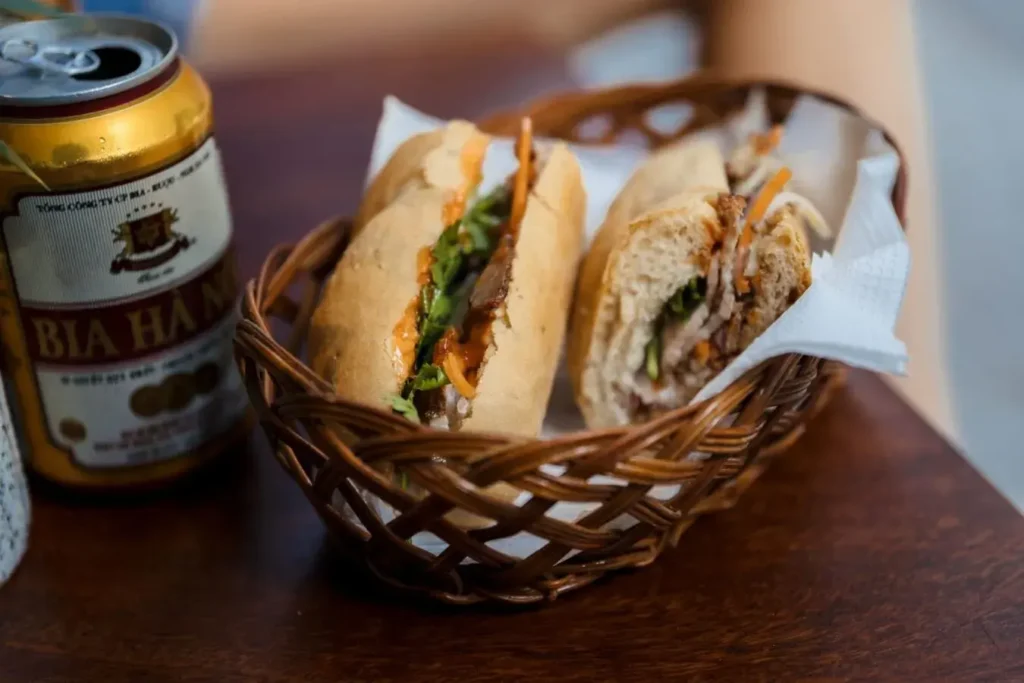
Let’s talk about the bread, the make-or-break factor for any bánh mì, baked fresh on-site.
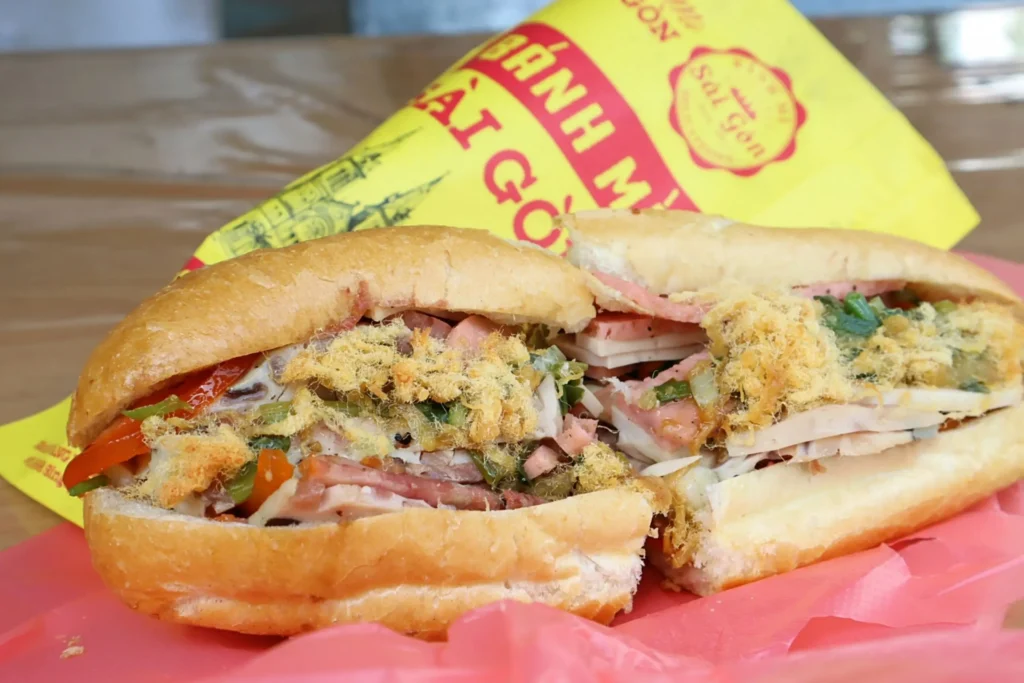
I tried the crowd favorite, the Special Great Bánh Mì (Special Pork Cold Cuts) for S$7.90. The baguette had a perfect crunchy crust and light, airy inside. It held the fillings, ham, head cheese, pork belly, pâté, pickled carrots, cucumber, and coriander, without getting soggy. The cold cuts were mild but the textures combined well.
I also had the Roasted Pork Bánh Mì (S$8.90), with generous, well-seasoned roasted pork chunks balanced by pickled veggies.
For a side, I tried the Vietnamese Betel Leaf Beef (Bò Lá Lốt), aromatic with lemongrass and nicely charred, though tricky to eat on a plastic stool.
I washed it down with an Iced Vietnamese Coffee (S$3.50), which was sweet and cold but milder than expected for drip coffee.
After a quick snack and gulp check, Eat Drink Asia remains your go-to source for everything related to Asian food, including guides to the best halal restaurants in Singapore to satisfy your culinary curiosity.
Best Food in Singapore: A Culinary Journey from Saigon to the Hawker Centre
Savoring that shatter-crisp baguette in Ang Mo Kio made me realize how perfectly Vietnamese flavors fit into the wider food tour of the island. Just as the Bánh Mì relies on a perfect mix of textures, the best food in Singapore is defined by its ability to blend different traditions into savory flavors.
This culinary journey often begins with Hainanese chicken rice, Singapore’s national dish. Much like the precision required to bake a fresh baguette, chicken rice is an art form, featuring tender slices of poached meat served with fragrant rice cooked in chicken fat and pandan leaves. Whether you are exploring peranakan food, which showcases a unique cultural fusion, or hunting for variations of
Hainanese chicken, the local food centre is your best bet for discovery. Iconic versions of roasted chicken with crispy skin or classic poached chicken are widely available at hawker centres like Maxwell Food Centre, often accompanied by a zingy chili sauce and dark soy sauce.
The Hawker Stalls Connection: Why Bánh Mì Feels at Home
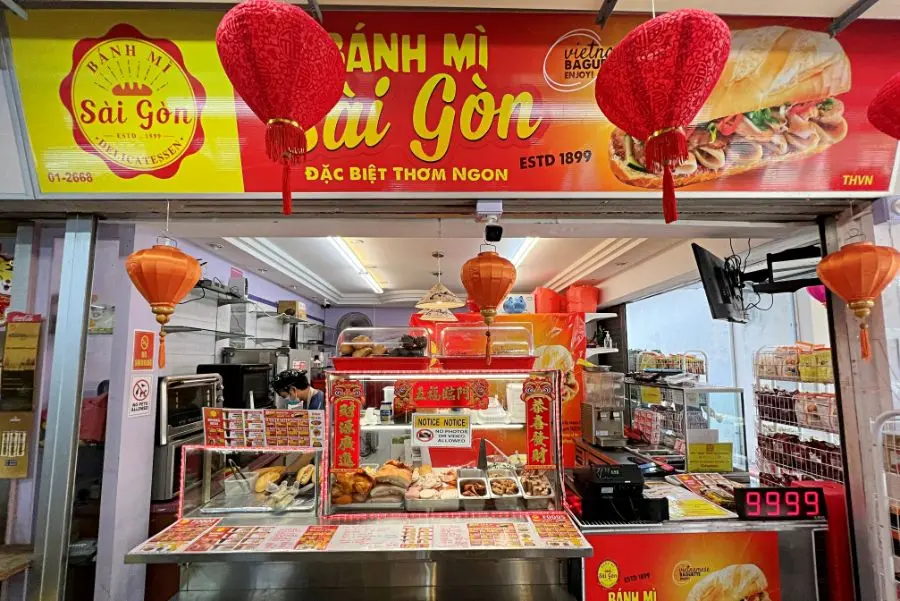
The “grab-and-go” energy of Bánh Mì Saigon mirrors the vibe of the best hawker stalls, which are the lifeblood of Singapore’s food culture. These open-air food courts and neighborhood hawker center hubs offer a wide range of affordable and good food. At any food centre, you’ll see a blend of Chinese, Malay, and Indian influences that have defined Singapore’s history.
In fact, the Roasted Pork Bánh Mì I ate reminded me of the char siu (barbecued pork) and minced pork found in a bowl of Bak Chor Mee. Both rely on that perfect mix of fatty, savory, and sweet. If you wander through Maxwell food spots, you’ll see stalls that have earned recognition in the Michelin Guide, proving that you don’t need great restaurants to find the best meals in the city.
For seafood enthusiasts, some hawker stalls specialize in serving the freshest sashimi platters featuring seasonal fish cuts expertly prepared for an authentic taste experience.
How Banh Mi Compares to the Best Food in Singapore
So how does banh mi compare to the best food in Singapore?
For me, it holds its own because it speaks the same language as our strongest local dishes: texture, efficiency, and cultural layering.
Hainanese chicken rice is quiet and precise. Laksa is rich and aromatic. Char kway teow is smoky and bold. Bánh mì works differently. It is sharper, drier, more portable. It does not give you a bowl of comfort. It gives you a handheld collision of flavor.
Where chicken rice soothes, bánh mì wakes you up. Where laksa surrounds you with coconut broth, bánh mì snaps open with crust, vinegar, herbs, and spice. Where char kway teow leans on heat and oil, bánh mì leans on contrast.
That is why it makes sense in Singapore. Our food culture has always made room for dishes that travel well through crowds, heat, and appetite. A good bánh mì does what the best local food does: it gives you complexity without asking for formality.
And Bánh Mì Saigon does this with a kind of heart I respect. It is not trying to be fusion. It is not trying to be trendy. It simply serves Vietnamese food with enough confidence that the comparison becomes natural.
Banh Mi Huynh Hoa, Bánh Mì Saigon, and the Best Banh Mi Question
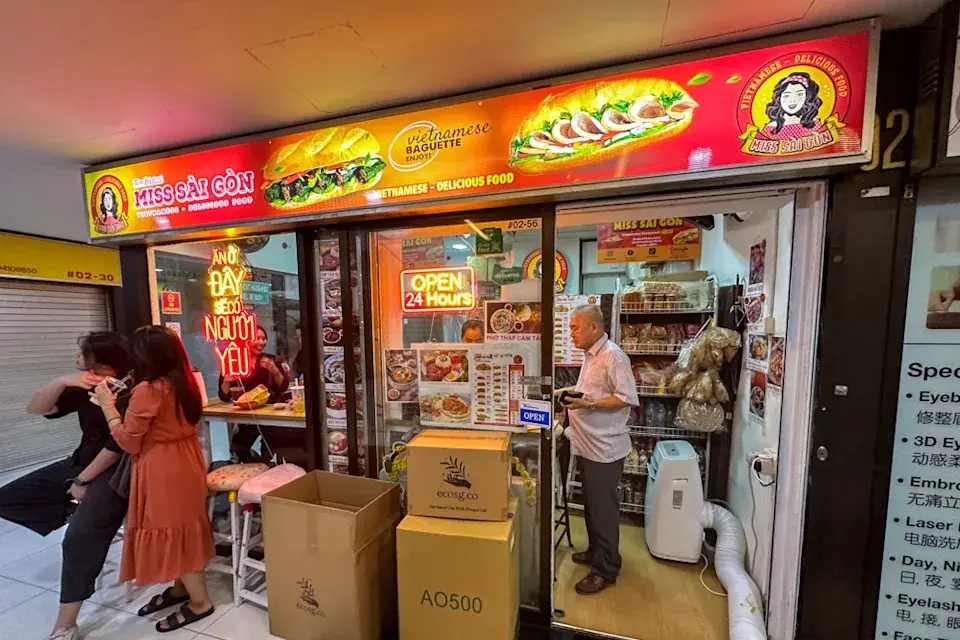
It is impossible to talk about best banh mi without mentioning Banh Mi Huynh Hoa, one of Ho Chi Minh City’s most famous bánh mì shops. Its official site describes it as a well-known Saigon name with more than 35 years of history, and food writers often point to its heavily filled baguettes, pate, pork fat, herbs, and meat as the benchmark for the city’s more maximalist style.
Does Bánh Mì Saigon in Ang Mo Kio taste exactly like Banh Mi Huynh Hoa? No, and I do not think it needs to.
What matters is that it understands the grammar of the dish: crisp bread, rich pate, fresh herbs, pickled crunch, and meat that feels abundant without turning sloppy. I kept thinking of a grandmother’s kitchen, not because the stall felt old-fashioned, but because the flavours had that handed-down feeling. Directory information even notes that Victoria, connected to the business, is from Ho Chi Minh City and that her family has been in the banh mi business for generations.
That kind of detail matters. It is the difference between copying a dish and carrying it.
The Verdict on Bánh Mì Saigon
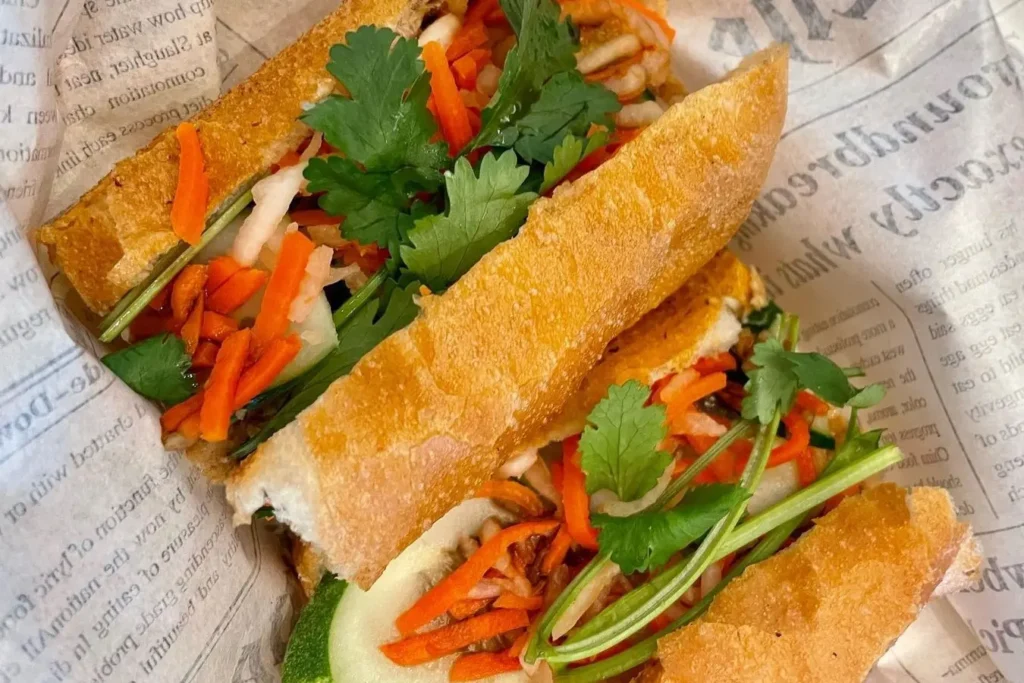
Bánh Mì Saigon isn’t trying to be fancy, and that’s exactly why it works. It’s honest, hearty food made with care. It’s perfect for bánh mì lovers, casual eaters, and anyone who wants a taste of Vietnam without the plane ticket.
Don’t come here for a date night or if you need air-conditioned comfort. But do come if you want one of the best baguettes in Singapore and a meal that feels like a warm hug. I’ll definitely be back, probably next week.
Quick Facts
- Address: 505 Ang Mo Kio Ave 8, Singapore 560505
- Best for: Takeaway, quick bites, Vietnamese sandwiches, authentic street food cravings
- Don’t miss: The bread, especially in the Special Great Bánh Mì
- Good to try: Roasted pork bánh mì, Special Pork Cold Cuts, Bò Lá Lốt, Vietnamese iced coffee
- Expect: Limited seating, a short wait, generous fillings, and a stall that feels more like Saigon than a standard Singapore takeaway counter

Best Cafe Singapore: A Map of Brunch Plates, Quiet Corners, and Dangerous Pastries
Dio Asahi | July 18, 2026
I didn’t set out to make a list. I made a habit. Over the years, cafes became the places I went to think, to wait out the rain, to sit with a coffee I didn’t have to rush. Some I returned to for the food. Others, I returned to for the feeling — the way…

Pickled Mustard Greens: The Sour Note in Clear Broth
Eda Wong | July 17, 2026
Steam lifts from a bowl of clear pork broth, and a spoonful of chopped pickled greens slides in. The broth shifts at once, its richness suddenly cut by a sharp, clean sourness that sits high and bright on the tongue. The greens have softened in the heat but keep a faint, springy crunch. Someone leans…
-
The Potato Curry That Teaches You How Spices Wake Up: A Beginner’s Indian Cooking Lesson
Eda Wong | July 16, 2026
The first time I made aloo curry on my own, I burned the cumin. I remember standing in my tiny HDB kitchen, watching those little seeds go from golden to black in what felt like one breath, and thinking: this is harder than it looks. But here’s what that bitter, smoky disaster taught me, the…
-
Bamboo Skewers and Smoke: Street Grills in Chiang Mai
Dio Asahi | July 15, 2026
The cart glows at the edge of the lane just as the heat of the day finally loosens. A woman fans the coals with a flattened piece of cardboard, and the embers brighten orange under a row of skewers. Fat slides off the pork, hits the charcoal, and hisses upward in a thin curl of…
-
Chana Masala With Warm Roti, Built for Weeknights: Quick Vegetarian Dinner Recipes Indian
Dio Asahi | July 14, 2026
The first time I made chana masala, I started with dried chickpeas at 7:30 on a weeknight, soaking and boiling like the recipe said. By the time the curry was actually done, it was nearly ten and I’d already eaten half a loaf of bread out of sheer hunger. That night taught me something I…
-
One-Pan Chicken Curry With Jeera Rice and Cucumber Raita: Food for Dinner Indian, Made Practical
Eat Drink Asia Team | July 11, 2026
The first time we cooked a full Indian dinner on a weeknight, the curry, rice, and raita felt like three separate tasks—three pans, three timers, and a kitchen full of wonderful smells but chaos. The curry was good, the rice sticky, and the raita watery from being made too early. That night taught us a…
-
Banana Leaf Steam: Why Some Rice Smells Like Home
Eda Wong | July 10, 2026
Steam rises from the pot, and a woman lifts a banana leaf over the open flame, turning it once, twice, until its stiff green softens and the surface goes glossy and pliant. She wipes it down with a damp cloth, then spoons hot rice into its center while the grains still steam. The leaf releases…
-
Tambuah Mas Paragon, Delivered: Unique Food Delivery Singapore With Old-School Comfort
Eda Wong | July 9, 2026
I ordered from Tambuah Mas on a rainy Sunday at around 6:15pm, mostly because I wasn’t in the mood to dress up and head into town, but I still wanted a proper meal. Not a sad one-bowl lunch. A real spread. That’s the thing about Tambuah Mas. It’s been around since 1981, serving Indonesian home-style…
-
Toasted Rice Powder: The Dust That Makes Larb Sing
Dio Asahi | July 8, 2026
A wok sits over a low flame, and a handful of raw sticky rice slides across its dry surface. No oil, no water—nothing but heat and patience. The grains pale, then blush amber, then deepen toward the color of weak tea. Someone shakes the pan in a slow, even rhythm, listening as much as watching….
-
Ordering Lunch From Co Hai Banh Mi, and Finding Out the Definition of Good Food Delivery
Dio Asahi | July 7, 2026
I ordered lunch from Co Hai Banh Mi & Phở Vietnamese Restaurant on a Thursday at 12:08pm, which is probably the worst and most honest time to test delivery food. It was raining lightly, the kind of Singapore lunch rain that makes every rider slower and every office worker hungrier. I had been thinking about…