The first thing I noticed was the smoke.
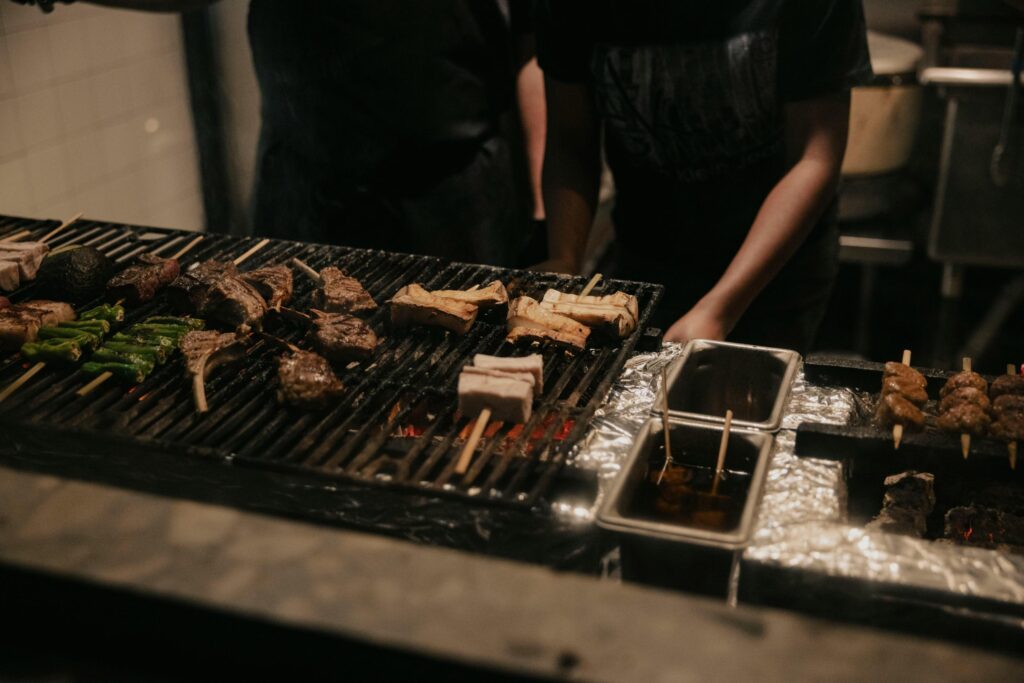
It didn’t rise all at once, but in thin, steady ribbons that curled upward from a narrow grill set just inches from the counter. The scent came first, warm and unmistakable, a mix of rendered chicken fat and binchōtan charcoal, clean but deeply present. Inside the small shop in Osaka, space felt compressed, not uncomfortably, but deliberately. A few stools lined the counter, close enough that you could hear the faint crackle of the coals and the quiet turn of skewers being rotated by hand. There was no menu in sight, only a sequence unfolding in front of you, one skewer at a time.
Yakitori, at its core, is straightforward. Chicken, skewered, seasoned, and grilled over charcoal. But in places like Osaka, it takes on a rhythm that feels more considered than casual. The skewers move in a quiet progression, beginning with lighter cuts, then gradually deepening in flavour and richness. Negima, with its alternating pieces of chicken and scallion, gives way to tsukune, a hand-formed meatball glazed lightly with tare. Each arrives without announcement, placed directly onto the counter, still warm, sometimes brushed once more with sauce before it leaves the grill.
Discover more about Japan’s food philosophy and culinary harmony here: https://eatdrinkasia.com/japan-food-culture-culinary-harmony/
What defines yakitori is not just the ingredients, but the way each part of the chicken is used with intent. Skin, liver, cartilage, even the tail, each prepared to highlight texture as much as flavour. There is a long-standing practice here of whole utilisation, rooted less in trend and more in habit. The technique itself relies heavily on control. Binchōtan charcoal burns at a high, steady heat, allowing the exterior to char lightly while keeping the interior tender. Seasoning is minimal, often just salt or tare, but applied at precise moments during grilling to build layers rather than overwhelm.
There is a quiet discipline in how the process unfolds. The chef’s attention never strays far from the grill, adjusting distance, turning skewers, watching for small shifts in colour and texture. It is a practice built on repetition, where consistency carries more weight than variation. The result is not dramatic, but exact. Each skewer arrives as it should, neither rushed nor held too long, shaped by timing that feels almost instinctive.
What makes yakitori stand out is this balance between simplicity and precision. It does not rely on complexity to create depth. Instead, it draws from familiarity, refining it through technique and attention. There is no attempt to reinterpret or elevate it beyond recognition. If anything, its strength lies in how closely it holds to its form, allowing small adjustments in heat, seasoning, and timing to define the experience.

Tiong Shian Porridge Centre Review: The Soft Counterweight to Chinatown’s Crisp Toast
Dio Asahi | September 22, 2026
I’d spent the morning with kaya toast. Crisp bread, cold butter, the clean snap of it between my teeth. Good, all of it. But by the time I’d walked a few streets over to New Bridge Road, my mouth wanted the opposite. Something warm. Something that gave way instead of shattering. That’s how I ended…
-
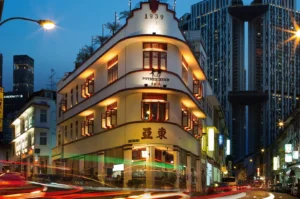
Tong Ah Eating House Review: A Chinatown Breakfast That Still Begins with Kaya Toast
Eda Wong | September 19, 2026
I almost walked past it. I’d been looking for the old triangular building, the red-and-white one you see in every photo of Keong Saik, the one that made Tong Ah feel like a landmark before you’d even ordered anything. But that’s not where it lives anymore. It’s a few doors down now, at 35 Keong…
-
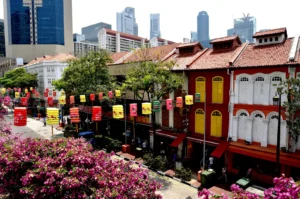
Breakfast at Chinatown Singapore: How Migration Built the City’s Morning Table
Eat Drink Asia Team | September 17, 2026
The first time I ate breakfast in Chinatown, I got it wrong. I arrived at eleven, hungry and hopeful, and found the kopi stalls already turning toward lunch. The porridge uncle was packing up. The toast man had switched to slicing char siew. I ate a rushed plate of noodles standing near a pillar, sweating,…
-
The Bitter Leaf Folded Into a Burmese Home Kitchen
Eda Wong | September 16, 2026
The oil is already hot when she reaches for the leaves. It’s late morning in a kitchen off a quiet lane, and a woman I’ve been watching stands over a blackened wok, tearing bitter gourd leaves by hand into a small heap. The garlic hits the oil first, sharp and loud. Then the leaves go…
-
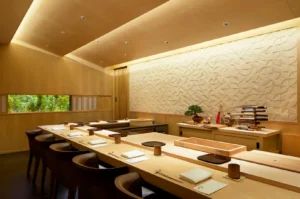
Best Sushi Singapore: From Premium Japanese Restaurants to Exclusive Deals from Affordable Sushi Trains
Dio Asahi | September 15, 2026
I’ve been eating sushi in this city for years now, from S$1.50 plates rolling past on a belt to omakase counters where the bill made me sit up straight. Somewhere along the way I stopped chasing “the best” and started noticing something else — that good sushi answers a mood, not a ranking. Some nights…
-
Al Mubin Restaurant and the Nasi Goreng Sambal Ayam That Has to Carry the Whole Plate
Eda Wong | September 12, 2026
It was close to eleven at night when I finally sat down. The kind of hour when you’re not really hungry so much as unsettled, when you want something warm in front of you more than you want a proper meal. Al Mubin’s food court at Block 407, Ang Mo Kio Avenue 10, was still…
-
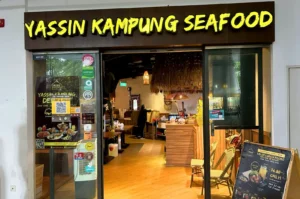
Yassin Kampung Admiralty Review: When Sambal Fried Rice Becomes the Whole Point
Eat Drink Asia Team | September 10, 2026
I ordered the sambal fried rice first, before I’d even properly read the menu. That’s usually a mistake at a place like this. Yassin Kampung @ Admiralty is the kind of restaurant that keeps trying to pull your attention elsewhere — toward stingray, toward crab, toward hotplates that arrive still hissing. But I’d come with…
-
The Bamboo Basket Holding Chiang Mai’s Sticky Rice
Dio Asahi | September 9, 2026
By Dio Asahi for Eat Drink Asia. The lid comes off, and the steam rises first. It’s a warm afternoon in Chiang Mai, and on the table sits a small woven bamboo basket, still holding the heat of the pot it came from. Someone’s grandmother lifts the top and sets it aside without looking. Inside,…
-
Sambal Fried Rice Recipe for People Who Know the Chilli Paste Does the Heavy Lifting
Dio Asahi | September 8, 2026
I used to add the rice too early. The oil would be hot, the sambal barely a minute in, and I’d tip in the cold rice because I was hungry and impatient. Every time, the same result: rice stained red but tasting of nothing much. Sharp. Raw. Flat where it should have been deep. It…
-
Hup Lok at Havelock Road: A Teochew Fish Soup Carrying Memory Forward
Eda Wong | September 8, 2026
The bowl arrives before anything else does. Steam lifts off it in slow ribbons, carrying the smell of ginger and something warmer underneath: the round, boozy note of hua tiao wine settling into fish. I lean in before I even pick up my spoon. The broth is pale gold and cloudy, thick enough that it…