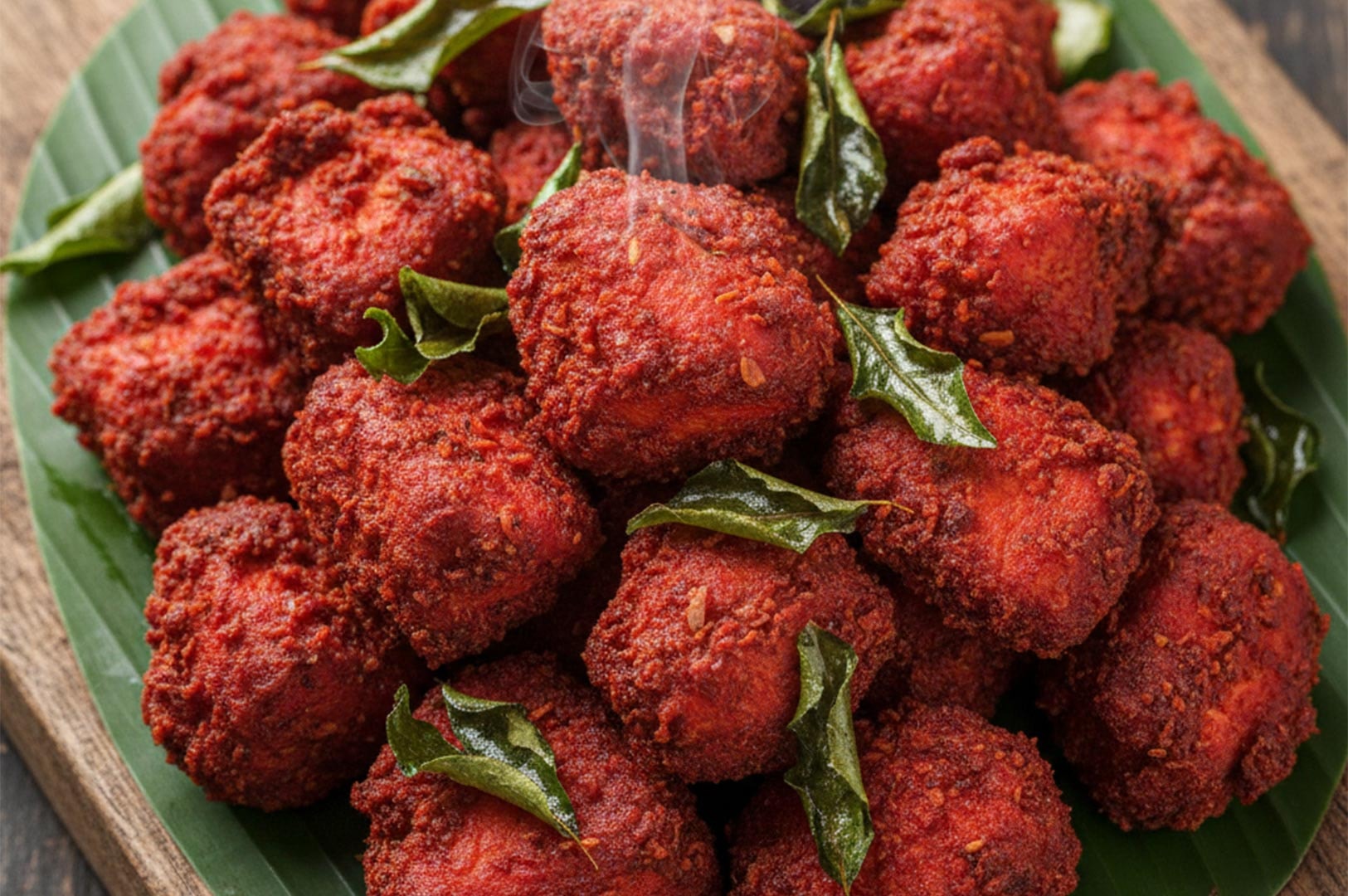
We’ve spent months tracking the ‘shatter-rate’ of chicken across the South, and here’s the truth: most of what you find is a pale, food-colored imitation. The real Chicken 65 isn’t just spicy; it’s an atmospheric experience. It starts with the sharp, herbal snap of curry leaves hitting 180°C oil and ends with a deep, earthy heat that lingers on your fingertips. We believe documenting this dish isn’t just about a recipe, it’s about preserving the high-heat ritual of Chennai’s street corners.
To truly appreciate its complexity, one should look at it as part of a larger culinary mastery, as detailed in our foundational exploration of Mastering the Art of Indian Dishes with Chicken. Understanding how to balance heat, acidity, and texture is what transforms a simple chicken recipe into a legendary experience.
How to Cook Chicken 65
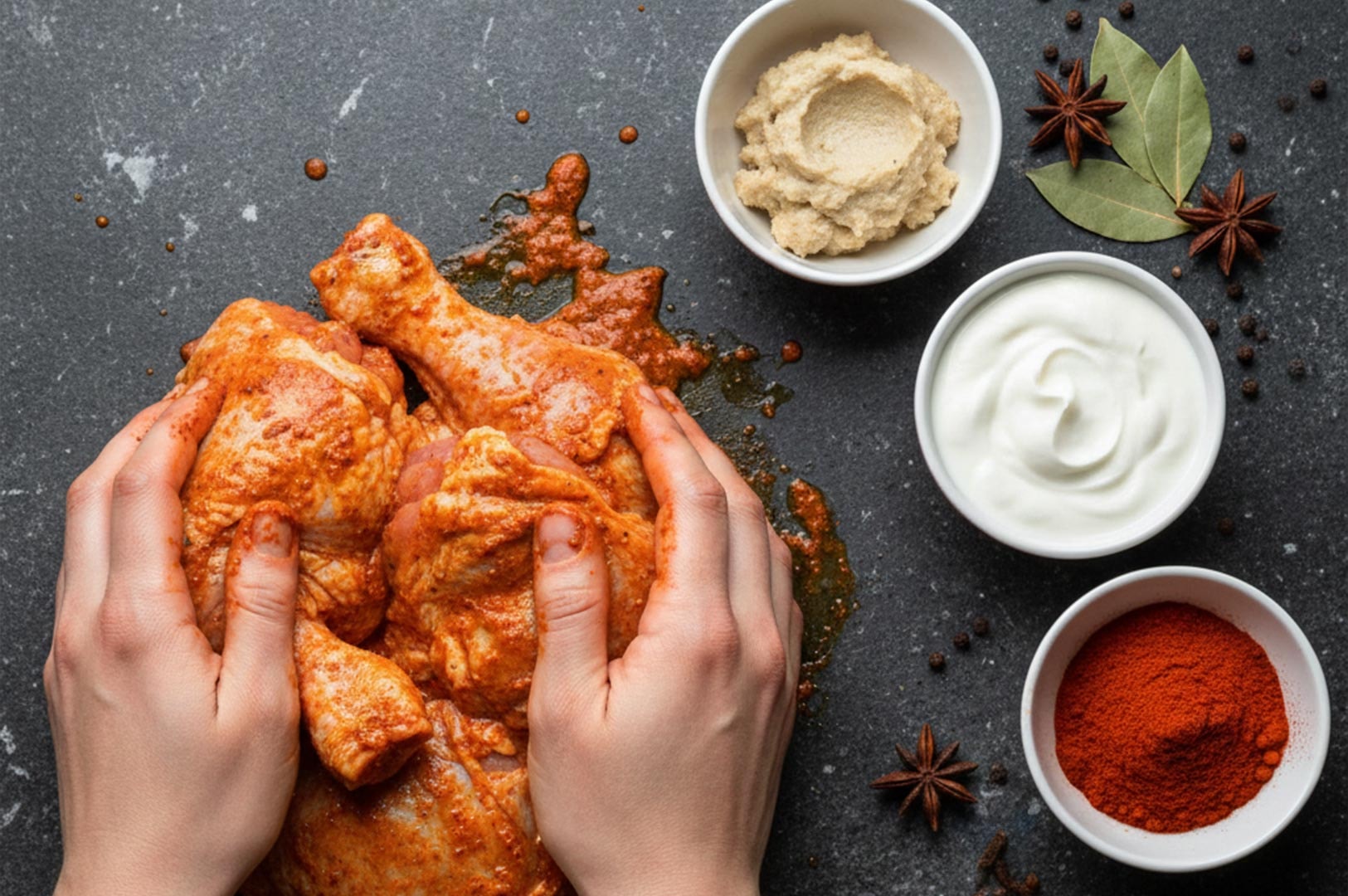
The Marinade (The Soul)
- 500g Chicken thighs (cut into 1-inch “shatter-ready” cubes)
- 2 tbsp Ginger-garlic paste (fresh is non-negotiable)
- 1/2 cup Plain yogurt (full-fat for that tenderizing tang)
- 1 tbsp Lemon juice
- Spices: 1 tsp Turmeric, 2 tsp Kashmiri red chili powder, 1 tsp Garam masala, 1 tsp Salt.
The Crunch Coating
- 3 tbsp Cornstarch (Cornflour)
- 1 tbsp Rice flour (This is the secret to the ‘shatter-rate’)
- 1 Large egg (beaten)
The Tempering (The Atmosphere)
- 2 sprigs Fresh curry leaves (Wait for the crackle)
- 4-6 Green chillies (slit lengthwise)
- 1 tsp Cumin seeds
The Step-by-Step Ritual
- The Deep Soak: Combine your chicken cubes with the marinade ingredients. Lemak Factor: Massage the ginger-garlic and yogurt into the meat until every crevice is coated. Cover and chill for 4 hours.
- The Coating: Just before frying, stir in the beaten egg, cornstarch, and rice flour. It should be a thick, pasty sludge—not a runny batter.
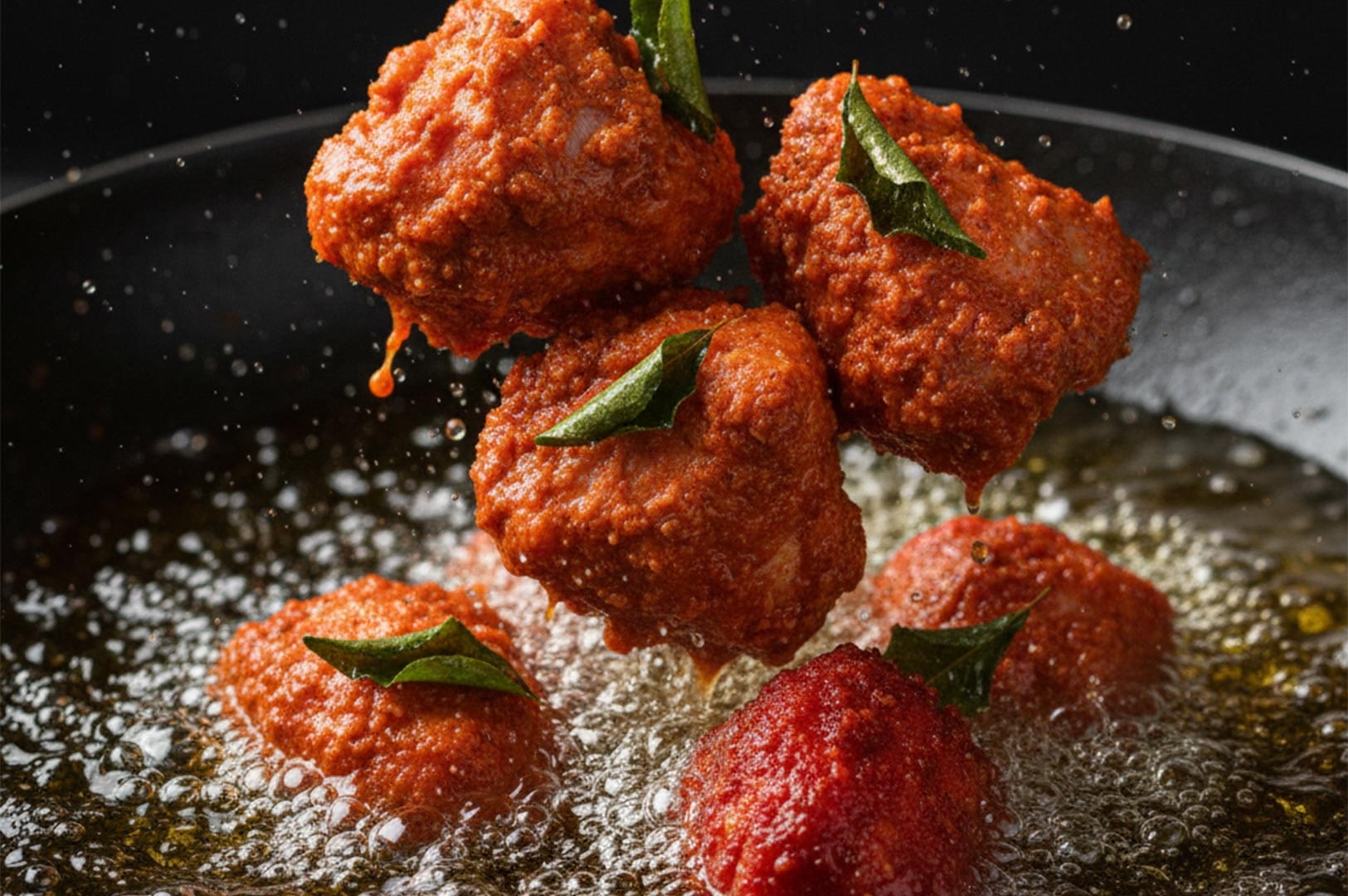
- The First Fry: Heat oil to 180°C. Drop chicken pieces individually so they don’t bond. Fry for 5-6 minutes until deep crimson and crispy. Drain on a wire rack (not paper towels!) to preserve the crunch.
- The Tempering Finish: In a separate skillet, heat 1 tbsp of oil. Toss in cumin seeds, green chillies, and curry leaves. When the leaves turn translucent and “snap,” toss the fried chicken back in for 30 seconds of high-heat adrenaline.
The Cultural Significance of Indian Chicken and Regional Heat
In the global culinary scene, Indian chicken is often synonymous with comfort. Born in the vibrant kitchens of Chennai, this dish was never intended to be a heavy meal; it was designed as a “quick fire” snack to be enjoyed with friends. Unlike a North Indian curry that relies on a slow-cooked onion tomato mixture, Chicken 65 is an exercise in high-heat transformation.
The name itself is legendary in Indian restaurants. Some say it was the 65th menu item at a famous hotel, while others believe it refers to a specific count of spices. Regardless of the myth, the result is a delicious dish, family loved and a staple for anyone serious about Indian recipes. It marks a shift from slow-simmered sauces to the immediate impact of the spice blend and the fry’s crunch.
Myth | Probability | Our Take |
65 Spices | Low | Too complex; the profile is sharp and distinct, not muddied. |
65-Day-Old Bird | Medium | A historical nod to tenderness, though rare in modern prep. |
Item No. 65 | High | Buhari Hotel’s 1965 menu, the most likely ‘Source Code.’ |
Marination Secrets for the Best Indian Chicken Recipes
What distinguishes the best Indian chicken recipes is not just the final temperature, but the intentional layering of flavor through marination. For Chicken 65, the process begins with marinated chicken, typically chicken thighs or thigh meat chosen for their juicy pieces.
To achieve an authentic flavor, the marinade must be robust. It is here that all the spices come into play: turmeric powder for color, cumin seeds for earthiness, and a generous dusting of red chili powder and cayenne pepper for that signature crimson glow. This deep preparation is what allows the dish to be prepared in less than an hour once the actual frying begins, making it a perfect addition to a weekly dinner rotation.
Comparing the Butter Chicken Recipe to Spicy Southern Styles
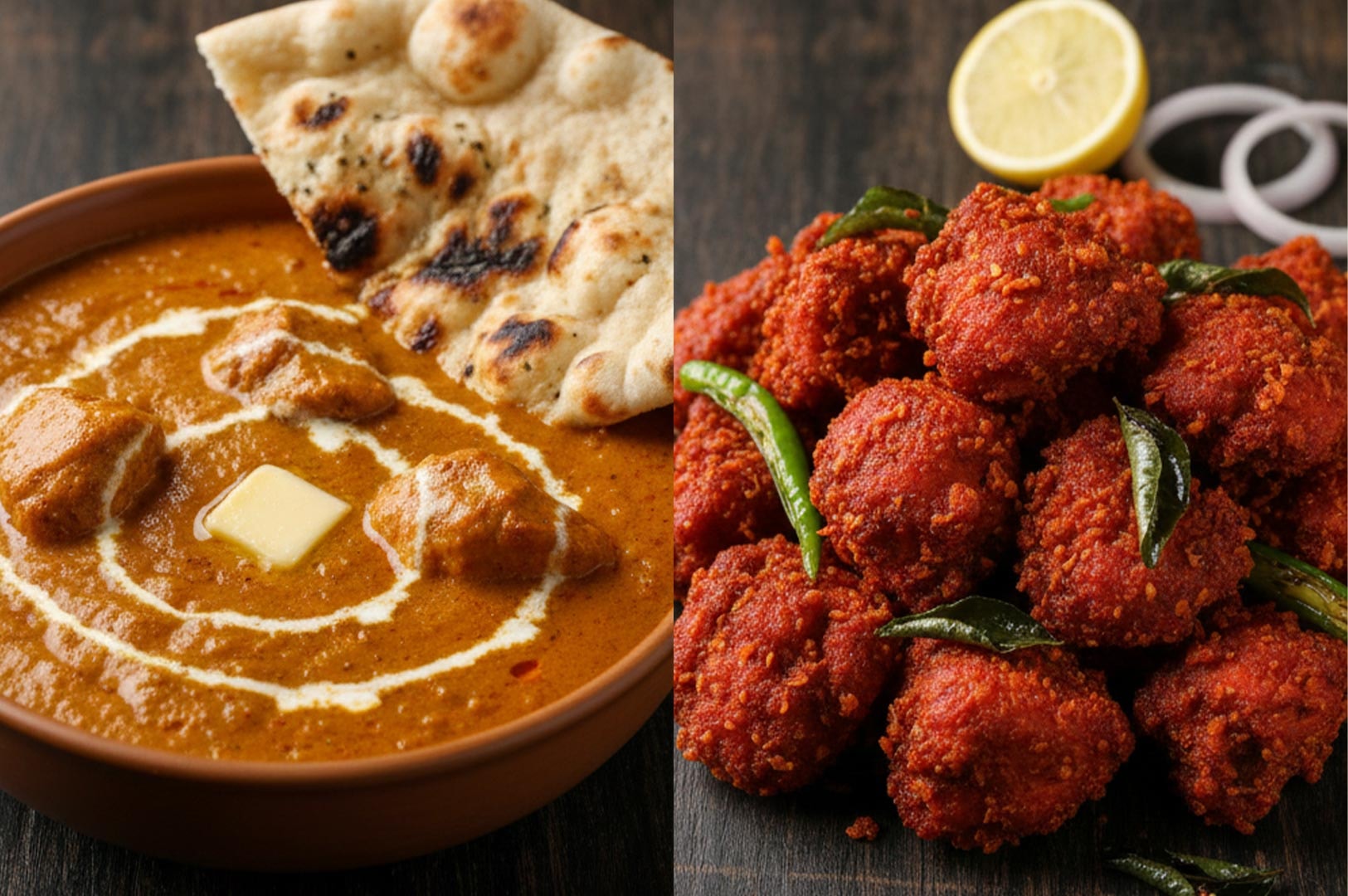
Many people find that they can enjoy both styles in one sitting—the butter chicken providing the rich, soothing base and the Chicken 65 providing the sharp, textural highlights. Even in the most traditional Indian recipes, there is a dialogue between these styles. Some modern variations of Chicken 65 even incorporate a touch of tomato paste or tomato puree in a “gravy style” version, bridging the gap between a dry fry and a traditional chicken curry.
The Role of Garam Masala and Aromatic Tempering
Central to the success of this dish—and indeed most Indian chicken recipes—is the quality of the garam masala. This warm spice mix provides the backbeat of flavor that supports the sharper notes of the chili powder. Unlike turmeric powder, which is added early, garam masala is often used to finish the marinade or the tempering to preserve its volatile oils.
The final “tempering” is where the Indian chicken truly comes alive. In a large skillet, a splash of olive oil is heated to crackle whole spices, fresh garlic, and vibrant curry leaves. As the fried chicken is tossed back into this aromatic hot oil, the leaves release an herbal perfume that distinguishes the dish from a standard chicken curry. It is this layering of aromatic spices that creates a restaurant quality meal in your own kitchen.
Liquid Gold: Incorporating Coconut Milk for Texture
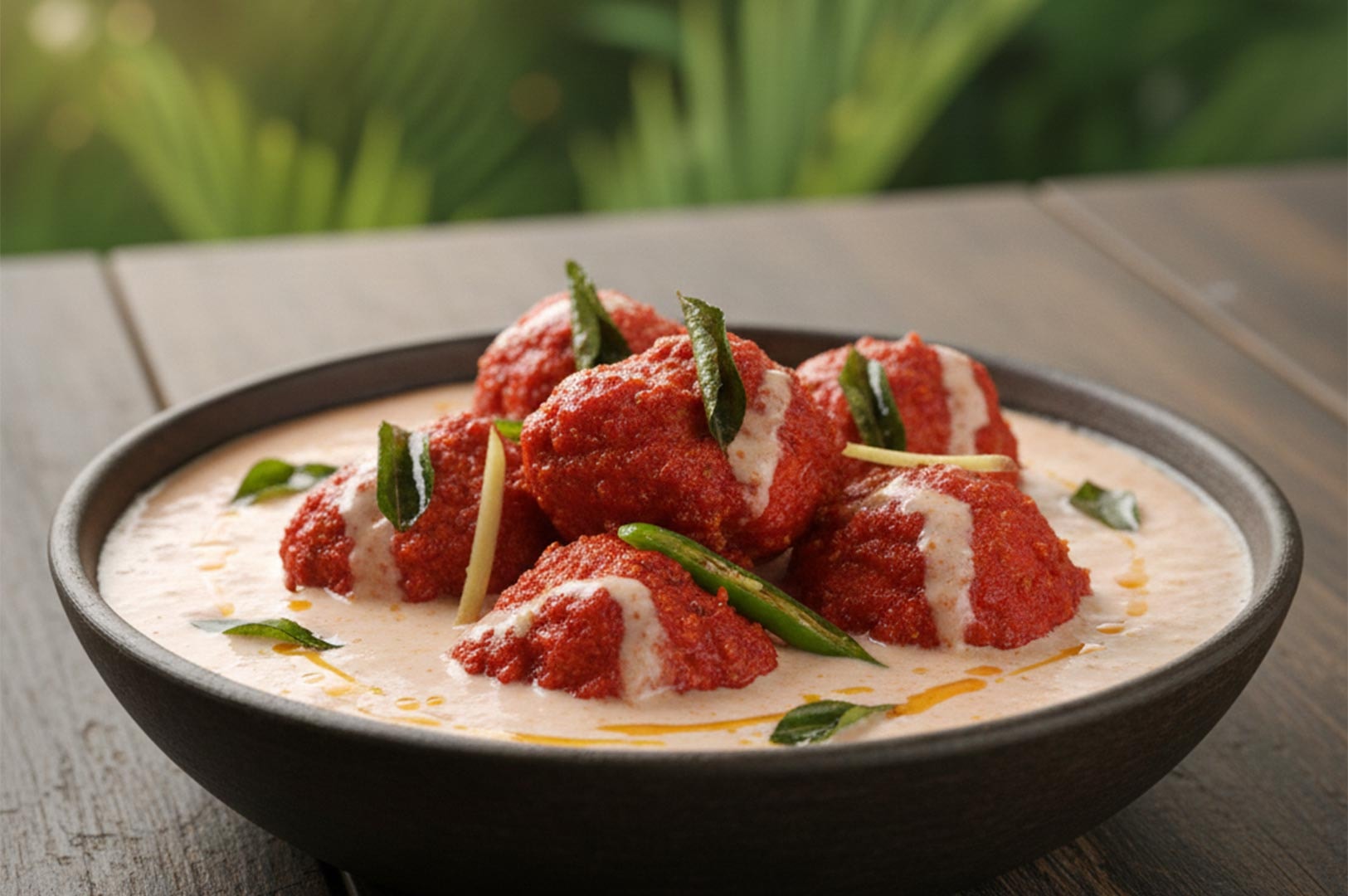
As you move toward the coastal versions of South Indian chicken, you might find chefs who temper the heat with coconut milk. While not part of the original “dry” street-food version, adding creamy coconut milk to a Chicken 65 gravy creates a silken finish that carries the heat of the green chillies more gently across the palate. This evolution shows the flexibility of the chicken recipe; it can adapt to the local ingredients of the region.
The use of coconut milk in a curry sauce creates a different kind of richness than the heavy cream used in a North Indian curry. It provides a tropical lightness that pairs perfectly with the acid of the lemon juice and the pungency of the fresh ginger. For those who find the standard version too fiery, a splash of creamy coconut milk can turn this into a more approachable, yet still bold, homestyle chicken curry.
Modern Kitchen Shortcuts: Using an Instant Pot or Slow Cooker
We recognized the undeniable convenience of the Instant Pot and slow cooker for recreating popular dishes without hours by the stove. Here’s the compromise: while the pressure cooker efficiently infuses the ginger garlic paste and garam masala deep into the chicken, it unfortunately kills the ‘soul’ of that signature crunch that defines Chicken 65. To honor the preservationist standard, we propose a hybrid workflow, steam the chicken first in the Instant Pot to lock in tenderness and flavor, then finish with a quick flash-fry or air-fry. This method keeps the cherished ritual alive while embracing modern convenience.
Using the Instant Pot method to prep the chicken pieces allows the flavors of the ginger garlic paste and garam masala to be forced into the meat under pressure. Similarly, a slow cooker can be used to develop a rich curry base for a gravy-style version, though the signature crunch will always require a final encounter with a large skillet and some hot oil. Regardless of the method, the goal is to ensure the whole spices have had time to release their essence into the meat.
The Importance of Whole Spices in Indian Recipes
One of the biggest mistakes home cooks make when tackling Indian recipes is relying solely on pre-ground powders. To capture authentic flavor, one must use whole spices. When you heat oil in a heavy-bottomed pan and add whole spices like cinnamon, cloves, and cumin seeds, you are performing a fundamental act of Indian cooking: the bloom.
These spices release fat-soluble flavors that ground powders simply cannot match. In the case of Chicken 65, the whole spices used in the tempering provide a textured, rustic feel to the dish. This technique is equally vital when making a homestyle chicken curry or a butter chicken recipe, as it builds the “soul” of the sauce from the ground up.
Serving and Pairing for a Restaurant Quality Meal
- To take your Indian chicken from good to restaurant quality, finish with a handful of fresh cilantro and a bright squeeze of lemon juice. This punch of acid lifts the deep, earthy garam masala flavors perfectly.
- Serve your Chicken 65 alongside fragrant basmati or simple white rice to soak up every spicy drop. Pair with fresh naan or rotis for that classic, comforting combo.
- Add crispy onion rings and tangy lemon wedges to cut through the richness with bold contrast. If the red chili powder gets too fiery, a cooling cucumber raita will bring balance and relief.
Whether you’re hunting for a new dinner rotation or aiming to master authentic Indian chicken recipes, Chicken 65 delivers an unforgettable flavor journey.
Perfect for the preservationist home cook seeking bold flavors with manageable effort.

Pour Decisions: The Best Bars in Singapore for Craft Beers and More
Dio Asahi | April 9, 2026
Walking through the humid streets of Singapore at dusk, you can feel the city transforming. The tropical heat fades into neon lights, and the clinking of glasses begins to echo from narrow shophouses and towering skyscrapers. Singapore boasts a dynamic bar scene that rivals any global metropolis. From opulent destinations like Atlas Bar and Republic…
-
The 8 Best Chinese Restaurants in Singapore: From Dim Sum to Peking Duck
Dio Asahi | April 7, 2026
Singapore’s best chinese restaurants in singapore function less like isolated dining rooms and more like a networked system of technique. Across these chinese restaurants, you see branches of chinese cuisine expressed through roast mastery, controlled fermentation, seafood purity, and banquet choreography. This is not simply a guide to chinese food. It’s a mapped culinary journey…
-
The Neighbourhood Restaurant Test: How to Spot Truly Authentic Cuisine Restaurants in Your Area
Eda Wong | March 31, 2026
A friend texted me last week: “I’m outside this new Vietnamese place. How do I know if it’s legit before I waste my money?” It’s a question I get often. We’ve all been there, drawn in by a cool sign, only to get a plate of sad, sweet, tourist-grade pad thai that tastes like ketchup….
-
Cuisine in the World Meets Singapore: Inside Nakhon Kitchen’s Cross-Cultural Magic
Dio Asahi | March 26, 2026
There’s a rite of passage for any food lover living in the East of Singapore, and it involves a queue. Specifically, the perpetually long, snaking queue outside Nakhon Kitchen in Bedok. I’d heard the legends for years: authentic Thai food, rock-bottom prices, and a wait time that tests your commitment. So, on a Tuesday evening…
-
The Spice Route Secrets: A Deep Dive into Malay Ethnic Food
Eda Wong | March 24, 2026
My first time ordering Nasi Padang in Geylang Serai was overwhelming, I randomly picked dishes and was shocked by a $20 bill due to premium beef rendang and squid. That taught me to always ask seafood prices and that Malay food is a complex, modular cuisine. Malay food is everywhere in Singapore, in hawker centres,…
-
The Shokunin Spirit: How Japan’s Craftsman Philosophy Lives Inside Singapore’s Most Disciplined Omakase Counter
Dio Asahi | March 21, 2026
The fire is not roaring; it is breathing. In a small, darkened workshop in Sakai, a swordsmith watches the colour of the steel with eyes that have tracked the same transformation for forty years. He does not look at a clock. He listens to the hum of the charcoal. He waits for the metal to…
-
The Evolution of the Plate: How History Transformed Iconic Malaysian Dishes
Eda Wong | March 19, 2026
I used to think I understood Malaysian food. As a Singaporean, it’s practically in my DNA, right? Nasi lemak for breakfast, a cheeky roti canai for supper – I thought I had it all figured out. Then I spent a week eating my way through Penang and Kuala Lumpur, and I realised I knew absolutely…
-
The Soul of the Table: An Educational Guide to the Role of Food in Malaysian Culture
Eat Drink Asia Team | March 17, 2026
We still remember our first collective Rumah Terbuka (Open House) experience in Kuala Lumpur.Standing at the doorway of a home during Hari Raya, we were utterly paralyzed by the sheer volume of people and the aroma of Malaysian cooking. There were aunties ladling beef rendang and tables groaning under the weight of colourful kuih. “Do…
-
Asian Food Comfort Trends: Why Broths and Bowls are Dominating Globally
Eda Wong | March 14, 2026
I still remember the first time I faced a “build-your-own” Mala Xiang Guo counter. I stood there, plastic tongs in hand, completely paralyzed by the mountain of choices. Lotus root? Kelp knots? three different types of tofu skin? My anxiety spiked. I panicked, grabbed way too much luncheon meat, and ended up with a $28…
-
The Fifth Element: A Masterclass on Umami in East Asian Cuisine
Dio Asahi | March 12, 2026
I’ll never forget the first time I made miso soup from scratch. Not the instant kind, but the “proper” way. I boiled water, dissolved miso paste, added tofu, and waited. It tasted flat, salty and cloudy but missing the deep, satisfying flavor I loved in Japanese restaurants. I thought maybe I needed better miso. Years…