I used to think I understood Malaysian food. As a Singaporean, it’s practically in my DNA, right? Nasi lemak for breakfast, a cheeky roti canai for supper – I thought I had it all figured out. Then I spent a week eating my way through Penang and Kuala Lumpur, and I realised I knew absolutely nothing. What I thought was a simple plate of food was actually a history lesson, a story of trade routes, migration, and centuries of culinary conversations.
The food we see on the plate today isn’t how it always was. It’s a living document, constantly edited by history. That beef rendang you love? Its evolution tells a story of preservation before refrigeration. That bowl of laksa? It’s a map of maritime trade routes. To really get Malaysian food, you have to look past the deliciousness and see the soul of the dish – the story of how it got there.
“What is “Authentic” Malaysian Food, Anyway?
The truth about “authenticity” in Malaysia is that it is a moving target. I see malaysian cuisine as the original fusion, a melting pot of Malay, Chinese, Indian, and Indigenous cultures.
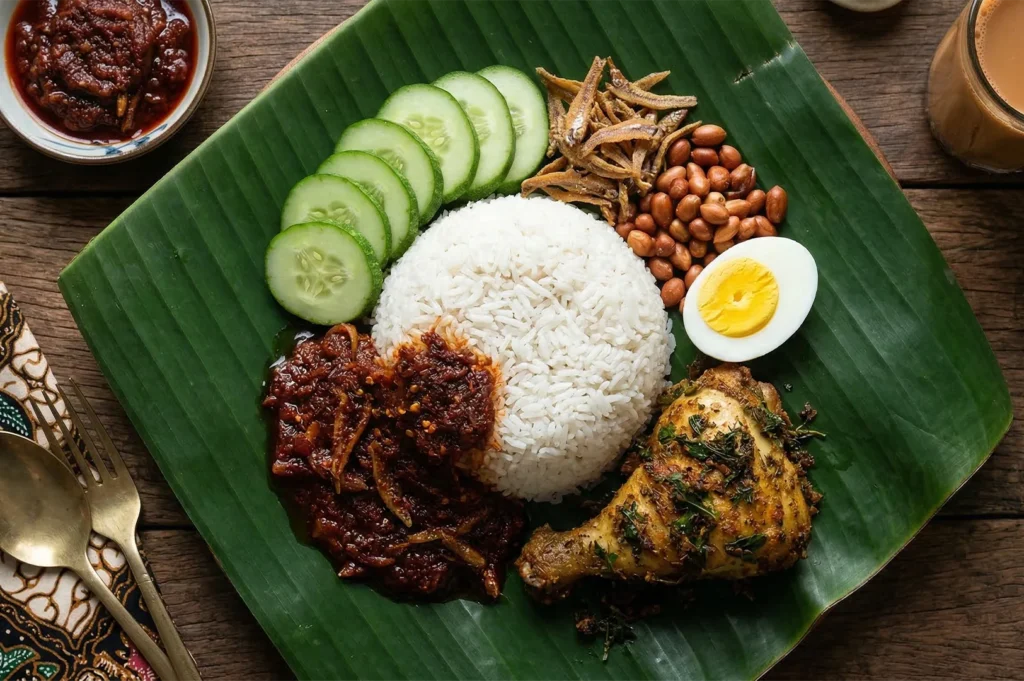
Take Nasi Lemak, for example. I consider it the national dish, yet its components tell a global story. The rice is quintessentially Malay, steamed with coconut milk, but the sambal? That fiery chili paste exists because of trade routes. A standard plate is a harmony of malaysian dishes:
- The Essentials: Rice cooked in coconut cream, served with fried anchovies, roasted peanuts, cucumber slices, and a hard boiled egg.
- The Additions: Whether it’s a Chinese-style fried chicken wing or an Indian-inspired beef curry, the plate becomes a snapshot of the country.
- The Soul: It is the first bite of that rich shrimp paste sambal that defines the malaysian food experience.
Rendang: From Preservation to Celebration
I will never forget my first bite of a truly mind-blowing beef rendang in Kuala Lumpur. Unlike the saucy versions found in Singapore, this was a dry “rendang tok.” The meat was slow cooked for several hours until the coconut milk evaporated, leaving the beef fibers coated in a dark, intensely fragrant spice paste.
Originally a preservation method for the Minangkabau people, this cooking process allowed the meat to stay tasty for weeks. Today, it remains a favourite malaysian dish, typically served during celebrations. It is a labor of love where herbs like galangal and lemongrass create a symphony of malaysian flavors.
The Great Laksa Debate: A Map in a Bowl
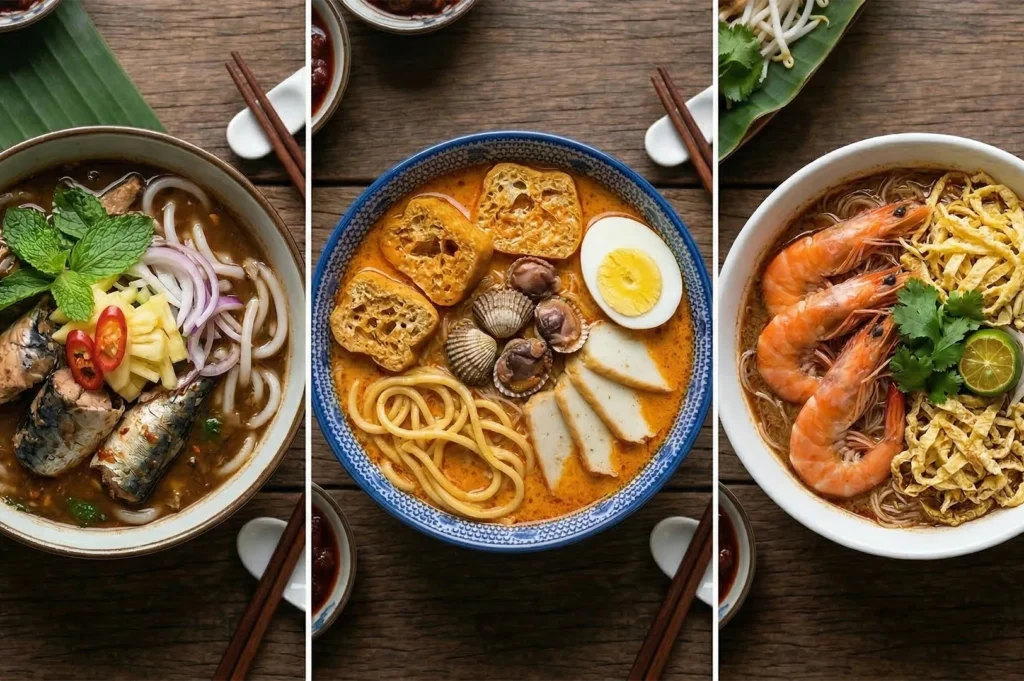
Few dishes spark as much debate as laksa. To me, it isn’t just a noodle dish; it is a declaration of regional identity.
- Assam Laksa: In Penang, this is the king. It’s a sour fish-based noodle soup pungent with tamarind, onion, and shrimp paste. The thick rice noodles cut through the sharp, tangy broth.
- Curry Laksa: Traveling down to Melaka, I find curry laksa (or Nyonya Laksa). This bowl is enriched with coconut milk, reflecting the spice trade’s influence.
- Laksa Sarawak: In East Malaysia, the recipe shifts again, using a complex spice paste that balances chicken and shrimp notes.
The Sweet Art of Patience: Kuih and Roti Canai
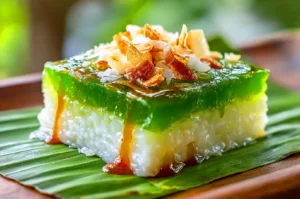
Malaysian food culture is also defined by its snacks. Kuih, colorful, bite-sized sweets, require incredible precision. Whether it’s the steamed layers of kuih lapis or onde-onde filled with shrimp or palm sugar, these treats are a legacy of craftsmanship.
Similarly, the roti canai (or roti prata) is a staple indian-influenced food in malaysian life. Skillfully flipped and served with curry sauces or condensed milk, it is the ultimate comfort food.
Hokkien Mee and Char Koay Teow: The High Heat of the Wok
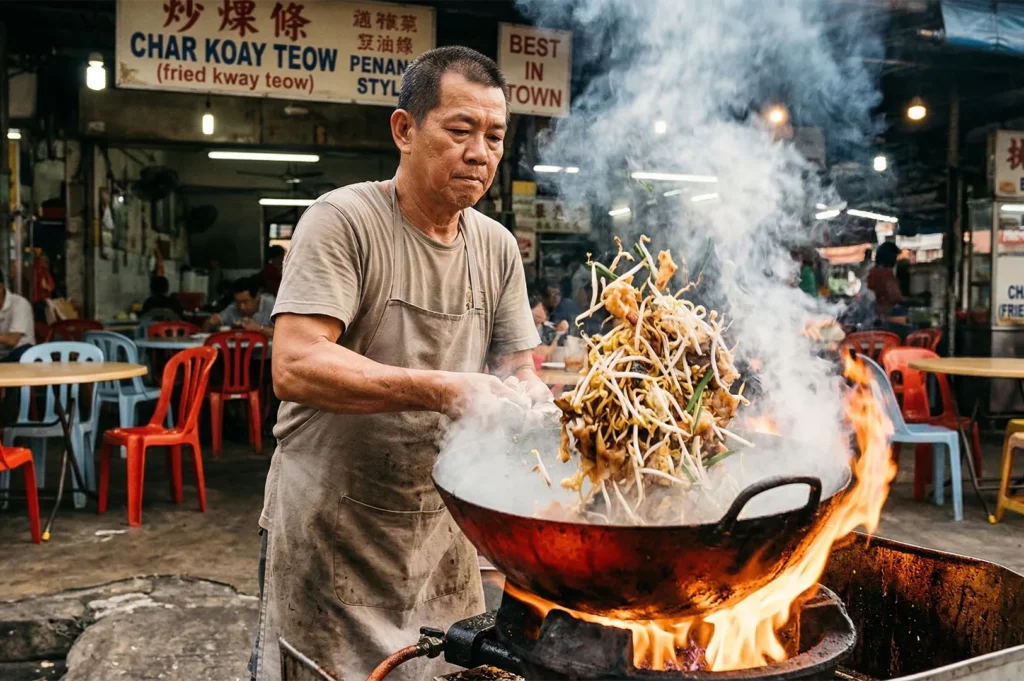
To round out my malaysian food guide, I must look at the stir fried legends found in every hawker center from Penang to Kuala Lumpur.
- Hokkien Mee: This tasty dish features thick yellow noodles braised in dark soy sauce. Hokkien Mee is often cooked with pork, fish cake, and chinese sausage, topped with crispy fried pork lard.
- Char Koay Teow: Using wide rice noodles (or flat rice noodles), Char Koay Teow is stir fried over high heat. The addition of shrimp, egg, and bean sprouts creates a smoky taste that is emblematic of malaysian chinese cuisine.
Nasi Kandar and Grilled Fish: Hearty Regional Favorites
In the north, nasi kandar allows diners to customize their steamed rice with a variety of curry options. Meanwhile, along the coast, grilled fish, marinated in herbs and spices and cooked over charcoal, highlights the freshness of local fish. These malaysian dishes are often served on a banana leaf to enhance the aroma.
Hainanese Chicken Rice: A Cultural Staple
Even a simple dish like hainanese chicken rice carries weight. The rice is cooked in chicken fat and garlic, served with poached meat and a side of soy sauce and chili paste. It is a hearty meal that proves malaysian cooking doesn’t always need to be spicy to be delicious.
Experience Malaysian Food Like a Local
Exploring Malaysian food is one of the most rewarding travel experiences you can have. But you have to go beyond the tourist traps. Here’s my advice for doing it right.
1. Eat Where the Locals Eat.
My best meals have always been in unassuming kopitiams or roadside stalls with plastic chairs and zero ambience. If there’s a queue of locals at 11 am on a Tuesday, join it. That’s where the magic is.
2. Ask Questions.
Don’t just point and eat. Ask the stall owner what their speciality is. Ask them what makes their rendang different. Malaysians are incredibly proud of their food, and most are happy to share their stories.
3. Embrace the “Mamak” Culture.
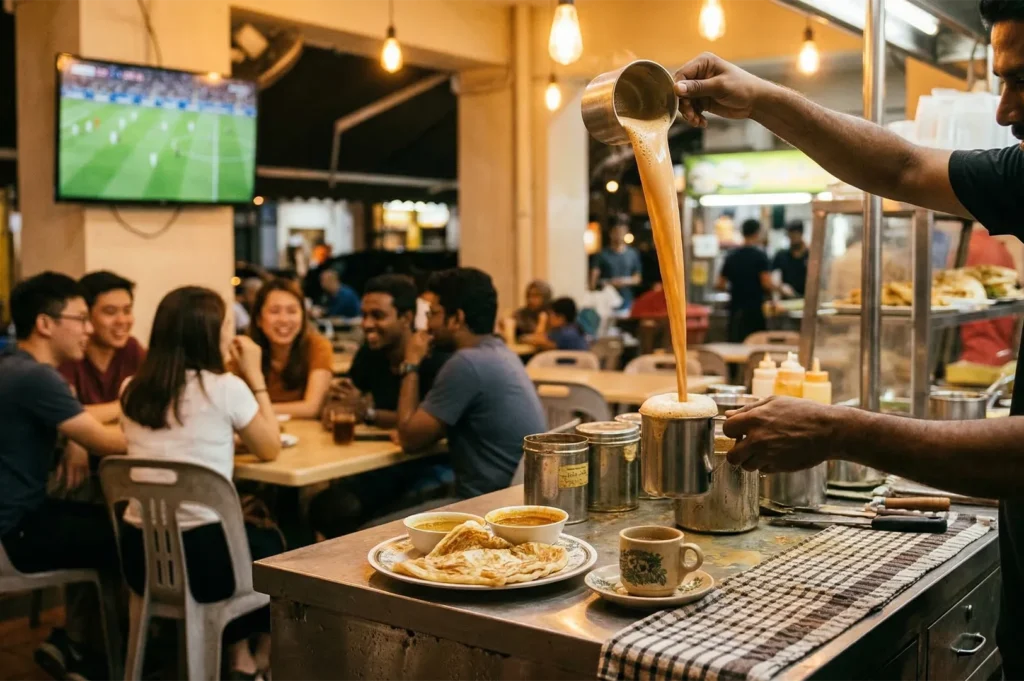
A trip to Malaysia isn’t complete without a late-night session at a mamak stall. Order a teh tarik and a roti canai. The food is secondary. The real experience is the atmosphere – the chatter, the football on TV, the sense of community. It’s where you’ll feel the true pulse of the country. I once spent three hours at a mamak in Bangsar, KL, with just a S$3 glass of tea. No one rushed me. That’s the point.
The Lingering Aftertaste: Why Every Meal in Malaysia is a Story
I believe that whether you’re practicing your Bahasa Malaysia at a bustling Mamak stall or indulging in seafood at a Thai-influenced restaurant in Southern Thailand, you’re part of a vibrant story. To me, Malaysian cuisine is a true celebration of diversity. From the first bite of satay to the last sip of a drink sweetened with condensed milk, my journey through these delicious malaysian foods is always a revelation.
The evolution of Malaysian food is a beautiful, complex story that’s still being written. Every plate tells a tale of migration, innovation, and community. So the next time you tuck into a bowl of laksa or a plate of nasi lemak, take a moment. You’re not just eating a meal; you’re tasting history.
For more delicious Malaysian dishes and culinary insights, click here to learn more.

The Coconut Spoon That Shapes Nyonya Kueh Salat
Eda Wong | August 21, 2026
By Eda Wong for Eat Drink Asia. Steam curls up from a tray in the back of the kitchen, and the whole room smells green. Pandan, crushed and knotted, pushed through wet cloth until the leaves give up their colour. An auntie leans over the tray with a spoon carved from coconut shell, dark and…
-
Chicken Nasi Goreng Recipe: What Leftover Rice Becomes After the Wok Gets Serious
Dio Asahi | August 20, 2026
There’s a container of rice at the back of my fridge most weeks. Cold, a little hard, forgotten from a dinner two nights ago. Some people see that and think of waste. I see the start of something better. Because leftover rice doesn’t want to be reheated. It wants to be fried. And when it…
-
The First Ladle of Miso Soup in a Tokyo Breakfast Shop
Dio Asahi | August 19, 2026
By Dio Asahi for Eat Drink Asia. The shop is barely wider than a hallway. Seven stools, a counter worn smooth, and behind it a woman ladling soup into small ceramic bowls before anyone has ordered it. Steam lifts off the surface and fogs the window against the cold morning. The bowl reaches me warm…
-
Chirashi Don Best Picks When Bowls Between the Sushi Counter and Lunch Are the Current Mood
Eat Drink Asia Team | August 18, 2026
There’s a specific kind of hunger that a chirashi don answers. It’s not the hunger for a full sushi omakase, with its slow ceremony and its quiet counter watching. And it’s not the hunger for something thrown together and forgotten by three o’clock. It sits somewhere in between — fish and rice in one bowl,…
-
Kopi Through the Cloth: Why the Strain Matters
Eda Wong | August 17, 2026
By Eda Wong for Eat Drink Asia. It is not yet seven, and the uncle at Heap Seng Leong has the pot going. He works the sock strainer over the tin cup with both hands, dipping and lifting, dipping and lifting, coaxing the coffee through the worn cloth. Steam rises between his fingers. The smell…
-
SBCD Korean Tofu House and the Comfort Logic of Bubbling Soondubu
Eda Wong | August 15, 2026
It was raining the afternoon I went. Not the polite kind, the sort that drums against the glass of Guoco Tower and makes you glad you’re already underground. I hadn’t planned on soondubu. I’d planned on something quick, something I could eat between the errands piling up in my head. But the rain does something…
-
The Knife Work at Hanashizuku Japanese Cuisine, Three Floors Above the Noise
Eda Wong | August 14, 2026
By Eda Wong for Eat Drink Asia. The lift doors open on a floor of Cuppage Plaza that has seen better decades. Peeling signage. A corridor that smells faintly of old carpet and cigarette smoke drifting from somewhere. Then a door slides shut behind me, and the noise falls away. Inside Hanashizuku Japanese Cuisine, the…
-
Todamgol Restaurant and the Comfort Logic Behind Famous Korean Foods
Dio Asahi | August 13, 2026
It was close to nine on a Friday when I finally found the door. Tanjong Pagar was doing its usual thing, full tables spilling onto five-foot ways, soju bottles catching the light, someone laughing too loudly two doors down. I almost walked past Todamgol. Then the smell reached me. Fermented, smoky, a little sharp. The…
-
The Same Grill, Three Decades On, at Kazu Sumiyaki Restaurant
Dio Asahi | August 12, 2026
By Dio Asahi for Eat Drink Asia. The lift opens on the fourth floor of Cuppage Plaza and the smoke finds me before the door does. Charcoal, dark and earthy, threaded through with something richer — fat meeting fire. I follow it down a narrow corridor, past shuttered shops and flickering signage, until I reach…
-
Popular Korean Cuisine Has a Memory: Why Famous Korean Food Feels So Complete
Eat Drink Asia Team | August 11, 2026
The first time I ordered kimchi jjigae in Singapore, I made a small mistake. It came bubbling in a stone pot, and I ate it like soup, spoonful after spoonful, straight down, until my mouth was on fire and the bowl was half gone. The auntie across the counter watched me for a moment, then…