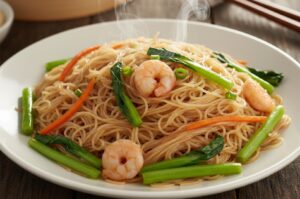
I used to think I understood Malaysian food. As a Singaporean, it’s practically in my DNA, right? Nasi lemak for breakfast, a cheeky roti canai for supper – I thought I had it all figured out. Then I spent a week eating my way through Penang and Kuala Lumpur, and I realised I knew absolutely nothing. What I thought was a simple plate of food was actually a history lesson, a story of trade routes, migration, and centuries of culinary conversations.
The food we see on the plate today isn’t how it always was. It’s a living document, constantly edited by history. That beef rendang you love? Its evolution tells a story of preservation before refrigeration. That bowl of laksa? It’s a map of maritime trade routes. To really get Malaysian food, you have to look past the deliciousness and see the soul of the dish – the story of how it got there.
“What is “Authentic” Malaysian Food, Anyway?
The truth about “authenticity” in Malaysia is that it is a moving target. I see malaysian cuisine as the original fusion, a melting pot of Malay, Chinese, Indian, and Indigenous cultures.
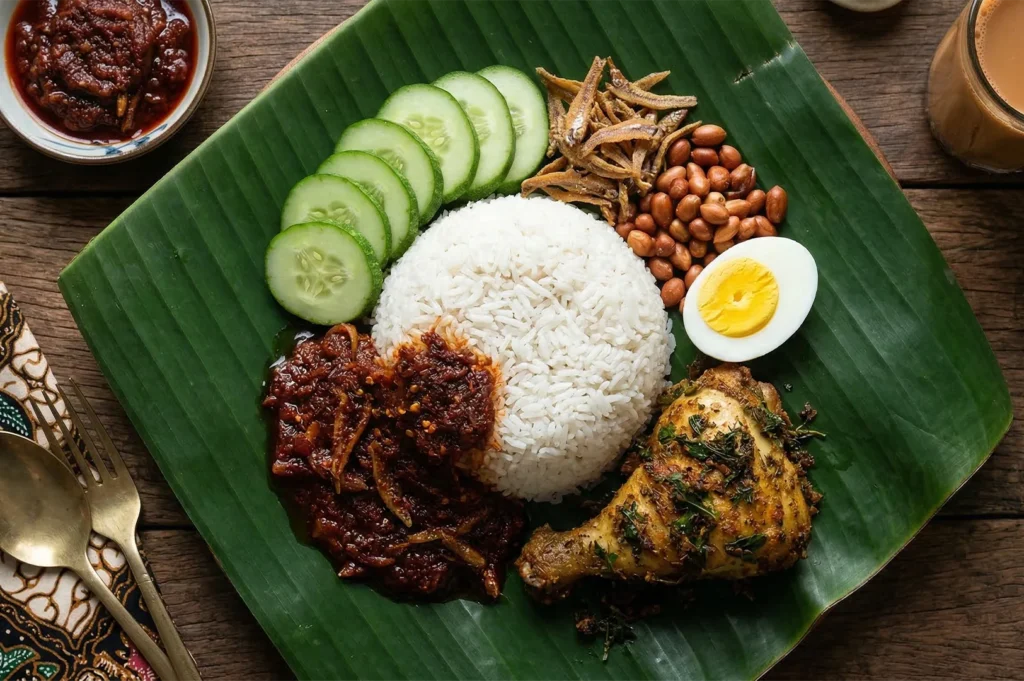
Take Nasi Lemak, for example. I consider it the national dish, yet its components tell a global story. The rice is quintessentially Malay, steamed with coconut milk, but the sambal? That fiery chili paste exists because of trade routes. A standard plate is a harmony of malaysian dishes:
- The Essentials: Rice cooked in coconut cream, served with fried anchovies, roasted peanuts, cucumber slices, and a hard boiled egg.
- The Additions: Whether it’s a Chinese-style fried chicken wing or an Indian-inspired beef curry, the plate becomes a snapshot of the country.
- The Soul: It is the first bite of that rich shrimp paste sambal that defines the malaysian food experience.
Rendang: From Preservation to Celebration
I will never forget my first bite of a truly mind-blowing beef rendang in Kuala Lumpur. Unlike the saucy versions found in Singapore, this was a dry “rendang tok.” The meat was slow cooked for several hours until the coconut milk evaporated, leaving the beef fibers coated in a dark, intensely fragrant spice paste.
Originally a preservation method for the Minangkabau people, this cooking process allowed the meat to stay tasty for weeks. Today, it remains a favourite malaysian dish, typically served during celebrations. It is a labor of love where herbs like galangal and lemongrass create a symphony of malaysian flavors.
The Great Laksa Debate: A Map in a Bowl
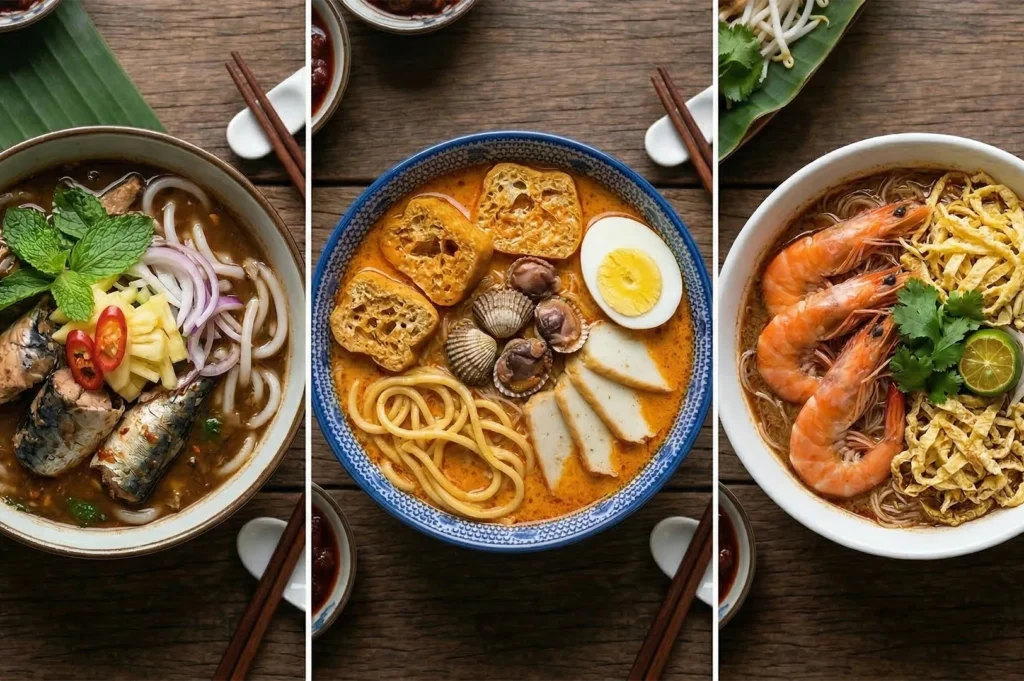
Few dishes spark as much debate as laksa. To me, it isn’t just a noodle dish; it is a declaration of regional identity.
- Assam Laksa: In Penang, this is the king. It’s a sour fish-based noodle soup pungent with tamarind, onion, and shrimp paste. The thick rice noodles cut through the sharp, tangy broth.
- Curry Laksa: Traveling down to Melaka, I find curry laksa (or Nyonya Laksa). This bowl is enriched with coconut milk, reflecting the spice trade’s influence.
- Laksa Sarawak: In East Malaysia, the recipe shifts again, using a complex spice paste that balances chicken and shrimp notes.
The Sweet Art of Patience: Kuih and Roti Canai
Malaysian food culture is also defined by its snacks. Kuih, colorful, bite-sized sweets, require incredible precision. Whether it’s the steamed layers of kuih lapis or onde-onde filled with shrimp or palm sugar, these treats are a legacy of craftsmanship.
Similarly, the roti canai (or roti prata) is a staple indian-influenced food in malaysian life. Skillfully flipped and served with curry sauces or condensed milk, it is the ultimate comfort food.
Hokkien Mee and Char Koay Teow: The High Heat of the Wok
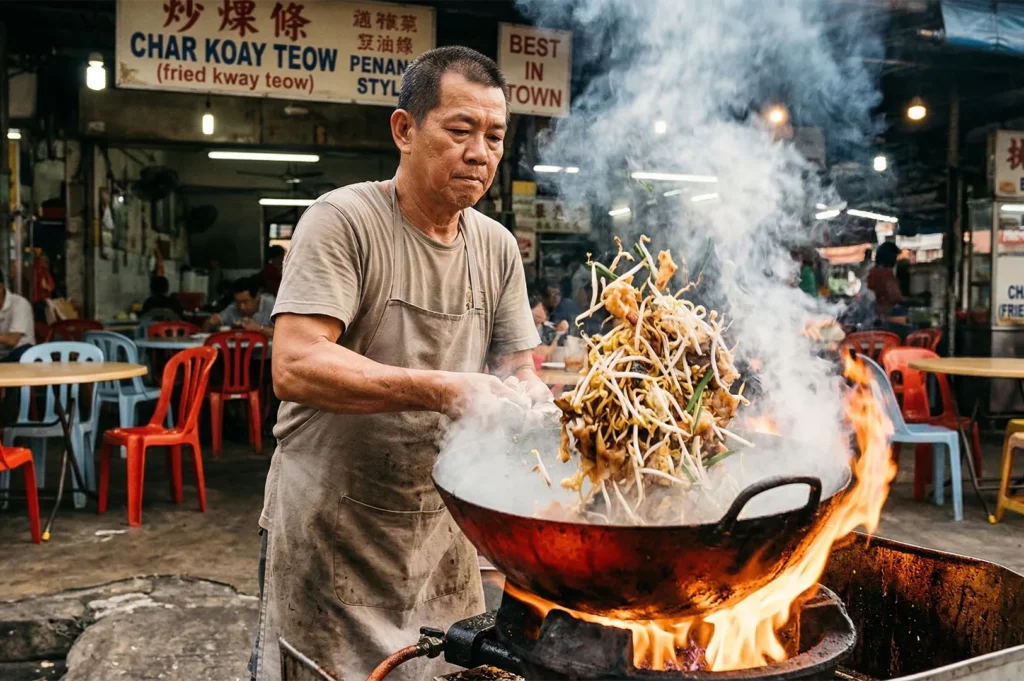
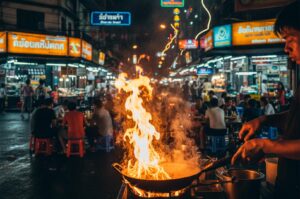
To round out my malaysian food guide, I must look at the stir fried legends found in every hawker center from Penang to Kuala Lumpur.
- Hokkien Mee: This tasty dish features thick yellow noodles braised in dark soy sauce. Hokkien Mee is often cooked with pork, fish cake, and chinese sausage, topped with crispy fried pork lard.
- Char Koay Teow: Using wide rice noodles (or flat rice noodles), Char Koay Teow is stir fried over high heat. The addition of shrimp, egg, and bean sprouts creates a smoky taste that is emblematic of malaysian chinese cuisine.
Nasi Kandar and Grilled Fish: Hearty Regional Favorites
In the north, nasi kandar allows diners to customize their steamed rice with a variety of curry options. Meanwhile, along the coast, grilled fish, marinated in herbs and spices and cooked over charcoal, highlights the freshness of local fish. These malaysian dishes are often served on a banana leaf to enhance the aroma.
Hainanese Chicken Rice: A Cultural Staple
Even a simple dish like hainanese chicken rice carries weight. The rice is cooked in chicken fat and garlic, served with poached meat and a side of soy sauce and chili paste. It is a hearty meal that proves malaysian cooking doesn’t always need to be spicy to be delicious.
Experience Malaysian Food Like a Local
Exploring Malaysian food is one of the most rewarding travel experiences you can have. But you have to go beyond the tourist traps. Here’s my advice for doing it right.
1. Eat Where the Locals Eat.
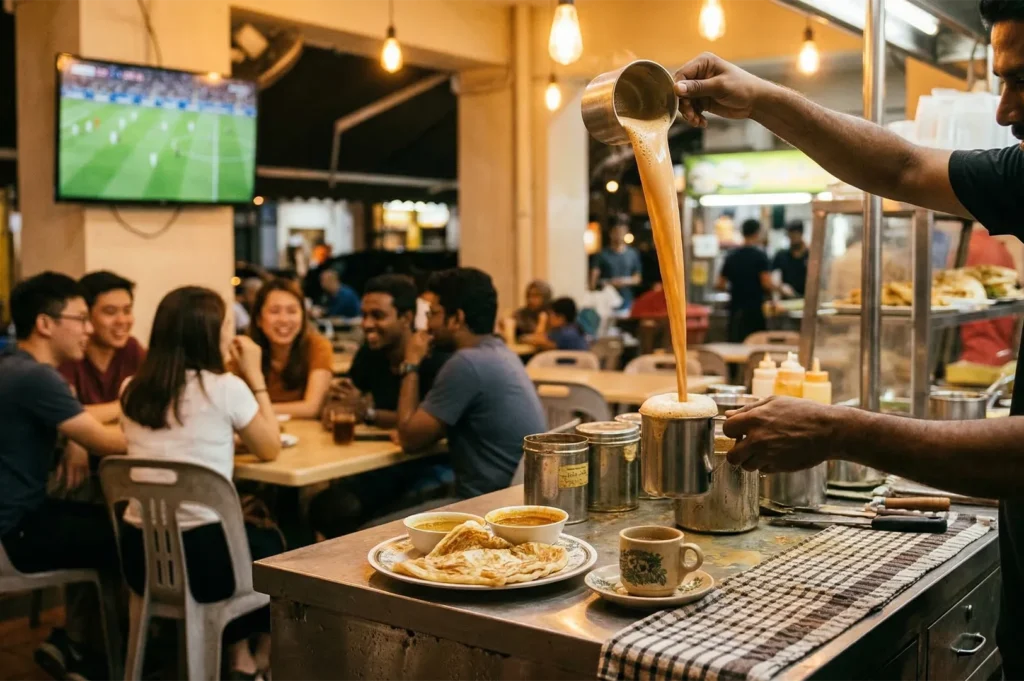
My best meals have always been in unassuming kopitiams or roadside stalls with plastic chairs and zero ambience. If there’s a queue of locals at 11 am on a Tuesday, join it. That’s where the magic is.
2. Ask Questions.
Don’t just point and eat. Ask the stall owner what their speciality is. Ask them what makes their rendang different. Malaysians are incredibly proud of their food, and most are happy to share their stories.
3. Embrace the “Mamak” Culture.
A trip to Malaysia isn’t complete without a late-night session at a mamak stall. Order a teh tarik and a roti canai. The food is secondary. The real experience is the atmosphere – the chatter, the football on TV, the sense of community. It’s where you’ll feel the true pulse of the country. I once spent three hours at a mamak in Bangsar, KL, with just a S$3 glass of tea. No one rushed me. That’s the point.
The Lingering Aftertaste: Why Every Meal in Malaysia is a Story
I believe that whether you’re practicing your Bahasa Malaysia at a bustling Mamak stall or indulging in seafood at a Thai-influenced restaurant in Southern Thailand, you’re part of a vibrant story. To me, Malaysian cuisine is a true celebration of diversity. From the first bite of satay to the last sip of a drink sweetened with condensed milk, my journey through these delicious malaysian foods is always a revelation.
The evolution of Malaysian food is a beautiful, complex story that’s still being written. Every plate tells a tale of migration, innovation, and community. So the next time you tuck into a bowl of laksa or a plate of nasi lemak, take a moment. You’re not just eating a meal; you’re tasting history.
For more delicious Malaysian dishes and culinary insights, click here to learn more.

Tea Room by Ki-setsu: A Curated Journey Through Chinese Tea in the Heart of Singapore
Dio Asahi | February 25, 2026
Most people arrive at Chinese tea the way they arrive at any beverage: thirsty, curious, maybe looking for something sweet or soothing. But traditional chinese tea isn’t built like a single drink. It’s a network: leaf origin, processing choices, vessel physics, water, pacing, and the quiet social technology of sitting down long enough for a…
-
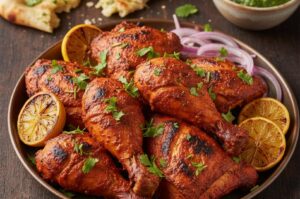
Tandoori Chicken: The Signature Indian Chicken Dish
Eda Wong | February 24, 2026
Tandoori chicken stands tall among the best Indian chicken recipes. With its vibrant hue and smoky aroma, this iconic Indian chicken dish is celebrated in Indian restaurants worldwide. Emerging from Punjab, it pairs perfectly with fragrant basmati rice or fresh naan and is a favorite for anyone who loves bold flavors. The hallmark of tandoori…
-
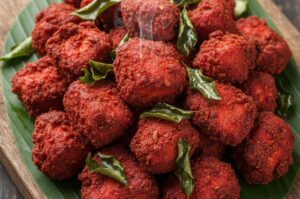
Chicken 65: A Fiery Indian Chicken Recipe You Must Try
Eat Drink Asia Team | February 21, 2026
We’ve spent months tracking the ‘shatter-rate’ of chicken across the South, and here’s the truth: most of what you find is a pale, food-colored imitation. The real Chicken 65 isn’t just spicy; it’s an atmospheric experience. It starts with the sharp, herbal snap of curry leaves hitting 180°C oil and ends with a deep, earthy…
-
Mastering the Art of Indian Dishes with Chicken
Eda Wong | February 19, 2026
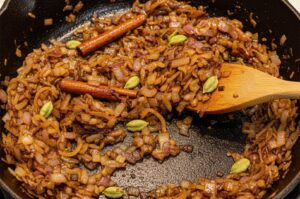
The story of India’s culinary identity is deeply tied to its poultry dishes. I remember my first attempt at an Indian chicken recipe, failing to brown the onions properly left the dish hollow, missing its soul. The sound of mustard seeds popping in hot oil signals layers of flavor to come. The steam from the…
-
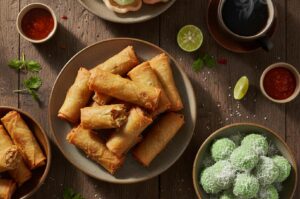
Crunch, Sweet, and Heat: The Irresistible Textures of Southeast Asian Snacks
Dio Asahi | February 17, 2026
In the humid, sticky heat of Southeast Asia, where your shirt clings to your back and the air is thick with the sharp scent of oxidising oil, there’s a particular clink that always gets me. It’s the sound of a metal spatula striking a wok, a rhythmic percussion that’s as familiar to me now as…
-
The Living Pantry: How Geography and Trade Shaped the Food in the Southeast Region
Eat Drink Asia Team | February 14, 2026
To understand the plate is to understand the map. If you were to trace the spice routes of the 15th century or follow the monsoon winds that carried merchant ships across the Indian Ocean, you would find yourself at the epicenter of the world’s most vibrant pantry. The food in the Southeast region of Asia…
-
A Symphony of Senses: Why Southeast Asian Food is the World’s Greatest Culinary Journey
Dio Asahi | February 12, 2026
If you were to stand at a busy intersection in Bangkok, Ho Chi Minh City, or Jakarta and close your eyes, your nose would tell you a story before your eyes ever could. There is a specific, intoxicating perfume that defines Southeast Asian food: the sharp tang of lime juice hitting a hot wok, the…
-
The Alchemy of the Wok: The Story of Singapore-Style Bee Hoon
Eda Wong | February 10, 2026
Across the humid evening air of Singapore, a rhythmic clatter echoes from hawker stalls to high-rise kitchens—the sound of a metal spatula against a seasoned wok. Within that intense heat, rice vermicelli noodles undergoes a profound transformation, absorbing the golden hues of curry powder, the savory depths of soy sauce, and the smoky “breath” of…
-
The Sizzle of the Wok: An Exploration of Fried Bee Hoon Across Southeast Asia
Eat Drink Asia Team | February 7, 2026
Across Southeast Asia, from bustling hawker centers to family kitchens, the sizzle of rice vermicelli noodles hitting a hot wok is a universal comfort. Few dishes capture the spirit of Asian noodle culture as well as fried bee hoon. This stir fry, made with thin rice noodles, delivers a tasty meal any time of the…
-
The Silk of the East: A Deep Dive into Bee Hoon and the Art of Rice Vermicelli
Eda Wong | February 5, 2026
Across the bustling kitchens of Southeast Asia, one humble ingredient has woven itself into the fabric of countless beloved dishes. Bee hoon, the delicate rice vermicelli that transforms from brittle strands into silky noodles, represents centuries of culinary tradition and innovation. Whether you’ve savored Singapore noodles in a hawker center or encountered fried bee hoon…