At a narrow lunch table in Bangkok, the bottle arrives before the rice has stopped steaming. It is clear glass, refilled many times, its plastic cap slightly stained from years of fingers and heat. Beside it sits a small bowl of sliced chillies floating in amber liquid, the cut edges pale and sharp. Someone nudges it towards the centre, not as an announcement but as a gesture of readiness. The spoon taps porcelain. The fan turns above us. From the kitchen comes the smell of garlic, hot oil, and fish sauce meeting flame for one brief, salty second.
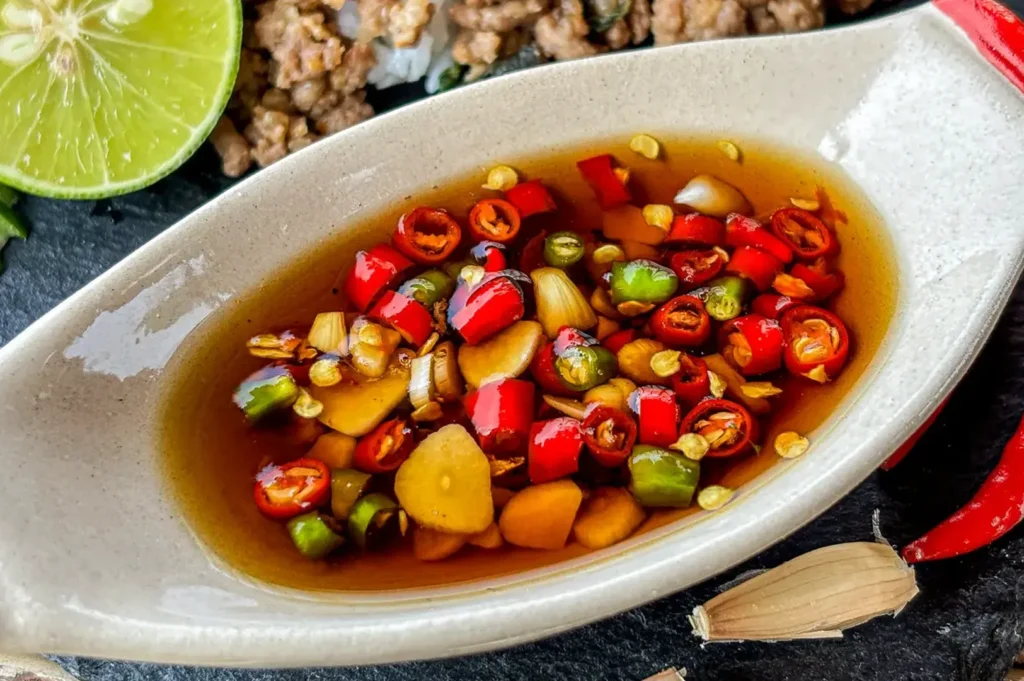
This is nam pla — น้ำปลา — pronounced roughly “nahm plah”, Thai fish sauce. In plain terms, it is a liquid seasoning made from fish and salt, left to transform slowly until it becomes clear, savoury, and deeply aromatic. At the table, it does not behave like a sauce poured for abundance. It works more quietly than that. A few drops can pull sweetness forward, sharpen a bowl of rice, or give soup a firmer edge. In many Thai meals, it appears as part of prik nam pla, fish sauce with sliced chillies, sometimes lime and garlic. The craft begins long before the table: in the patience of salting, pressing, waiting, and drawing off a liquid that carries depth without heaviness.
What interests Eat Drink Asia is not only its flavour, but the way people use it. At a shared table, seasoning is both personal and social. You adjust your own spoonful, not the whole dish. You taste first, then decide. Too much fish sauce can flatten a meal into salt; too little can leave it polite but unfinished. This small act teaches restraint without making restraint feel severe. It also holds memory. Someone may add more chillies because that is how their father ate noodles. Someone else may avoid touching the bottle because the cook has already balanced the dish. These choices happen quickly, almost invisibly, yet they reveal how people carry appetite, habit, and respect into the same bowl.
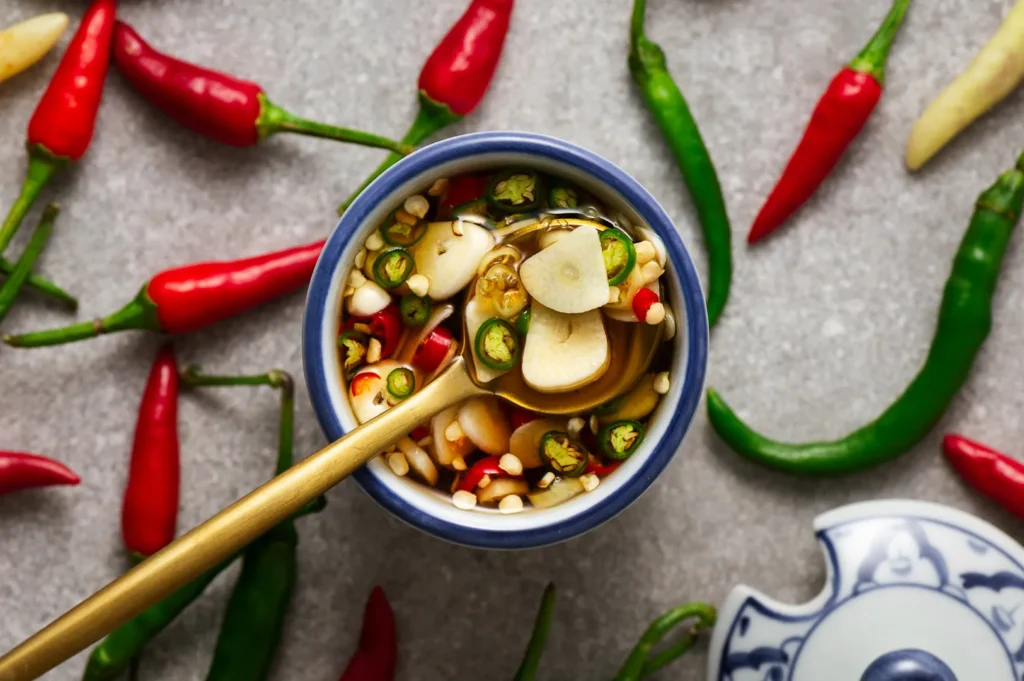
There is a tension now between convenience and care. Fish sauce comes in sachets with takeaway meals, in neat supermarket bottles, in polished restaurant cruets designed to look clean rather than lived in. None of this is wrong; food has to move with the speed of the city. But something changes when the table loses the small, shared grammar of seasoning. The old bottle with its cloudy rim asks for attention. It asks you to notice before you alter. It reminds you that flavour is not only built in the kitchen, but completed in relation to others.
By the end of lunch, the bowl of chillies has darkened slightly, its seeds resting at the bottom like sand. The bottle returns to the side of the table. Nothing dramatic has happened. Still, the meal feels more exact because of that quiet liquid, waiting to be used carefully.

The First Ladle of Miso Soup in a Tokyo Breakfast Shop
Dio Asahi | August 19, 2026
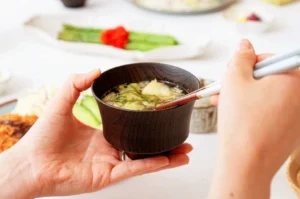
By Dio Asahi for Eat Drink Asia. The shop is barely wider than a hallway. Seven stools, a counter worn smooth, and behind it a woman ladling soup into small ceramic bowls before anyone has ordered it. Steam lifts off the surface and fogs the window against the cold morning. The bowl reaches me warm…
-
Chirashi Don Best Picks When Bowls Between the Sushi Counter and Lunch Are the Current Mood
Eat Drink Asia Team | August 18, 2026
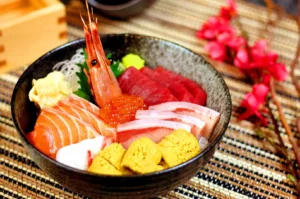
There’s a specific kind of hunger that a chirashi don answers. It’s not the hunger for a full sushi omakase, with its slow ceremony and its quiet counter watching. And it’s not the hunger for something thrown together and forgotten by three o’clock. It sits somewhere in between — fish and rice in one bowl,…
-
Kopi Through the Cloth: Why the Strain Matters
Eda Wong | August 17, 2026
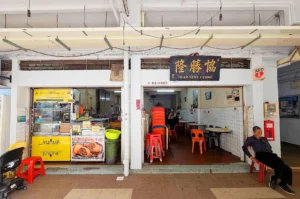
By Eda Wong for Eat Drink Asia. It is not yet seven, and the uncle at Heap Seng Leong has the pot going. He works the sock strainer over the tin cup with both hands, dipping and lifting, dipping and lifting, coaxing the coffee through the worn cloth. Steam rises between his fingers. The smell…
-
SBCD Korean Tofu House and the Comfort Logic of Bubbling Soondubu
Eda Wong | August 15, 2026
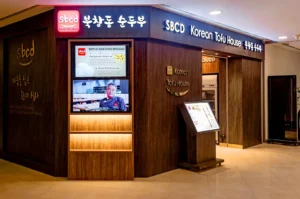
It was raining the afternoon I went. Not the polite kind, the sort that drums against the glass of Guoco Tower and makes you glad you’re already underground. I hadn’t planned on soondubu. I’d planned on something quick, something I could eat between the errands piling up in my head. But the rain does something…
-
The Knife Work at Hanashizuku Japanese Cuisine, Three Floors Above the Noise
Eda Wong | August 14, 2026
By Eda Wong for Eat Drink Asia. The lift doors open on a floor of Cuppage Plaza that has seen better decades. Peeling signage. A corridor that smells faintly of old carpet and cigarette smoke drifting from somewhere. Then a door slides shut behind me, and the noise falls away. Inside Hanashizuku Japanese Cuisine, the…
-
Todamgol Restaurant and the Comfort Logic Behind Famous Korean Foods
Dio Asahi | August 13, 2026
It was close to nine on a Friday when I finally found the door. Tanjong Pagar was doing its usual thing, full tables spilling onto five-foot ways, soju bottles catching the light, someone laughing too loudly two doors down. I almost walked past Todamgol. Then the smell reached me. Fermented, smoky, a little sharp. The…
-
The Same Grill, Three Decades On, at Kazu Sumiyaki Restaurant
Dio Asahi | August 12, 2026
By Dio Asahi for Eat Drink Asia. The lift opens on the fourth floor of Cuppage Plaza and the smoke finds me before the door does. Charcoal, dark and earthy, threaded through with something richer — fat meeting fire. I follow it down a narrow corridor, past shuttered shops and flickering signage, until I reach…
-
Popular Korean Cuisine Has a Memory: Why Famous Korean Food Feels So Complete
Eat Drink Asia Team | August 11, 2026
The first time I ordered kimchi jjigae in Singapore, I made a small mistake. It came bubbling in a stone pot, and I ate it like soup, spoonful after spoonful, straight down, until my mouth was on fire and the bowl was half gone. The auntie across the counter watched me for a moment, then…
-
Raffles Place Food Has the Restaurants That Understand the CBD Lunch Rush
Eda Wong | August 8, 2026
I used to think lunch in the CBD was a lost cause. You get an hour, maybe less. The lift takes ten minutes just to reach the ground floor. By the time you’ve queued, ordered, and found a corner to eat in, you’re already checking the clock. For a while, I gave up and just…
-
The Tamarind Sourness Inside a Filipino Sinigang Pot
Eda Wong | August 7, 2026
By Eda Wong for Eat Drink Asia. The pot has been going for a while now, and the whole kitchen knows it. Steam curls up from the surface, carrying that sharp-sour smell that reaches you before anything else. It’s not a gentle aroma. It pricks at the back of your throat a little, makes your…