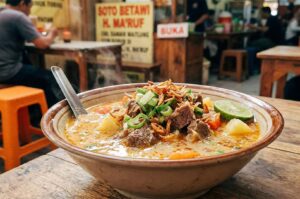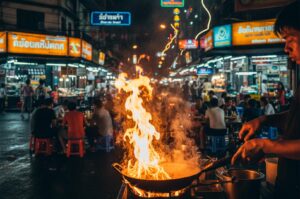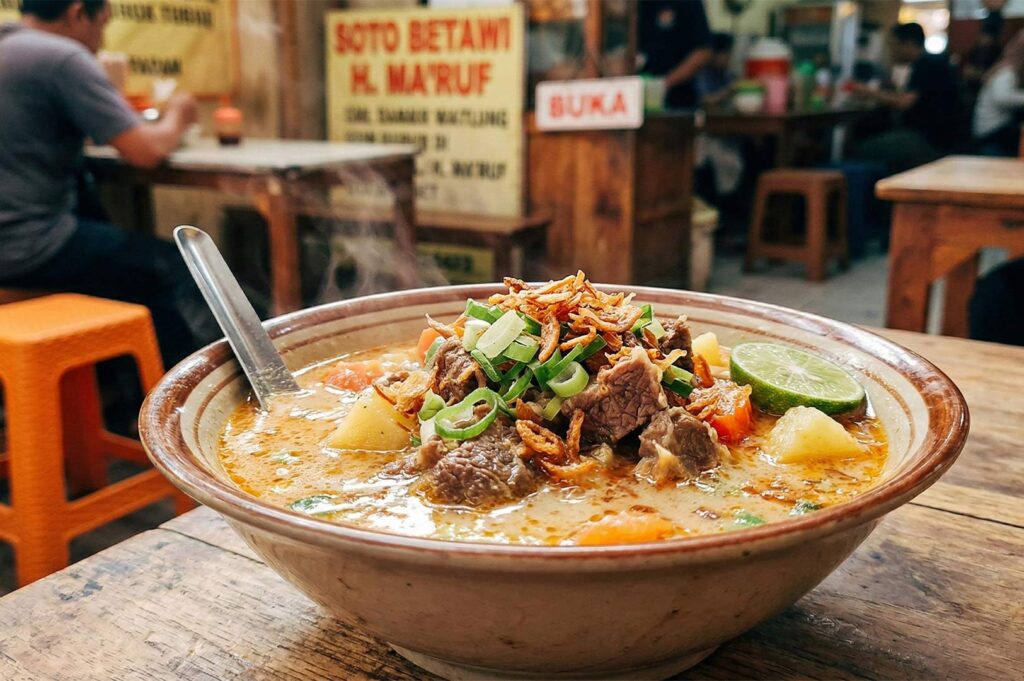
I still remember my first "real" bowl of Indonesian soto. Sitting on a low plastic stool in a cramped warung, I ordered Soto Betawi, expecting it to be like the clear Soto Ayam from Singaporean weddings. I was wrong. The rich, milky broth was intense, creamy, and boldly spiced. That first spoonful rewired my idea of "soup."
In Singapore, soups like prawn mee and bak kut teh are beloved, but Indonesian soto is now moving into the mainstream, appearing in hip cafes and food courts, reshaping our culinary scene. If you’re curious about soto or confused by its varieties like Betawi and Lamongan, this guide will help you explore why this humble soup is shaping the future of Asian food traditions.
The Soto System: Why This Isn't "Just Chicken Soup" in Asiatic Food
Let’s debug the biggest misconception in the scene: calling Soto "Indonesian chicken soup." To be honest, that’s like calling a smartphone a "calculator", it’s a massive underestimation of the architecture. In reality, Soto is a versatile genre of asiatic food that adapts its "Source Code" based on the regional trade routes it inhabits.
What makes this dish a "heritage in a bowl" is its incredible complexity. A single serving is a data map of the spice trade: Indian turmeric, Middle Eastern aromatics, and Chinese noodle traditions all colliding in a single broth. Whether you are at a local Malay stall in Singapore or a roadside warung in Jakarta, you are tasting a centuries-old migration of flavor.
The Regional Branches (A Quick Breakdown of Southeast Asia's Regional Specialties)
- The Jakarta Cream (Soto Betawi): A rich, beef-forward broth enriched with coconut milk. It’s high-fat, high-comfort, and perfectly emulsified.
- The East Java Crunch (Soto Lamongan): A turmeric-heavy chicken base defined by koya, a savory, garlic-prawn powder that acts as a natural thickener, enhanced with shrimp paste.
- The Sumatran Clarity (Soto Padang): A clear, beef-stock architecture featuring crispy dendeng (beef slices) for a high-contrast texture.
- The Singaporean Pivot: Locally, our Soto Ayam is typically lighter and clearer, a "lite" version of the heavy Indonesian spice bombs. It's the perfect entry point for a palate craving comfort without the "grease" of a heavy coconut base.
The current "Soto Boom" in Singapore isn't a coincidence; it’s a reflection of our evolving palate. We are moving toward dishes that offer sensory specificity, where the lemongrass is sharp, the galangal is earthy, and the lime provides a necessary "reset" for the taste buds. It sits right at the intersection of our shared Malay-Muslim heritage and a global craving for soulful, complex comfort food.
Street Food Protocol: How to Optimize Your Soto Bowl
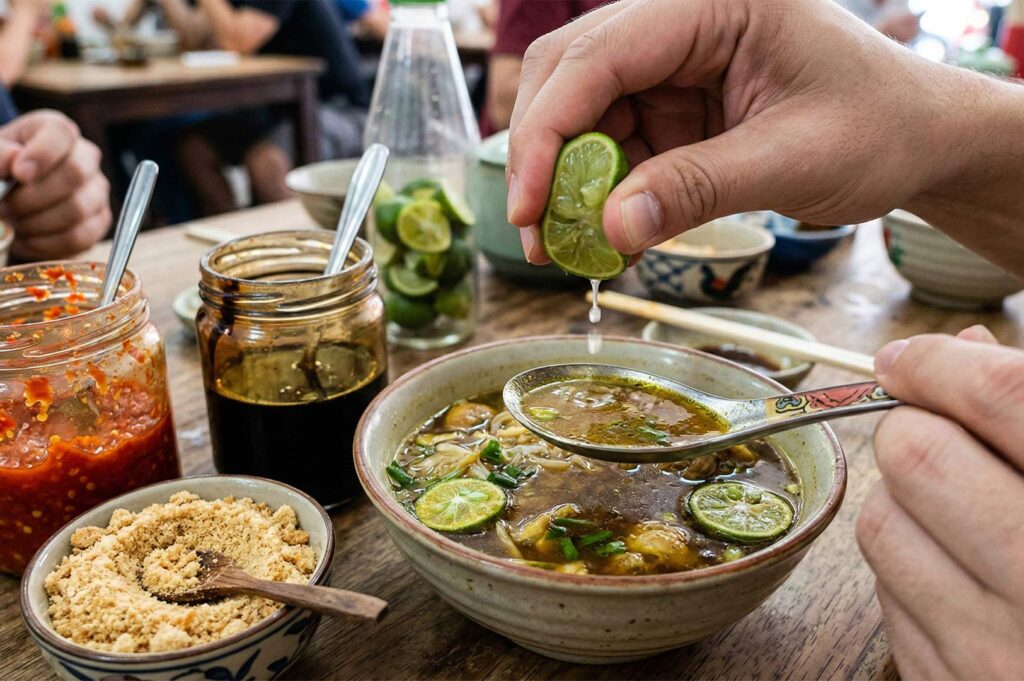
If you’re a first-timer, the condiment tray at an authentic Indonesian stall can feel like a complex dashboard with no manual. To be honest, I spent my early years as a "dump-and-stir" amateur before I realized that Soto is a modular system that requires a specific sequence to reach its full potential.
Step 1: Choose Your Architecture
Don’t just point and hope. Your choice should depend on your preferred "fat-to-spice" ratio:
- The Entry Level (Soto Ayam Lamongan): Chicken drumsticks-based and approachable. It bridges the gap between familiar comfort and exotic aromatics.
- The High-Fat Model (Soto Betawi): If you’re a fan of laksa or rich curries, this coconut-milk-heavy beef broth is your target.
- The Clean Build (Soto Padang): A clear, beef-forward broth that relies on sharp spices and crispy dendeng (beef) for texture.
Step 2: The Logic of Condiments
Respect the 4–6 hours of labor in that broth, taste it plain first. Then, begin the calibration:
- The Acid (Lime): Squeeze that jeruk nipis. The acidity doesn't just "sour" the soup; it cuts through the fat and "activates" the galangal.
- The Heat (Sambal): Indonesian sambal is ferociously spicy. Treat it like a software update, install it slowly, one teaspoon at a time.
- The Umami (Koya): In Soto Lamongan, this prawn-garlic powder is the secret weapon. It dissolves into the liquid, thickening the architecture of the soup.
- The Sweetness (Kecap Manis): I usually prefer just a drop of this dark soy sauce to add a caramelized finish.
Strategic Vulnerability: Learn from my "System Error", never wear white. I once spent a 2026 lunch hour tackling a turmeric-heavy Soto and ended up walking into a 3 PM meeting looking like a Jackson Pollock painting. Turmeric doesn't just stain; it marks its territory.
The Carb Backbone: Why Soto Rejects the Fried Rice Protocol
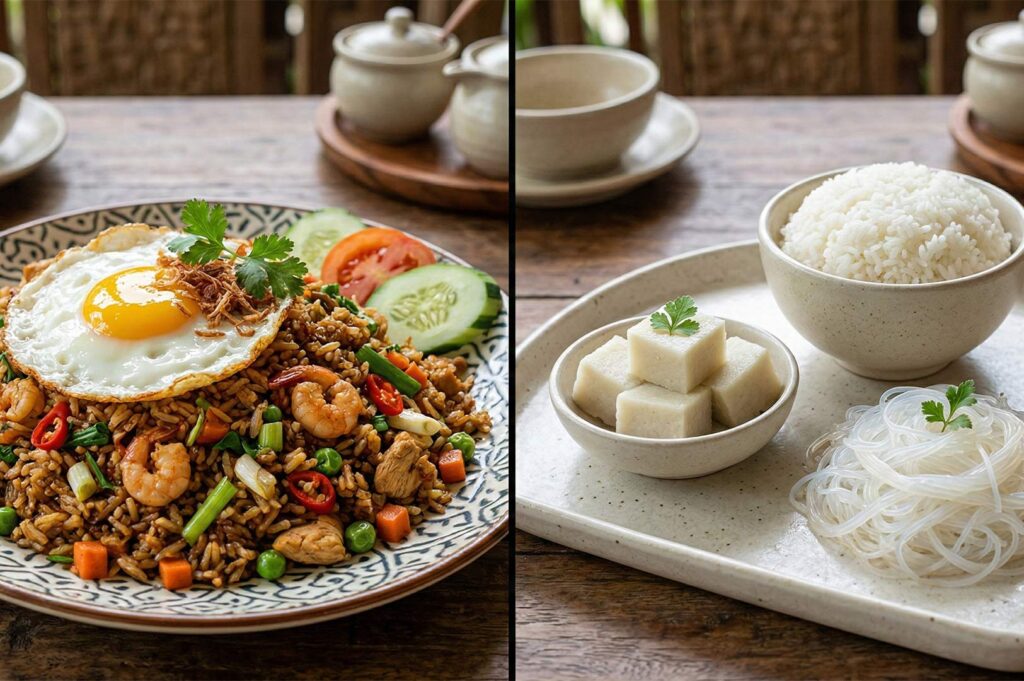
In my analysis of Asian recipes, no bowl is complete without a functional side of rice. But here is where Soto deviates from the standard operating procedure.
While fried rice, often topped with a crispy fried egg, is the undisputed king of Chinese stalls and global Asian cuisines, it is fundamentally too "busy" for a complex broth. Fried rice recipes rely on a mix of fresh vegetables, garlic, and heavy soy sauce to create a standalone meal.
Soto, however, requires a "blank canvas." It’s about textural utility; the carb exists solely to serve the soup. To get the "System Logic" right, you need:
- Steamed Rice: Neutral and porous, acting as the perfect sponge for savory liquids.
- Lontong (Sticky Rice Cake): Provides a dense, broth-absorbing bite that holds its shape even when submerged.
- Vermicelli: Often added to provide a slippery, light contrast to the heavier proteins.
The Culinary Logic of Trade and Tradition
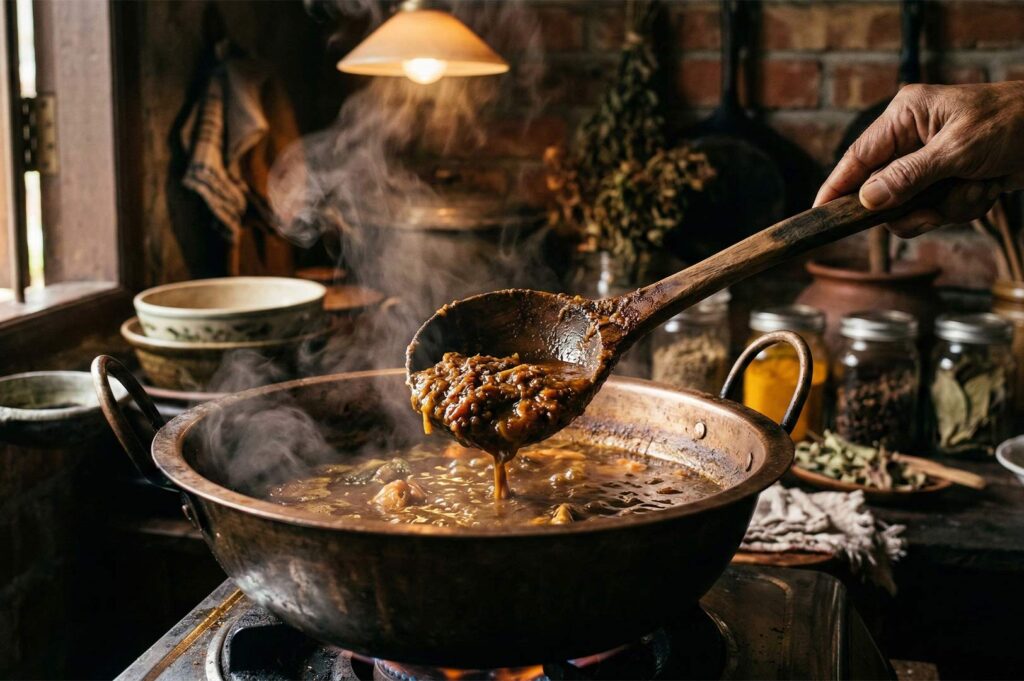
Soto is a unique hybrid that reflects centuries of maritime exchange. It occupies a specialized branch of Asian dishes where flavors aren't just tossed in a pan; they are integrated over hours of labor.
Unlike other regional powerhouses, Soto follows a "Slow Simmer" philosophy:
- vs. Japanese Cuisine: While Japan focuses on the precision of fresh fish and the seasonality of sushi, Soto focuses on depth and spice extraction.
- vs. Chinese Cuisine: Where Chinese cooking emphasizes high-heat stir-fried techniques and the fermented punch of fish sauce, Soto utilizes a modular broth system.
Soto borrows the pungent shrimp paste and curry leaves found in South and Southeast Asian traditions but applies them to a structured broth. It is a culinary "Source Code" that has been refined by geography and trade, ensuring that every bowl delivers a consistent, time-tested hit of umami.
While the Indonesian bumbu relies on a complex, heated layering of spices, those seeking to pivot toward a cleaner 'Source Code' of flavor, by discovering exactly where to find the freshest sashimi in Singapore, will realize that Japanese raw prep offers the ultimate masterclass in ingredient precision.
The Flavor Drivers: From Black Pepper to Bumbu
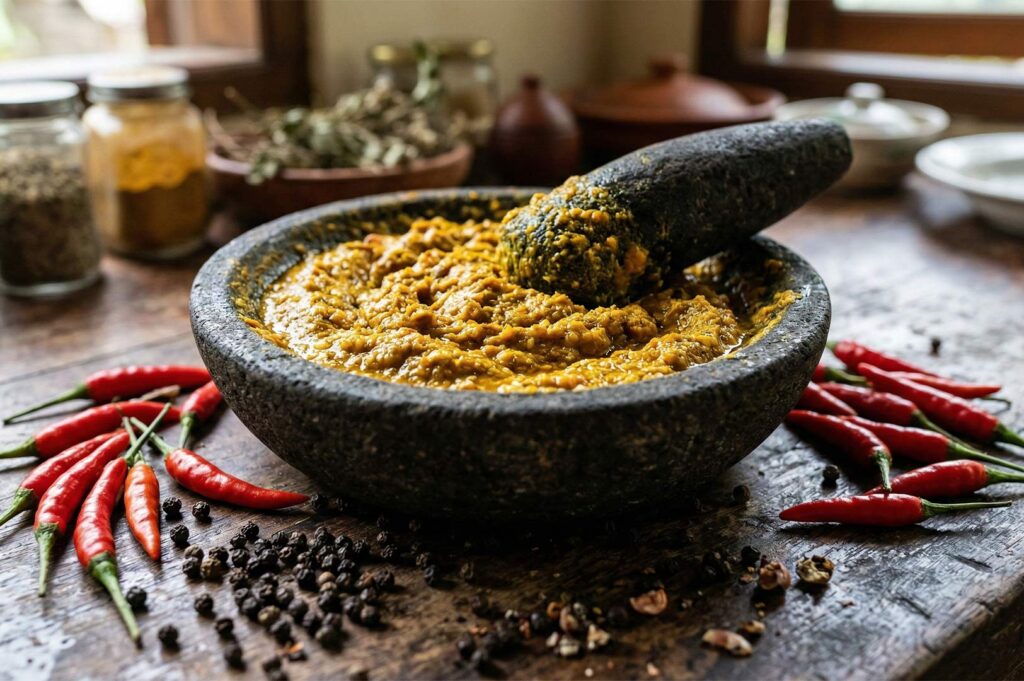
If you look at the "Source Code" of popular dishes across Asian cuisines, spices like black pepper, garlic, and chili peppers are the fundamental drivers. You see this in the high-heat kick of Mongolian cuisine and the layered aromatics of Bangladeshi cuisine. But in Soto, these aren't just spices; they are part of a Bumbu (spice paste). Whether it’s the heat of a Korean bibimbap or the fragrant basmati rice of an Indian curry, the goal is the same: to excite the taste buds. In Soto, however, the black pepper and chili serve to cut through the Lemak (richness), providing a "reset" button for your palate.
The Comfort Food Equilibrium
At its core, Soto represents the heart of asiatic food. It sits on the same shelf of comfort as the savory tteokbokki of Korea or a perfectly balanced pad thai from Thailand. These Asian dishes are totally worth exploring because they offer more than just a meal, they offer a cultural heritage you can taste. Whether you’re at a high-end restaurant or a humid street food stall, the comforting textures and rich flavors of these Asiatic food traditions are what keep our culinary future grounded.
Navigating the Future of the Bowl
Understanding Soto isn’t just about the flavor; it’s about recognizing the "System Errors" that ruin a good experience. To be honest, I’ve navigated my fair share of "Oil Slicks" (the result of poor temperature control in Soto Betawi) and tasted enough rancid Koya (stale prawn powder) to know that authenticity is fragile.
Watch out for these red flags:
- Flat Flavor: Stalls that rely on pre-mix powders instead of a fresh, hand-ground Bumbu.
- Over-Sweetness: Broths that are sweetened to cater to local palates, losing that savory "Soul of the East."
- Stale Textures: Toppings that have lost their crunch or oils that have gone "heavy."
The Final Source Code: Textural Mastery
While most diners focus purely on the broth, the structural integrity of the experience often relies on the hardware: the delicate bee hoon strands. In a traditional Soto, these fine rice vermicelli noodles act as the ultimate delivery system, their high surface area trapping the aromatic spices and ensuring every bite is saturated with flavor.
To master your next bowl, keep this "User Guide" in mind:
- The Heat Check: Remember, the broth is your blank canvas. The spice level is a user-controlled variable—always add the sambal yourself to calibrate the heat to your specific tolerance.
- The Carb Load: Balance the "System Logic" of your meal. Whether you opt for the springy, light contrast of glass noodles or the dense, broth-absorbing bite of Lontong (rice cake), the texture is the true key to the comfort.
- The Adventurous Update: Don't be afraid to patch your palate with something new. If you're feeling bold, try the beef lung (Paru); its unique, spongy texture is an elite sponge for the Bumbu.

The Global Soup Bowl: How Indonesian Soto Shapes the Future of Asiatic Food Traditions
Dio Asahi | March 3, 2026
I still remember my first “real” bowl of Indonesian soto. Sitting on a low plastic stool in a cramped warung, I ordered Soto Betawi, expecting it to be like the clear Soto Ayam from Singaporean weddings. I was wrong. The rich, milky broth was intense, creamy, and boldly spiced. That first spoonful rewired my idea…
-
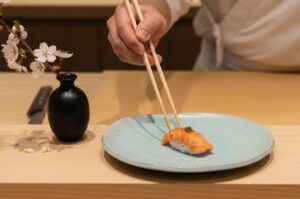
Shun: Japan’s Seasonal Treasures – A Deep Dive Into the Ingredients Behind True Omakase
Eat Drink Asia Team | February 28, 2026
In the world of Asian food, few dining experiences capture the soul of traditional Japanese food culture like omakase. At a premier omakase restaurant, diners entrust their meal entirely to the chef, whose artistry is guided not just by mastery, but by shun—the appreciation of seasonal and fresh ingredients at the absolute peak of their…
-
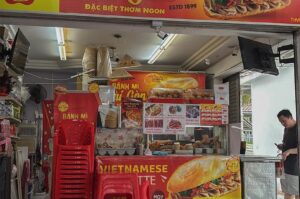
My Trip to Bánh Mì Saigon and How It Compares to Best Food in Singapore
Eda Wong | February 26, 2026
Located in the bustling neighborhood of Ang Mo Kio, Bánh Mì Saigon offers a taste of Vietnam right here in Singapore. From traditional bánh mì sandwiches to hearty pho bowls and refreshing Vietnamese iced coffee, this restaurant has it all. I arrived at Bánh Mì Saigon on a busy Saturday evening and was immediately drawn…
-
Tea Room by Ki-setsu: A Curated Journey Through Chinese Tea in the Heart of Singapore
Dio Asahi | February 25, 2026
Most people arrive at Chinese tea the way they arrive at any beverage: thirsty, curious, maybe looking for something sweet or soothing. But traditional chinese tea isn’t built like a single drink. It’s a network: leaf origin, processing choices, vessel physics, water, pacing, and the quiet social technology of sitting down long enough for a…
-
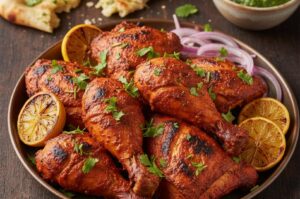
Tandoori Chicken: The Signature Indian Chicken Dish
Eda Wong | February 24, 2026
Tandoori chicken stands tall among the best Indian chicken recipes. With its vibrant hue and smoky aroma, this iconic Indian chicken dish is celebrated in Indian restaurants worldwide. Emerging from Punjab, it pairs perfectly with fragrant basmati rice or fresh naan and is a favorite for anyone who loves bold flavors. The hallmark of tandoori…
-
Chicken 65: A Fiery Indian Chicken Recipe You Must Try
Eat Drink Asia Team | February 21, 2026
We’ve spent months tracking the ‘shatter-rate’ of chicken across the South, and here’s the truth: most of what you find is a pale, food-colored imitation. The real Chicken 65 isn’t just spicy; it’s an atmospheric experience. It starts with the sharp, herbal snap of curry leaves hitting 180°C oil and ends with a deep, earthy…
-
Mastering the Art of Indian Dishes with Chicken
Eda Wong | February 19, 2026
The story of India’s culinary identity is deeply tied to its poultry dishes. I remember my first attempt at an Indian chicken recipe, failing to brown the onions properly left the dish hollow, missing its soul. The sound of mustard seeds popping in hot oil signals layers of flavor to come. The steam from the…
-
Crunch, Sweet, and Heat: The Irresistible Textures of Southeast Asian Snacks
Dio Asahi | February 17, 2026
In the humid, sticky heat of Southeast Asia, where your shirt clings to your back and the air is thick with the sharp scent of oxidising oil, there’s a particular clink that always gets me. It’s the sound of a metal spatula striking a wok, a rhythmic percussion that’s as familiar to me now as…
-
The Living Pantry: How Geography and Trade Shaped the Food in the Southeast Region
Eat Drink Asia Team | February 14, 2026
To understand the plate is to understand the map. If you were to trace the spice routes of the 15th century or follow the monsoon winds that carried merchant ships across the Indian Ocean, you would find yourself at the epicenter of the world’s most vibrant pantry. The food in the Southeast region of Asia…
-
A Symphony of Senses: Why Southeast Asian Food is the World’s Greatest Culinary Journey
Dio Asahi | February 12, 2026
If you were to stand at a busy intersection in Bangkok, Ho Chi Minh City, or Jakarta and close your eyes, your nose would tell you a story before your eyes ever could. There is a specific, intoxicating perfume that defines Southeast Asian food: the sharp tang of lime juice hitting a hot wok, the…