When visiting Hokkaido, Japan’s northernmost island, food lovers are greeted with some of the most highly regarded seafood specialties in the world. Hokkaido is famous for its abundance of fresh seafood and rich fishing grounds, thanks to the surrounding Sea of Japan, Pacific Ocean, and Sea of Okhotsk. These nutrient-packed waters yield a wide range of marine delicacies, celebrated for their natural flavor, rich umami, and sweet taste. Here, seafood is not just food-it’s a way of life, enjoyed year round by locals and visitors alike.
Most travelers come to Japan expecting impeccable sushi and sashimi, but Hokkaido’s culinary scene offers much more. From fresh sea urchin and hairy crab to grilled fish and kaisen-don (seafood rice bowls), Hokkaido seafood specialties present a variety of delicious dishes steeped in history and local tradition. This guide explores the diverse flavors, unique dishes, best markets and restaurants, plus practical tips for truly savoring the essence of Hokkaido.
Why Hokkaido is Japan’s Ultimate Seafood Haven
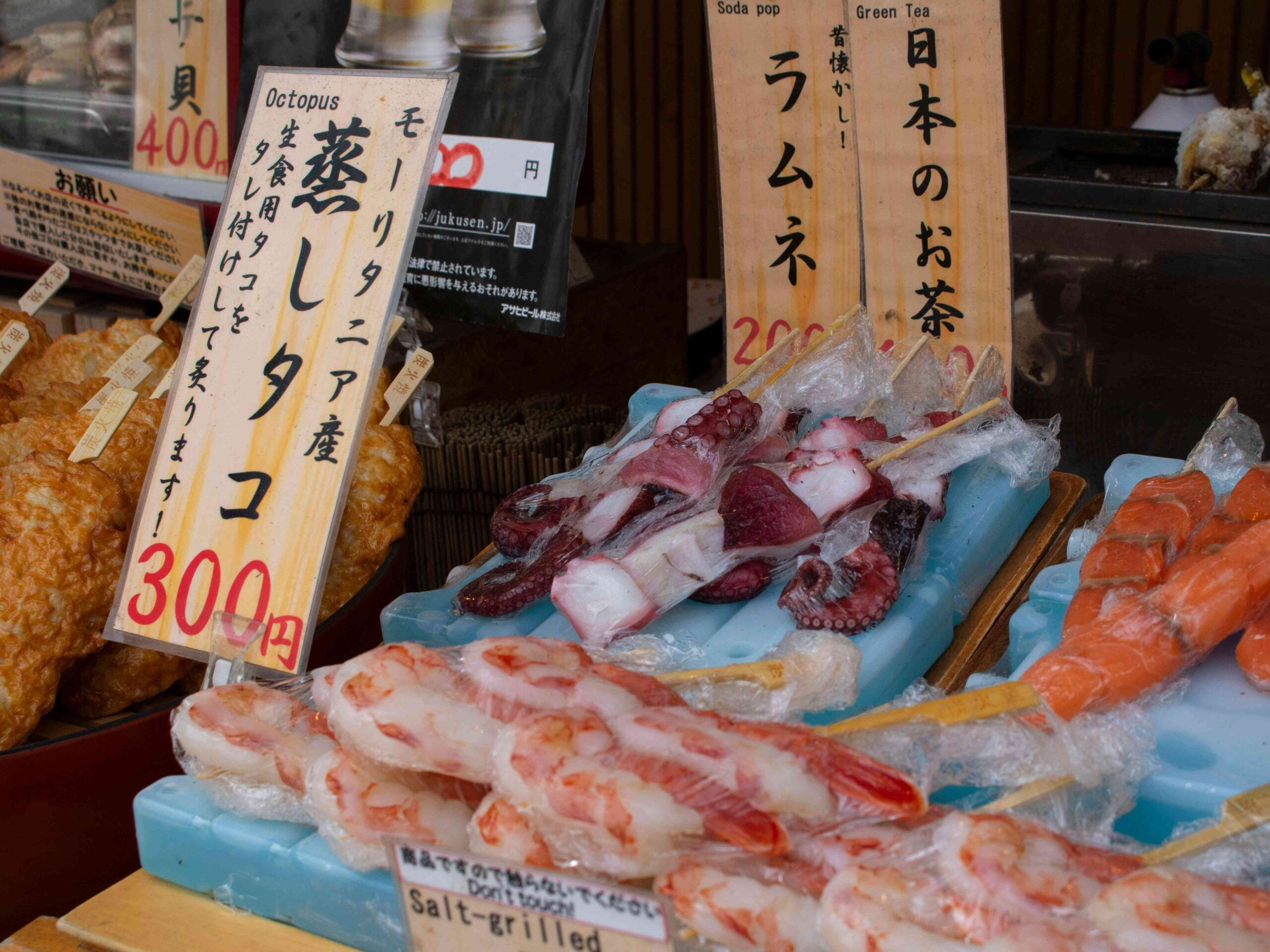
Hokkaido’s reputation for seafood is built on its cold seas, which result in firm texture, rich sweetness, and a natural flavor prized by chefs worldwide. The region’s seafood is enjoyed raw, grilled, fried, and in various dishes ranging from fine-dining sushi to casual bowls eaten at market stalls.
Hokkaido’s fishermen haul in prized crab, fresh scallops, succulent sea urchin, bluefin tuna, salmon, and atka mackerel, with seasonal flavors peaking at different times of the year. Here, eating seafood is woven into everyday life, marked by the seasons and celebrated with festivals and community meals.
Seafood Delicacies: Botan Shrimp, Atka Mackerel, and More
Botan shrimp and Atka mackerel are other must-try ingredients, often enjoyed grilled or served as sashimi. Don’t miss the rare hanasaki crab or Akkeshi oysters, celebrated for their rich sweetness and natural flavor. Whether at bustling markets in Hokkaido or cozy seafood markets near JR Otaru Station, visitors can relish high-quality seafood year-round, making every rice bowl a memorable experience.
Best Places to Eat Hokkaido Seafood Specialties
These five restaurants are the places I keep recommending when friends ask where to try the best seafood in Hokkaido. Each one shows a different side of the island’s hokkaido seafood culture — from bustling seafood markets serving towering seafood rice bowls to smoky grills celebrating the island’s bountiful seas.
What they share is simple: fresh ingredients, seafood supplied daily by local fishermen, and cooking that highlights the natural flavor of Hokkaido’s rich marine life.
1. Ajidokoro Takeda (Otaru)
Nearest Station: JR Otaru Station – one minute walk
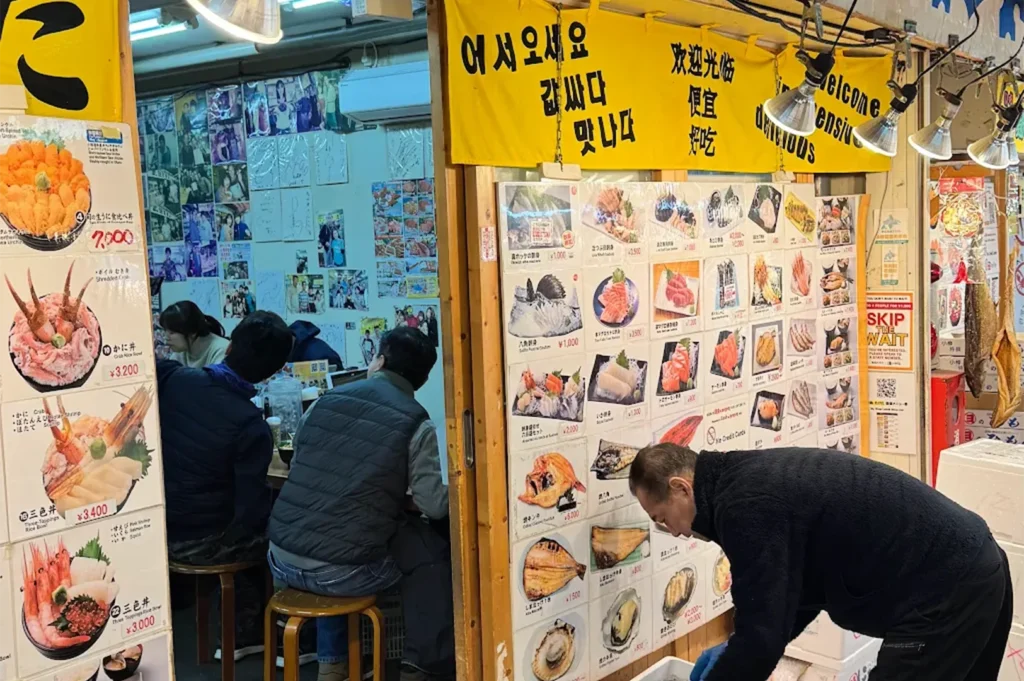
Inside the narrow lanes of Sankaku Market, Ajidokoro Takeda feels like a true treasure trove of hokkaido seafood specialties. The restaurant sits inside the wholesale market, surrounded by stalls selling fresh fish, crab, and shrimp pulled from nearby waters.
I ordered the famous Sanjuu Don, a generous rice bowl layered with fresh sea urchin, salmon roe, and fresh scallops over steaming white rice. The uni had that unmistakable creamy texture, while the ikura burst with salty sweetness. The giant scallops were sweet and tender with a gentle firm texture.
A touch of soy sauce brought out the rich umami of the seafood without overpowering its natural flavor.
Perfect pick for: Travelers wanting the classic Otaru seafood market breakfast.
Word to the wise: Order a mixed seafood bowl so you can taste several Hokkaido seafood specialties at once.
Skip this spot if: You dislike crowded markets.
2. Uni Murakami Hakodate Honten
Nearest Station: JR Hakodate Station – 3 minute walk
If you love sea urchin, this restaurant is essential.
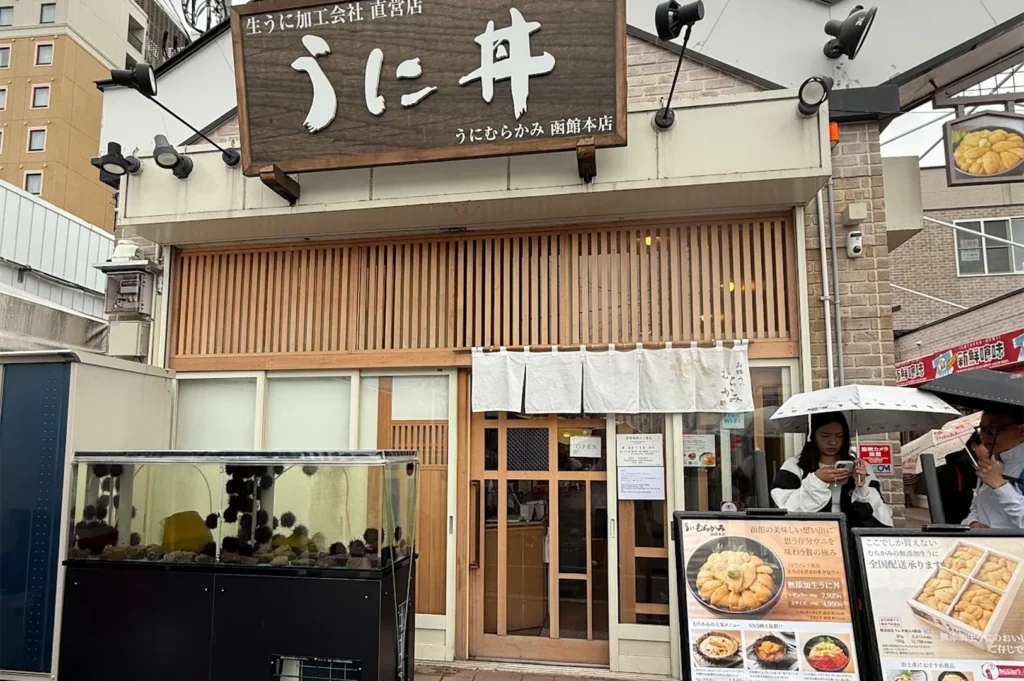
Uni Murakami is known for serving fresh sea urchin without alum, preserving its rich sweetness and silky texture. The uni comes from the bountiful seas around Hokkaido, and the difference is obvious from the first bite.
My rice bowl arrived covered with golden uni that tasted almost buttery — delicate, smooth, and full of rich umami.
The restaurant sits near the bustling Hakodate Morning Market, yet the atmosphere inside is calm and refined, focused entirely on serving some of the finest seafood in the region.
Perfect pick for: Uni lovers and ingredient-focused diners.
Word to the wise: Try the uni gratin — lightly cooked sea urchin reveals even deeper sweetness.
Skip this spot if: You want cheap seafood.
3. Kikuyo Shokudo Main Store
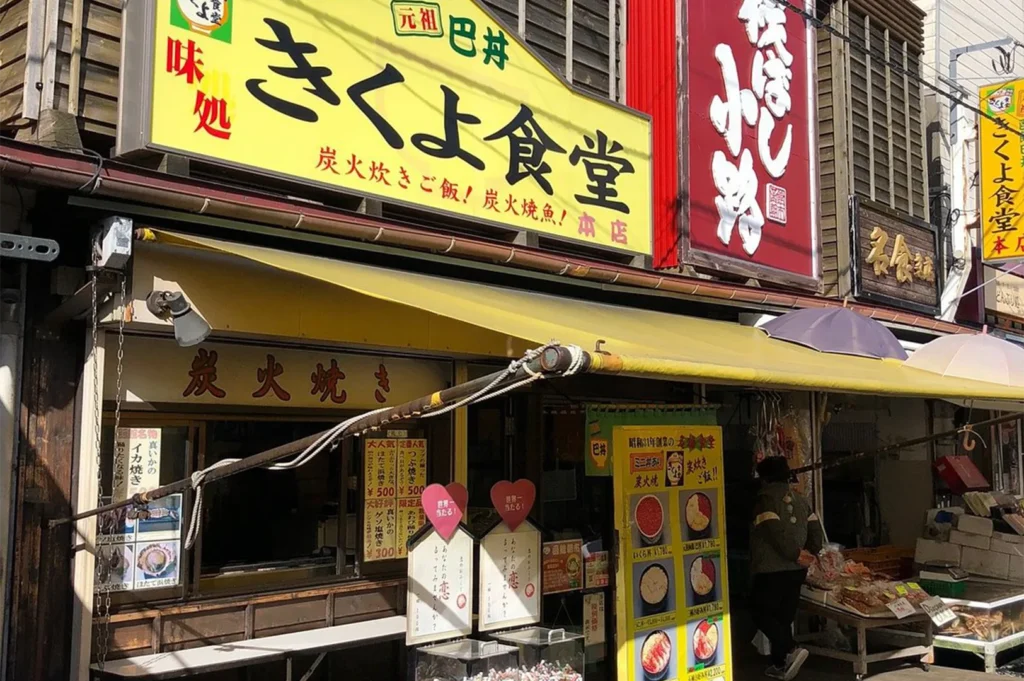
Nearest Station: JR Hakodate Station – 2 minute walk
Located inside the famous Hakodate Morning Market, Kikuyo Shokudo has been serving seafood bowls since the early Meiji period.
The surprise here is the rice.
It’s cooked in a charcoal-fired kamado, giving the white rice a subtle smoky aroma. Their signature bowl combines sea urchin, salmon roe, and Hokkaido’s scallops.
The scallops are plump and sweet with a clean ocean flavor, while the ikura don delivers bursts of savory taste and rich flavor.
The restaurant fills quickly in the morning, but that lively energy is part of the market experience.
Perfect pick for: Travelers wanting a classic morning market seafood breakfast.
Word to the wise: Focus on the kamado-cooked rice — it’s the detail that makes this bowl special.
Skip this spot if: You prefer quiet dining.
4. OHISO Main Store (Sapporo)
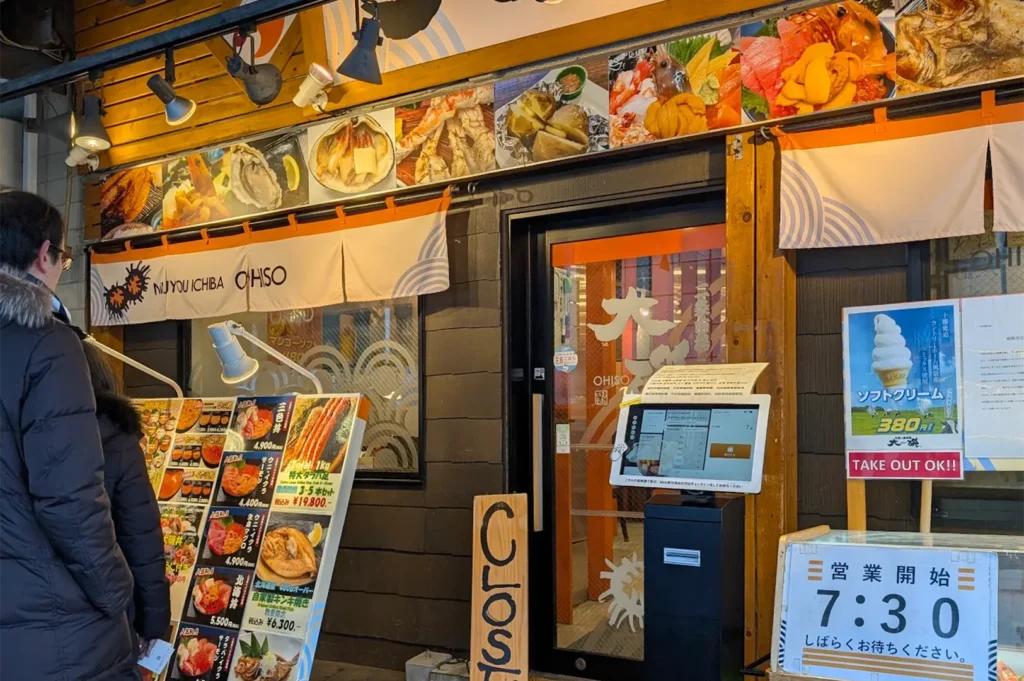
Nearest Station: Odori Station – 7 minute walk
Located in Nijo Fish Market in central Sapporo, OHISO is one of the best places to enjoy a classic seafood bowl.
Their signature bowl arrives piled high with rice topped with salmon, salmon roe, fresh scallops, and sea urchin. The seafood tastes incredibly clean and sweet — a reflection of the island’s high quality seafood.
What many visitors miss, however, is the grilled menu.
I ordered Atka mackerel, and the skin crisped beautifully while the flesh stayed juicy, releasing a smoky aroma that paired perfectly with the seafood bowl.
Perfect pick for: Travelers exploring Nijo Market.
Word to the wise: Add the grilled Atka mackerel for a deeper taste of Hokkaido seafood.
Skip this spot if: You dislike busy markets.
5. Robata Renga (Kushiro)
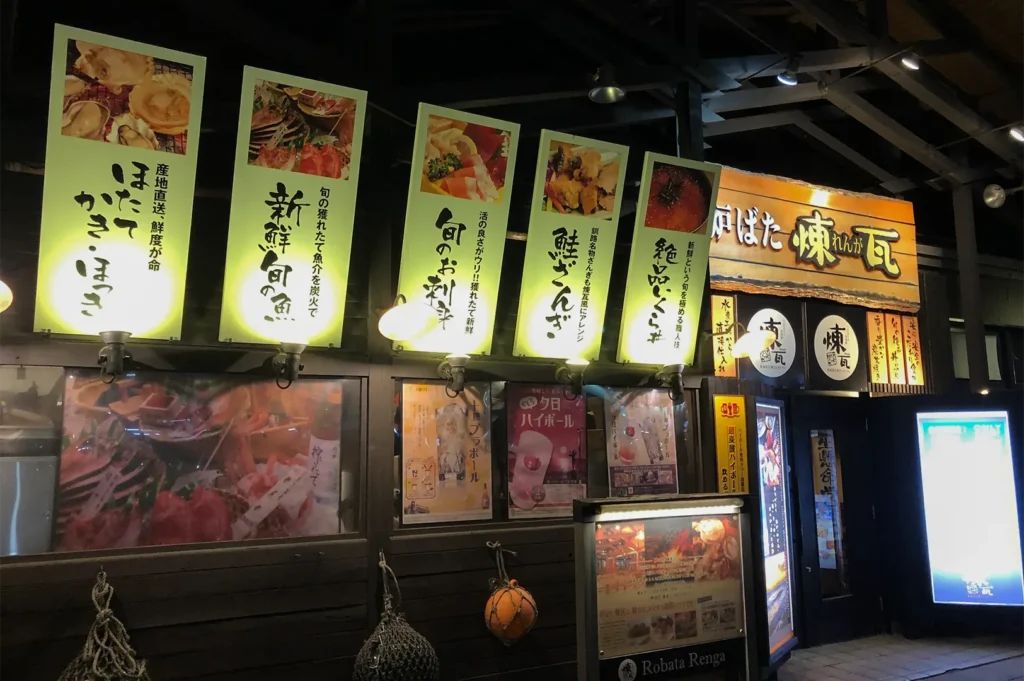
Nearest Station: JR Kushiro Station – 15 minute walk
Robata Renga offers one of the most memorable seafood dinners I’ve had in Hokkaido.
Set inside a historic brick warehouse near Kushiro Port, the restaurant focuses on robata-style grilling rather than sushi or sashimi. Diners cook seafood such as Akkeshi oysters, scallops, and fish over charcoal grills.
When the scallops hit the grill, they caramelized at the edges and released a sweet ocean aroma. The oysters tasted briny and fresh, reflecting the nearby rich fishing grounds.
The smoky atmosphere captures the spirit of Kushiro’s fishing port.
Perfect pick for: Travelers wanting an interactive seafood dinner.
Word to the wise: Order a mix of seafood — including Hanasaki crab, hairy crab, or king crab when available — to explore the island’s variety of seafood.
Skip this spot if: You want refined fine dining.
Hokkaido Seafood Specialties: A Feast from the Bountiful Seas
Hokkaido seafood specialties are a true celebration of the island’s rich fishing grounds where the cold waters of the Sea of Japan, Pacific Ocean, and Sea of Okhotsk meet. Among the finest seafood, the hairy crab, king crab, and snow crab are prized catches, each offering a unique savory taste that seafood lovers cherish. The Hakodate Morning Market and Nijo Fish Market in central Sapporo are treasure troves where you can savor these local delicacies at reasonable prices.
Seafood rice bowls, or kaisen-don, are a popular way to enjoy Hokkaido’s bounty. Picture a bowl of rice topped with fresh sea urchin, ikura don (salmon roe bowl), and freshly caught scallops from the Notsuke Peninsula or Uchiura Bay. The creamy texture of sea urchin combined with the rich umami of salmon roe creates a perfect harmony of flavors.
Experience Seafood Like a Local
Hokkaido’s seafood is best appreciated when enjoyed in the company of locals and fishermen. Here’s how to eat and experience seafood like a true Hokkaido resident:
- Join Auctions or Fishing Excursions: Some coastal villages, like Rausu and Abashiri, let visitors watch seafood auctions or partake in scallop and squid fishing for a truly immersive experience.
- Learn Key Phrases: Simple words help connect with local fishermen and vendors:
- “Oishii!” (Delicious!)
- “Osusume wa?” (What do you recommend?)
- “Gochisousama deshita” (Thank you for the meal)
More Than a Meal-A Taste of Hokkaido’s Spirit
Hokkaido’s seafood scene is where the natural flavor of the sea meets the skill and heart of its people. The wide variety of delicious dishes, from creamy sea urchin to sweet crab and fresh scallops, is a testament to the island’s rich fishing culture. Eating here is about more than what’s on your plate-it’s about discovering new flavors, meeting fishermen, enjoying seasonal abundance, and appreciating the artistry in every slice of sashimi, bowl of rice, or grilled fish set before you.
For those visiting Japan, especially Hokkaido, take the time to explore beyond the usual. With its best seafood, prime season delicacies, markets, and welcoming spirit, Hokkaido invites you to savor a culinary adventure that lingers well beyond the last bite.
Similarly, if you’re craving an unforgettable food experience, consider exploring the vibrant flavors of Gujarati Thali, a plant-based feast from Western India. Rich in variety and tradition, this iconic meal offers a complete sensory journey through spices, textures, and cultural heritage. You can also dive deeper into regional rituals with The Art of Asian Tea Ceremony Traditions: Ancient Rituals and Cultural Values Across Asia.

Asian Food Comfort Trends: Why Broths and Bowls are Dominating Globally
Eda Wong | March 14, 2026
I still remember the first time I faced a “build-your-own” Mala Xiang Guo counter. I stood there, plastic tongs in hand, completely paralyzed by the mountain of choices. Lotus root? Kelp knots? three different types of tofu skin? My anxiety spiked. I panicked, grabbed way too much luncheon meat, and ended up with a $28…
-
The Fifth Element: A Masterclass on Umami in East Asian Cuisine
Dio Asahi | March 12, 2026
I’ll never forget the first time I made miso soup from scratch. Not the instant kind, but the “proper” way. I boiled water, dissolved miso paste, added tofu, and waited. It tasted flat, salty and cloudy but missing the deep, satisfying flavor I loved in Japanese restaurants. I thought maybe I needed better miso. Years…
-
Why My Quest Ended at Yummy Western (409 AMK)
Dio Asahi | March 10, 2026
There’s a specific magic to a late-night supper hunt in Singapore. It’s the ritual of chasing a craving through the humidity to find that one stall that hits the spot. For me, that meant a pilgrimage to Ang Mo Kio Avenue 10. I arrived at 10 PM on a Friday, just as the ‘supper soul’…
-
A Taste of Time: My Dinner at Guan Hoe Soon
Eda Wong | March 7, 2026
There’s something special about visiting a place that has seen decades of Singapore’s history unfold. Guan Hoe Soon, tucked away on Joo Chiat Road, holds the title of Singapore’s oldest Nyonya restaurant, and you can feel that heritage the moment you step inside. I’d heard about it for years, a place where recipes aren’t just…
-
The 5 Best Halal Restaurant in Singapore for Authentic Nasi Padang
Eda Wong | March 5, 2026
There are few meals as satisfying as Nasi Padang, a colourful feast where you choose from a variety of dishes to create your perfect plate. Over the years, I’ve explored Singapore’s Nasi Padang scene, especially in Kampong Glam, sampling everything from humble hawker stalls to renowned spots. This list highlights the five best halal Nasi…
-
The Global Soup Bowl: How Indonesian Soto Shapes the Future of Asiatic Food Traditions
Dio Asahi | March 3, 2026
I still remember my first “real” bowl of Indonesian soto. Sitting on a low plastic stool in a cramped warung, I ordered Soto Betawi, expecting it to be like the clear Soto Ayam from Singaporean weddings. I was wrong. The rich, milky broth was intense, creamy, and boldly spiced. That first spoonful rewired my idea…
-
Shun: Japan’s Seasonal Treasures – A Deep Dive Into the Ingredients Behind True Omakase
Eat Drink Asia Team | February 28, 2026
In the world of Asian food, few dining experiences capture the soul of traditional Japanese food culture like omakase. At a premier omakase restaurant, diners entrust their meal entirely to the chef, whose artistry is guided not just by mastery, but by shun—the appreciation of seasonal and fresh ingredients at the absolute peak of their…
-
My Trip to Bánh Mì Saigon and How It Compares to Best Food in Singapore
Eda Wong | February 26, 2026
Located in the bustling neighborhood of Ang Mo Kio, Bánh Mì Saigon offers a taste of Vietnam right here in Singapore. From traditional bánh mì sandwiches to hearty pho bowls and refreshing Vietnamese iced coffee, this restaurant has it all. I arrived at Bánh Mì Saigon on a busy Saturday evening and was immediately drawn…
-
Tea Room by Ki-setsu: A Curated Journey Through Chinese Tea in the Heart of Singapore
Dio Asahi | February 25, 2026
Most people arrive at Chinese tea the way they arrive at any beverage: thirsty, curious, maybe looking for something sweet or soothing. But traditional chinese tea isn’t built like a single drink. It’s a network: leaf origin, processing choices, vessel physics, water, pacing, and the quiet social technology of sitting down long enough for a…
-
Tandoori Chicken: The Signature Indian Chicken Dish
Eda Wong | February 24, 2026
Tandoori chicken stands tall among the best Indian chicken recipes. With its vibrant hue and smoky aroma, this iconic Indian chicken dish is celebrated in Indian restaurants worldwide. Emerging from Punjab, it pairs perfectly with fragrant basmati rice or fresh naan and is a favorite for anyone who loves bold flavors. The hallmark of tandoori…