By Dio Asahi for Eat Drink Asia.
It’s mid-morning, and the cook doesn’t look up.
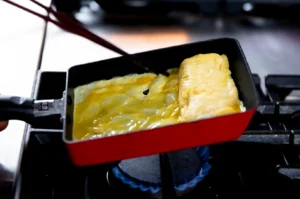
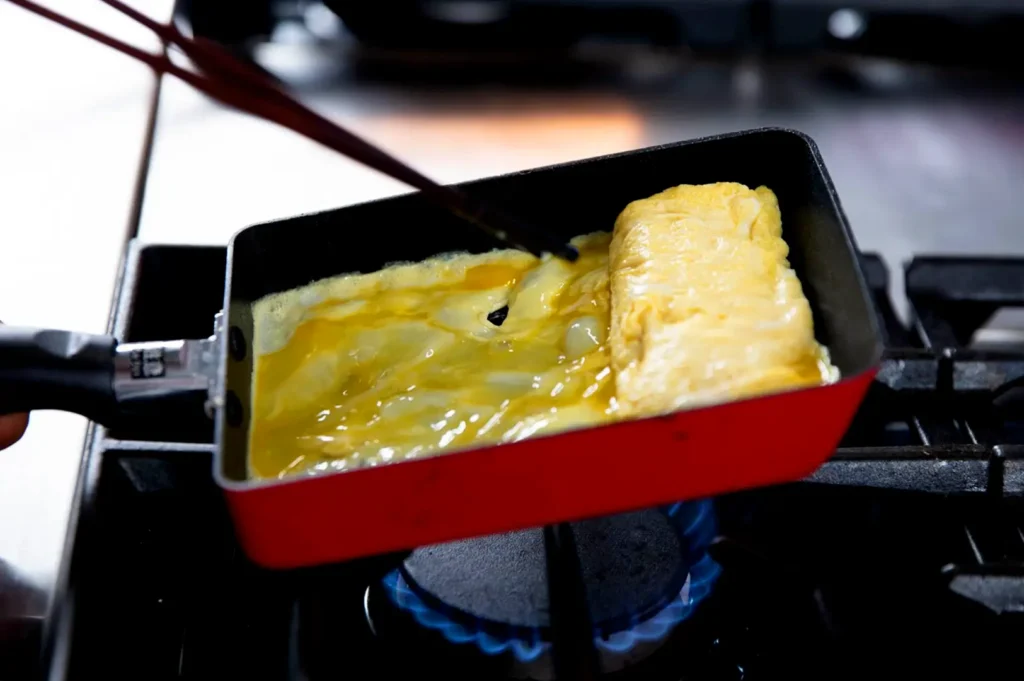
He stands over a rectangular pan, copper worn to a dull gold at the edges, and pours a thin skin of beaten egg across its surface. It hisses. Steam rises, warm and faintly sweet, and he tilts the pan just so, letting the egg find the corners. Before it fully sets, he folds. A chopstick lifts one edge, rolls it toward him in a single unhurried motion, then nudges the small log back to the far side. He pours again. Another layer. Another fold. The counter behind him is quiet. Somewhere, a knife works against a board.
This is tamagoyaki (tah-mah-go-YAH-ki), and up close, it’s less a dish than a slow accumulation.
Plainly, it’s rolled egg. But that description sells it short. Beaten egg, loosened with dashi, touched with sugar and sometimes a little soy, cooked not all at once but in layers — thin sheet upon thin sheet, each one folded into the last until a striped block builds up in the pan. The rectangular shape isn’t decoration. It’s what lets the roll keep its clean, right-angled form, layer stacking on layer until the cook can slice it into neat, banded pieces. Cut it open and you’ll see the rings, like the growth lines of something that took its time. The texture is soft, almost custard-like at the centre, holding just enough shape to lift with chopsticks.
To place tamagoyaki within the wider habits, ingredients, and rhythms of Japanese cuisine, see food in Japan.
There’s a patience in it I find hard to look away from.
The whole thing is built on timing you can’t rush. Too hot, and the egg browns and tears. Too cool, and the layers won’t set to fold. The cook reads the heat with his hands and eyes, not a timer — pour, wait, fold, pour, the rhythm so worn-in it looks like nothing. At a market counter, that economy of movement is its own kind of conversation. He doesn’t explain. You don’t ask. The pan does the talking, and you wait for it the way everyone before you waited. Tamagoyaki lives in bento boxes across the country, tucked beside rice and pickles, a small square of sweetness in a lunch packed by someone who cared. Watching it made is watching that care take shape in real time.
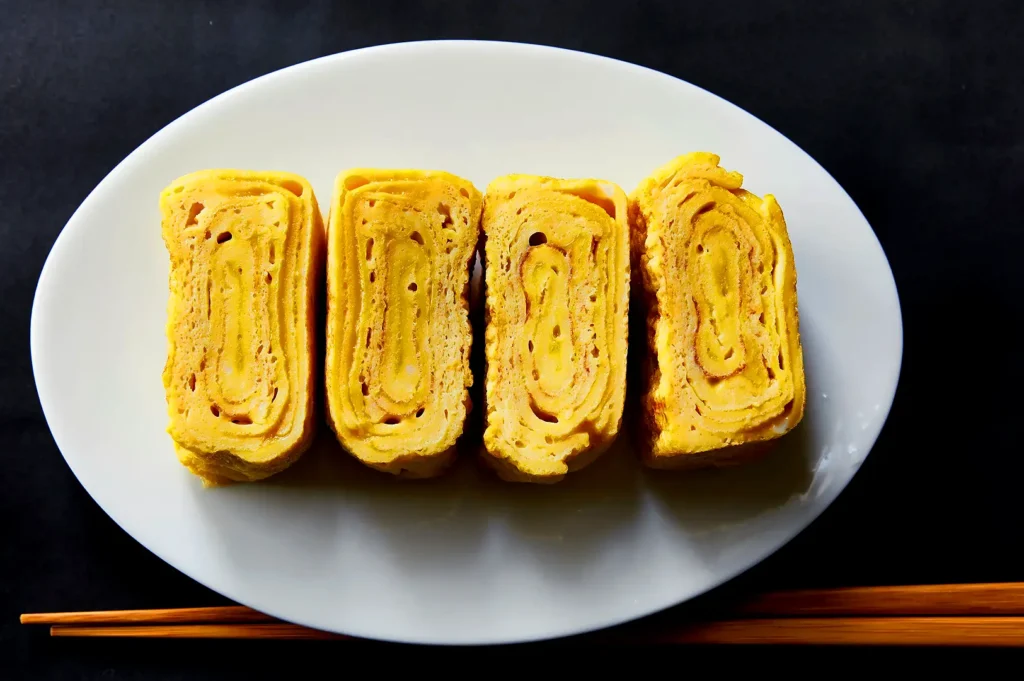
You can buy it already made, of course. Cut, sealed, stacked in every convenience store cold case, perfectly fine and perfectly forgettable. That’s the tension I keep turning over. The finished block looks nearly identical either way — neat, golden, photogenic. But the counter version carries something the packaged one can’t: the minutes it took, the folds you saw, the small heat still holding in it when it reaches you. The eye can’t tell them apart. The mouth, somehow, still can.
I took the last piece from the end of the roll, the one with the roughest edge.
It was warm, barely sweet, soft in a way that asked nothing of me. The cook had already started the next pan. And I understood, chewing, that I’d been given the plain end of something patient — and that plainness was the whole point.

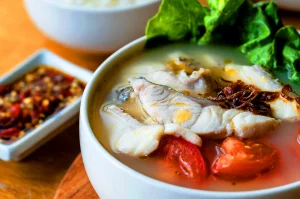
Best Fish Soup in Singapore: Bowls Where the Broth Is the Whole Point
Eat Drink Asia Team | October 15, 2026
I don’t remember when fish soup became my quiet meal. It just did. On days when I couldn’t decide what I wanted, when the weather turned grey, when I needed something warm that asked nothing of me, I’d end up hunched over a bowl, breathing in the steam before the first spoonful. I’ve eaten a…
-
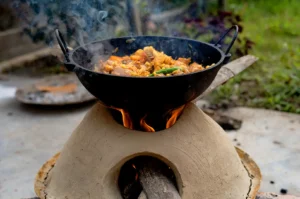
The Clay Stove Heat Beneath a Lao Grilled River Fish
Eda Wong | October 14, 2026
By Eda Wong for Eat Drink Asia It’s late afternoon, and the river is the colour of weak tea. A woman crouches beside a small clay stove at the edge of the bank, feeding it slivers of charcoal. Smoke lifts, thin and grey, and drifts toward the water. On a bamboo skewer, a whole fish…
-
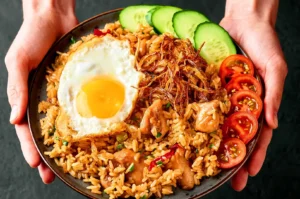
The National Dish of Indonesia Is Not One Plate: Why a Country of Islands Needs Many Icons
Dio Asahi | October 13, 2026
The first time someone asked me for the national dish of Indonesia, I answered nasi goreng without thinking. It seemed obvious: fried rice darkened with kecap manis, often topped with a fried egg, familiar from warungs and late-night street food stalls. That answer is not wrong. It is simply too small. Indonesian food is regional,…

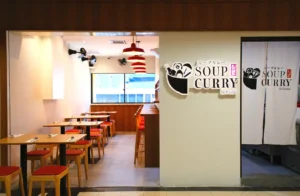
Sapporo in a Bowl: Soup Curry by Ki-setsu Comes to Singapore
Eda Wong | October 12, 2026
Ask most Singaporeans to picture Japanese curry and a familiar image probably comes to mind: a plate of rice beneath thick brown gravy, perhaps with a breaded cutlet sliced neatly across the top. It is rich, sweet-edged, comforting and, by now, almost as recognisable as ramen or donburi. Head to the fourth floor of Fortune…
-
Meokja by Jungga Review: The Halal Korean Snack Table That Knows What It’s Doing
Eda Wong | October 10, 2026
I had not planned to eat at Meokja by Jungga. I was walking down North Bridge Road on a Tuesday, somewhere around the awkward hour between lunch and dinner, when I caught the smell of something frying and the low clatter of a kitchen working hard. I looked up, saw the sign, and my feet…
-
Seoul Bunsik Funan Review: The Comfort of Korean Street Food Without the Street
Eat Drink Asia Team | October 8, 2026
I have eaten ramyeon on a plastic stool in Seoul, close to midnight, with cold air biting at my ankles and the broth doing all the work of keeping me warm. Seoul Bunsik Funan is not that. This was a bright Tuesday afternoon, escalators humming behind me, the smell of mall air-con instead of street…
-
The Last Turn of Tamagoyaki in a Tsukiji Pan
Dio Asahi | October 7, 2026
By Dio Asahi for Eat Drink Asia. It’s mid-morning, and the cook doesn’t look up. He stands over a rectangular pan, copper worn to a dull gold at the edges, and pours a thin skin of beaten egg across its surface. It hisses. Steam rises, warm and faintly sweet, and he tilts the pan just…
-
Seafood Restaurants in Singapore That Turn Crab Night Into a Full Table Ritual
Dio Asahi | October 6, 2026
It always starts the same way for me. Someone lifts the lid off a plate of chilli crab, and the whole table leans in. Fingers reach before spoons do. Somebody tears the first piece of fried mantou, drags it through that sticky, sweet-savoury sauce, and the rest of us stop talking for a second. That…
-
Korean Street Food Is Built for Movement, Heat, and One-Handed Eating
Eda Wong | October 3, 2026
The first time I ate tteokbokki in Seoul, I burned my tongue standing up. It was late, the air was sharp with cold, and I had stopped at a small street food stall near a subway exit because the steam pulled me in. The woman handed me a paper cup of rice cakes in red…
-
Mrs Pho and the Bowl That Makes Somerset Feel Like a Vietnamese Family Table
Eat Drink Asia Team | October 1, 2026
I wasn’t hungry when I walked into 313@somerset. I’d come for something else entirely; an errand, a shop I needed, the usual Orchard rush of people moving faster than the escalators. But somewhere on the first floor, past the noise, I caught the smell of star anise and beef bone, and my feet slowed down…