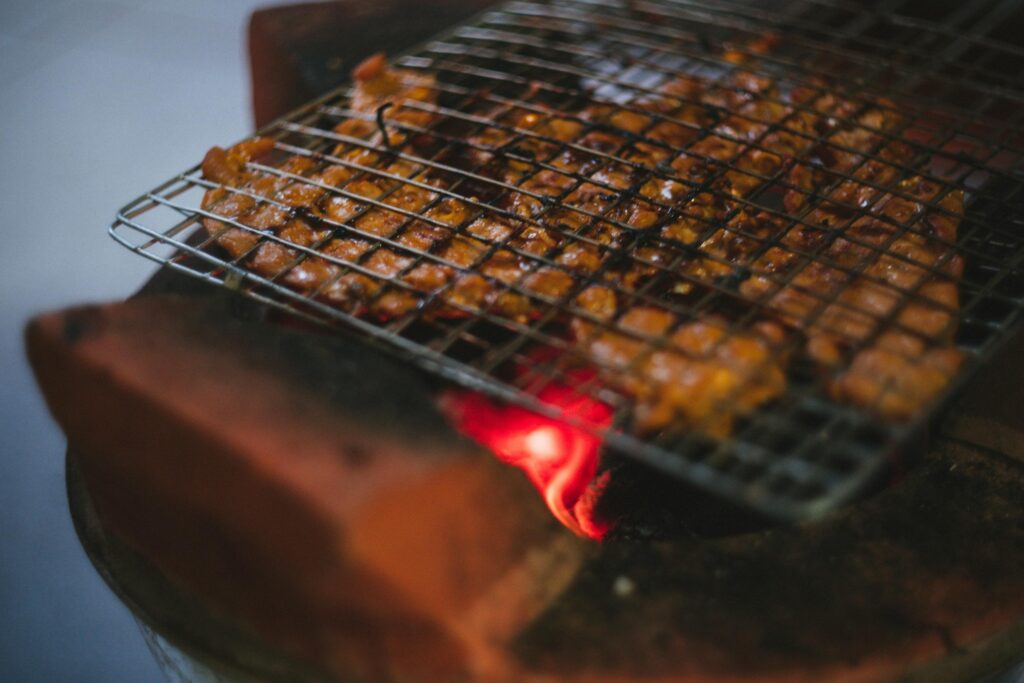
The first thing I noticed was the smoke, thin, controlled, rising steadily from a charcoal grill along a Bangkok street. Skewers of pork turned in a quiet rhythm, fat dripping and hissing as it met the heat. The air carried layers of scent: sweet palm sugar, garlic, and a faint fermented depth beneath it. I remember watching the vendor press each skewer gently against the grill, coaxing out a light crust at the edges while a basket of sticky rice steamed beside him. Nothing felt rushed. Every movement fulfills a purpose.
Moo ping looks simple, but its structure is deliberate. Thin slices of pork, often from the shoulder, are marinated in soy sauce, garlic, coriander root, and palm sugar. In some versions, coconut milk is added to introduce fat, helping the meat retain moisture over direct heat. When grilled, the sugars caramelize into a lightly crisp exterior while the inside remains tender. The result is a balance of texture and flavour that feels effortless but depends heavily on timing. It is typically paired with sticky rice, which absorbs the rendered fat and softens the intensity of the meat. In Thailand, this is everyday food, breakfast, snack, or something eaten quickly between errands.
What becomes interesting is how moo ping fits into a broader pattern across Asia. Skewered meat appears in many forms, satay in Southeast Asia, yakitori in Japan, kebabs across Central and West Asia. The method is shared: small cuts, direct heat, controlled charring. But the flavour system shifts with geography. In Thailand, palm sugar plays a defining role, creating a surface that caramelizes quickly and locks in moisture. This introduces a constraint. Too much heat, and the sugar burns. Too little, and the structure remains soft without contrast. Moo ping exists in that narrow space where heat and sugar must be managed together.
Check here for more information about food in the South East Region: https://eatdrinkasia.com/exploring-food-southeast-region-culinary-journey/
What sets it apart is its calibration. The pork is sliced thin to ensure even cooking. The marinade penetrates just enough to season without overwhelming the natural flavour of the meat. I noticed that some vendors brush on additional glaze near the end, deepening the caramelization, while others keep it restrained. Even the sticky rice is not incidental, it completes the system, balancing richness with neutral starch. These adjustments may seem minor, but they reflect a deep familiarity with the process.
Standing there, watching the skewers turn, it became clear that moo ping is less about grilled pork and more about coordination. Heat, sugar, fat, and timing move together in a controlled sequence. It is eaten quickly, often in passing, but the structure behind it is precise. Once you notice that, it becomes difficult to see moo ping as just another piece of street food.

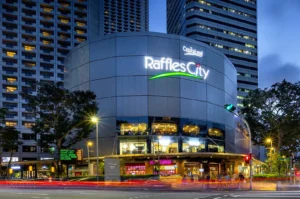
Raffles Place Food Has the Restaurants That Understand the CBD Lunch Rush
Eda Wong | August 8, 2026
I used to think lunch in the CBD was a lost cause. You get an hour, maybe less. The lift takes ten minutes just to reach the ground floor. By the time you’ve queued, ordered, and found a corner to eat in, you’re already checking the clock. For a while, I gave up and just…
-
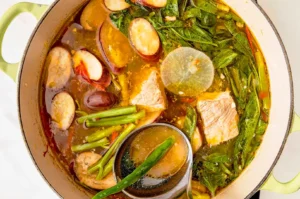
The Tamarind Sourness Inside a Filipino Sinigang Pot
Eda Wong | August 7, 2026
By Eda Wong for Eat Drink Asia. The pot has been going for a while now, and the whole kitchen knows it. Steam curls up from the surface, carrying that sharp-sour smell that reaches you before anything else. It’s not a gentle aroma. It pricks at the back of your throat a little, makes your…
-
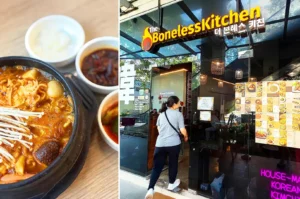
Vegetarian Asian Dishes at The Boneless Kitchen: A Korean Meal Built on Kimchi, Rice, and Restraint
Dio Asahi | August 6, 2026
I didn’t expect to find Korean comfort food in an office building near Tai Seng. But there I was, on a Wednesday a little past 7pm, standing outside The Commerze @ Irving wondering if I’d read the address wrong. This isn’t the part of Singapore you go to for dinner. It’s the part you leave…
-
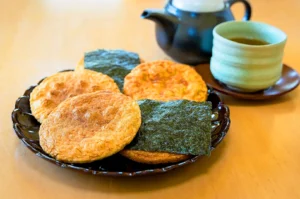
The Soy Glaze on Kyoto’s Forgotten Rice Crackers
Dio Asahi | August 5, 2026
By Dio Asahi for Eat Drink Asia. The old man works close to the coals, and the smell reaches me before I see what he’s doing. Soy meeting heat. That dark, caramel-edged smell that tightens something in your chest. His brush moves in short strokes across a rack of rice crackers, back and forth, patient….
-
Vegetarian Laksa Without the Usual Seafood Shadow: Asian Vegetarian Recipes Begin With the Broth
Eat Drink Asia Team | August 4, 2026
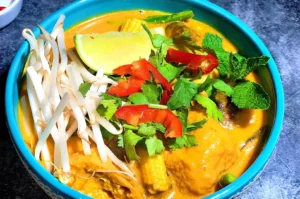
The first vegetarian laksa I made tasted like coconut soup with chilli, not laksa. I thought I was doing it right, stirring paste into warm coconut milk with tofu puffs. It looked the part but lacked depth. Seafood usually provides that depth, prawn shells, dried shrimp, fish cake sweetness. I learned that depth can’t be…
-
A Bowl Built by Hand at Hi Noodle, Three Floors Below Somerset
Eda Wong | July 31, 2026
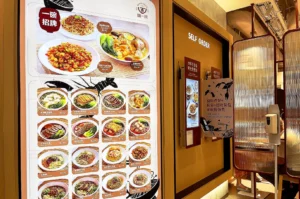
The escalator carries me down to Basement 3, past the lunch noise of 313 Somerset, and the air changes somewhere along the way. Less mall, more kitchen. The smell finds me first — chilli, vinegar, something warm and sharp that cuts through the perfume of the shops above. Hi Noodle sits there, plain and bright….
-
An Asian Vegetarian Meal at Herbivore Japanese Vegetarian Restaurant: When Japanese Comfort Food Learns a New Body
Eda Wong | July 30, 2026
I didn’t grow up eating eel. But I grew up watching my grandmother turn one thing into another — gluten into “duck,” beancurd skin into “fish,” mushrooms into something that tasted of the sea without ever touching it. Buddhist vegetarian cooking does that. It doesn’t pretend so much as it remembers, building familiar shapes out…
-
A Table for One, and a Grill That Belongs to You in Yakiniku Like
Dio Asahi | July 29, 2026
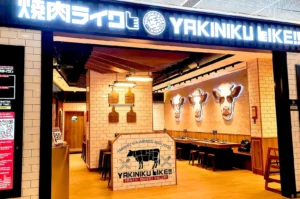
The grill glows orange in front of me before the meat arrives. It’s a small thing, set into the counter at my single seat, and it hums faintly under the chatter of the room. No flame. No charcoal. Just a low electric warmth I can feel rising toward my face. A plate comes. Thin slices…
-
Best Buffet Singapore: Where Hotel Buffets Turn Abundance Into Order
Dio Asahi | July 28, 2026
I used to think buffets were about greed. Pile the plate high, go back for thirds, leave feeling like you got your money’s worth. That was the whole game, or so I believed. After years of exploring this city’s hotel buffets, I learned the good ones focus on order. They transform a wall of food…
-
STR TAO Taiwan Cuisine and the Comfort of a Menu That’s Too Big to Be Lazy: Food Places Nearby
Eat Drink Asia Team | July 25, 2026
It was the kind of evening where you don’t want to think too hard about dinner. I’d been walking up East Coast Road, the air still thick from an afternoon shower, when I ducked into a coffeeshop just to sit down. The Bullion Hawker Bar. And tucked among the usual suspects — wanton mee, Hokkien…