It was a Wednesday, a little after 6pm, and somewhere behind me a pot hissed on a portable burner. The broth climbed the sides, popping softly against the metal, while a child at the next table leaned forward to watch. His mother caught the back of his shirt and pulled him gently away. That was my first useful clue about Muk-Bang Korean Restaurant.
This is not a quiet, polished Korean restaurant built around delicate plating or a stylised Seoul aesthetic. The food arrives hot, bubbling, crisp, saucy, and meant to be shared, and the best way to eat here is to put several dishes in the middle of the table and let everyone reach in.
Muk-Bang Korean Restaurant: First Impressions in Chai Chee
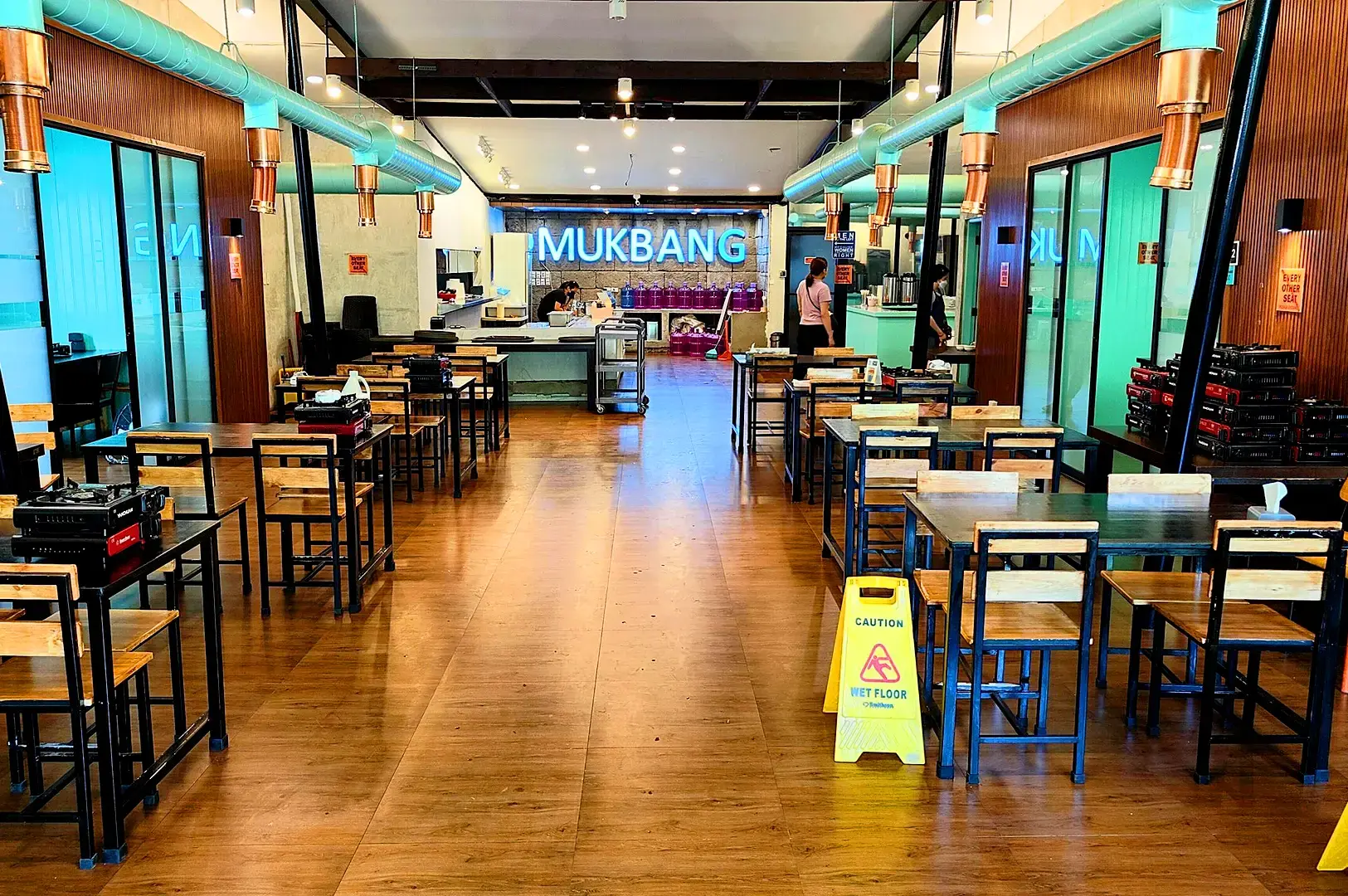
Muk-Bang is located at 750 Chai Chee Road, #01-02, ESR BizPark @ Chai Chee. The surrounding business park is functional rather than atmospheric, but stepping into the restaurant brings an immediate change. The smell of sesame oil, garlic, fried food, and warm soup replaces the quiet office corridors outside.
The dining room is larger than I expected. Tables have breathing room, the lighting is bright, and there is no attempt to turn the place into a neon recreation of Seoul. It feels clean, practical, and designed for people who have actually come to eat.
By 6:30pm, families, couples, and office workers had begun filling the tables. The sound grew into a warm hum without becoming overwhelming. If you are hoping for a quieter visit, I would come early, when the room feels at its most relaxed.
Muk-Bang Budae Jjigae: The Dish That Sets the Tone
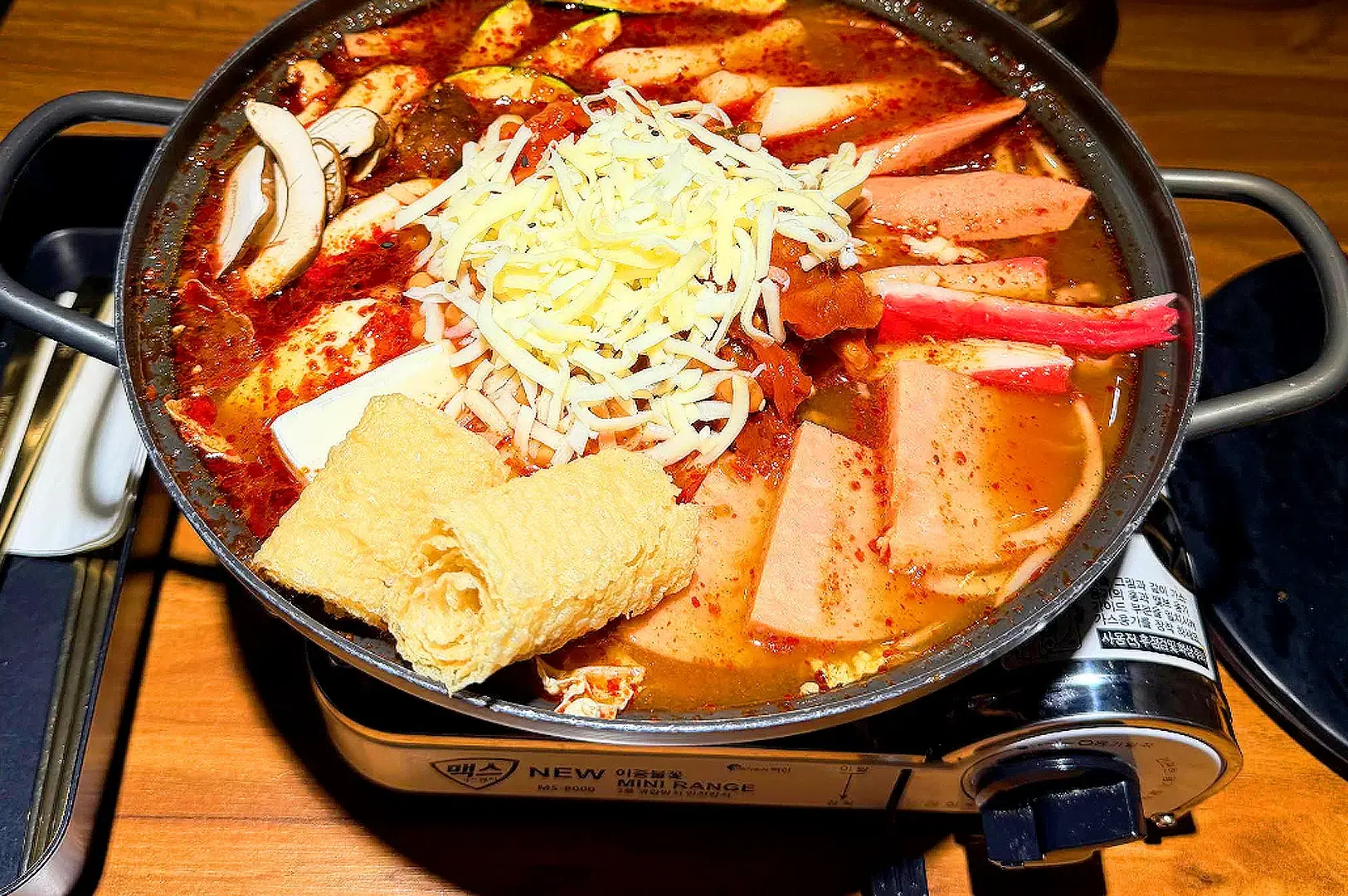
It arrived in a wide pot over a portable hotplate, already bubbling. Chicken ham, chicken sausage, tofu, kimchi, rice cakes, mushrooms, baked beans, instant noodles, and melting cheese crowded the surface.
Because Muk-Bang is halal-certified, its version moves away from the pork-based processed meats commonly used in traditional budae jjigae. Army stew remains one of the restaurant’s popular dishes, and it is easy to understand why: the whole table becomes involved once the pot starts boiling.
For the wider story behind those substitutions, our halal Korean Singapore article explains what changes in the ingredients, and what keeps the dishes recognisably Korean.
How the Soup Develops
The broth was savoury and tangy with kimchi, with a faint sweetness from the beans and extra richness once the cheese disappeared into the red soup. The rice cakes stayed satisfyingly chewy while the instant noodles slowly absorbed the broth.
Time improves this dish. As the liquid reduces on the hotplate, the flavour becomes deeper and the texture more cohesive. The first spoonful tastes like soup. Halfway through, it feels more like a thick, comforting stew ready to be spooned onto rice.
One Thing to Know About Portion Value
The pot looks substantial, but I would add noodles or rice if you are sharing. That extra starch makes the meal feel complete and helps stretch the broth across the table. Without it, people with larger appetites may find the portion lighter than expected.
Muk-Bang can still feel relatively affordable when several diners share the same dishes, but ordering one plate after another individually is where the bill climbs more quickly.
Seafood Pancake: Crisp Edges, Soft Centre
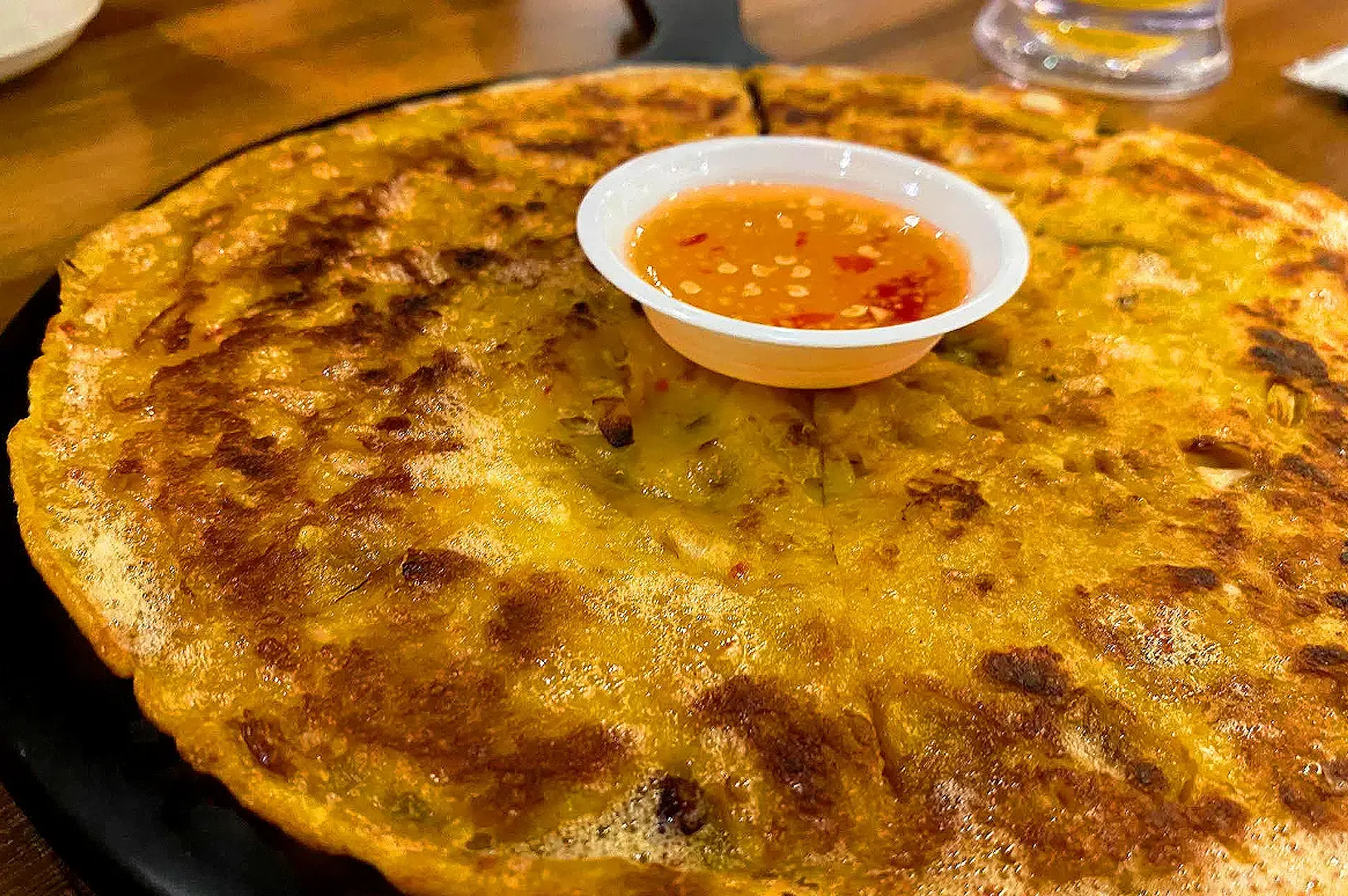
Seafood Pancake arrived sliced into wedges, with edges that were golden, lacy, and almost brittle. Pulling one away produced a faint crackle before reaching the softer, slightly chewy centre, where squid and spring onion were folded through the batter.
The soy-vinegar dipping sauce was important. Its acidity cut through the oil and sharpened the seafood flavours, turning a good pancake into something much more balanced. I liked it especially after the stew. The budae jjigae was soft, hot, and wet. The pancake was crisp enough to pick up with your fingers. Moving between the two kept the meal interesting rather than letting everything blur into similar textures.
I would happily eat it again, although I would also be tempted by the kimchi version on another visit.
Muk-Bang Fried Chicken: The Reliable Crowd-Pleaser
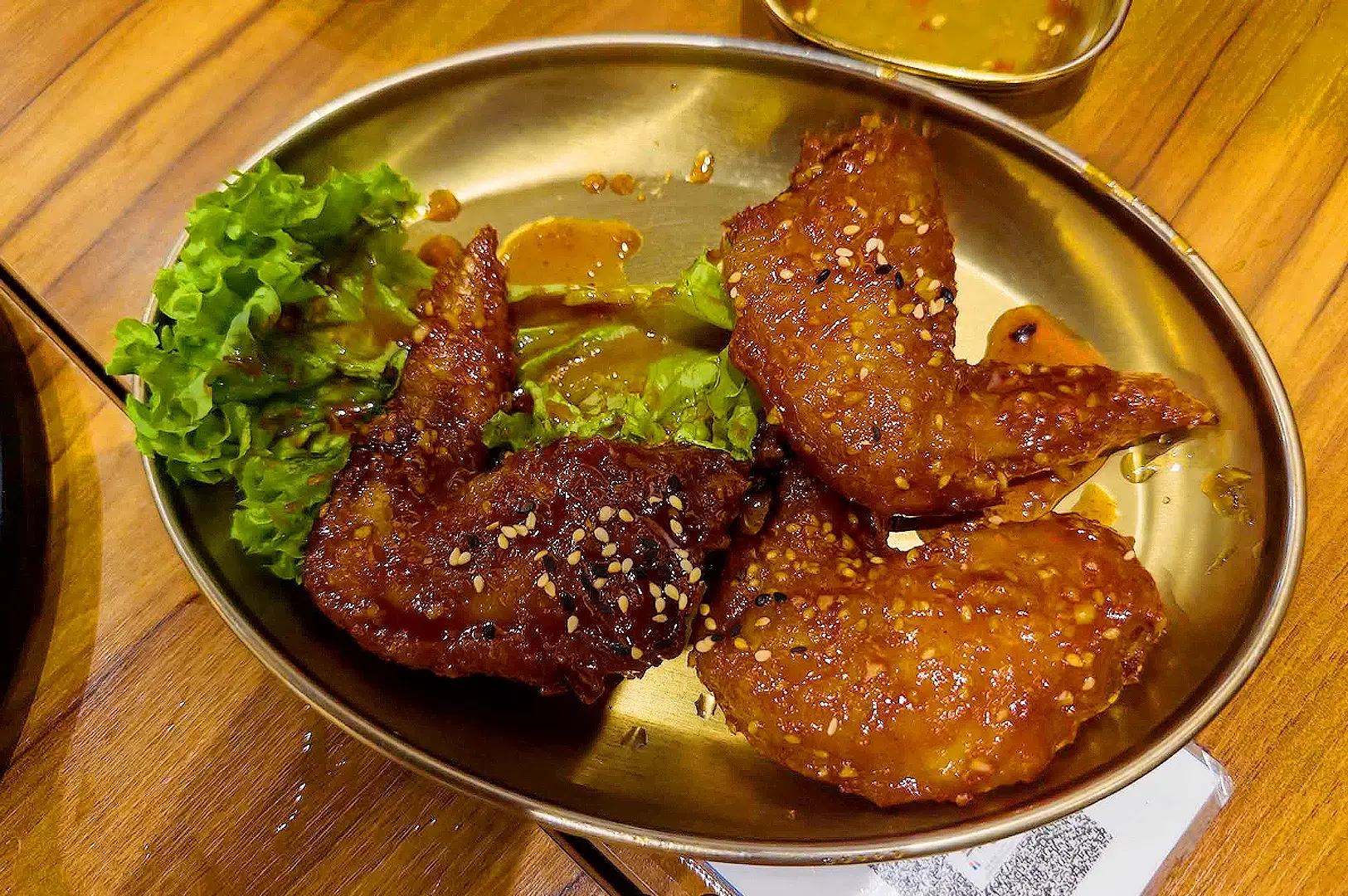
The version I ate announced itself through smell first: roasted garlic, soy, hot oil, and that lightly caramelised aroma you get when a sweet glaze meets fresh fried chicken.
The skin remained crisp beneath the glossy coating, rather than turning soggy at the bottom of the plate. The sauce landed sweet first, followed by soy and then garlic, while the meat inside stayed juicy. That balance made it easy to love. Nothing felt drowned, and the garlic never became harsh enough to overwhelm the chicken.
Menu availability changes, so I would still check the current selection before making a trip for one specific flavour. But fried chicken as a category is one of the safer places to start when deciding what to add to the table.
Sobulgogi Deopbap: The Meal Settles Down
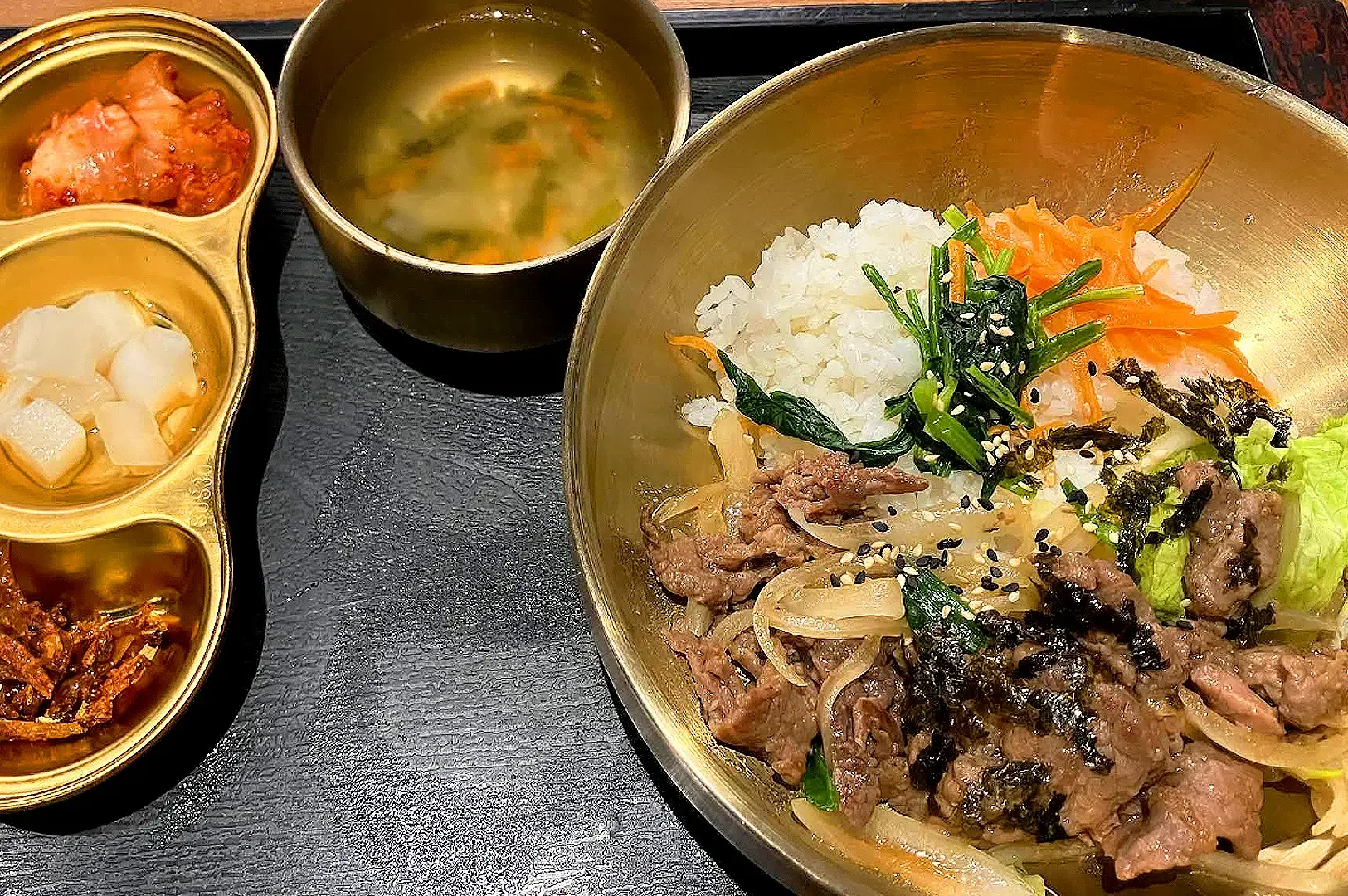
By the time the Sobulgogi Deopbap arrived, I wanted something calmer. That was exactly what it gave me.
The beef was sliced thin, tender enough to eat without effort, and laid over warm rice. Its marinade leaned sweet-savoury with a gentle sesame aroma, slowly seeping down between the grains. After the sharp kimchi, bubbling soup, and crisp fried food, the rice bowl felt reassuringly straightforward.
Sometimes the dish you remember is not the loudest one. The bulgogi worked because it gave the meal somewhere to land.
The Banchan Help the Meal Feel Complete
There was kimchi, seasoned vegetables, and other small accompaniments to eat between larger bites. Their flavours were fresher and lighter than the fried food and stew, which made them useful rather than merely decorative. What mattered most was that they came back. When the small plates ran low, they were replenished, keeping the table active throughout dinner.
That is one of the pleasures of Korean dining that can be difficult to capture if you focus only on main dishes. Banchan makes the table feel generous and lived-in, giving people something to reach for while waiting for the next hot plate to arrive.
You stop thinking about which dish belongs to whom. You simply keep eating.
What Did Not Work as Well
You can find soups, noodles, rice bowls, pancakes, fried chicken, grilled meats, and other Korean comfort food. That range is useful for groups, but I do not think every dish needs to be treated as essential.
Not everything I ate had the same character. That is why I would resist trying to complete the menu in one visit. The better strategy is to identify two or three dishes you genuinely want, add banchan and a filling carb, and build around them.
For me, the stew, pancake, chicken, and bulgogi made sense together. That is enough.
Warm Rather Than Polished
The service was the part that surprised me most.
When I hesitated over the chicken, our server gave an actual recommendation instead of simply saying everything was good. Later, the child at the neighbouring table began fussing. A staff member noticed and brought over a small bowl and spoon without being asked. The mother’s face softened immediately.
I remember that moment because it told me more about Muk-Bang than any promotional post or enthusiastic online comment could. The restaurant is not formal. What it offers instead is attentive, family-friendly service that feels instinctive rather than rehearsed.
Muk-Bang Is Best When You Share
The restaurant makes the most financial sense when several people order together.
Individual soups, noodles, rice dishes, and grilled items can add up, particularly if everyone orders separately. Share a stew, pancake, chicken, and rice, however, and the table feels much more generous. For me, a sensible working budget remains around S$20 to S$30 per person, depending on appetite and how many larger dishes you add.
For another halal meal built around rice and shared dishes, Eat Drink Asia nasi padang picks offer a different kind of generous table.
What I Would Order for Four
If four people asked me what to eat, I would start with:
- Budae Jjigae
- Seafood or kimchi pancake
- Fried chicken
- Sobulgogi Deopbap or another rice dish
- Extra rice or ramen if everyone is hungry
That combination gives you heat, crunch, acidity, sweetness, and something substantial enough to finish on.
Your Dining Guide
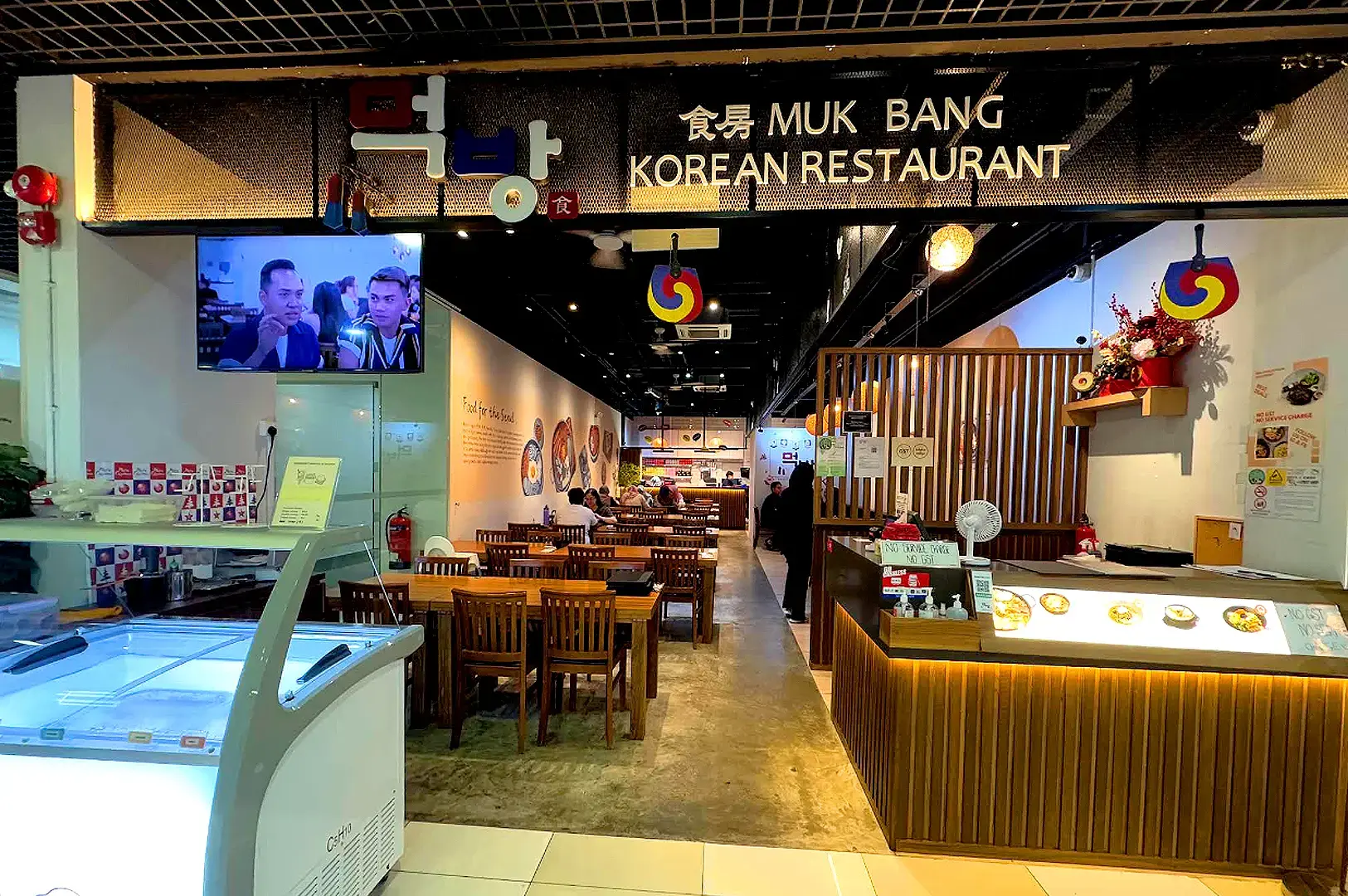
Address: 750 Chai Chee Road, #01-02, ESR BizPark @ Chai Chee, Singapore 469000.
Halal status: Muk-Bang Korean Restaurant is listed in the MUIS halal register under the Eating Establishment scheme.
Opening hours: Current listings show 11am to 9:30pm daily. If you are hoping for a late dinner, check directly before travelling because delivery ordering hours may differ.
Reservations: Booking ahead makes sense for larger family groups, celebrations, and busy dinner periods.
Parking: ESR BizPark provides onsite parking. One current source referencing OneMotoring data lists weekday parking from 6pm to 10:59pm at S$2.62 per entry, although parking information can change and should be checked before your visit.
Getting there: The restaurant is inside a business park rather than immediately outside an MRT station, so a bus or car is generally the more convenient option.
Come to Muk-Bang for the Shared Table
Muk-Bang is not trying to recreate a fashionable Seoul restaurant at home in Singapore.
I would recommend it most to families, Muslim diners looking for halal-certified Korean food, and groups who enjoy sharing dishes rather than ordering individual mains.
Come early if you prefer a quieter room. Add enough rice or ramen to make the stew filling. And if that pot is already hissing when it reaches your table, give it a moment before leaning over it. I still remember the child beside me learning exactly that.

Pagi Sore Indonesian Restaurant Est 1989 Review: A Second-Generation Kitchen That Still Knows Its Own Voice
Eda Wong | October 17, 2026
The first thing I noticed at Pagi Sore Indonesian Restaurant was the smell. Not the sharp, showy kind. Something slower: coconut milk, lemongrass, chilli, fried egg, and the deep warmth of spice paste drifting out from a wood-heavy dining room while Far East Square kept moving outside. I walked over on a Wednesday evening, just…

Best Fish Soup in Singapore: Bowls Where the Broth Is the Whole Point
Eat Drink Asia Team | October 15, 2026
I don’t remember when fish soup became my quiet meal. It just did. On days when I couldn’t decide what I wanted, when the weather turned grey, when I needed something warm that asked nothing of me, I’d end up hunched over a bowl, breathing in the steam before the first spoonful. I’ve eaten a…
-
The Clay Stove Heat Beneath a Lao Grilled River Fish
Eda Wong | October 14, 2026
By Eda Wong for Eat Drink Asia It’s late afternoon, and the river is the colour of weak tea. A woman crouches beside a small clay stove at the edge of the bank, feeding it slivers of charcoal. Smoke lifts, thin and grey, and drifts toward the water. On a bamboo skewer, a whole fish…
-
The National Dish of Indonesia Is Not One Plate: Why a Country of Islands Needs Many Icons
Dio Asahi | October 13, 2026
The first time someone asked me for the national dish of Indonesia, I answered nasi goreng without thinking. It seemed obvious: fried rice darkened with kecap manis, often topped with a fried egg, familiar from warungs and late-night street food stalls. That answer is not wrong. It is simply too small. Indonesian food is regional,…
-
Sapporo in a Bowl: Soup Curry by Ki-setsu Comes to Singapore
Eda Wong | October 12, 2026
Ask most Singaporeans to picture Japanese curry and a familiar image probably comes to mind: a plate of rice beneath thick brown gravy, perhaps with a breaded cutlet sliced neatly across the top. It is rich, sweet-edged, comforting and, by now, almost as recognisable as ramen or donburi. Head to the fourth floor of Fortune…
-
Meokja by Jungga Review: The Halal Korean Snack Table That Knows What It’s Doing
Eda Wong | October 10, 2026
I had not planned to eat at Meokja by Jungga. I was walking down North Bridge Road on a Tuesday, somewhere around the awkward hour between lunch and dinner, when I caught the smell of something frying and the low clatter of a kitchen working hard. I looked up, saw the sign, and my feet…
-
Seoul Bunsik Funan Review: The Comfort of Korean Street Food Without the Street
Eat Drink Asia Team | October 8, 2026
I have eaten ramyeon on a plastic stool in Seoul, close to midnight, with cold air biting at my ankles and the broth doing all the work of keeping me warm. Seoul Bunsik Funan is not that. This was a bright Tuesday afternoon, escalators humming behind me, the smell of mall air-con instead of street…
-
The Last Turn of Tamagoyaki in a Tsukiji Pan
Dio Asahi | October 7, 2026
By Dio Asahi for Eat Drink Asia. It’s mid-morning, and the cook doesn’t look up. He stands over a rectangular pan, copper worn to a dull gold at the edges, and pours a thin skin of beaten egg across its surface. It hisses. Steam rises, warm and faintly sweet, and he tilts the pan just…
-
Seafood Restaurants in Singapore That Turn Crab Night Into a Full Table Ritual
Dio Asahi | October 6, 2026
It always starts the same way for me. Someone lifts the lid off a plate of chilli crab, and the whole table leans in. Fingers reach before spoons do. Somebody tears the first piece of fried mantou, drags it through that sticky, sweet-savoury sauce, and the rest of us stop talking for a second. That…
-
Korean Street Food Is Built for Movement, Heat, and One-Handed Eating
Eda Wong | October 3, 2026
The first time I ate tteokbokki in Seoul, I burned my tongue standing up. It was late, the air was sharp with cold, and I had stopped at a small street food stall near a subway exit because the steam pulled me in. The woman handed me a paper cup of rice cakes in red…