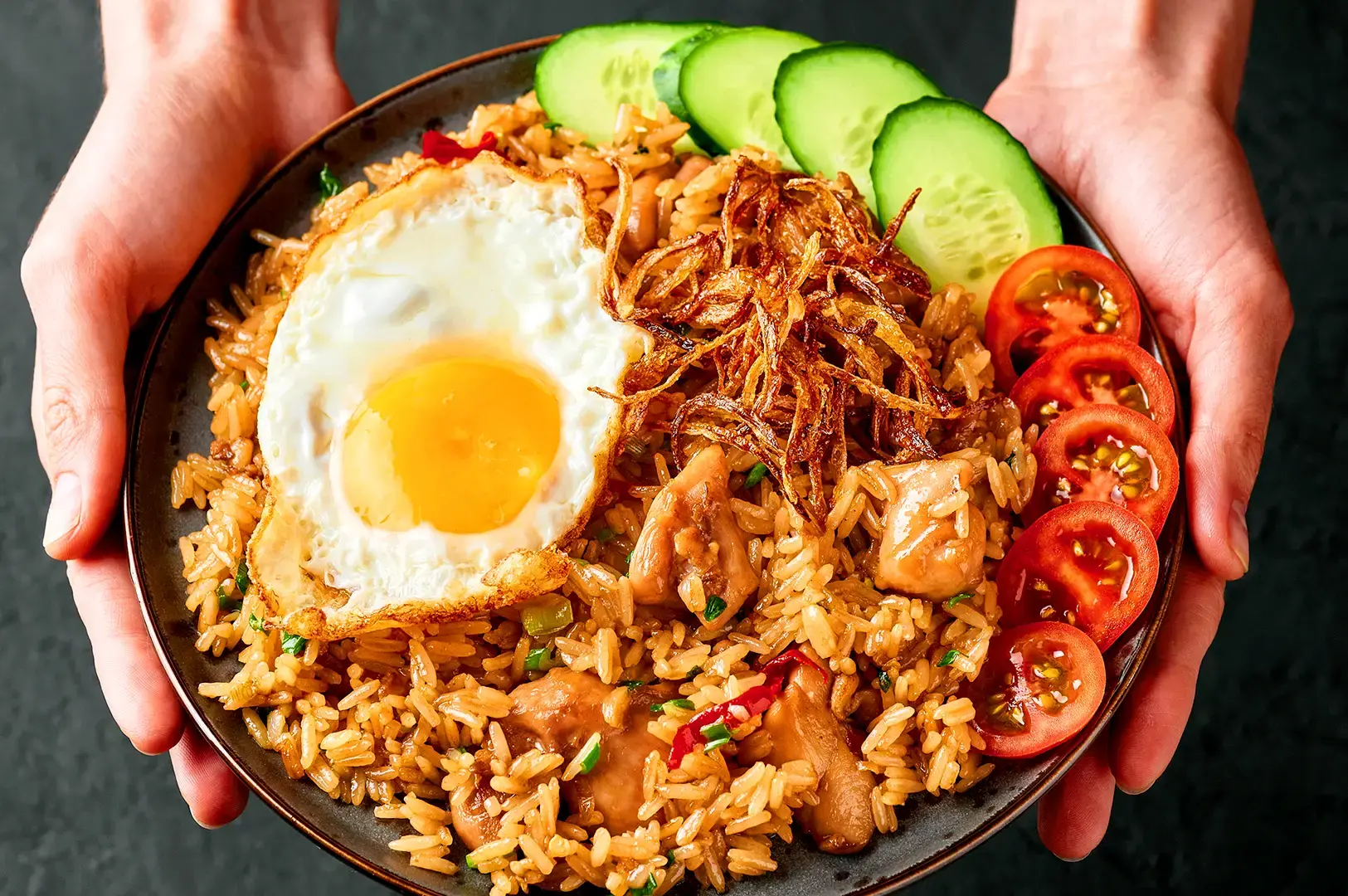
The first time someone asked me for the national dish of Indonesia, I answered nasi goreng without thinking. It seemed obvious: fried rice darkened with kecap manis, often topped with a fried egg, familiar from warungs and late-night street food stalls.
That answer is not wrong. It is simply too small. Indonesian food is regional, shaped by islands, religion, migration, trade, and local ingredients. The better question is not “Which single plate wins?” but which dishes best explain the country.
So, Does Indonesia Have One National Dish?
In 2018, Indonesia’s Ministry of Tourism named rendang, soto, nasi goreng, sate, and gado-gado as five national dishes for culinary promotion. It is best read as a cultural and tourism framework, not as a legal declaration that one plate is the only national dish of Indonesia.
Nasi goreng remains the easy answer because it is eaten throughout Indonesia and adapts easily to what is available. A typical Indonesian version starts with cooked rice stir-fried with garlic, shallot, chilli, egg, and kecap manis, the thick sweet soy sauce that gives many versions their dark colour and caramel-like savouriness. Shrimp paste, crispy fried shallots, chicken, prawns, or a fried egg may join the pan.
Why Nasi Goreng Cannot Explain Everything
Fried-rice techniques have long histories in Chinese and Southeast Asian cooking, but Indonesian fried rice developed its own pantry. Kecap manis, sambal, terasi or shrimp paste, shallots, and local seasonings distinguish it from Chinese fried rice. Chinese culinary influence is part of the story, but the dish evolved through Indonesian tastes and ingredients rather than remaining a copy of its antecedents.
Even nasi goreng is not one recipe. Nasi goreng Jawa, nasi goreng kampung, goat fried rice, and seafood versions show how one category changes by region, cook, and household. That same diversity runs through Indonesian cuisine.
Because Chinese cooking techniques helped shape parts of Southeast Asian food culture, Eat Drink Asia offers a useful comparison point for understanding how Chinese culinary influence travels.
The Five Icons and What Each One Teaches
1. Nasi Goreng: Fried Rice as an Everyday Dish
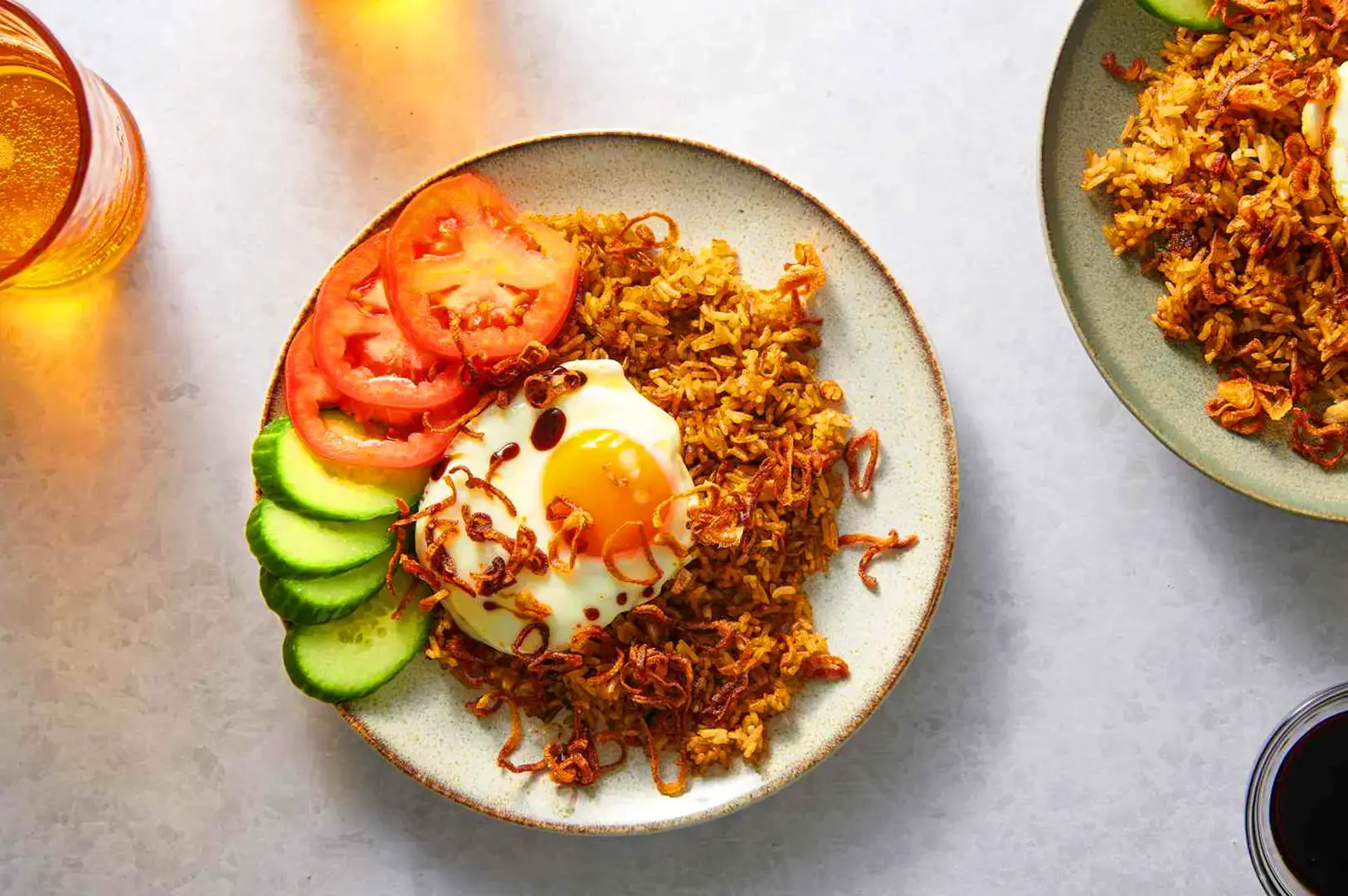
Nasi goreng shows how rice, aromatics, condiments, and high heat become a complete meal. Good nasi goreng has separate grains, balanced sweet soy sauce, and a toasted wok aroma rather than a greasy, sticky finish.
2. Rendang: Coconut Milk, Not Just Beef Stew
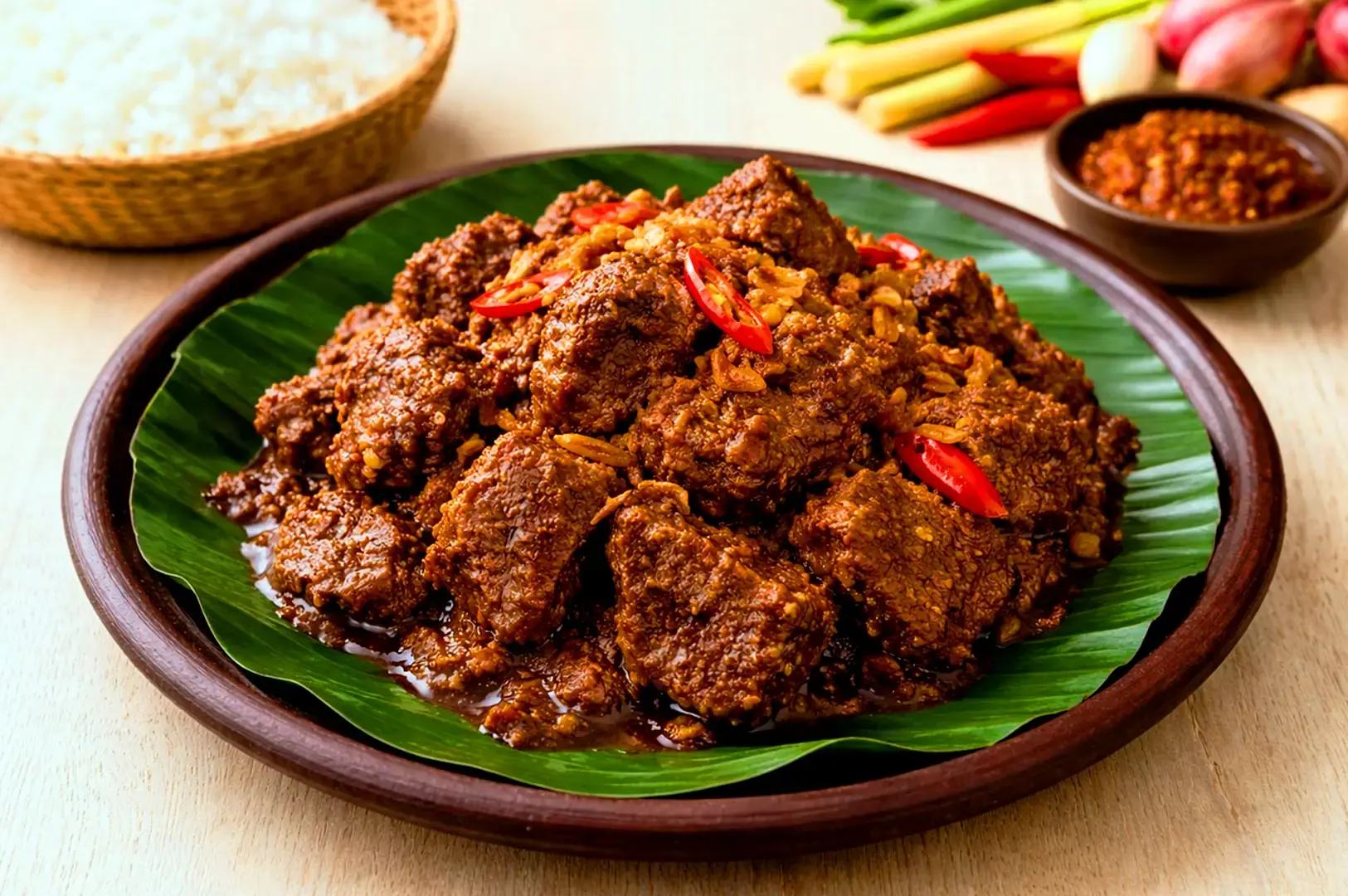
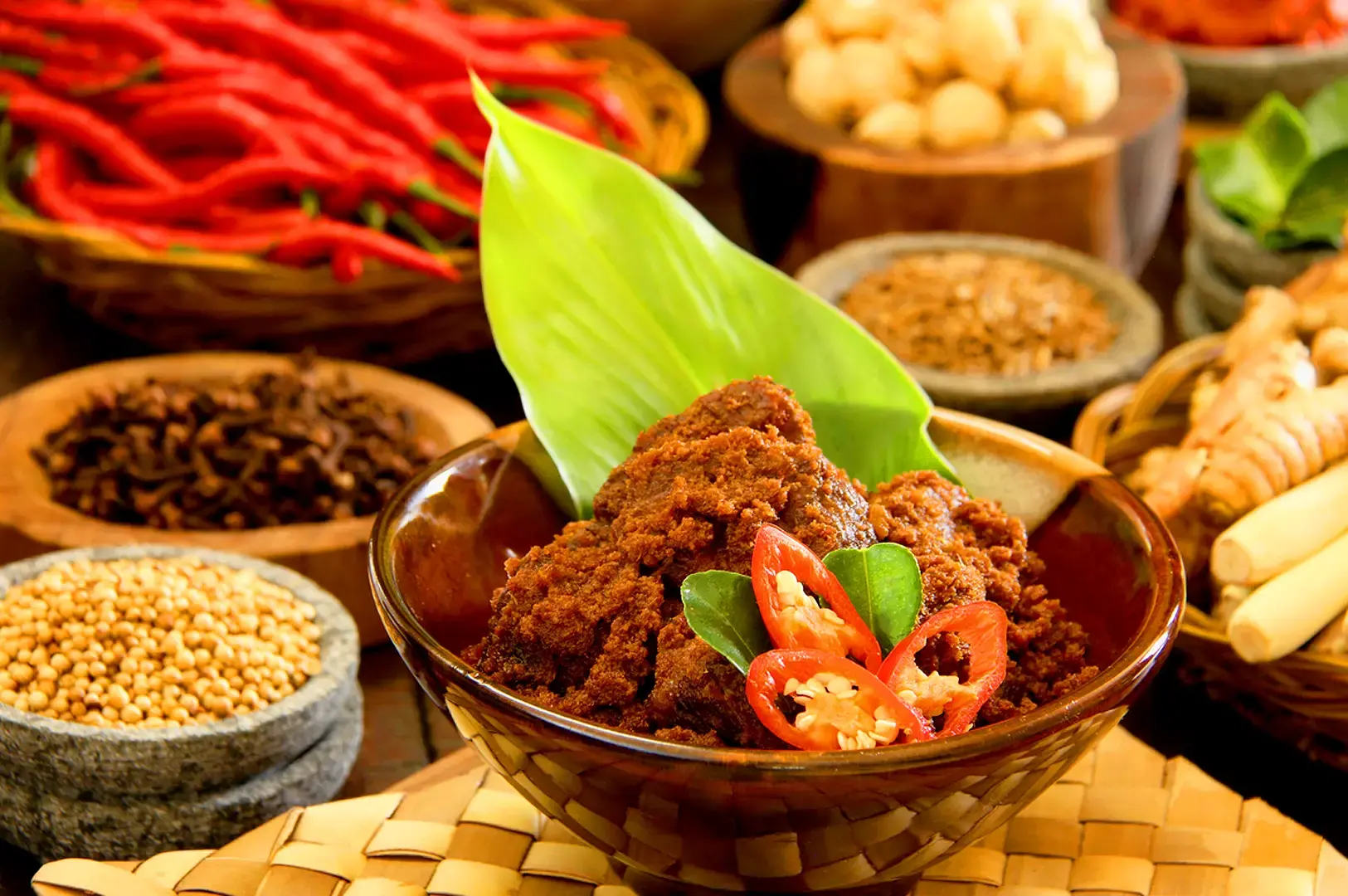
Rendang comes from Minangkabau culinary traditions in West Sumatra. Calling it a beef stew misses the defining technique. Meat cooks slowly with coconut milk and spices until the liquid reduces and the seasoning becomes dark, oily, and concentrated. Dry-style rendang is tender and deeply aromatic, but not soupy.
3. Sate: Grilled Chicken, Smoke, and Regional Variation
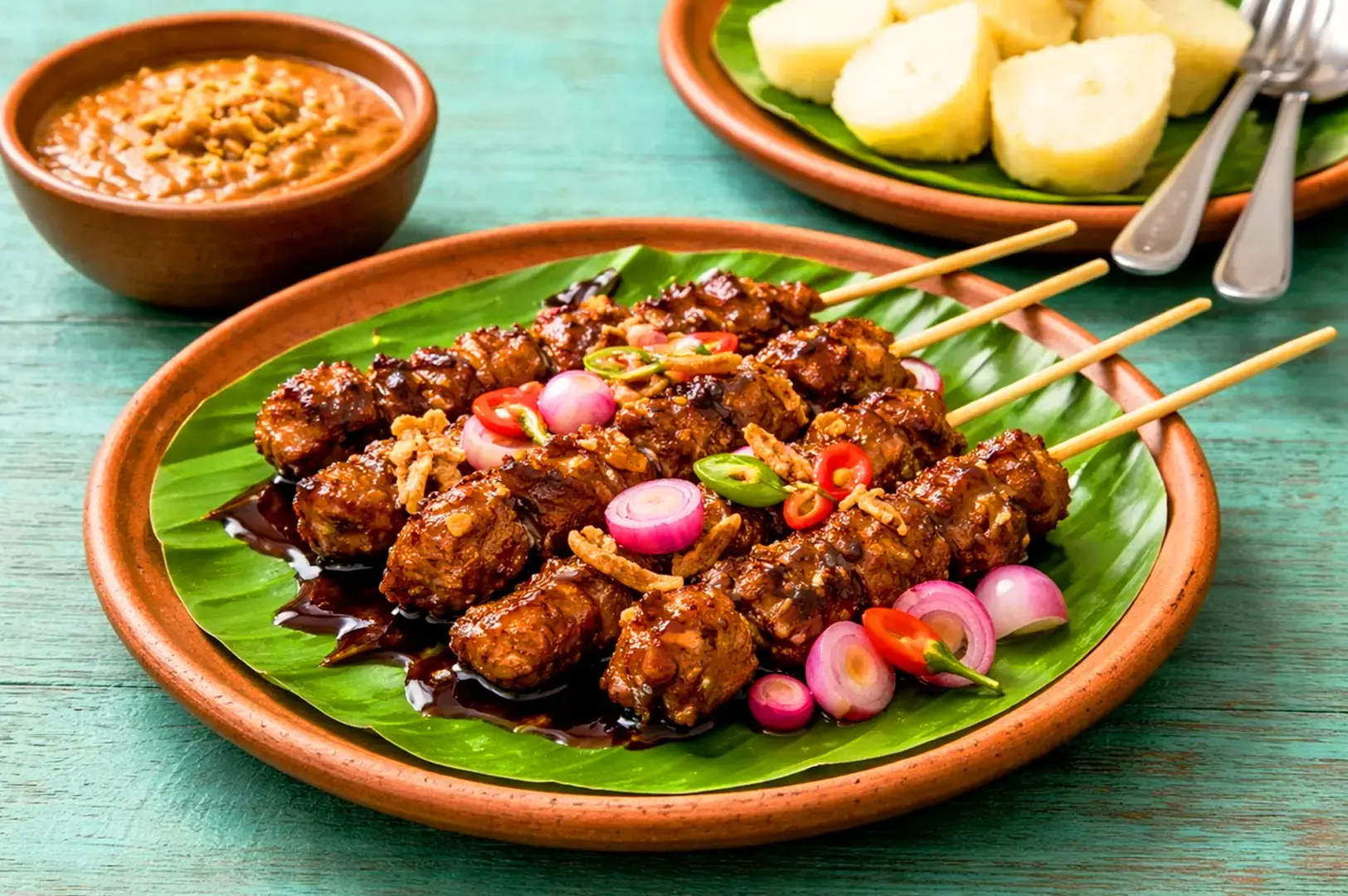
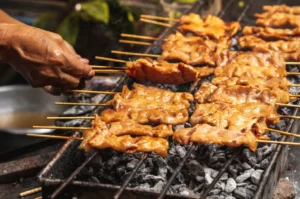
Sate teaches the role of charcoal, marinades, and sauce. Grilled chicken is common, but beef, goat, offal, fish, and other proteins appear across Indonesia. Some sate comes with peanut sauce; some does not.
Sate Padang is a useful example. It is commonly served with beef or offal, a thick spice-heavy sauce, and compressed rice cake such as ketupat. The first thing I notice is the smoke, followed by soft meat and warm spice, rather than the sweet peanut sauce many first-time diners expect.
4. Soto: One Name, Many Soups
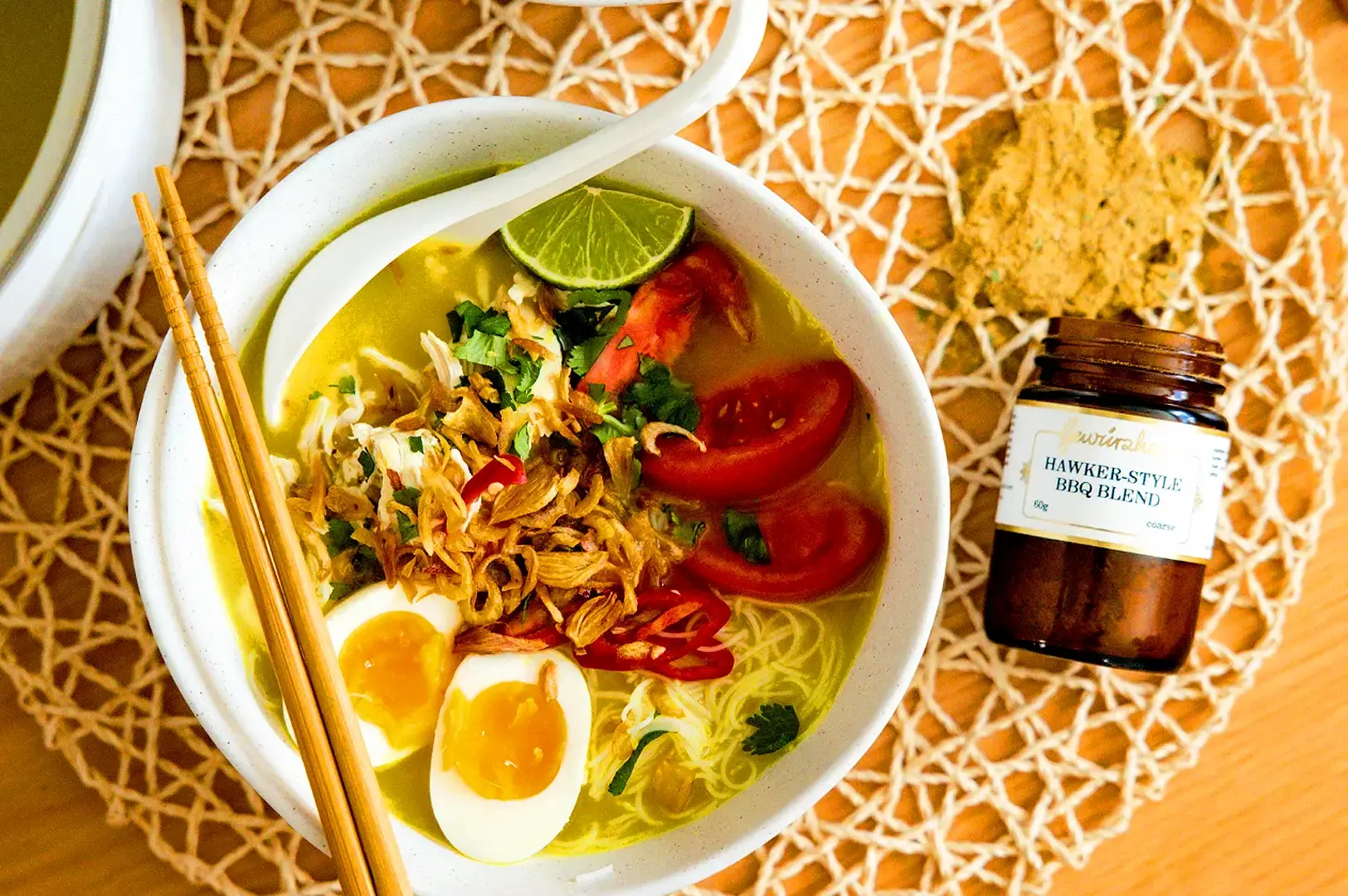
Soto is a family of soups. Soto Lamongan from East Java is known for yellow chicken broth and koya, a powder made with shrimp crackers and fried garlic, often served with shredded chicken, cabbage, bean sprouts, or rice vermicelli.
Soto Betawi from Jakarta is richer, commonly using beef or offal with milk and coconut milk. Other versions may be clear, creamy, chicken-based, or closer to a dark beef soup. The regional name tells you more than the word “soto” alone.
5. Gado-Gado: Vegetables and Peanut Sauce Belong at the Centre
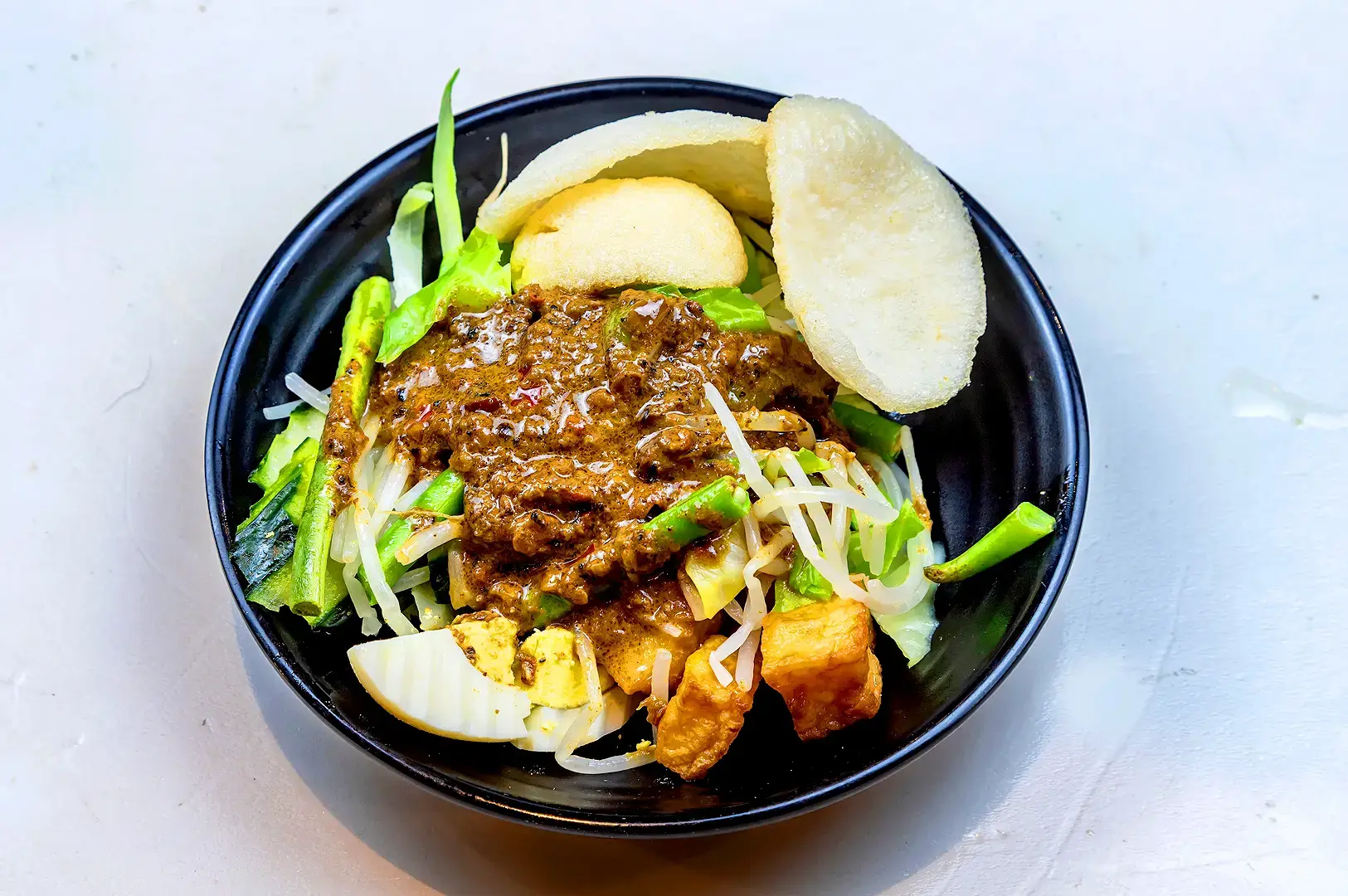
Gado-gado combines vegetables, tofu, tempeh, egg, and rice cakes or ketupat under thick peanut sauce. A good plate contrasts soft tofu, chewy rice cake, crisp bean sprouts, and vegetables with some bite. Palm sugar may add sweetness, but the sauce should remain savoury and nutty, with optional chilli.
Geography Is Why One Dish Is Not Enough
Indonesia’s Geospatial Information Agency lists 17,380 standardised island names in its 2025 gazetteer. That geography helps explain why food in Indonesia changes so dramatically. Communities developed around different coastlines, crops, trade routes, religious practices, and preservation methods.
A Minangkabau table does not taste like a Javanese one, and neither represents Bali, Sulawesi, Maluku, or Papua. Centuries of contact across Southeast Asia also shaped local food culture. Noodles, soy products, and stir-fried techniques were absorbed alongside older regional culinary traditions, then adapted to Indonesian ingredients and preferences.
Beyond the Five
The five icons are a starting point, not a complete Indonesian food guide. Nasi uduk, for example, is coconut rice cooked with coconut milk and aromatics, commonly served in Jakarta with side dishes such as Indonesian fried chicken, egg, tempeh, sambal, and fried noodles or bihun.
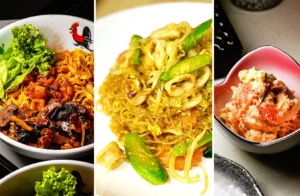
Elsewhere, Mie Aceh uses thick yellow noodles in fried, stir-fried, or soupy forms. You will also find grilled fish, grilled chicken, fried duck, deep-fried fish, and bubur ayam, the Indonesian version of chicken congee topped with shredded chicken and savoury garnishes. These dishes show why a short list can only introduce the cuisine.
Religion and Local Practice Matter Too
Indonesia has the world’s largest Muslim population, so pork is absent from many food traditions. But Indonesian cuisine is not automatically halal. In Hindu-majority Bali, pork soto and other pork dishes exist alongside chicken, seafood, and vegetable cooking. If halal status matters, check the restaurant or certification rather than assume.
How to Taste the Five Icons as a Beginner
The easiest way to understand traditional Indonesian dishes is to compare cooking techniques rather than simply collecting famous names:
- Nasi goreng for rice, kecap manis, aromatics, and wok heat.
- Rendang for coconut milk, spice paste, and long reduction.
- Sate for charcoal, marinades, and sauce.
- Soto for broth and regional variation.
- Gado-gado for vegetables, rice cakes, and peanut sauce.
Then add nasi Padang, not as a sixth national dish, but as a lesson in how Indonesian meals are assembled. Padang food pairs steamed rice with side dishes such as rendang, curried meat, vegetables, sambal, fried items, and seafood dishes. To see how nasi Padang works in a real Singapore dining context, read top-rated Muslim-friendly dining in Singapore.
Build a Table, Not a Single Plate
For a first group meal, order one rice dish, one slow-cooked protein, one grilled item, one vegetable dish, one soup, and sambal on the side.
That spread lets you compare smoke, broth, coconut, sweetness, chilli, and texture in one sitting. It teaches far more about Indonesian meals than ordering several versions of fried rice.
How to Recognise a Well-Made Version
Nasi Goreng
Look for separate grains and balanced seasoning. It should not be slick with cooking oil or drowned in soy sauce. The aroma should feel toasted and savoury.
Rendang
The meat should be tender but recognisable, with a dark coating of reduced coconut milk and spices. Dry-style rendang should not sit in thin gravy.
Sate
Look for browned edges and a smoky aroma. The sauce should complement the meat rather than hide poor grilling.
Soto and Gado-Gado
With soto, start with the broth. It should smell layered, whether clear, turmeric-yellow, creamy, or beefy. With gado-gado, vegetables should retain texture and the peanut sauce should balance nuttiness, salt, sweetness, and chilli.
The biggest warning sign is a menu that reduces Indonesian food to generic spicy food. Indonesian meals can be smoky, sour, sweet, creamy, brothy, nutty, fermented, herbal, and deeply savoury.
Where to Learn These Differences in Singapore
Singapore is useful for comparing Indonesian and Malay-Indonesian culinary traditions. The categories overlap, so it helps to know whether you are eating specifically Minangkabau food, broader Indonesian cooking, or Malay dishes with Indonesian influences.
For Nasi Padang and Rendang
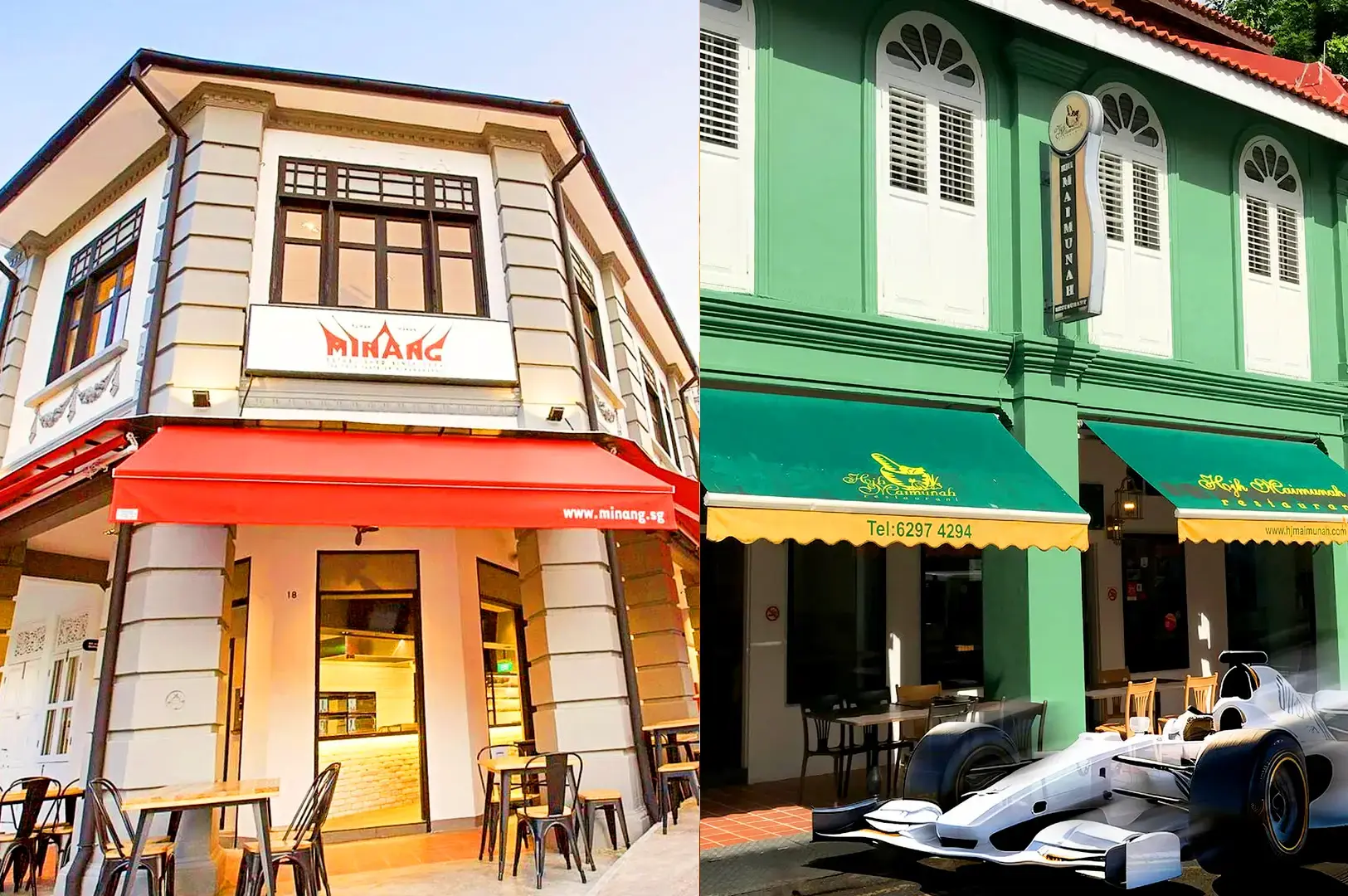
Rumah Makan Minang specialises in Minangkabau cuisine, especially nasi Padang and beef rendang, and currently operates at Kandahar Street, Jurong West, and Our Tampines Hub.
Hjh Maimunah blends Malay and Indonesian traditions, with beef rendang, ayam bakar Sunda or grilled chicken, tahu telur, and nasi Padang among its signatures. Its Jalan Pisang restaurant is listed by the Michelin Guide as a Bib Gourmand address.
For a Broader Indonesian Menu
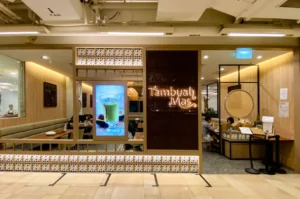
Tambuah Mas serves Indonesian homestyle food and currently has outlets at Paragon, Great World, and Jewel Changi Airport, making it a practical place to compare several regional dishes at one table.
For a more casual approach, Taste of Indonesia currently operates five food-court and express locations. Its focus on street food makes it useful for sampling everyday Indonesian dishes without committing to a formal restaurant meal.
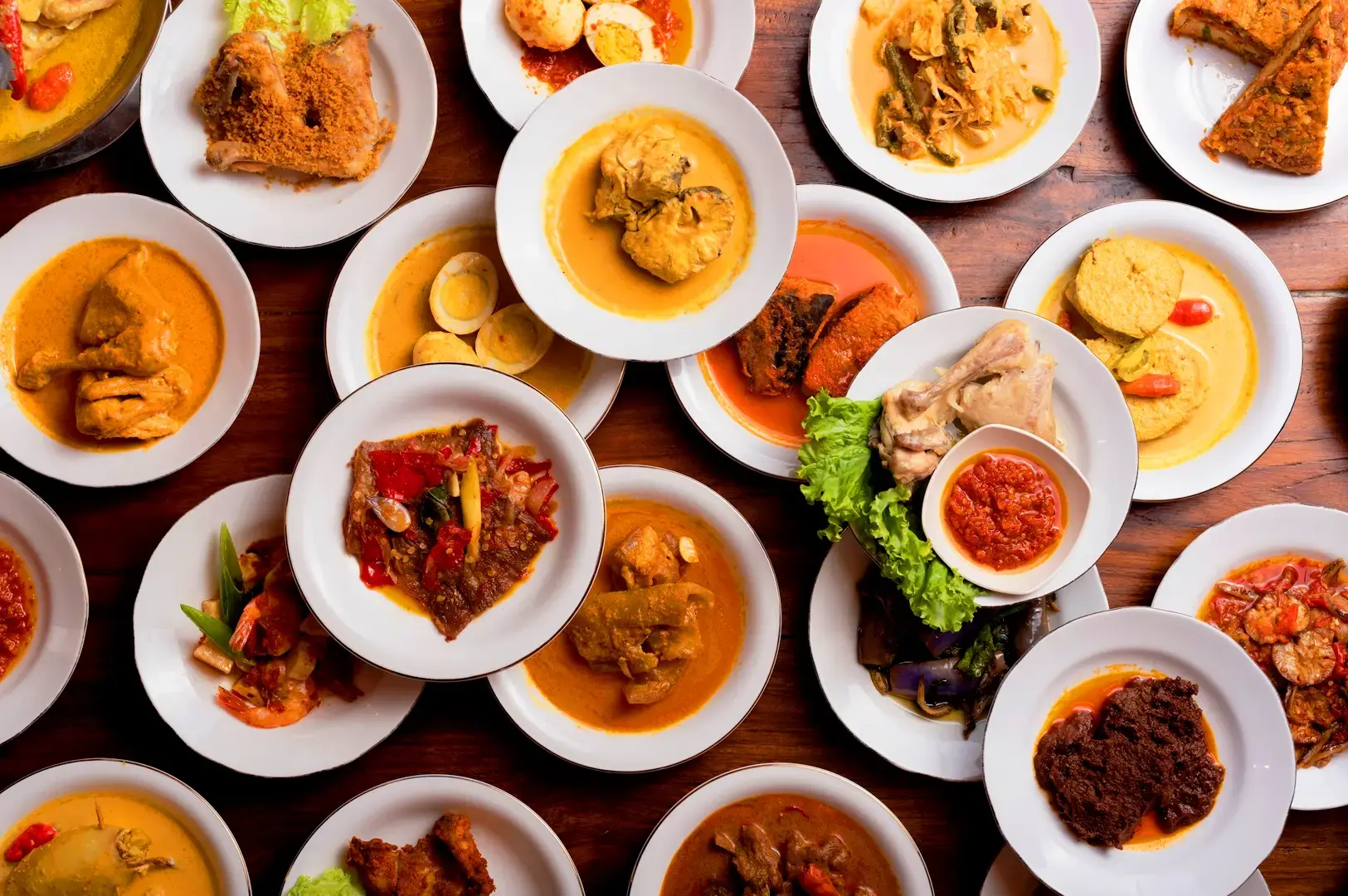
One Country, Many Plates
I still understand why nasi goreng is the first answer people give. It is accessible, recognisable, and genuinely important. But it is better understood as one doorway into Indonesian food, not the whole house.
The five-dish framework teaches five ideas: fried rice and kecap manis, slow reduction, charcoal grilling, regional soup traditions, and vegetables with peanut sauce. Add coconut rice, fried noodles, chicken congee, Padang food, and many other traditional Indonesian dishes, and the larger point becomes clear.
Indonesia does not need one plate to represent it. Build a table and let the differences do the teaching.

The Potato Curry That Teaches You How Spices Wake Up: A Beginner’s Indian Cooking Lesson
Eda Wong | July 16, 2026
The first time I made aloo curry on my own, I burned the cumin. I remember standing in my tiny HDB kitchen, watching those little seeds go from golden to black in what felt like one breath, and thinking: this is harder than it looks. But here’s what that bitter, smoky disaster taught me, the…

Bamboo Skewers and Smoke: Street Grills in Chiang Mai
Dio Asahi | July 15, 2026
The cart glows at the edge of the lane just as the heat of the day finally loosens. A woman fans the coals with a flattened piece of cardboard, and the embers brighten orange under a row of skewers. Fat slides off the pork, hits the charcoal, and hisses upward in a thin curl of…
-
Chana Masala With Warm Roti, Built for Weeknights: Quick Vegetarian Dinner Recipes Indian
Dio Asahi | July 14, 2026
The first time I made chana masala, I started with dried chickpeas at 7:30 on a weeknight, soaking and boiling like the recipe said. By the time the curry was actually done, it was nearly ten and I’d already eaten half a loaf of bread out of sheer hunger. That night taught me something I…
-
One-Pan Chicken Curry With Jeera Rice and Cucumber Raita: Food for Dinner Indian, Made Practical
Eat Drink Asia Team | July 11, 2026
The first time we cooked a full Indian dinner on a weeknight, the curry, rice, and raita felt like three separate tasks—three pans, three timers, and a kitchen full of wonderful smells but chaos. The curry was good, the rice sticky, and the raita watery from being made too early. That night taught us a…
-
Banana Leaf Steam: Why Some Rice Smells Like Home
Eda Wong | July 10, 2026
Steam rises from the pot, and a woman lifts a banana leaf over the open flame, turning it once, twice, until its stiff green softens and the surface goes glossy and pliant. She wipes it down with a damp cloth, then spoons hot rice into its center while the grains still steam. The leaf releases…
-
Tambuah Mas Paragon, Delivered: Unique Food Delivery Singapore With Old-School Comfort
Eda Wong | July 9, 2026
I ordered from Tambuah Mas on a rainy Sunday at around 6:15pm, mostly because I wasn’t in the mood to dress up and head into town, but I still wanted a proper meal. Not a sad one-bowl lunch. A real spread. That’s the thing about Tambuah Mas. It’s been around since 1981, serving Indonesian home-style…
-
Toasted Rice Powder: The Dust That Makes Larb Sing
Dio Asahi | July 8, 2026
A wok sits over a low flame, and a handful of raw sticky rice slides across its dry surface. No oil, no water—nothing but heat and patience. The grains pale, then blush amber, then deepen toward the color of weak tea. Someone shakes the pan in a slow, even rhythm, listening as much as watching….
-
Ordering Lunch From Co Hai Banh Mi, and Finding Out the Definition of Good Food Delivery
Dio Asahi | July 7, 2026
I ordered lunch from Co Hai Banh Mi & Phở Vietnamese Restaurant on a Thursday at 12:08pm, which is probably the worst and most honest time to test delivery food. It was raining lightly, the kind of Singapore lunch rain that makes every rider slower and every office worker hungrier. I had been thinking about…
-
Orchard Plaza Food: Hidden Japanese Restaurants and Local Eats Near Somerset
Eat Drink Asia Team | July 4, 2026
Orchard Plaza is one of those buildings we kept walking past before we properly understood it. From the street, it looks more like an office block than a dinner plan. But over repeated visits, usually after work or during odd lunch windows, we’ve found that the real charm sits behind lift doors, quiet corridors, and…
-
Salted Egg, Properly Treated: Sauce, Not Shortcut
Eda Wong | July 3, 2026
By Eda Wong for Eat Drink Asia. The wok station is already hot when the cook lowers the flame. In the narrow back of a Singapore zi char kitchen, the air smells of butter, curry leaves, and the faint mineral edge of salted duck egg. A metal spatula presses cooked yolks through oil until they…