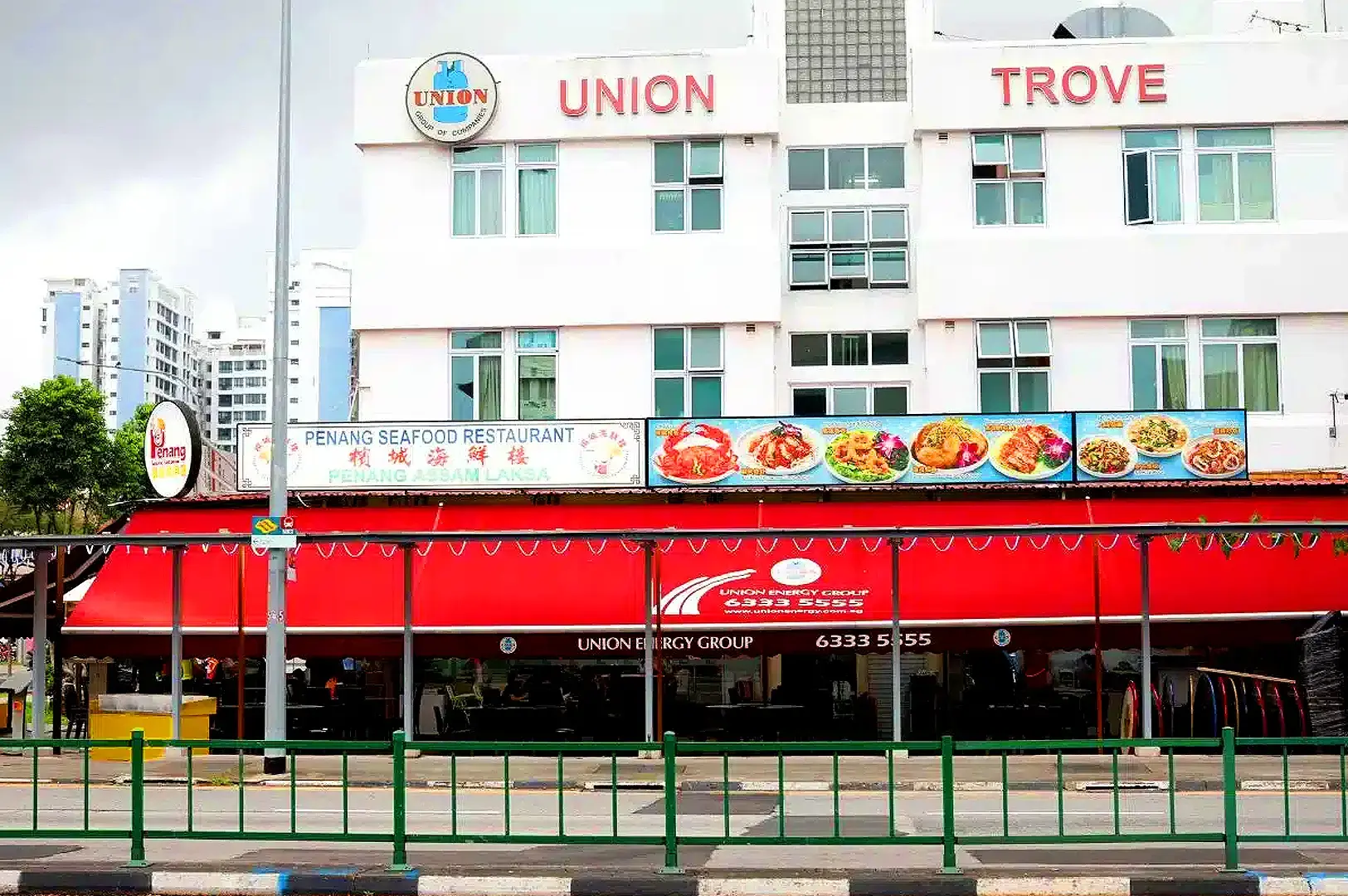
The first thing I heard was the wok.
Not the polite sizzle of a quiet stall, but a hard metallic scrape, then a roar of flame, then another scrape. It carried out to the five-foot way along Aljunied Road, past waiting families, parked bikes, and the small knot of people checking whether their table was ready.
That is Penang Seafood Restaurant before you even sit down. It is loud, practical, and built for sharing. The food does not arrive with much ceremony, but when the right dishes land, they speak in crunch, gravy, steam, and the soft click of lala shells against a plate.
This is not a narrow Penang restaurant in the purist sense. It feels more like a Singapore zi char restaurant with Penang dishes, seafood plates, and crowd-friendly portions sitting together on one large menu. That is not a criticism. It simply tells you how to order.
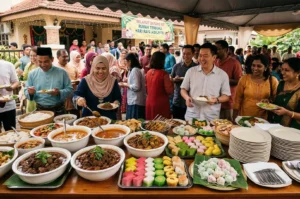
What I kept noticing at Island Penang Kitchen was how much of the meal came down to texture, the same thread that runs through all Malaysian Chinese food as highlighted by Eat Drink Asia.
Loud, Fast, and Very Much Alive
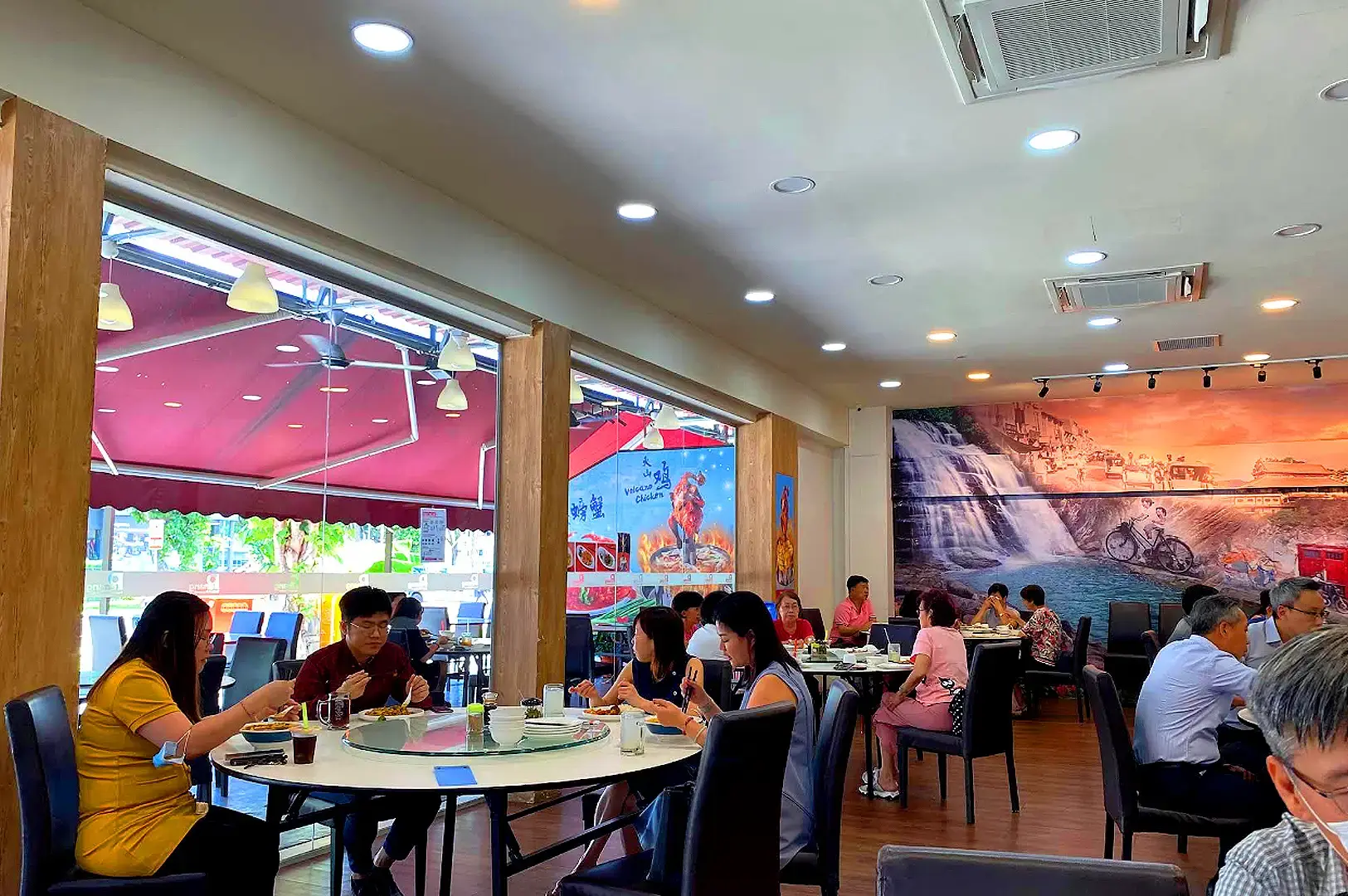
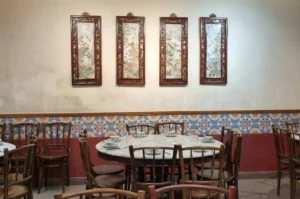
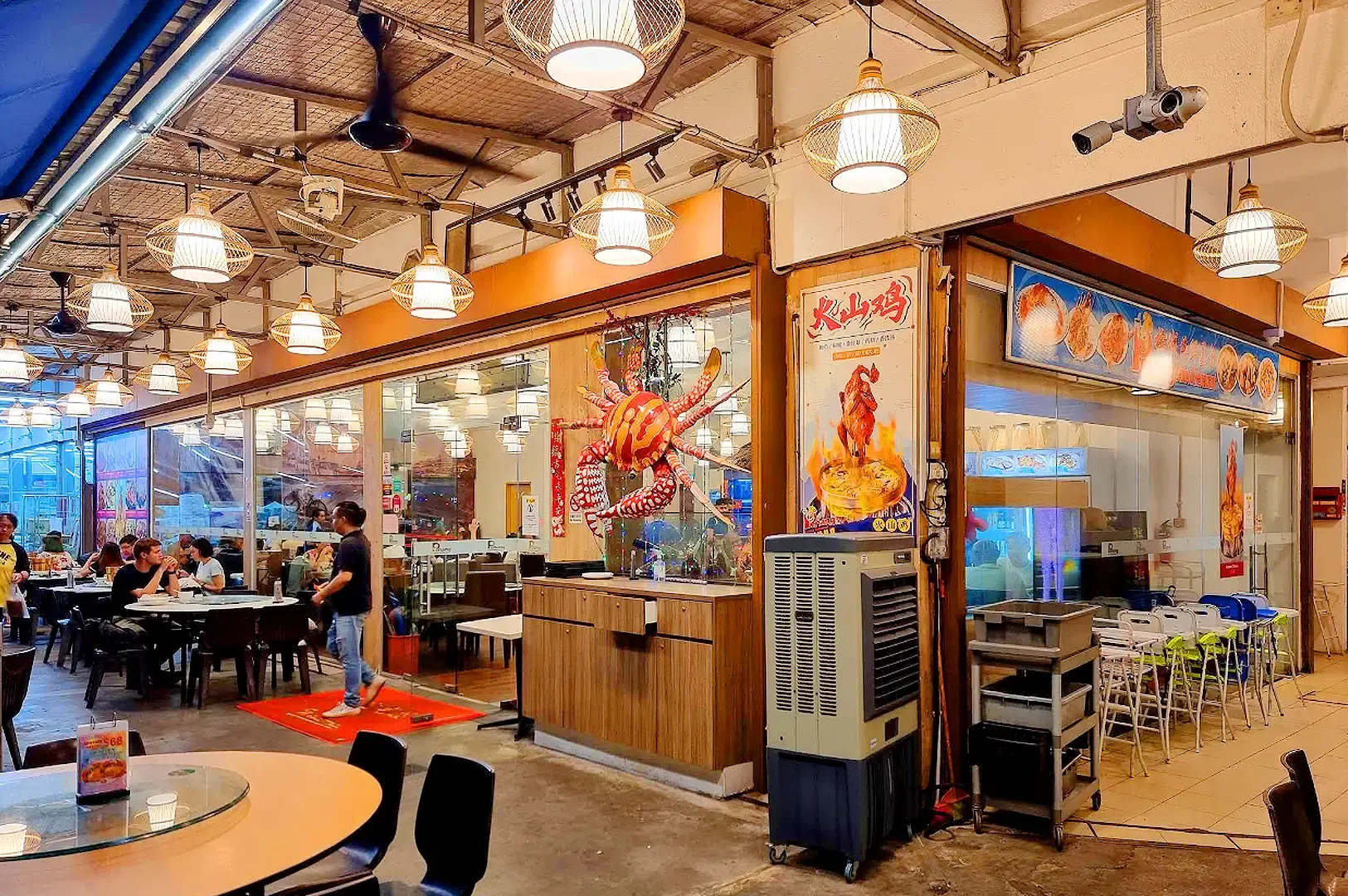
The dining room is large and plain, with air-conditioned indoor seating and outdoor tables along the front. There are Penang-style murals on the walls, but few people seemed to look at them for long. Most eyes were on the next plate coming out of the kitchen.
This is not the place for a quiet date or a slow two-person dinner where every sentence needs soft lighting. Chairs scrape, glasses clink, children ask for steamed rice, and servers move quickly between tables. Smaller groups may find themselves sitting close to larger parties when the restaurant is crowded.
The Best Way To Sit
If you want to hear your friends, ask for an outdoor table. It is still not silent, especially with Aljunied Road nearby, but it feels less compressed than the indoor room when peak dinner hits.
What I liked was how familiar the whole thing felt. Grandparents, office groups, families, teenagers sharing noodles, and tables ordering more rice before the first dish was finished. Penang Seafood Restaurant works best when you come with people who are happy to share.
Fried Sotong with Salted Egg: The Dish To Eat First
We started with the Fried Sotong with Salted Egg, the dish I had seen mentioned often enough in reviews to feel almost compulsory. Burpple’s listing also points to Fried Sotong with Salted Egg and Lala Hokkien Mee as commonly discussed signature orders here.
It arrived piled high on an oval plate, squid rings coated in a pale yellow salted egg sauce. Curry leaves sat on top, fried dark and glassy, with a few slivers of red chilli cutting through the richness. The smell reached first: buttery, salty, faintly spicy, like the warm backbeat of a busy kopitiam kitchen.
Texture Check
The first piece passed the test. I pressed it lightly with my chopsticks and the coating held. That matters because creamy salted egg sauce can soften batter fast, especially when it is rich and heavy.
The bite gave a small crackle before reaching the squid, which had a gentle bounce rather than a rubbery pull. The sauce clung instead of pooling, with a buttery salted egg richness, mild heat from the chilli, and curry leaves adding a sharp herbal lift.
Lala Hokkien Mee: Comfort More Than Smoke
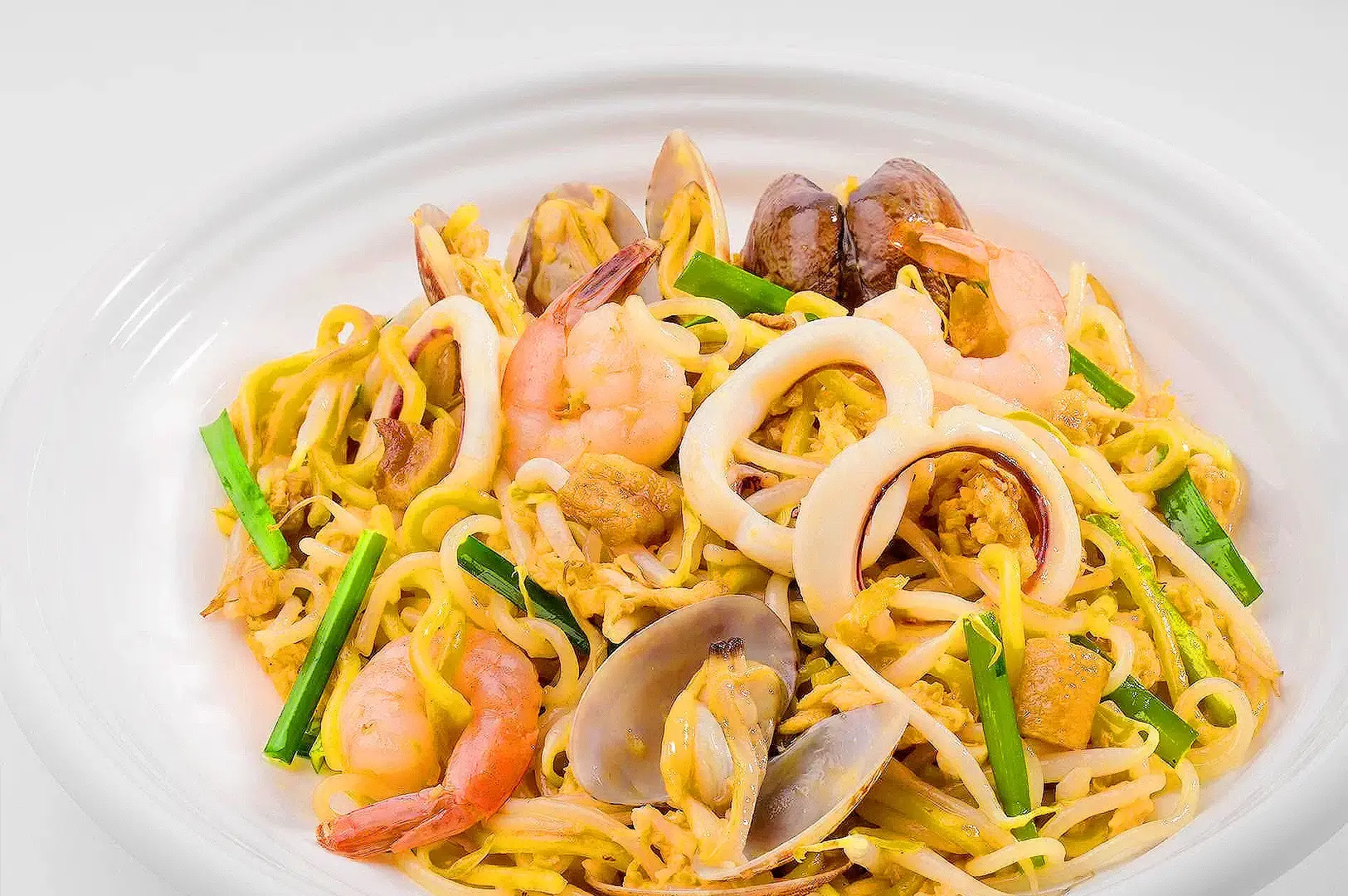
The Lala Hokkien Mee was the dish I came for.
It arrived wide and glossy, yellow noodles tangled with bee hoon under a light brown gravy. Lala clams sat open across the top, still steaming in their shells. There were prawns, squid, cabbage, and a saucer of sambal on the side, which I would not treat as optional.
Where It Falls Short
What I missed was stronger wok hei. There was a faint charred edge somewhere in the background, but the gravy smoothed most of it away. If you want a smoky, dry, intensely wok-fired Hokkien mee, this may not be the version in your head.
Still, I would order it again. The dish works because it is comforting, generous, and seafood-forward. Add the sambal early. It wakes the plate up and gives the gravy a sharper, spicier finish.
Fermented Pork Belly: Crunch, Fat, and Restraint
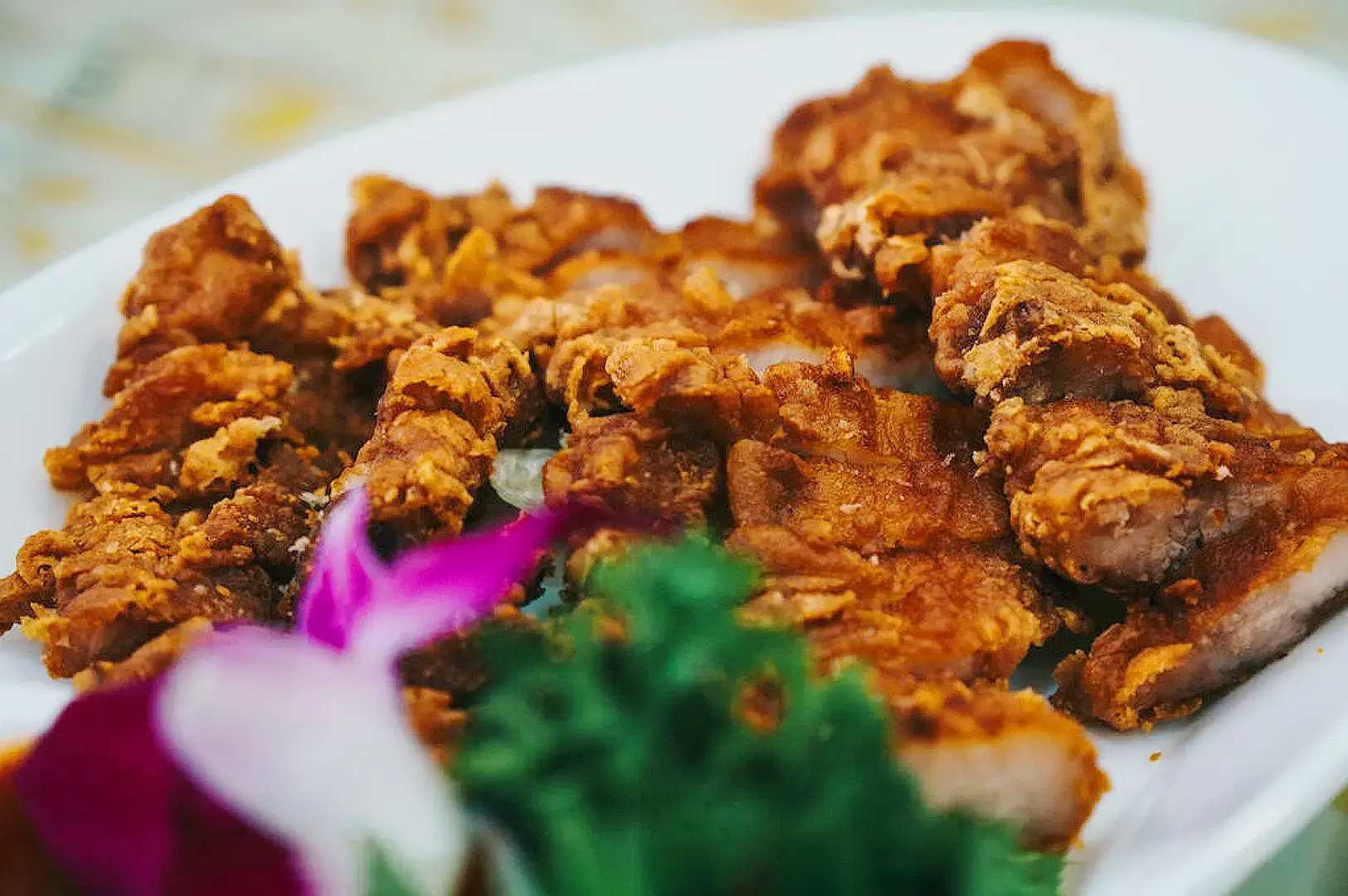
The Fermented Pork Belly changed the mood at the table.
The pieces came thick and deep golden, with darker mahogany edges that made them look almost dry from a distance. They were not. The first bite cracked through a thin crust, then gave way to soft fat and tender meat.
What Worked
The fat had rendered enough to feel silky rather than greasy. That was the surprise. Pork belly can easily become heavy, especially in a meal already carrying salted egg and seafood gravy, but this still had lift because of the crust.
The fermented bean curd flavour was present, salty and faintly funky, though gentler than I expected. I wanted a slightly sharper edge, that almost cheesy fermented note that lingers. One friend preferred it exactly as it was, more savoury than aggressive.
Penang Laksa: The Sour Reset
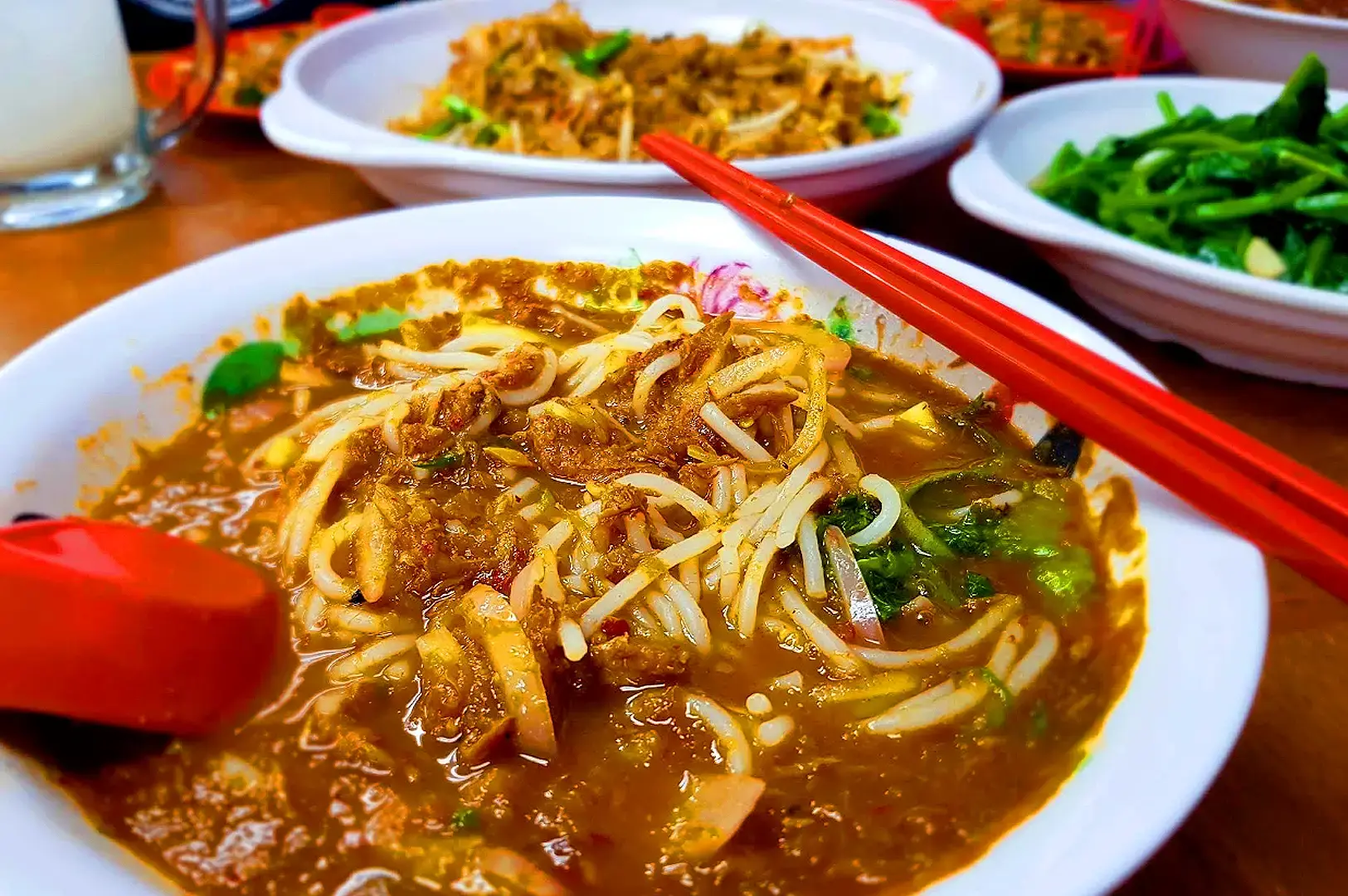
By the time the Penang Laksa arrived, we needed something to cut through the richness.
The bowl looked murky in the right way, with a grey-brown broth, fish flakes, cucumber, onion, pineapple, mint, and a dark spoonful of prawn paste waiting to be stirred in. It was not the prettiest dish on the table, but it had the clearest personality.
The Broth
The first sip was properly sour. Tamarind pulled at the back of the jaw, followed by fish, heat, and the deeper sweetness of prawn paste. After salted egg sotong and pork belly, it felt like opening a window in a hot room.
The fresh vegetables gave the bowl its rhythm. Cucumber and onion stayed crisp, pineapple brought quick sweetness, and the noodles slipped through the tangy broth without making it feel heavy.
Penang Char Kway Teow, Cereal Prawns, and Other Orders I Would Consider Next
I would be curious about the Penang Char Kway Teow on another visit, especially if I were craving a drier kway teow dish with more wok hei. A good Penang fried kway teow should have smoke, eggs, prawns, bean sprouts, and that slick, savoury finish that makes one more mouthful feel reasonable even when you are full.
The Cereal Prawns also make sense for a family table, especially if you want something sweet, crispy, and easy to share. I would consider Sambal Petai only if the group enjoys bold, spicy, slightly funky flavours. Petai is not a neutral vegetable, and that is exactly why people either love it or avoid it.
That smoky edge comes from the same high-heat wok work behind some of the best Chinese restaurants in Singapore, only here it lands on a Penang-style plate.
Fast Hands, Few Words
Our order was taken within minutes, and the dishes arrived steadily. Plates were cleared without fuss. Nobody lingered to explain the food, and honestly, that is not the kind of seafood restaurant this is.
The Premium Seafood Push
When I hesitated over the menu, our server pointed us toward crab and whole fish. That is not unusual for a seafood restaurant, but it is worth knowing before you sit down. If you came for noodles, fried sotong, pork belly, and laksa, say so clearly.
I declined the larger seafood items, and the server moved on without making it awkward. The practical rule is simple: decide your budget before ordering, especially if chilli crab, prawns, or whole fish enter the conversation.
Before You Go to Penang Seafood Restaurant
Address: 32 Aljunied Road, Union Trove, Singapore 389817
Phone: +65 6841 3002
Nearest MRT: Aljunied MRT, about a 3 to 5 minute short walk
Opening Hours: Daily, around 11am to 11:30pm based on current delivery platform listing. Some listings show service until midnight, so check before a late visit.
Estimated Spend: Around S$20 to S$35 per person for noodles and shared zi char dishes, more if you add crab, whole fish, chilli crab, or premium fresh seafood
EDA Says
- Reserve for weekend dinners and larger groups.
- Go before 12pm for lunch or before 6:30pm for dinner if you dislike waiting.
- Take the train if you can, since parking around Aljunied and Geylang can be limited.
- Ask about portion sizes before ordering medium or large dishes.
- Eat the fried sotong first, before the salted egg coating softens.
- Bring family or friends, because this place works best when several dishes can be shared.
A Loud Penang Seafood Restaurant Worth Ordering Carefully
Penang Seafood Restaurant is not trying to be quiet, polished, or pure. If you want a calm date night, a small tasting menu, or a focused Penang-only restaurant, this is probably not your table.
But if you are bringing family, colleagues, or a group of friends who like sharing, it makes a lot of sense. The best dishes are not subtle, but they are memorable: the crackle of salted egg batter, the soft click of lala shells, the crunch of pork belly, and the sour pull of Penang laksa.
Still, I left understanding why people return. The restaurant has energy. The kitchen knows texture. And when we stepped back onto 32 Aljunied Rd, Singapore night air heavy around us, the queue outside had grown longer while the wok inside was still roaring.

The Soul of the Table: An Educational Guide to the Role of Food in Malaysian Culture
Eat Drink Asia Team | March 17, 2026
We still remember our first collective Rumah Terbuka (Open House) experience in Kuala Lumpur.Standing at the doorway of a home during Hari Raya, we were utterly paralyzed by the sheer volume of people and the aroma of Malaysian cooking. There were aunties ladling beef rendang and tables groaning under the weight of colourful kuih. “Do…
-
Asian Food Comfort Trends: Why Broths and Bowls are Dominating Globally
Eda Wong | March 14, 2026
I still remember the first time I faced a “build-your-own” Mala Xiang Guo counter. I stood there, plastic tongs in hand, completely paralyzed by the mountain of choices. Lotus root? Kelp knots? three different types of tofu skin? My anxiety spiked. I panicked, grabbed way too much luncheon meat, and ended up with a $28…
-
The Fifth Element: A Masterclass on Umami in East Asian Cuisine
Dio Asahi | March 12, 2026
I’ll never forget the first time I made miso soup from scratch. Not the instant kind, but the “proper” way. I boiled water, dissolved miso paste, added tofu, and waited. It tasted flat, salty and cloudy but missing the deep, satisfying flavor I loved in Japanese restaurants. I thought maybe I needed better miso. Years…
-
Why My Quest Ended at Yummy Western (409 AMK)
Dio Asahi | March 10, 2026
There’s a specific magic to a late-night supper hunt in Singapore. It’s the ritual of chasing a craving through the humidity to find that one stall that hits the spot. For me, that meant a pilgrimage to Ang Mo Kio Avenue 10. I arrived at 10 PM on a Friday, just as the ‘supper soul’…
-
A Taste of Time: My Dinner at Guan Hoe Soon
Eda Wong | March 7, 2026
There’s something special about visiting a place that has seen decades of Singapore’s history unfold. Guan Hoe Soon, tucked away on Joo Chiat Road, holds the title of Singapore’s oldest Nyonya restaurant, and you can feel that heritage the moment you step inside. I’d heard about it for years, a place where recipes aren’t just…
-
The 6 Best Halal Restaurant in Singapore for Authentic Nasi Padang
Eda Wong | March 5, 2026
There are few meals as satisfying as Nasi Padang, a colourful feast where you choose from a variety of dishes to create your perfect plate. Over the years, I’ve explored Singapore’s Nasi Padang scene, especially in Kampong Glam, sampling everything from humble hawker stalls to renowned spots. This list highlights the best halal Nasi Padang…
-
The Global Soup Bowl: How Indonesian Soto Shapes the Future of Asiatic Food Traditions
Dio Asahi | March 3, 2026
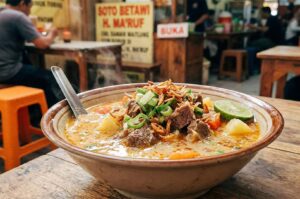
I still remember my first “real” bowl of Indonesian soto. Sitting on a low plastic stool in a cramped warung, I ordered Soto Betawi, expecting it to be like the clear Soto Ayam from Singaporean weddings. I was wrong. The rich, milky broth was intense, creamy, and boldly spiced. That first spoonful rewired my idea…
-
Shun: Japan’s Seasonal Treasures – A Deep Dive Into the Ingredients Behind True Omakase
Eat Drink Asia Team | February 28, 2026
In the world of Asian food, few dining experiences capture the soul of traditional Japanese food culture like omakase. At a premier omakase restaurant, diners entrust their meal entirely to the chef, whose artistry is guided not just by mastery, but by shun—the appreciation of seasonal and fresh ingredients at the absolute peak of their…

My Trip to Bánh Mì Saigon and How It Compares to Best Food in Singapore
Eda Wong | February 26, 2026
Located in the bustling neighborhood of Ang Mo Kio, Bánh Mì Saigon offers a taste of Vietnam right here in Singapore. From traditional bánh mì sandwiches to hearty pho bowls and refreshing Vietnamese iced coffee, this restaurant has it all. I arrived at Bánh Mì Saigon on a busy Saturday evening and was immediately drawn…
-
Tea Room by Ki-setsu: A Curated Journey Through Chinese Tea in the Heart of Singapore
Dio Asahi | February 25, 2026
Most people arrive at Chinese tea the way they arrive at any beverage: thirsty, curious, maybe looking for something sweet or soothing. But traditional chinese tea isn’t built like a single drink. It’s a network: leaf origin, processing choices, vessel physics, water, pacing, and the quiet social technology of sitting down long enough for a…