The fire is not roaring; it is breathing. In a small, darkened workshop in Sakai, a swordsmith watches the colour of the steel with eyes that have tracked the same transformation for forty years. He does not look at a clock. He listens to the hum of the charcoal. He waits for the metal to reach a shade of red that exists only for a fleeting second—a colour that signals the precise moment when earth and fire are ready to yield to his hammer.
There is no audience here. There is no applause when the blade is quenched. There is only the artisan and the material, locked in a silent dialogue that will continue until his hands can no longer hold the tongs.
This is the essence of the shokunin (職人). To translate this word simply as “craftsman” is to strip it of its soul. In Japanese culture, a shokunin is not merely someone who makes things; they are someone who has surrendered their ego to the pursuit of mastery in a single, deepening discipline. It is a spiritual obligation to do one’s very best, not for profit or recognition, but for the sake of the craft itself.
The Weight of a Single Path
In a world obsessed with scaling, franchising, and “pivoting,” the shokunin philosophy stands as a quiet act of rebellion. It values depth over breadth. It chooses the infinite refinement of one thing over the mediocre production of many. It is the belief that if you polish a stone every day for fifty years, you will eventually see the universe reflected in it.
In the heart of Singapore, amidst the neon glare and hurried ambition of Orchard Road, this ancient spirit has found a sanctuary. It lives inside a modest, eight-seat counter at Cuppage Plaza known as Sushi Masa by Ki-setsu.
Finding Stillness in the City of Speed
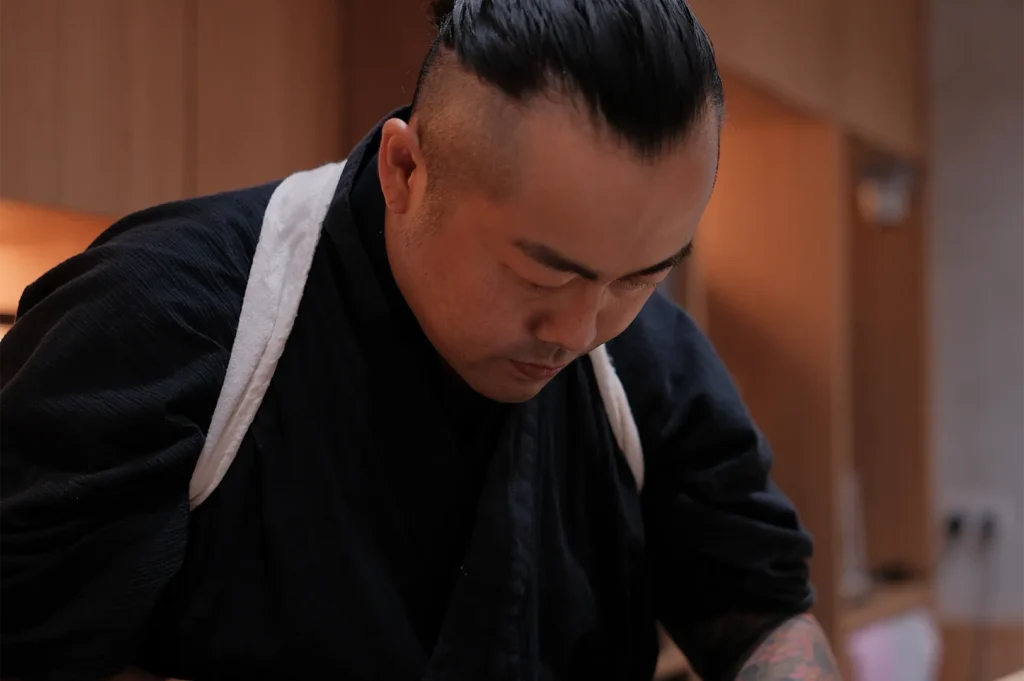
Cuppage Plaza is an anomaly in itself—a weathered, labyrinthine building that feels more like a portal to 1980s Tokyo than a mall in 2026 Singapore. It is here that Chef Masa from Sushi Masa by Ki-setsu has chosen to practise his craft. He is not a restaurateur in the modern sense; he is a custodian of the shokunin spirit.
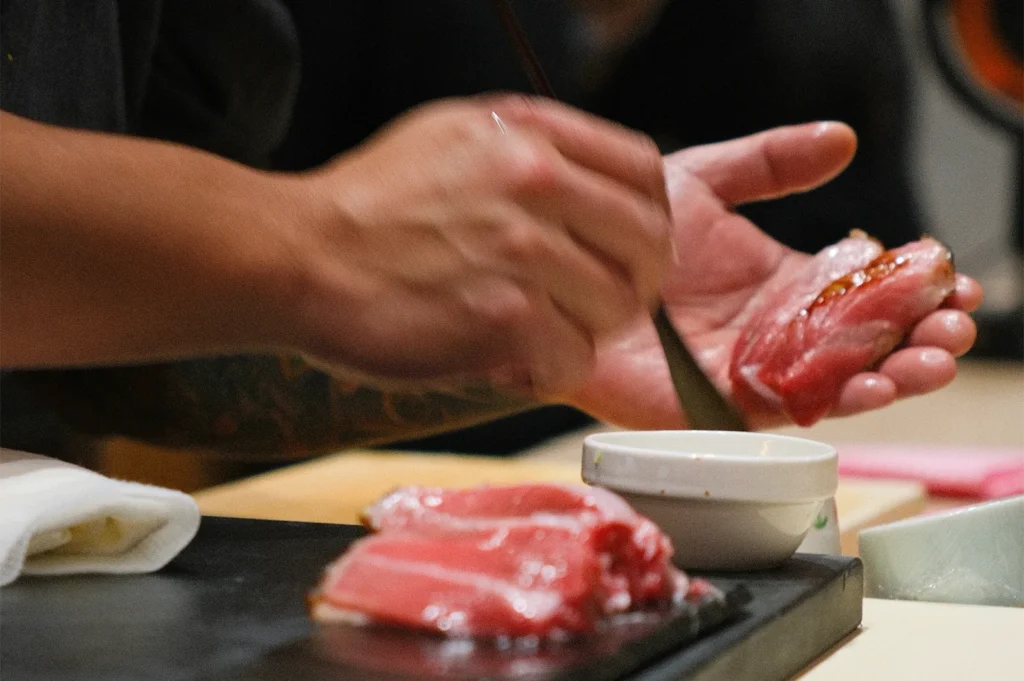
To dine here is not merely to eat; it is to witness a philosophy in motion. There are no sous chefs plating your nigiri. There is no expansion plan to open three more outlets by next year. There is only Chef Masa, standing behind the blonde wood counter, shaping rice and fish with the same meditative focus as the swordsmith in Sakai.
The Philosophy of the Solo Practitioner
Why does he refuse to delegate? In the shokunin tradition, the work cannot be separated from the worker. The warmth of the hands, the rhythm of the breathing, the precise pressure applied to the shari (sushi rice)—these are not technical steps; they are an extension of the chef’s own life force, or ki. To hand this over to another would be to dilute the spirit of the offering.
This refusal to scale is often baffling to the modern business mind. But for the shokunin, growth is measured vertically, not horizontally. The goal is not to serve more customers, but to serve the same number of customers better than yesterday. It is a relentless, internal competition where the only opponent is one’s previous self.
Ki-setsu: Listening to the Voice of Nature
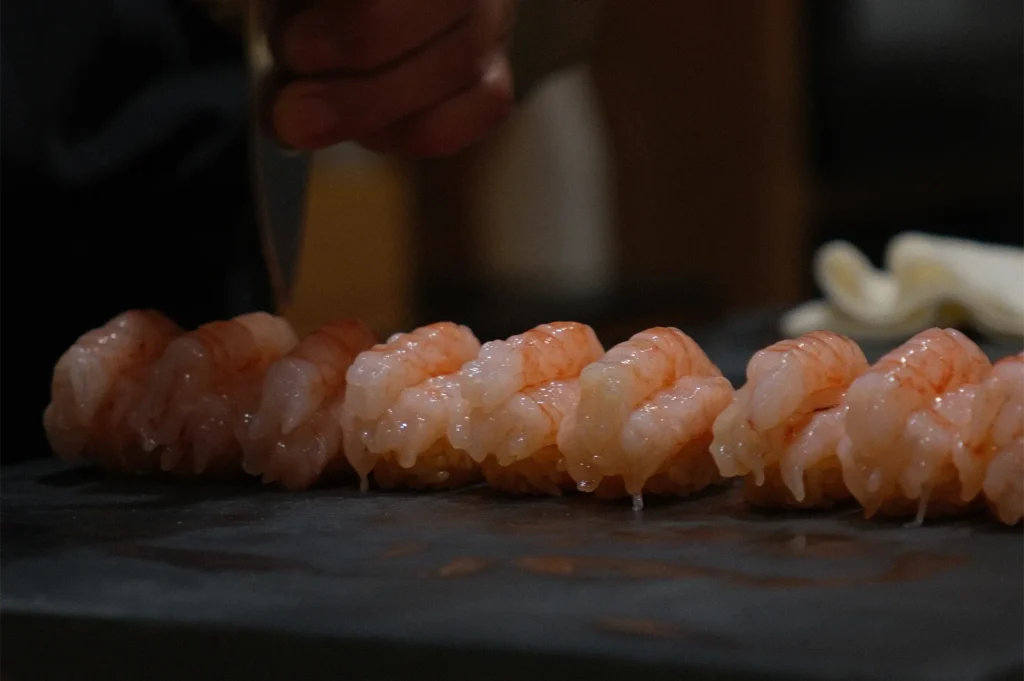
The name of the counter, Ki-setsu, means “season.” But in the context of a Japanese omakase counter, seasonality is not just about using ingredients that are available; it is about submission to nature’s timeline.
A master carpenter does not force wood to bend against its grain. Similarly, a sushi shokunin does not force flavour. They wait. They wait for the specific week when the sanma (Pacific saury) is fattiest. They wait for the winter chill that sweetens the uni.
This is the main reason for Sushi Masa by Ki-setsu not having a fixed menu. That’s why if you really want to taste the absolute peak of food Japan imports, where Toyosu’s daily catch, taste it on a surgical precision of an 8-seat counter.
The 72 Micro-Seasons of Japan
To understand the precision of this Japanese craftsman philosophy, one must look at the calendar. While the West observes four seasons, the traditional Japanese calendar recognises twenty-four major divisions (sekki), which are further split into seventy-two micro-seasons, or ko.
These micro-seasons last only about five days each. They have poetic names like “Earthworms Rise” (Mimizu izuru) or “First Peach Blossoms” (Momo hajimete saku). This hyper-specific awareness of time means that true omakase can never be industrialised. A factory cannot adjust its production line every five days. Only a human being, attuned to the subtle shifts in wind and temperature, can cook with this level of sensitivity.
At Sushi Masa by Ki-setsu, the menu is a mirror of these fleeting moments. What you eat today may not be there next week, not because it ran out, but because its moment has passed. The shokunin honours the ingredient by serving it only at its peak, and then letting it go.
Depth Over Abundance: A Different Kind of Care
In many Asian cultures, hospitality is defined by abundance. We show love through the overflowing banquet table, the extra scoop of rice, the constant refilling of tea. It is a beautiful, communal generosity.
The shokunin spirit offers a different, quieter form of care. It is the gift of subtraction.
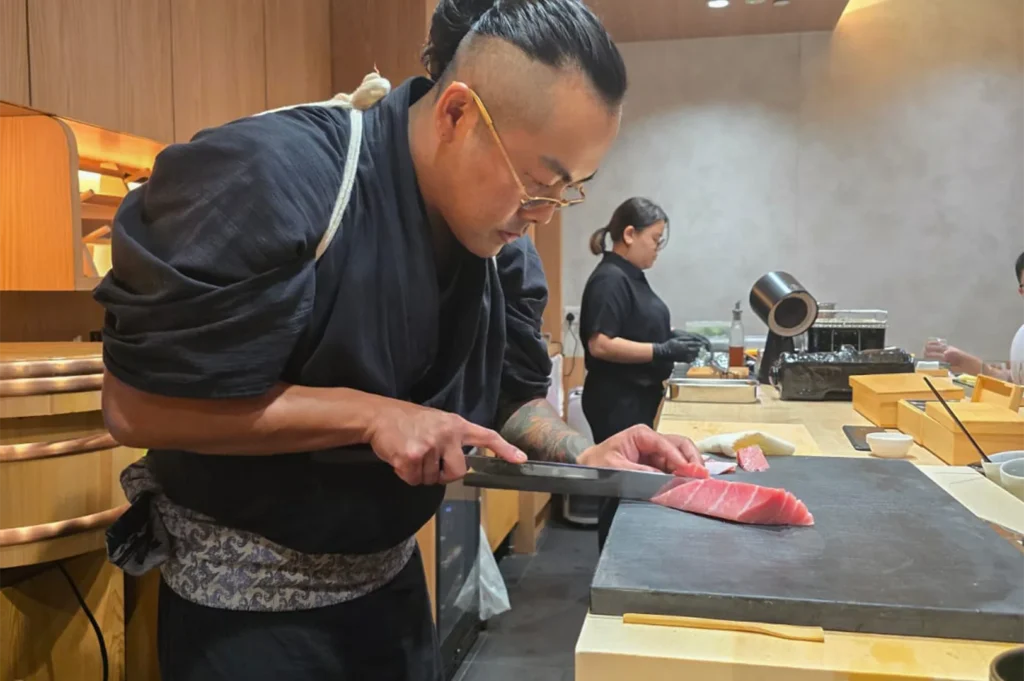
At an intimate Singapore omakase counter like this, you are not given volume; you are given attention. Total, undivided, absolute attention. When the chef places a single piece of sushi in front of you, the entire world shrinks to that one bite.
Currently, Sushi Masa by Ki-Setsu, offers a wide range of giving you the experience of a lifetime. For S$230 to S$320, you’re not going to taste luxury or exclusivity, but you will taste mastery, art, and precision. You’re going to taste what it’s like to know what intentionality is, and how nature can open your eyes through your taste buds.
The Quiet Anchor in a Fast World
Why does this matter to us in Singapore? We live in a city defined by speed, efficiency, and restless ambition. We are constantly looking for the next big thing, the newest opening, the faster route.
Places like Sushi Masa offer a necessary counterweight. They remind us that there is dignity in stillness. They teach us that true mastery takes time—a lifetime, in fact.
As you step out of Cuppage Plaza and back into the humid Singapore night, the noise of the city returns. But perhaps you carry a piece of that silence with you. You have tasted the shokunin spirit, and you understand that sometimes, the most profound way to move forward is to stand still, focus on one thing, and do it with all your heart.

Best Buffet Singapore: Where Hotel Buffets Turn Abundance Into Order
Dio Asahi | July 28, 2026
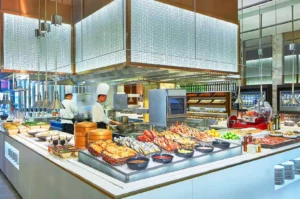
I used to think buffets were about greed. Pile the plate high, go back for thirds, leave feeling like you got your money’s worth. That was the whole game, or so I believed. After years of exploring this city’s hotel buffets, I learned the good ones focus on order. They transform a wall of food…
-
STR TAO Taiwan Cuisine and the Comfort of a Menu That’s Too Big to Be Lazy: Food Places Nearby
Eat Drink Asia Team | July 25, 2026
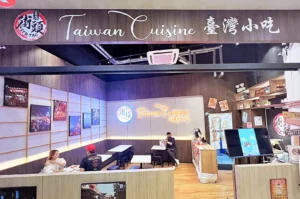
It was the kind of evening where you don’t want to think too hard about dinner. I’d been walking up East Coast Road, the air still thick from an afternoon shower, when I ducked into a coffeeshop just to sit down. The Bullion Hawker Bar. And tucked among the usual suspects — wanton mee, Hokkien…
-
Sesame Oil at the End: Finishing, Not Flavoring
Eda Wong | July 24, 2026
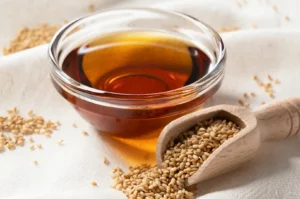
The wok is already off the heat. The greens sit glossy and dark, steam still curling off them. My mother lifts a small bottle, tilts it, and lets a thin line of sesame oil fall across the top. It hisses faintly against the warm leaves, and the smell rises all at once — toasted, nutty,…
-
Long Phung Vietnamese Cuisine, Where the Menu Doesn’t Waste Words: A Good Restaurant Close to Me
Eda Wong | July 23, 2026
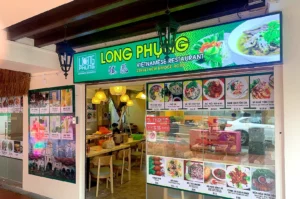
I came in from the rain on a Tuesday, somewhere past 8pm, hungry and a little defeated by the day. The fan was clacking. A queue of three or four people stood near the doorway, dripping. Someone shouted an order toward the kitchen in Vietnamese, and a bowl of pho slid onto a nearby table…
-
The First Squeeze of Calamansi in a Noodle Stall Bowl
Dio Asahi | July 22, 2026
The bowl lands in front of me, broth still trembling from the walk across the stall. Steam rises and fogs the edge of my glasses. To the side sits a small dish of calamansi halves, cut and waiting, their skins slick under the fluorescent light. I pick one up. It gives slightly between my fingers,…
-
Isshin Machi East Coast: Where Comfort Food Turns Addictive
Dio Asahi | July 21, 2026
Let me clear up the first puzzle right away. The name “Isshin Machi” sounds unmistakably Japanese, and I’ll admit I walked in half-expecting ramen and gyoza. What I found instead was a Taiwanese kitchen, plates of lu rou fan, braised beef noodles, and golden fried chicken that trace straight back to the island’s home cooking….

Best Cafe Singapore: A Map of Brunch Plates, Quiet Corners, and Dangerous Pastries
Dio Asahi | July 18, 2026
I didn’t set out to make a list. I made a habit. Over the years, cafes became the places I went to think, to wait out the rain, to sit with a coffee I didn’t have to rush. Some I returned to for the food. Others, I returned to for the feeling — the way…
-
Pickled Mustard Greens: The Sour Note in Clear Broth
Eda Wong | July 17, 2026
Steam lifts from a bowl of clear pork broth, and a spoonful of chopped pickled greens slides in. The broth shifts at once, its richness suddenly cut by a sharp, clean sourness that sits high and bright on the tongue. The greens have softened in the heat but keep a faint, springy crunch. Someone leans…
-
The Potato Curry That Teaches You How Spices Wake Up: A Beginner’s Indian Cooking Lesson
Eda Wong | July 16, 2026
The first time I made aloo curry on my own, I burned the cumin. I remember standing in my tiny HDB kitchen, watching those little seeds go from golden to black in what felt like one breath, and thinking: this is harder than it looks. But here’s what that bitter, smoky disaster taught me, the…
-
Bamboo Skewers and Smoke: Street Grills in Chiang Mai
Dio Asahi | July 15, 2026
The cart glows at the edge of the lane just as the heat of the day finally loosens. A woman fans the coals with a flattened piece of cardboard, and the embers brighten orange under a row of skewers. Fat slides off the pork, hits the charcoal, and hisses upward in a thin curl of…