If you were to stand at a busy intersection in Bangkok, Ho Chi Minh City, or Jakarta and close your eyes, your nose would tell you a story before your eyes ever could. There is a specific, intoxicating perfume that defines Southeast Asian food: the sharp tang of lime juice hitting a hot wok, the earthy funk of shrimp paste fermenting in the sun, and the sweet, creamy scent of coconut milk bubbling in a clay pot.
Southeast Asia is not just a geographical region; it is a sensory explosion. For centuries, this corner of the globe has been the world’s spice box, a crossroads where culinary traditions from India, China, and indigenous archipelagoes collided to create what are arguably the most delicious cuisines on the planet. This isn’t just about sustenance; it’s about a balance of salt, sweet, sour, and heat that dances on the palate in a way that makes other Asian food feel almost quiet by comparison.
The Alchemy of the Southeast Asian Pantry
To understand why Southeast Asian cuisine is so incredibly flavorful, you have to look at the “holy trinity” of ingredients that form its backbone. While Japanese food might rely on the subtle purity of dashi and East Asia often leans heavily on the savory depth of soy sauce, Southeast Asian chefs play a more aggressive—and rewarding—game.
The Soul of the Sauce
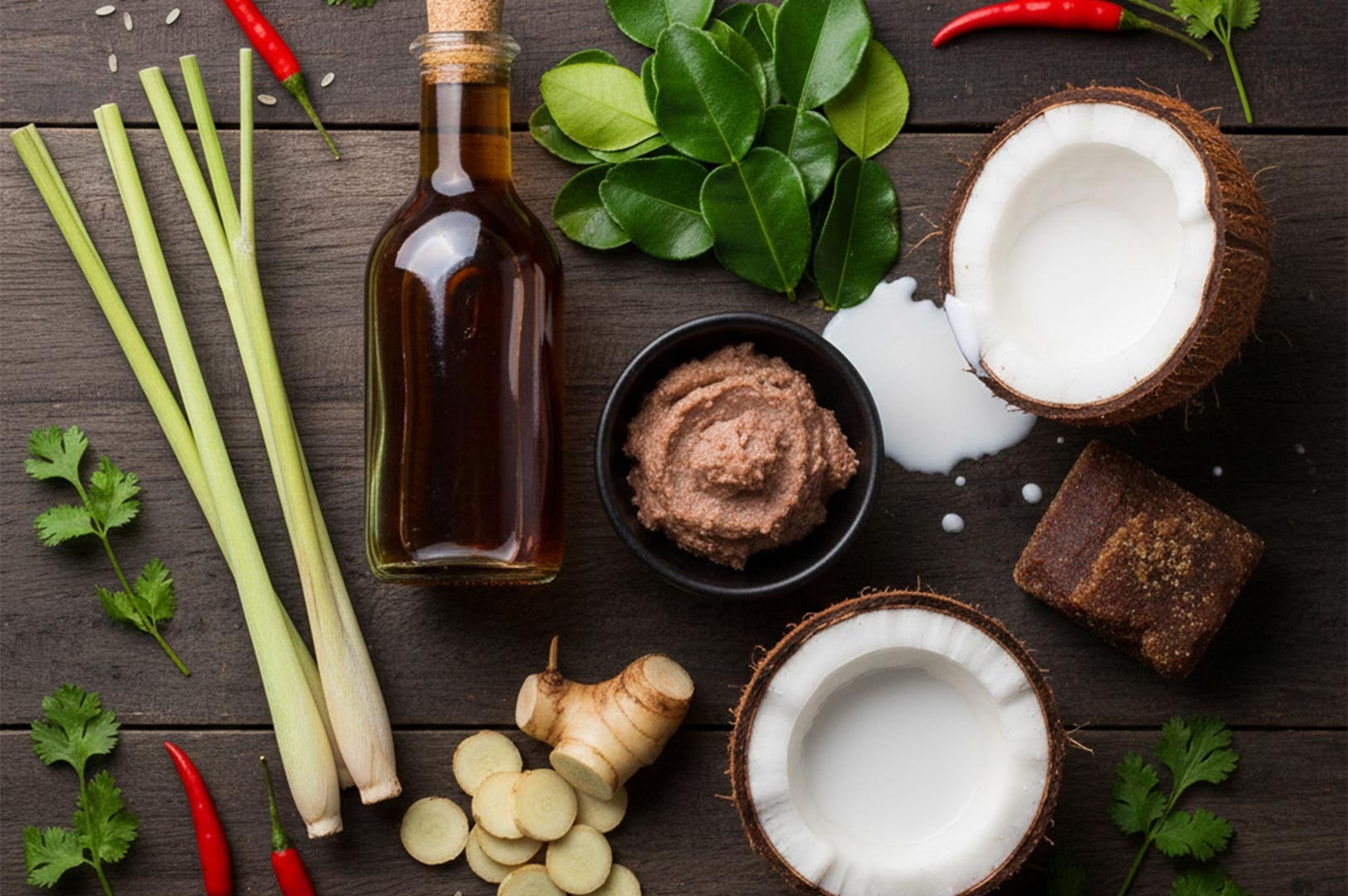
In almost every Southeast Asian kitchen, the salt doesn’t come from a shaker; it comes from a bottle of fish sauce. This amber liquid is the lifeblood of the region. On its own, it’s pungent, but when dropped into a flavorful broth or whisked into a dipping sauce, it transforms into a savory, umami-rich backbone that heightens every other ingredient. In Indonesia and Malaysia, this saltiness often comes from shrimp paste (belacan or terasi), a pungent block of fermented krill that provides a deep, earthy funk to sambals.
The Cream and the Crunch
Then, there is the texture. Coconut milk provides a velvety richness to Thai dishes like green curry, acting as a cooling foil to the fiery red chili peppers. To brighten these heavy flavors, a handful of fresh herbs—Thai basil, cilantro, and mint—is almost always tossed on at the last second.
- Palm Sugar: Derived from palmyra or coconut palms, it provides a smoky, caramel-like sweetness.
- Kaffir Lime Leaves: These hourglass-shaped leaves lend a citrusy aroma that defines Tom Yum.
- Galangal and Lemongrass: The woody, floral aromatics that distinguish Thai food from its neighbors.
Street Food: The Living Heart of the Region
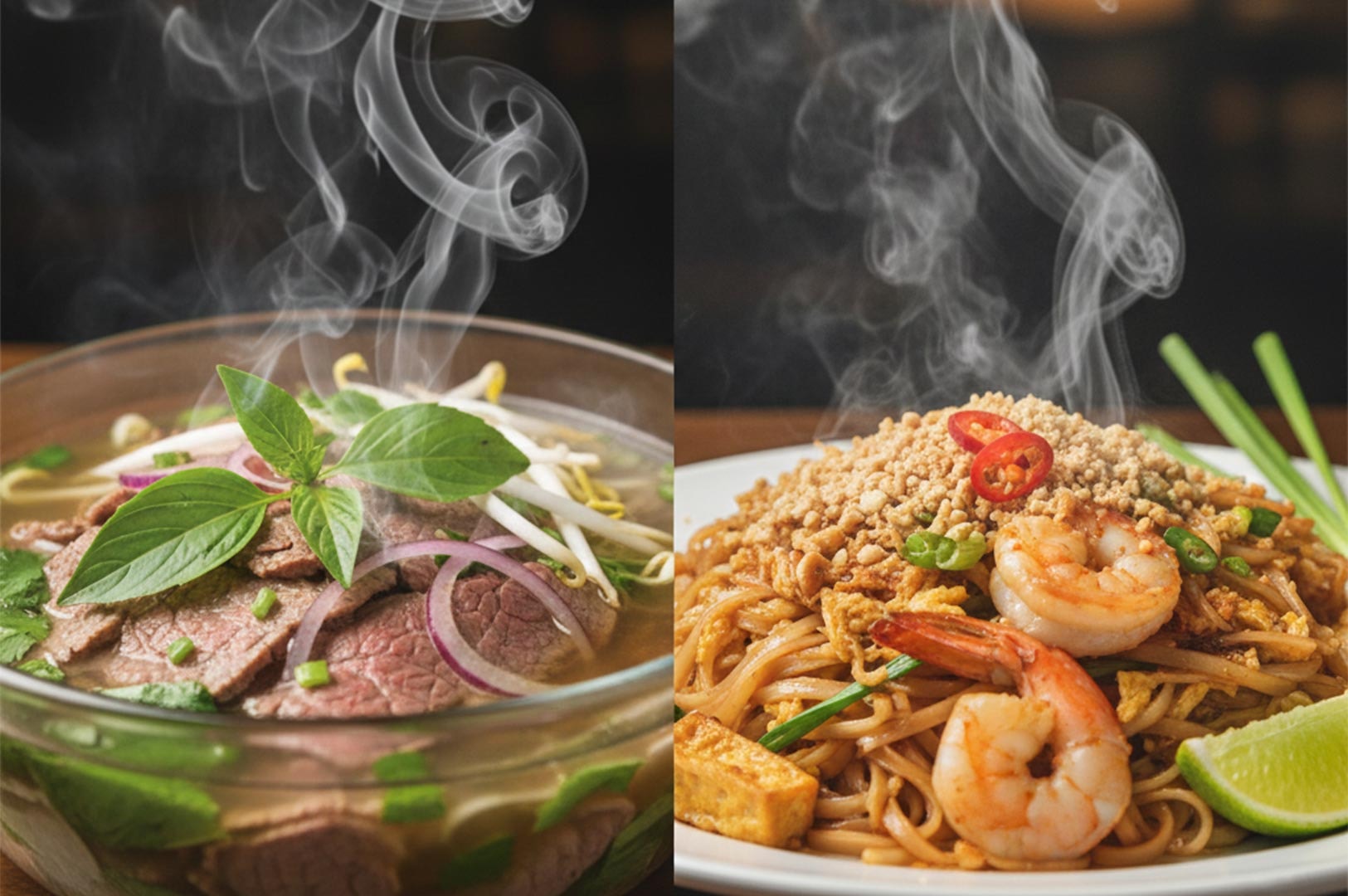
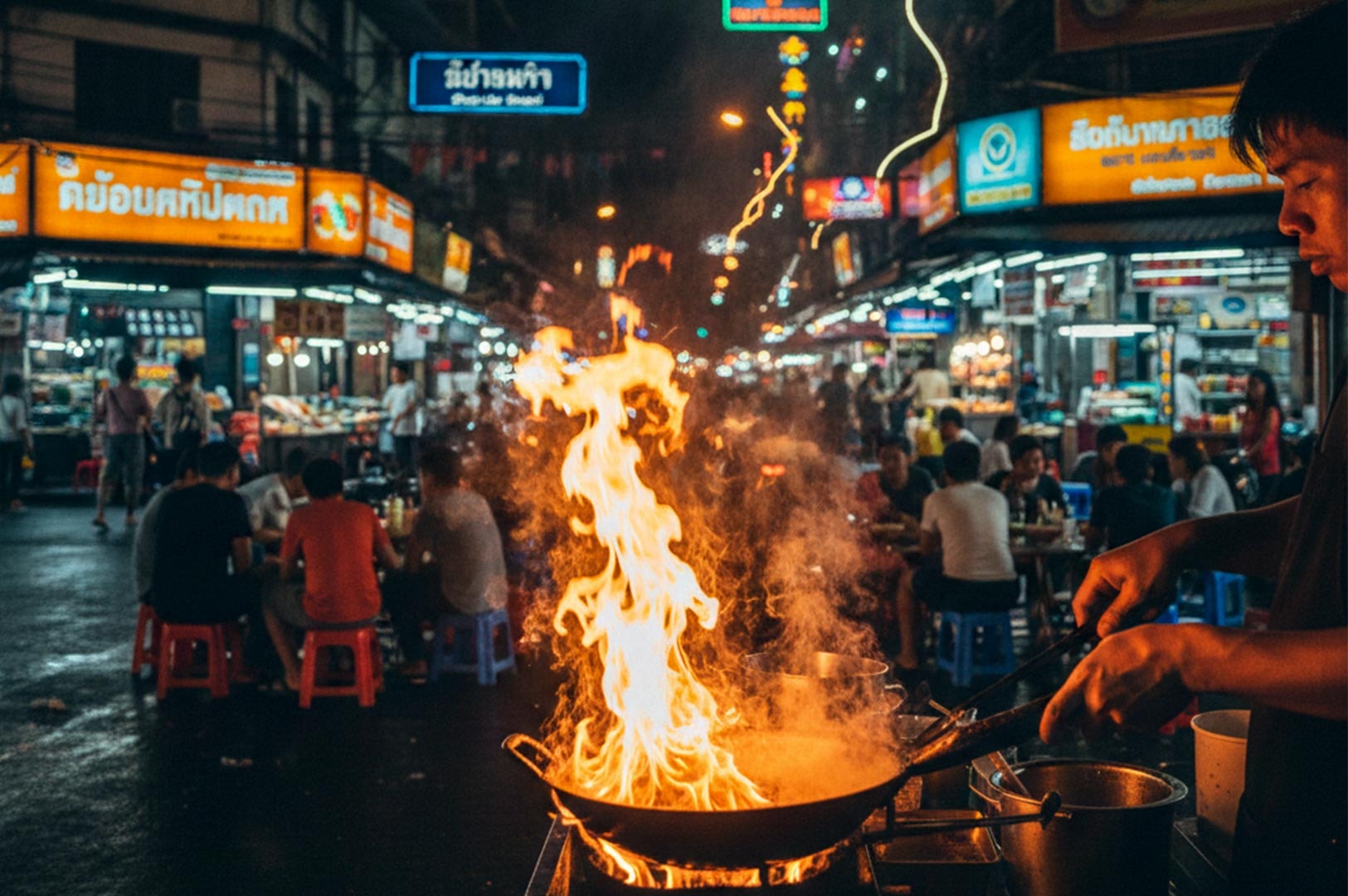
You cannot talk about Southeast Asian food without talking about the sidewalk. In this part of the world, the best food isn’t found behind velvet ropes; it’s found on plastic stools. Street food vendors are the keepers of the region’s gastronomic flame, often having spent decades perfecting a single national dish.
In Vietnam, the morning fog is pierced by the aroma of Vietnamese noodle soup, or Pho. This isn’t just a meal; it’s a ritual. A flavorful broth is simmered for twelve hours with charred ginger and star anise, then poured over silky rice noodles and thin slices of beef. It is typically served with a mountain of bean sprouts, fresh basil, and a squeeze of lime.
Cross the border into Thailand, and the street food landscape shifts. Here, the wok is king. Pad Thai is perhaps the most famous noodle dish globally, a masterful scramble of flat rice noodles, dried shrimp, tofu, and bean sprouts, finished with a dusting of crushed peanuts. But if you want something truly soul-warming, look for Tom Yum Goong. This hot and sour soup, teeming with prawns and fragrant with lemon juice and lemongrass, is a masterclass in flavor balancing.
The Influence of Migration and Fusion
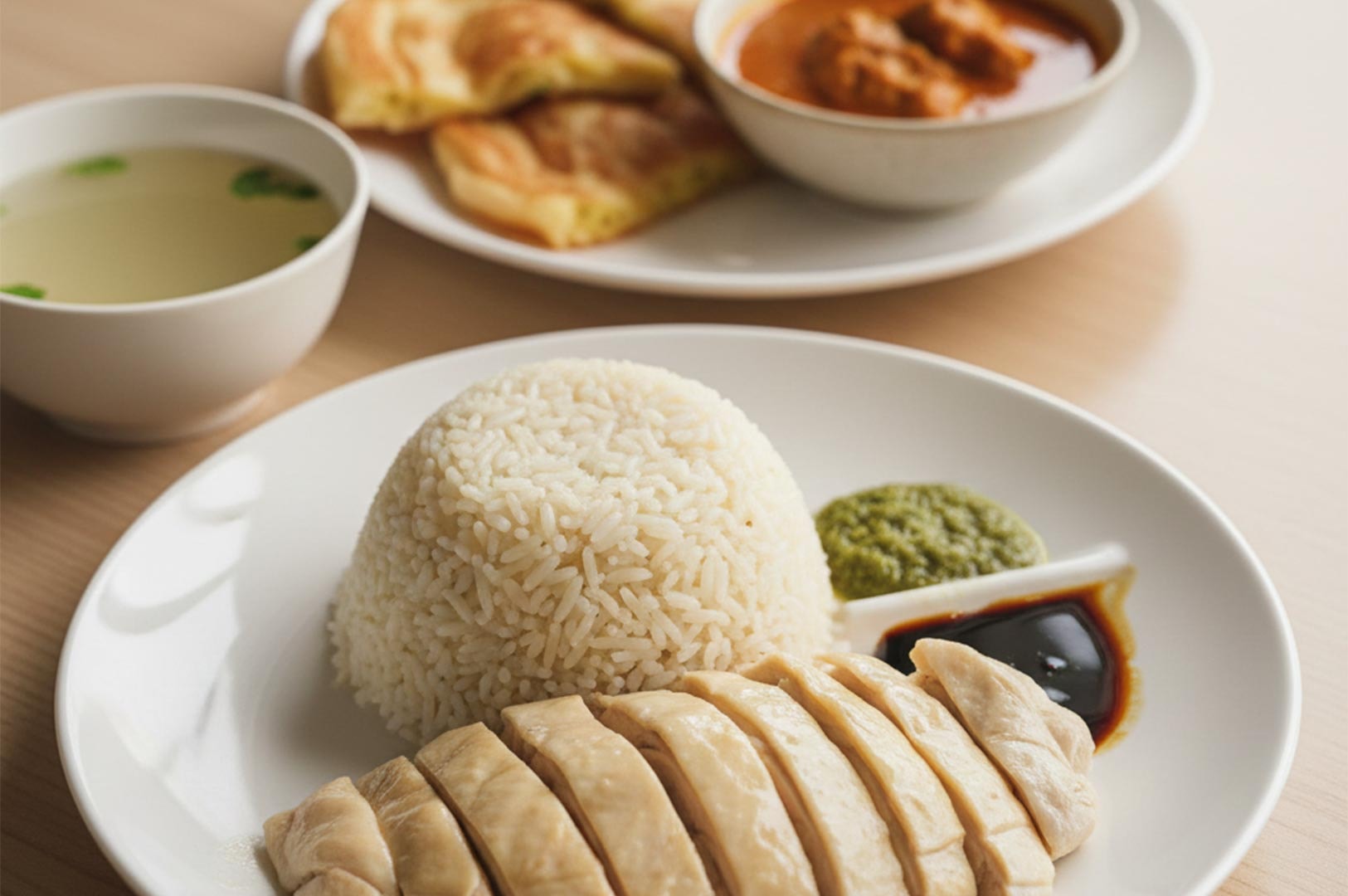
The beauty of Southeast Asian countries lies in their history as a global melting pot. Many of the region’s favorite dishes are actually a form of fusion food, born from the influence of Chinese immigrants who traveled south centuries ago.
Take Hainanese Chicken Rice, the undisputed king of Singaporean and Malaysian food. It is a deceptively simple dish of poached chicken served with rice that has been cooked in chicken fat and ginger. Its brilliance lies in the execution—the silky skin of the chicken and the punchy chili-ginger dipping sauce. Similarly, Roti Canai—a flaky, buttery flatbread—shows the undeniable influence of Indian labor and trade in the Malay Peninsula.
In the Philippines and Indonesia, you see the heavy use of soy sauce and sweet soy sauce (kecap manis), a thick, syrupy condiment that gives dishes like Nasi Goreng (fried rice) its dark, caramelized hue. It’s also the secret behind fried tempeh, a fermented soy cake that is a staple protein across the Indonesian archipelago.
A Narrative Journey Through Iconic Flavors
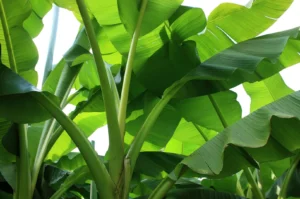
If one were to chart a course through these delicious destinations, the journey would begin with the aromatic curries of the mainland. While Thai food is famous for the coconut-heavy Tom Kha Gai, the culinary story continues into Cambodia, which offers a gentler, more herb-forward alternative called Fish Amok. This silken mousse of white fish is steamed in banana leaves with a curry paste made of lemongrass and turmeric, showcasing a subtlety that is often overlooked in the region’s more fiery reputations.
The narrative of the region is also written in rice flour. From the stir fried noodles found in a smoky Bangkok alley to the Bun Cha (grilled pork with noodles) of Hanoi, the region runs on this versatile grain.
You might find flat rice noodles tossed in a dark soy glaze for Char Kway Teow in a Malaysian hawker center, or glutinous rice steamed inside bamboo for a portable street food snack. Each iteration of the noodle reflects the local climate and the specific preferences of the community, whether they crave the “breath of the wok” or the freshness of a cold noodle salad.
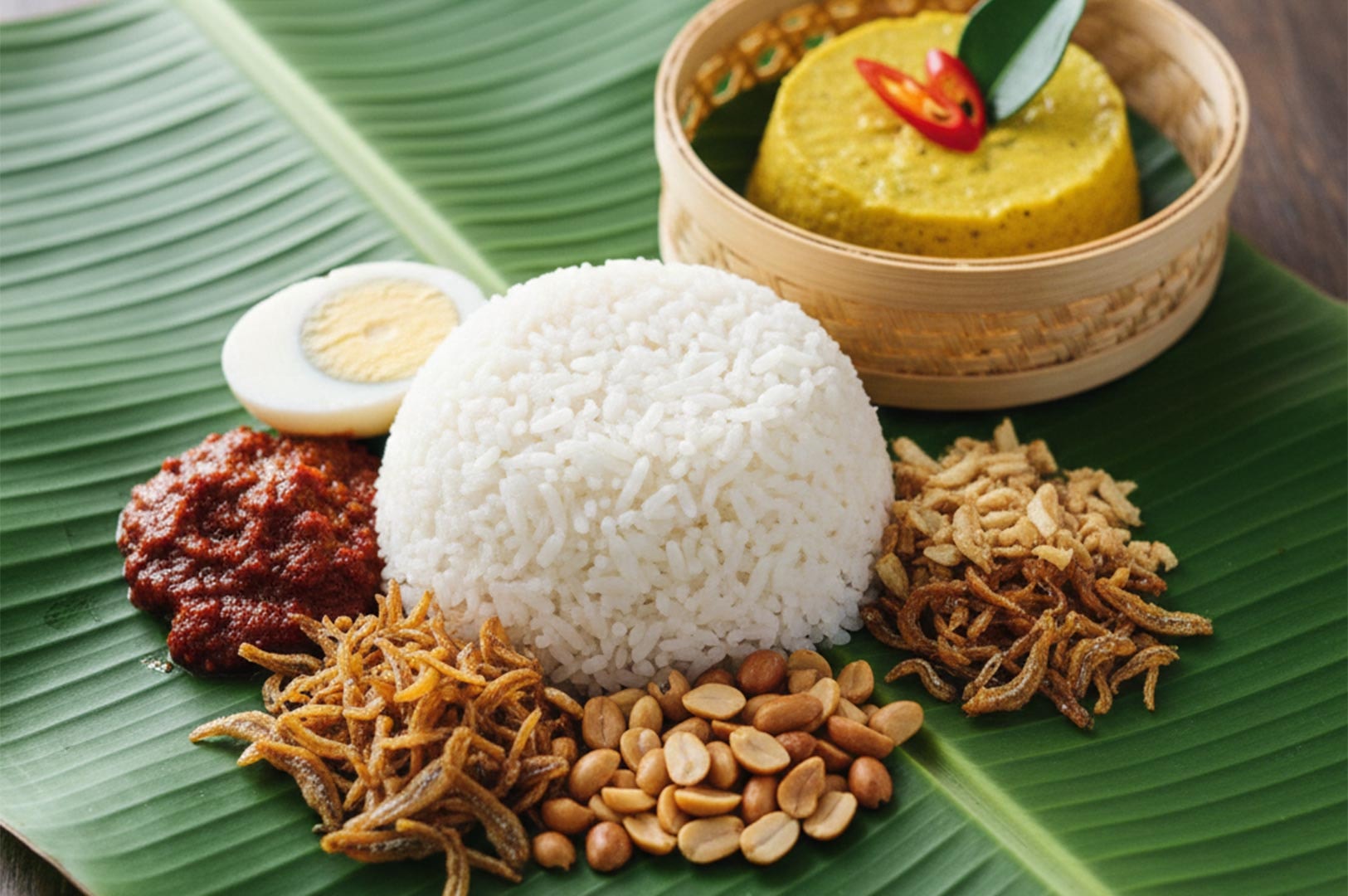
Moving toward the islands, the flavors become even richer. In Malaysia, the national pride is Nasi Lemak, where steamed rice is infused with coconut milk and pandan, then served with a spicy sambal and hard boiled eggs.
In Indonesia, the diversity of the archipelago means the food changes with every island. While pork belly is less common in many areas, in Bali, the legendary Babi Guling (roast suckling pig) remains a celebratory feast, highlighting the unique Hindu-Balinese culinary traditions that stand out within the broader Indonesian landscape.
The Art of the Sweet Finish
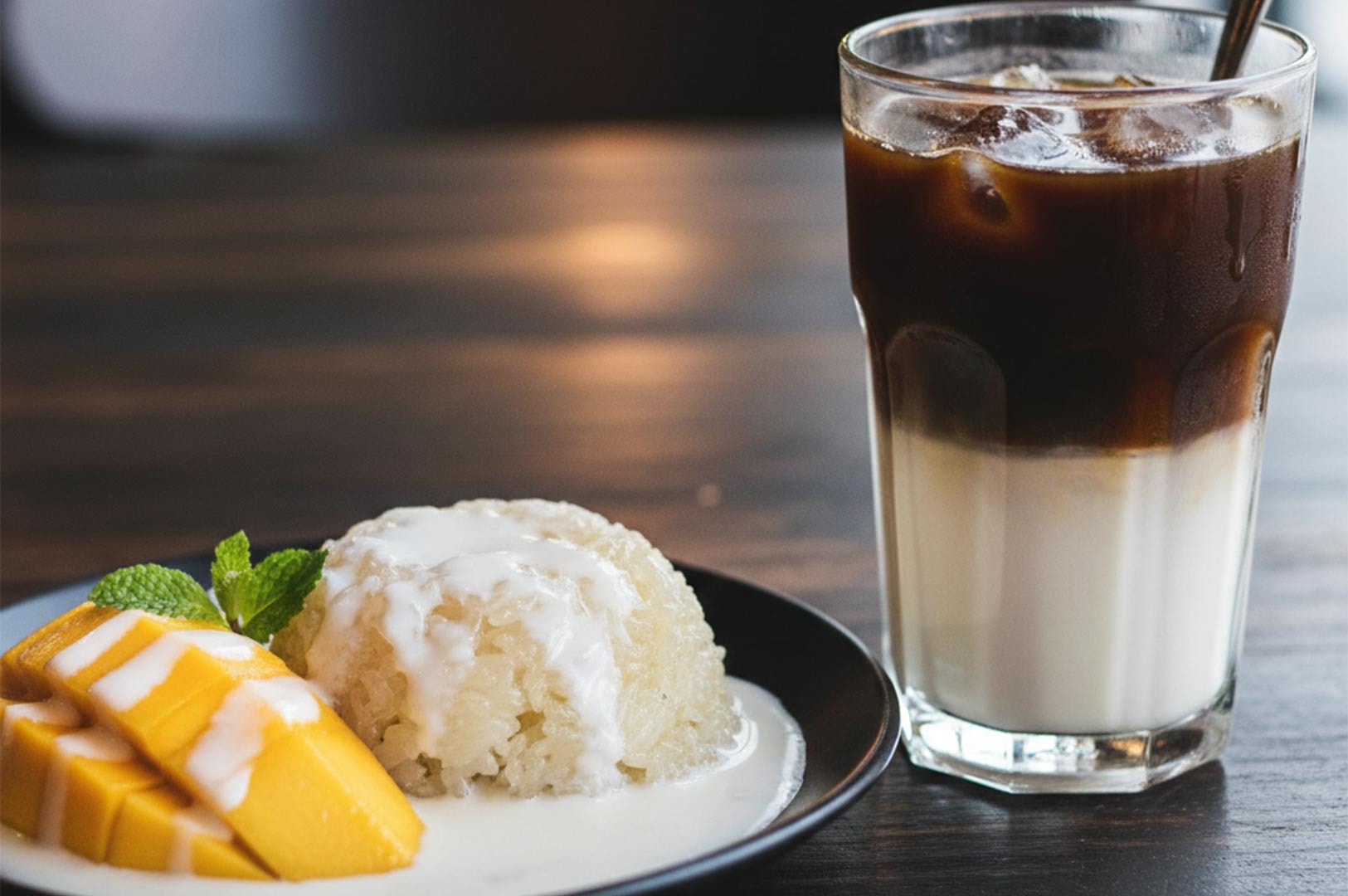
Southeast Asians have a unique relationship with dessert. You won’t find many heavy cakes or pastries here. Instead, sweetness comes from nature and the clever use of sweetened condensed milk and evaporated milk.
After a spicy meal, nothing cuts the heat like a bowl of sticky rice topped with slices of ripe mango and a drizzle of salty coconut cream. For a refreshing drink, locals turn to iced coffee sweetened with thick condensed milk or bowls of grass jelly and shaved ice.
Glutinous rice also makes an appearance in countless snacks, often wrapped in banana leaves with palm sugar or filled with savory Chinese sausage. The textures are chewy, bouncy, and entirely different from Western desserts, focusing on the natural sweetness of tubers and grains.
Why We Keep Coming Back
What makes Southeast Asian food the best street food in the world isn’t just the ingredients; it’s the accessibility and the soul. It is food that is meant to be shared. It is food that values the “umami” of fish sauce just as much as the brightness of cherry tomatoes or the crunch of a rice paper spring roll.
Whether you are cracking into a spicy Chili Crab in Singapore, enjoying a bowl of Vietnamese food by a lake in Da Lat, or learning how to cook noodles in a Chiang Mai cooking class, you are participating in a thousand-year-old conversation between cultures.
The region’s culinary traditions are a reminder that the most great food doesn’t require a tablecloth—it just requires fresh ingredients, a little bit of heat, and an open mind. From the first sip of a Tom Yum broth to the last bite of a Roti Canai, this is a journey that never truly ends.
Ready to Taste the Tradition?
The world of Asian food is vast, but you don’t have to fly across the ocean to start your journey. Why not try recreating a classic at home? Start by sourcing a high-quality fish sauce and some fresh herbs from your local market.

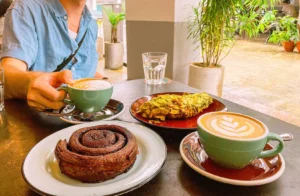
Best Cafe Singapore: A Map of Brunch Plates, Quiet Corners, and Dangerous Pastries
Dio Asahi | July 18, 2026
I didn’t set out to make a list. I made a habit. Over the years, cafes became the places I went to think, to wait out the rain, to sit with a coffee I didn’t have to rush. Some I returned to for the food. Others, I returned to for the feeling — the way…

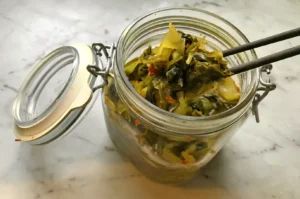
Pickled Mustard Greens: The Sour Note in Clear Broth
Eda Wong | July 17, 2026
Steam lifts from a bowl of clear pork broth, and a spoonful of chopped pickled greens slides in. The broth shifts at once, its richness suddenly cut by a sharp, clean sourness that sits high and bright on the tongue. The greens have softened in the heat but keep a faint, springy crunch. Someone leans…
-
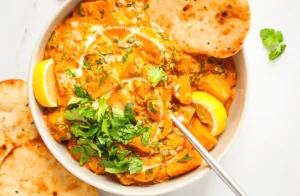
The Potato Curry That Teaches You How Spices Wake Up: A Beginner’s Indian Cooking Lesson
Eda Wong | July 16, 2026
The first time I made aloo curry on my own, I burned the cumin. I remember standing in my tiny HDB kitchen, watching those little seeds go from golden to black in what felt like one breath, and thinking: this is harder than it looks. But here’s what that bitter, smoky disaster taught me, the…
-
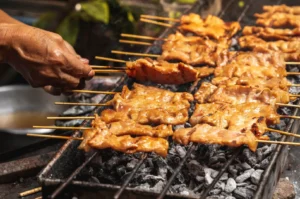
Bamboo Skewers and Smoke: Street Grills in Chiang Mai
Dio Asahi | July 15, 2026
The cart glows at the edge of the lane just as the heat of the day finally loosens. A woman fans the coals with a flattened piece of cardboard, and the embers brighten orange under a row of skewers. Fat slides off the pork, hits the charcoal, and hisses upward in a thin curl of…
-
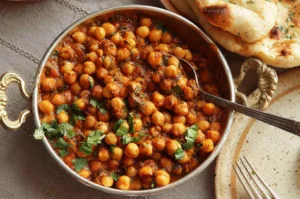
Chana Masala With Warm Roti, Built for Weeknights: Quick Vegetarian Dinner Recipes Indian
Dio Asahi | July 14, 2026
The first time I made chana masala, I started with dried chickpeas at 7:30 on a weeknight, soaking and boiling like the recipe said. By the time the curry was actually done, it was nearly ten and I’d already eaten half a loaf of bread out of sheer hunger. That night taught me something I…
-
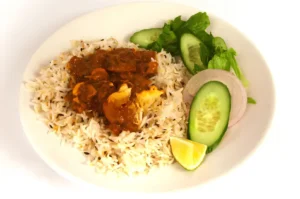
One-Pan Chicken Curry With Jeera Rice and Cucumber Raita: Food for Dinner Indian, Made Practical
Eat Drink Asia Team | July 11, 2026
The first time we cooked a full Indian dinner on a weeknight, the curry, rice, and raita felt like three separate tasks—three pans, three timers, and a kitchen full of wonderful smells but chaos. The curry was good, the rice sticky, and the raita watery from being made too early. That night taught us a…
-
Banana Leaf Steam: Why Some Rice Smells Like Home
Eda Wong | July 10, 2026
Steam rises from the pot, and a woman lifts a banana leaf over the open flame, turning it once, twice, until its stiff green softens and the surface goes glossy and pliant. She wipes it down with a damp cloth, then spoons hot rice into its center while the grains still steam. The leaf releases…
-
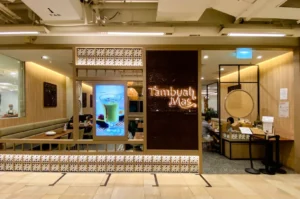
Tambuah Mas Paragon, Delivered: Unique Food Delivery Singapore With Old-School Comfort
Eda Wong | July 9, 2026
I ordered from Tambuah Mas on a rainy Sunday at around 6:15pm, mostly because I wasn’t in the mood to dress up and head into town, but I still wanted a proper meal. Not a sad one-bowl lunch. A real spread. That’s the thing about Tambuah Mas. It’s been around since 1981, serving Indonesian home-style…
-
Toasted Rice Powder: The Dust That Makes Larb Sing
Dio Asahi | July 8, 2026
A wok sits over a low flame, and a handful of raw sticky rice slides across its dry surface. No oil, no water—nothing but heat and patience. The grains pale, then blush amber, then deepen toward the color of weak tea. Someone shakes the pan in a slow, even rhythm, listening as much as watching….
-
Ordering Lunch From Co Hai Banh Mi, and Finding Out the Definition of Good Food Delivery
Dio Asahi | July 7, 2026
I ordered lunch from Co Hai Banh Mi & Phở Vietnamese Restaurant on a Thursday at 12:08pm, which is probably the worst and most honest time to test delivery food. It was raining lightly, the kind of Singapore lunch rain that makes every rider slower and every office worker hungrier. I had been thinking about…