When I first tried making Samyang Buldak noodles at home, I expected the fiery heat but was surprised by the watery, separated red oil at the bottom of my bowl. I had boiled the noodles, drained them, and dumped the flavor packets on top, ending with a dry, clumpy mess that burned my throat without the rich, savory comfort I wanted.
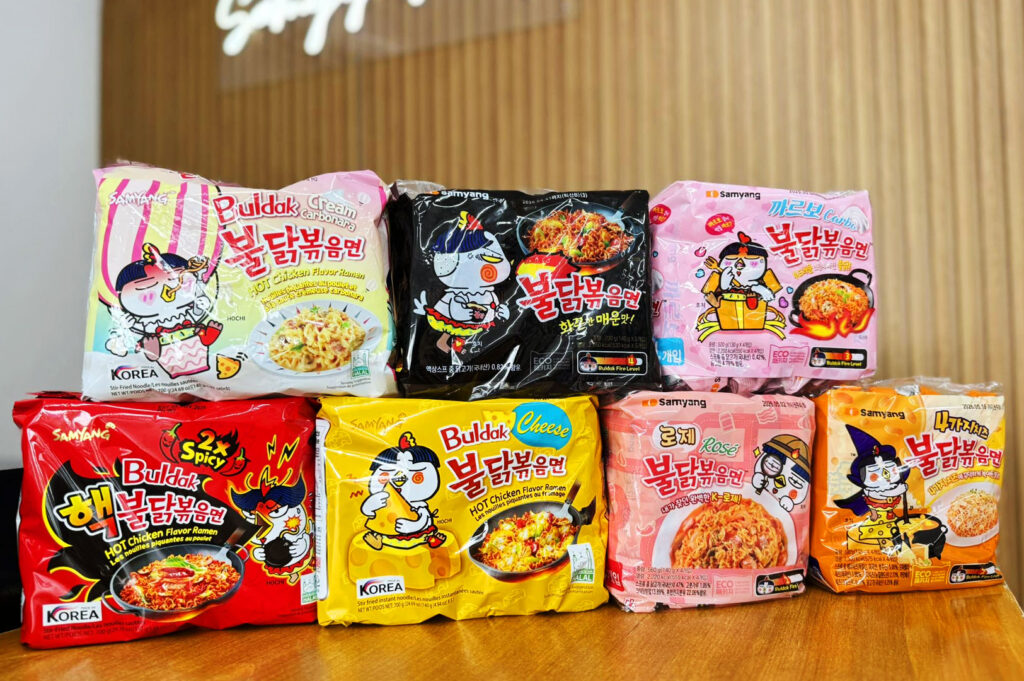
After several failed attempts, I realized making these famous Korean fire noodles requires more than boiling water. The secret lies in a quiet but crucial technique: emulsification. In this guide, I’ll share the simple 10-minute method I use to achieve the perfect emulsified sauce, elevating your Samyang noodles from a basic meal to a restaurant-quality dish.
What Is Emulsion in Samyang Noodles?
If you look closely at a packet of Samyang noodles, a flagship product of Samyang Foods from South Korea, you will notice it usually comes with a liquid sauce packet and sometimes a dry seasoning packet. The liquid sauce is heavily oil-based, featuring main ingredients like chili, garlic, and chicken flavor extracts. As we all know, oil and water naturally repel each other.
Emulsion refers to the method of forcing these two opposing elements to combine in a way that they do not separate. By using the starchy cooking water leftover from boiling the noodles, you create a bridge between the spicy oil and the water. When agitated vigorously, they bind together. This creates a creamy, well-integrated sauce that clings to every strand of noodle, adding incredible richness and depth of flavour.
A common misconception is that leaving water in the pot will simply dilute the spice and make the dish taste like a weak soup. In my experience, the exact opposite is true. Without that starchy water to bind the sauce, the oil simply slips off the noodles and pools at the bottom of your bowl. Emulsion is the secret engine that drives the entire dish’s delicious mouthfeel and texture.
Secret Sauce: Restaurants rely heavily on starchy pasta water to emulsify sauces for Italian dishes like carbonara and cacio e pepe. You are applying this exact same high-end culinary principle to a $2 packet of instant noodles from South Korea’s Samyang Foods.
How to Prepare Samyang Noodles with Emulsion
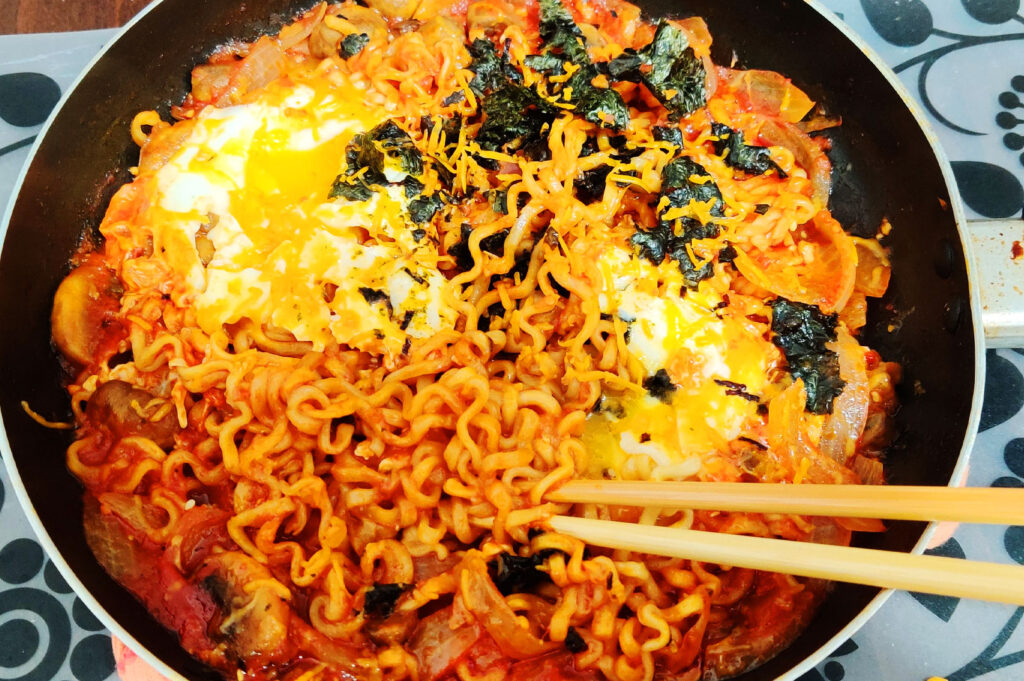
To master this technique, you need to treat the cooking process with a bit of focus. Here is the step-by-step method I use to achieve the perfect glossy finish every single time.
Ingredients you will need:
- 1 pack Samyang Buldak (or any Samyang ramen of your choice, which costs about $7.50 for a pack of five at local supermarkets like NTUC FairPrice)
- 500ml of water
- 1 tablespoon butter (optional, for extra richness)
- 1 egg (optional, for a creamy texture)
- A splash of milk (optional, to mellow the spice)
Step 1: The precision boil
Bring exactly 500ml of water to a rolling boil in a small pot. Add the Samyang noodles and cook them for exactly 4 minutes. Do not walk away or guess the time. You want the noodles to be strictly al dente (firm to the bite) because they will continue to cook slightly in the sauce later.
Step 2: Reserve the starchy water
Once the 4 minutes are up, turn off the heat. Do not dump all the water down the sink! Drain the noodles, but leave about 50 to 100ml (roughly three to four tablespoons) of the cloudy cooking water in the pot. This starchy water is liquid gold; it is the foundation of your emulsion.
Step 3: Build the sauce
First, squeeze the spicy sauce packet into the pot with the remaining cooking water. Turn the heat back on to a gentle low simmer. Grab a pair of chopsticks and stir vigorously. You will watch the separated red oil and clear water suddenly merge into a thicker, unified liquid that beautifully coats the noodles.
Step 4: The vigorous toss
Add the noodles back into the pot with your newly emulsified sauce mixture. If your packet came with dry seasoning (like the cheese or carbonara variations), add it now. Stir continuously and aggressively for 1 to 2 minutes. The mechanical action of tossing the noodles forces the fat and water to bind permanently. You will know you have succeeded when the sauce coats the noodles evenly, leaving them looking incredibly glossy and thick.
Step 5: Add your rich toppings (Optional)
For an extra layer of indulgence, I love dropping a tablespoon of butter into the hot noodles right at the end. The butter melts into the emulsion, making it even silkier. Alternatively, crack a raw egg yolk into the hot noodles off the heat and stir rapidly. The residual heat cooks the yolk into a stunningly rich, creamy glaze. A splash of milk can also be added here to soften the fiery spice and add a velvety texture.
Common Samyang Noodle Slip-Ups
Even with the best intentions, things can occasionally go wrong. Here are a few common scenarios I have personally encountered, and exactly how you can fix them.
1: The watery soup disaster
The mistake: When I first tried leaving water in the pot, I was terrified of burning the noodles. I left far too much water behind, probably closer to 200ml. I ended up with a soupy, watery noodle bowl that completely lacked that creamy, clinging sauce texture.
The solution: Be strict about reserving only 50 to 100ml of water. If you accidentally leave too much, do not panic. Simply leave the heat on medium and continue to stir vigorously until the excess water evaporates and the sauce thickens. It might slightly overcook your noodles, but it will save the sauce.
2: The dry choke
The mistake: A friend of mine once tried this recipe but drained the noodles completely dry, thinking the liquid sauce packet had enough moisture on its own. The result was a dry, clumpy noodle bowl where the seasoning aggregated into harsh, overly spicy patches.
The solution: Always reserve that cooking water. If you forget and accidentally drain the pot dry, quickly add two tablespoons of warm tap water and a tiny splash of milk before adding the sauce packets. It is not as effective as starchy noodle water, but it will rescue the emulsion.
Secret Sauce: Undermixing is the enemy of a good emulsion. Skipping the vigorous stirring process will result in an uneven coating, making some parts of your bowl dry and others overwhelmingly spicy. Do not just fold the noodles gently; toss them with absolute purpose.
Singaporean Adaptations and Local Tips
In Singapore, we take our spicy food very seriously. Samyang Buldak noodles have rapidly evolved from a viral internet challenge into a beloved pantry staple. We frequently adapt these imported noodles to suit our local palates, turning a simple snack into a hearty, deeply satisfying meal.
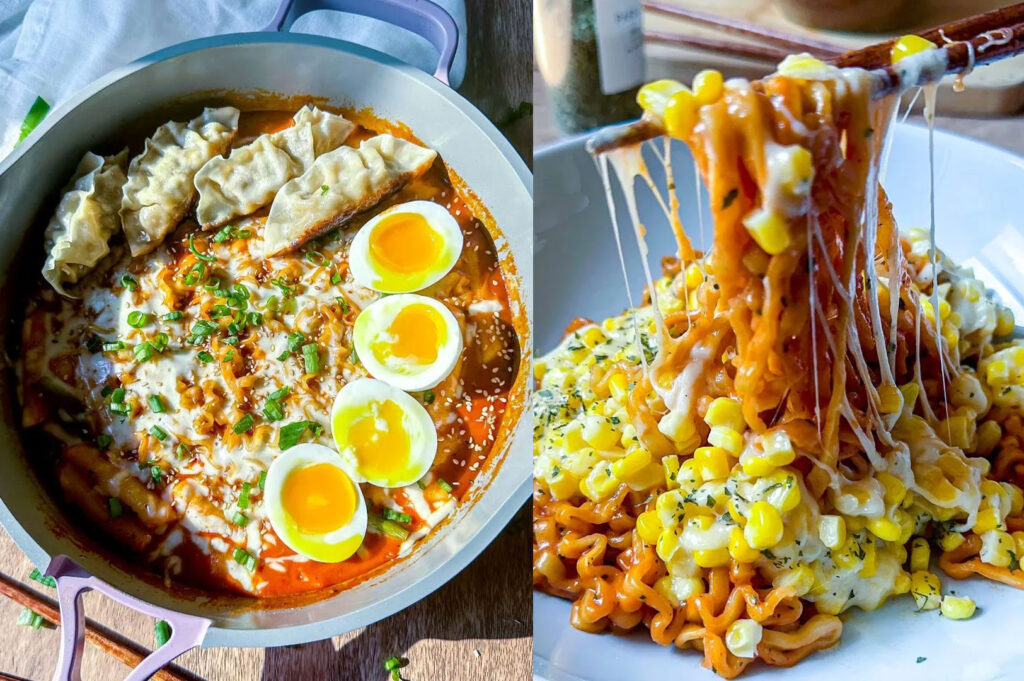
I’ve found that many locals love to throw in a handful of familiar steamboat ingredients to bulk up the dish. Tossing in a few bouncy fish balls, some sliced crab sticks, and a handful of blanched bok choy completely transforms the nutritional profile of the bowl. Because Singaporeans have a famously high tolerance for heat, it is also incredibly common to see people chopping up fresh chilli padi (bird’s eye chilli) and tossing it into the emulsion for a sharper, more immediate sting.
You can even find elevated versions of these spicy noodles out in the wild. Several modern Korean BBQ restaurants in the Tanjong Pagar district, such as O.BBa BBQ, often feature spicy ramen stir-fries on their menus. While they might charge around $12 to $15 for a premium bowl topped with melted mozzarella and grilled pork belly, you can easily replicate that exact glossy, restaurant-quality texture at home using the emulsion trick.
The next time you find yourself browsing the aisles of Sheng Siong or Cold Storage, grab a packet of Samyang and some fresh local produce. By blending Korean heat with familiar local toppings, you create a wonderful, cross-cultural comfort dish.
Why Samyang Foods and South Korea Matter in the World of Instant Noodles
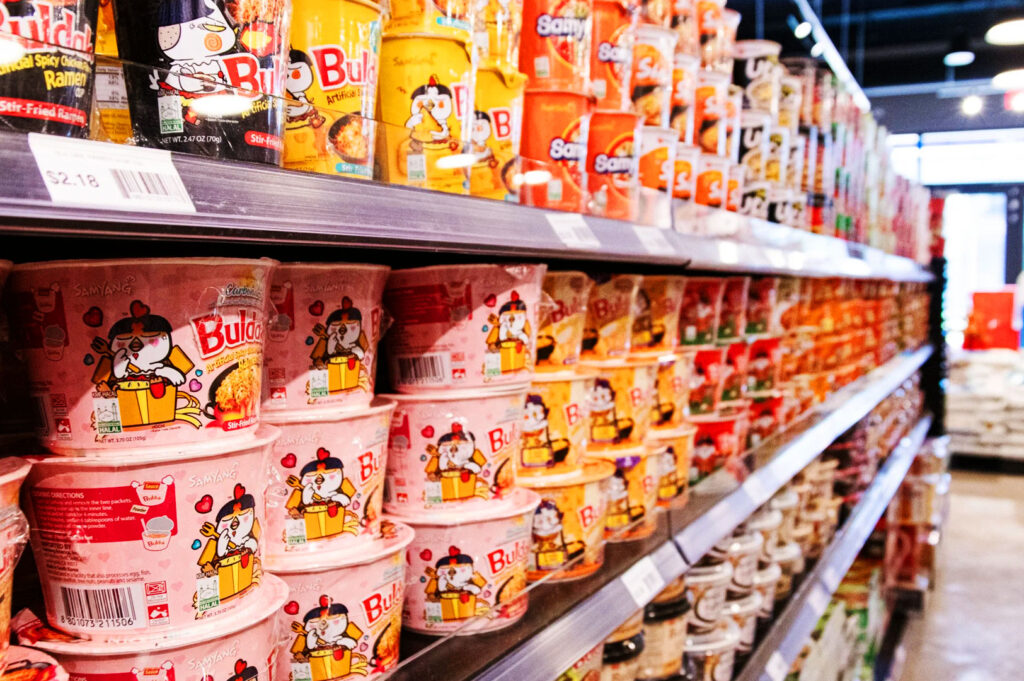
Samyang Foods, a pioneering South Korean company, has been sold and distributed widely, connecting people globally through their delicious and spicy products. Since their first instant ramen launch in 1963, Samyang has become synonymous with bold spice and rich chicken flavor. Their noodles are famously long, Samyang claims each strand stretches up to 50 meters if unwound, which contributes to the chewy texture fans adore.
People interested in Korean cuisine often get hooked on Samyang noodles not just for the heat but for the unique sauce that combines fiery chili with a savory backbone of chicken and pork extracts. This balance makes their products stand out among other brands sold worldwide.
Eating Samyang noodles is more than just a quick snack; it is a cultural experience that connects you to South Korea’s culinary heritage. Whether you start with the original Buldak or explore their many variations, you are tasting a piece of Korea’s food innovation and passion.
For those seeking an exquisite dining adventure, exploring the best omakase Singapore has to offer provides an equally memorable journey into refined Japanese culinary artistry.
Master the Quiet Trick
The emulsification process behind Samyang noodles is entirely essential to creating the perfect bowl. It is not just about boiling dried noodles and tearing open plastic packets. It is about understanding how to manipulate your ingredients, ensuring that the oil and seasoning are forced together to create a smooth, rich, and creamy masterpiece.
The quiet trick behind loud noodles is ultimately a balancing act between spice, oil, and water. It takes a humble, budget-friendly ingredient and elevates it into a genuine culinary experience.
Do not let the fear of ruining the sauce hold you back. Embrace the vigorous stirring, experiment with adding a knob of butter or a raw egg yolk, and watch as your noodles transform before your eyes. Once you taste the world of perfectly emulsified ramen, you will now look at a packet of instant noodles the Eat Drink Asia way!

Seafood Restaurants in Singapore That Turn Crab Night Into a Full Table Ritual
Dio Asahi | October 6, 2026
It always starts the same way for me. Someone lifts the lid off a plate of chilli crab, and the whole table leans in. Fingers reach before spoons do. Somebody tears the first piece of fried mantou, drags it through that sticky, sweet-savoury sauce, and the rest of us stop talking for a second. That…
-
Korean Street Food Is Built for Movement, Heat, and One-Handed Eating
Eda Wong | October 3, 2026
The first time I ate tteokbokki in Seoul, I burned my tongue standing up. It was late, the air was sharp with cold, and I had stopped at a small street food stall near a subway exit because the steam pulled me in. The woman handed me a paper cup of rice cakes in red…
-
Mrs Pho and the Bowl That Makes Somerset Feel Like a Vietnamese Family Table
Eat Drink Asia Team | October 1, 2026
I wasn’t hungry when I walked into 313@somerset. I’d come for something else entirely; an errand, a shop I needed, the usual Orchard rush of people moving faster than the escalators. But somewhere on the first floor, past the noise, I caught the smell of star anise and beef bone, and my feet slowed down…
-
The Carving Knife at Colony, and the Way We Mark What Matters
Eda Wong | September 30, 2026
By Eda Wong for Eat Drink Asia. It’s late morning, and the light is doing most of the work. It pours through the high windows of Colony, at The Ritz-Carlton, Millenia Singapore, spilling across white tablecloths and the vintage prints on the walls. Marina Bay hums somewhere outside, but in here the room feels a…
-
Co Chung Vietnamese Restaurant and the Gỏi Cuốn That Makes Fresh Herbs Do the Work
Dio Asahi | September 29, 2026
I found it by accident, the way you find most things in a mall basement. I’d come down to Plaza Singapura’s B2 for something else entirely, drifting past the usual food-court noise, when I caught the smell of star anise and beef bone coming from a corner. I followed it. And there it was —…
-
Vietnamese Spring Roll: The Recipe That Only Works When the Herbs Stay Awake
Eda Wong | September 26, 2026
Fresh Vietnamese spring rolls, or gỏi cuốn, look delicate, but the recipe is really about control: barely softened rice paper, dry herbs, restrained noodles, clean protein, and a dipping sauce sharp enough to wake the whole thing up. This is not the fried version, chả giò or nem rán. This is the cool, translucent, herb-heavy…
-
Best Steakhouse Singapore: From Fire-Kissed Icons to Old-School Beef Plates
Eat Drink Asia Team | September 24, 2026
I didn’t set out to write about steak. It started with a bad day and a craving for something that pushed back when I bit into it. One dinner turned into a habit, and over a couple of years I found myself at counters, coffeeshops, and dining rooms all over this island, chasing the same…
-
The Ice Counter at Carousel, and the Table Everyone Can Reach
Dio Asahi | September 23, 2026
By Dio Asahi for Eat Drink Asia. It’s a Saturday evening, and someone across the room is carrying a birthday cake. The candles are lit, the walk is careful, and a whole table turns to watch. Plates clink. A child laughs somewhere. The room at Carousel, inside Royal Plaza on Scotts, isn’t quiet — it…
-
Tiong Shian Porridge Centre Review: The Soft Counterweight to Chinatown’s Crisp Toast
Dio Asahi | September 22, 2026
I’d spent the morning with kaya toast. Crisp bread, cold butter, the clean snap of it between my teeth. Good, all of it. But by the time I’d walked a few streets over to New Bridge Road, my mouth wanted the opposite. Something warm. Something that gave way instead of shattering. That’s how I ended…
-
Tong Ah Eating House Review: A Chinatown Breakfast That Still Begins with Kaya Toast
Eda Wong | September 19, 2026
I almost walked past it. I’d been looking for the old triangular building, the red-and-white one you see in every photo of Keong Saik, the one that made Tong Ah feel like a landmark before you’d even ordered anything. But that’s not where it lives anymore. It’s a few doors down now, at 35 Keong…