The first time I made chana masala, I started with dried chickpeas at 7:30 on a weeknight, soaking and boiling like the recipe said. By the time the curry was actually done, it was nearly ten and I’d already eaten half a loaf of bread out of sheer hunger. That night taught me something I now treat as a rule: weeknight cooking lives or dies on the smart shortcuts you choose, not on how “authentic” you’re trying to be.
Since then, I’ve worked out a version that gets a genuinely good chana masala and warm roti on the table in 35 to 45 minutes. In this guide, I’ll walk you through exactly how I do it, the mistakes I’ve made along the way, and the cues that tell you when each step is right. This recipe is a perfect example of quick and satisfying food for dinner Indian style.
What Chana Masala Actually Is
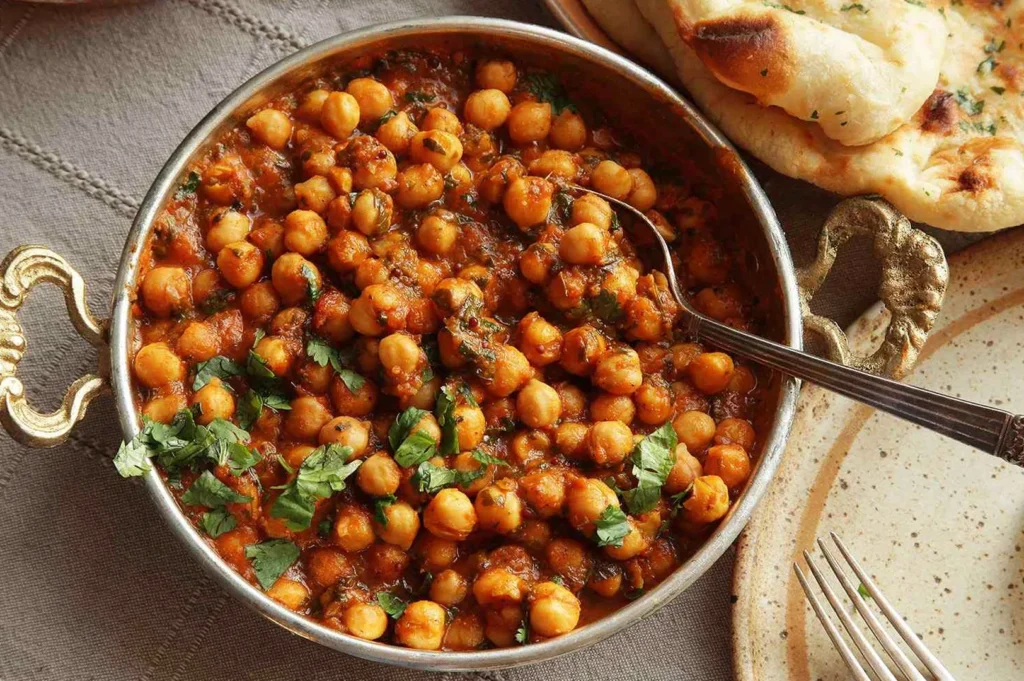
Chana masala is a North Indian chickpea curry made with chickpeas simmered in a spiced onion-tomato gravy. It is one of those quick vegetarian dinner recipes Indian households return to because it is filling, affordable, and deeply aromatic without needing a long cooking window.
At its best, chana masala tastes earthy from cumin seeds, warm from garam masala, sharp from green chili, and bright from lemon juice. Some versions lean darker and more intense, like Punjabi chole. Others are lighter and saucier. This chana masala recipe is built for weeknights, using canned chickpeas instead of dried chickpeas, while still giving you the rich, tangy flavors people expect from authentic chana masala.
Ingredients for Chana Masala Recipe
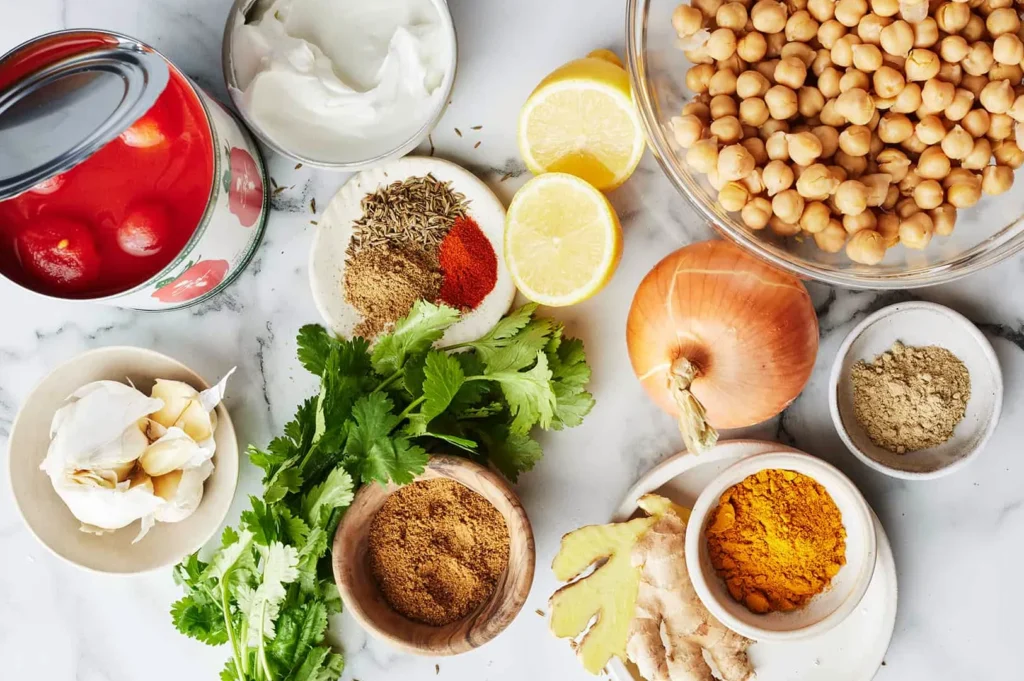
For 3–4 servings, you’ll need:
- 2 cans canned chickpeas, drained and rinsed
- 2 tablespoons oil or ghee
- 1 bay leaf
- 1 teaspoon cumin seeds
- 1 yellow onion, finely chopped
- 1 tablespoon ginger garlic paste
- 1 green chili, chopped, or green chilis to taste
- 2 fresh tomatoes, chopped, or ½ cup tomato puree
- 1 tablespoon tomato paste, optional, for deeper color
- 1 teaspoon coriander powder or ground coriander
- ½ teaspoon cumin powder
- ½ teaspoon turmeric
- ½–1 teaspoon red chili powder or chili powder
- 1–2 teaspoons chana masala powder or chole masala
- ½ teaspoon garam masala
- Salt and black pepper, to taste
- 1 tablespoon lemon juice
- Fresh coriander leaves, chopped
Optional but useful: dried mango powder, kasoori methi, crushed garlic cloves, or a small pinch of baking soda if you are cooking dried chickpeas from scratch. Do not use baking powder here. If using dried chickpeas, soak overnight, then pressure cook until tender before starting the masala.
Before You Make Chana Masala
I learned this the hard way after burning spices while searching for turmeric. Before you turn on the stove, measure your spice powders into one bowl. Keep your chickpeas drained, onion chopped, tomatoes ready, and coriander washed.
Use a large pot or wide pan. Chana masala needs space for the onion and tomato base to reduce properly. If the pan is too small, the masala steams instead of frying, and you lose that deep, roasted aroma.
The goal is not just to cook chickpeas. It is to build a base that smells warm, nutty, and slightly smoky before the chickpeas go in.
Step 1: Build the Onion Base with Whole Spices
Place your pot over medium heat or medium flame. Add oil or ghee, then drop in the bay leaf and cumin seeds. Let them sizzle until fragrant.
Add the finely chopped onion and cook until the edges turn golden. Do not rush this step. The onion is where the rich flavor begins. When it softens and darkens slightly, add ginger garlic paste and green chili. Stir until the raw garlic smell disappears.
The kitchen should smell warm and savory now, not sharp.
Step 2: Bloom the Spice Powders
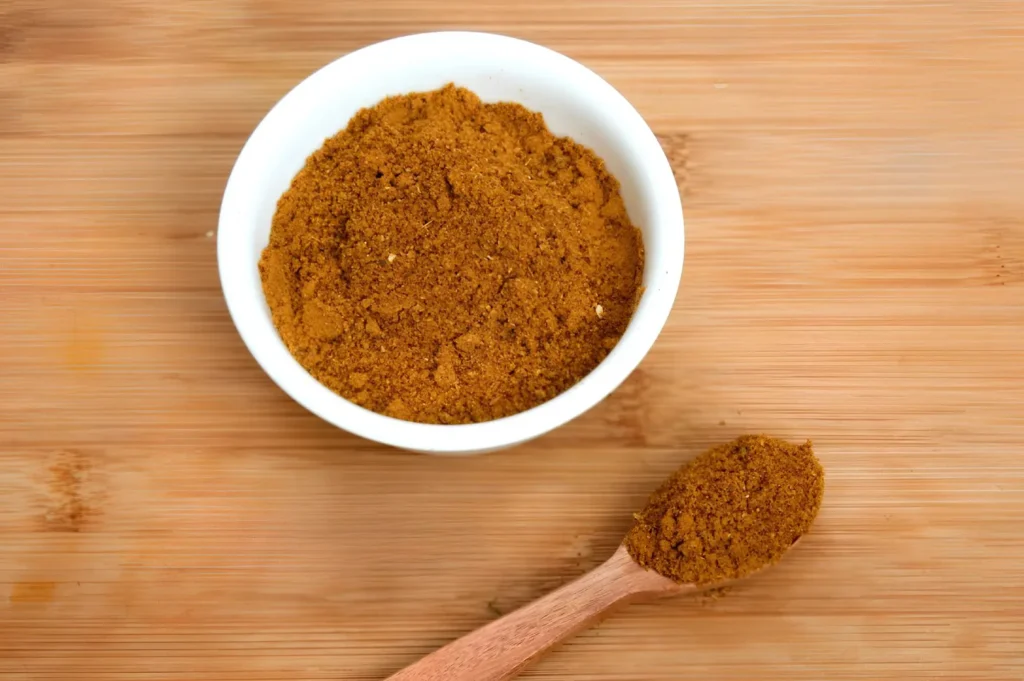
Add coriander powder, cumin powder, turmeric, red chili powder, chili powder, and chana masala powder. Stir for 30–45 seconds.
This is a small step, but it changes everything. The spices should move from dusty to fragrant. If they stick, splash in a spoonful of water. If you have a spice grinder, you can grind toasted whole spices for more intensity, but store-bought powder works well for weeknights.
Add chopped tomatoes, tomato puree, or tomato paste. Cook until the mixture thickens, darkens, and looks glossy. The raw tomato smell should fade.
Step 3: Add Chickpeas and Simmer
Add the canned chickpeas with ½ cup water. Stir well, then simmer for 12–15 minutes. Mash a few cooked chickpeas against the side of the pot. This thickens the gravy naturally and helps it reach your desired consistency.
If you are using cooked chana from dried chickpeas, add them the same way, but simmer a little longer. The chickpeas should be tender, but not falling apart completely.
Finish with garam masala, crushed kasoori methi, lemon juice, and coriander leaves. Taste and adjust salt. If the curry feels flat, add more lemon. If it feels thin, simmer uncovered. If it tastes harsh, the spices needed more cooking time.
Step 4: Serve Chana Masala with Roti or Rice
To serve chana masala, spoon it into bowls while hot. The gravy should cling to the chickpeas, thick but not pasty.
Warm roti or chapati makes the best pairing because it tears softly and scoops the sauce. Rice works too, especially if you want a gluten free meal. I remember one tired weeknight when I used frozen chapati and still felt like I had made something whole, warm, and generous.
This is also why some people compare chana masala with butter chicken. Both rely on a sauce that begs to be scooped. But chana masala is lighter, vegetarian, and built around chickpeas instead of cream and meat.
Quality Check: What the Best Chana Masala Looks Like
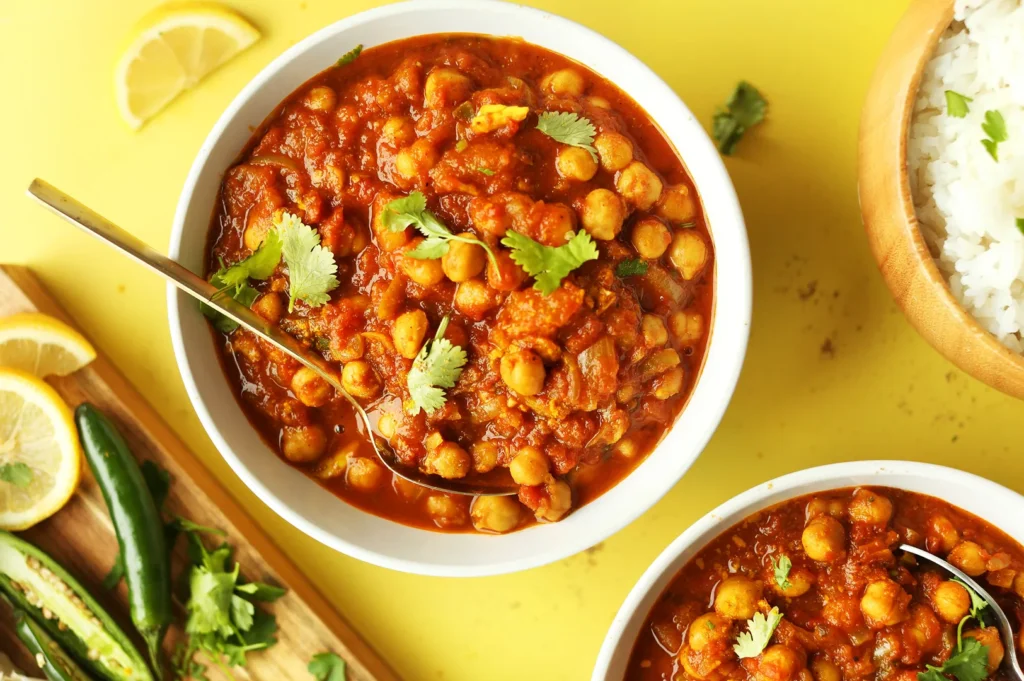
A best chana masala candidate should have:
- Thick gravy clinging to the chickpeas
- No raw spice smell
- Tender chickpeas with some bite
- Warm aroma from garam masala
- Bright finish from lemon juice
- Fresh lift from coriander leaves
If you tried this recipe and it tasted absolutely delicious, leave yourself a note for next time. If not, review recipe cues: more salt for depth, more lemon for lift, more simmering for body.
Singapore Cost and Weeknight Notes
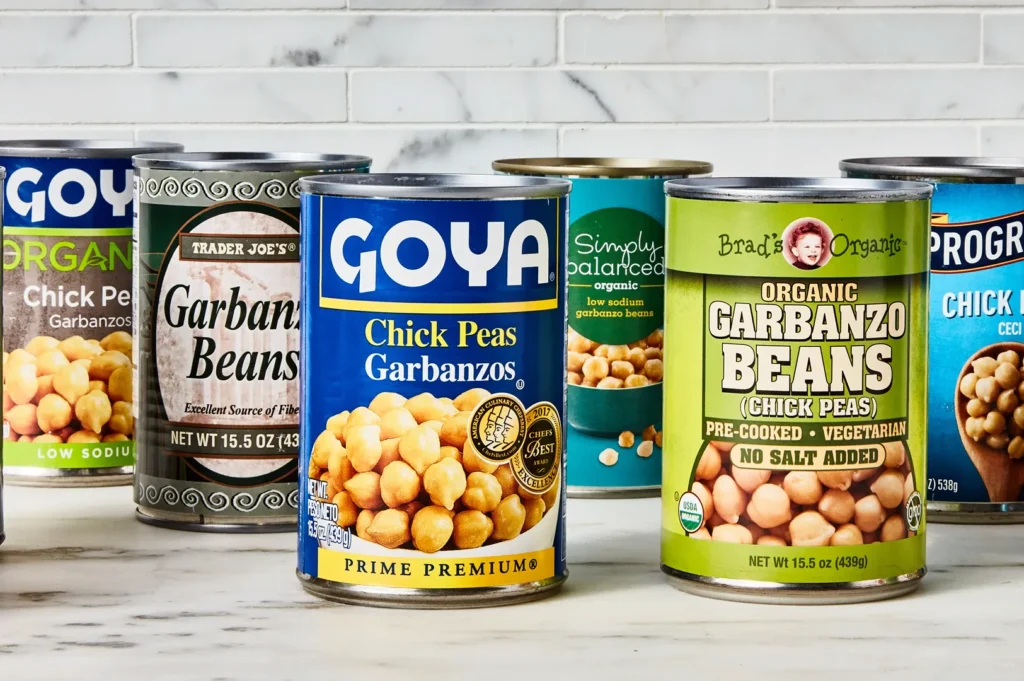
In Singapore, canned chickpeas are easy to find at FairPrice, Cold Storage, Sheng Siong, RedMart, and Lazada. For 3–4 servings, expect roughly S$10–S$25 depending on your pantry.
This great recipe becomes cheaper if you already keep cumin, coriander, turmeric, garam masala, and chana masala powder at home. It is also a wonderful recipe for building basic Indian cooking confidence because it teaches onion browning, spice blooming, simmering, and seasoning correction.
Nutrition will depend on oil or ghee. More ghee increases saturated fat, while moderate oil keeps monounsaturated fat and polyunsaturated fat more balanced. Either way, this is one of those delicious recipes the whole family can return to often.
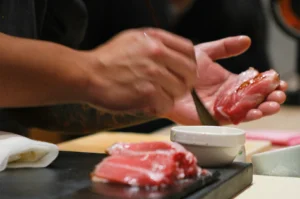
For those exploring culinary delights beyond Indian cuisine, Eat Drink Asia offers excellent guides to the best omakase Singapore has to offer, blending tradition with exceptional dining experiences.
The Heart of a Quick, Cozy Indian Dinner
What this dish really taught me is that weeknight cooking isn’t about perfection, it’s about getting it done well. Canned chickpeas, a properly cooked masala base, and warm roti give you a satisfying vegetarian dinner with no meat, no rice, and no two-hour simmer.
My advice: the first time, use frozen roti and put all your focus on the curry base. Once blooming spices and reducing the masala feel natural, try homemade roti. Take it one step at a time, and this’ll become one of your easiest weeknight wins.

The Spice Route Secrets: A Deep Dive into Malay Ethnic Food
Eda Wong | March 24, 2026
My first time ordering Nasi Padang in Geylang Serai was overwhelming, I randomly picked dishes and was shocked by a $20 bill due to premium beef rendang and squid. That taught me to always ask seafood prices and that Malay food is a complex, modular cuisine. Malay food is everywhere in Singapore, in hawker centres,…
-
The Shokunin Spirit: How Japan’s Craftsman Philosophy Lives Inside Singapore’s Most Disciplined Omakase Counter
Dio Asahi | March 21, 2026
The fire is not roaring; it is breathing. In a small, darkened workshop in Sakai, a swordsmith watches the colour of the steel with eyes that have tracked the same transformation for forty years. He does not look at a clock. He listens to the hum of the charcoal. He waits for the metal to…
-
The Evolution of the Plate: How History Transformed Iconic Malaysian Dishes
Eda Wong | March 19, 2026
I used to think I understood Malaysian food. As a Singaporean, it’s practically in my DNA, right? Nasi lemak for breakfast, a cheeky roti canai for supper – I thought I had it all figured out. Then I spent a week eating my way through Penang and Kuala Lumpur, and I realised I knew absolutely…
-
The Soul of the Table: An Educational Guide to the Role of Food in Malaysian Culture
Eat Drink Asia Team | March 17, 2026
We still remember our first collective Rumah Terbuka (Open House) experience in Kuala Lumpur.Standing at the doorway of a home during Hari Raya, we were utterly paralyzed by the sheer volume of people and the aroma of Malaysian cooking. There were aunties ladling beef rendang and tables groaning under the weight of colourful kuih. “Do…
-
Asian Food Comfort Trends: Why Broths and Bowls are Dominating Globally
Eda Wong | March 14, 2026
I still remember the first time I faced a “build-your-own” Mala Xiang Guo counter. I stood there, plastic tongs in hand, completely paralyzed by the mountain of choices. Lotus root? Kelp knots? three different types of tofu skin? My anxiety spiked. I panicked, grabbed way too much luncheon meat, and ended up with a $28…
-
The Fifth Element: A Masterclass on Umami in East Asian Cuisine
Dio Asahi | March 12, 2026
I’ll never forget the first time I made miso soup from scratch. Not the instant kind, but the “proper” way. I boiled water, dissolved miso paste, added tofu, and waited. It tasted flat, salty and cloudy but missing the deep, satisfying flavor I loved in Japanese restaurants. I thought maybe I needed better miso. Years…
-
Why My Quest Ended at Yummy Western (409 AMK)
Dio Asahi | March 10, 2026
There’s a specific magic to a late-night supper hunt in Singapore. It’s the ritual of chasing a craving through the humidity to find that one stall that hits the spot. For me, that meant a pilgrimage to Ang Mo Kio Avenue 10. I arrived at 10 PM on a Friday, just as the ‘supper soul’…
-
A Taste of Time: My Dinner at Guan Hoe Soon
Eda Wong | March 7, 2026
There’s something special about visiting a place that has seen decades of Singapore’s history unfold. Guan Hoe Soon, tucked away on Joo Chiat Road, holds the title of Singapore’s oldest Nyonya restaurant, and you can feel that heritage the moment you step inside. I’d heard about it for years, a place where recipes aren’t just…
-
The 6 Best Halal Restaurant in Singapore for Authentic Nasi Padang
Eda Wong | March 5, 2026
There are few meals as satisfying as Nasi Padang, a colourful feast where you choose from a variety of dishes to create your perfect plate. Over the years, I’ve explored Singapore’s Nasi Padang scene, especially in Kampong Glam, sampling everything from humble hawker stalls to renowned spots. This list highlights the best halal Nasi Padang…
-
The Global Soup Bowl: How Indonesian Soto Shapes the Future of Asiatic Food Traditions
Dio Asahi | March 3, 2026
I still remember my first “real” bowl of Indonesian soto. Sitting on a low plastic stool in a cramped warung, I ordered Soto Betawi, expecting it to be like the clear Soto Ayam from Singaporean weddings. I was wrong. The rich, milky broth was intense, creamy, and boldly spiced. That first spoonful rewired my idea…