Steam rises from the pot, and a woman lifts a banana leaf over the open flame, turning it once, twice, until its stiff green softens and the surface goes glossy and pliant. She wipes it down with a damp cloth, then spoons hot rice into its center while the grains still steam. The leaf releases a green, grassy warmth the moment heat touches it, a scent halfway between cut grass and something sweeter. Her fingers fold the edges in quick, practiced creases, tuck the ends under, and the bundle sits in her palm, warm and sealed, ready to travel.

Fresh green banana leaves used for wrapping and steaming rice.
The leaf is daun pisang, pronounced roughly dow-oon pee-sahng, the broad blade of the banana plant used as wrapper, plate, and quiet seasoning all at once. The craft is simple to describe and harder to master. You pass the leaf briefly over flame or hot steam to soften it, because a cold leaf cracks and tears when you fold. You wipe it clean, never wash it heavily, and you wrap the rice while it is still hot.
That heat is the whole point. It coaxes a faint oil from the leaf into the grains, lending a perfume that no pot alone can give. If you’ve ever chased the comforting aroma in a steamed chicken rice recipe, you already know how much fragrance can live in plain grains. The rice comes out with a thin sheen and a smell that clings to your fingers long after the meal.
I have watched grandmothers do this without looking, mid-conversation, the folding so automatic it seems boneless. A wrapped parcel of rice is breakfast at a crowded market, lunch carried into a paddy field, food packed for a long bus ride home. The wrapping is portable warmth, a way to keep rice hot and fragrant for hours without a single container. There is etiquette in the unwrapping too: you peel the leaf back slowly, careful not to lose the grains stuck to its inner face, and you eat with attention to the steam escaping. The folding is often shared labor, several pairs of hands at one table, talking as they work.
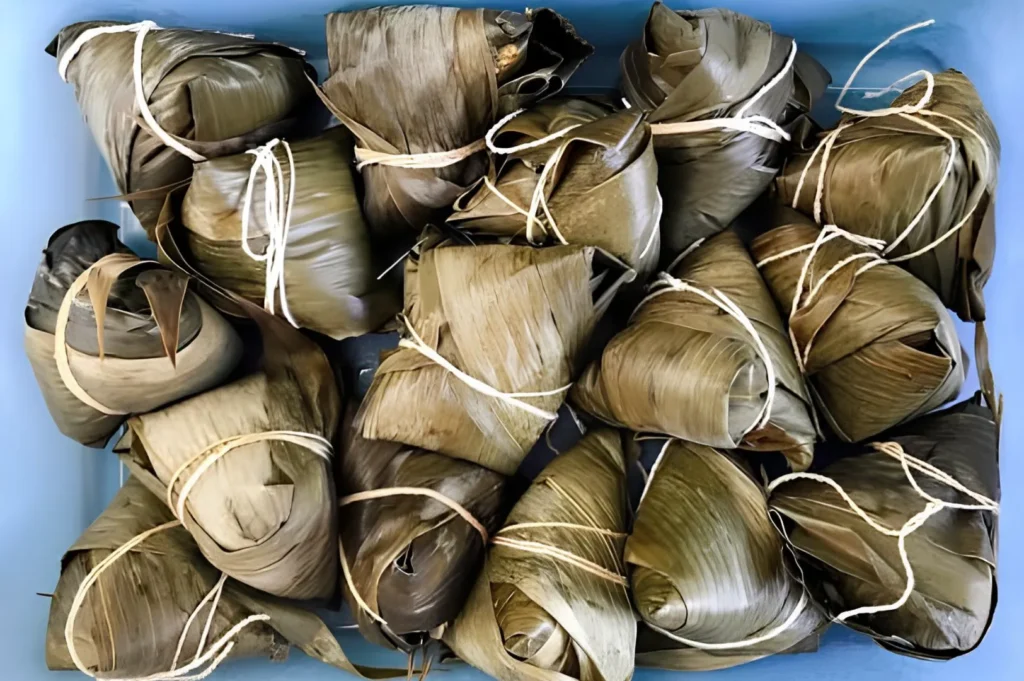
Traditional banana leaf wrapped rice parcels tied with natural string.
What stays with me now is how quietly this is slipping. Plastic and styrofoam wrap faster, seal tighter, cost less in effort. They keep rice hot, yes, but they give nothing back: no scent, no sheen, no green warmth rising when you open the parcel. The leaf asks more of you — a flame, a wiping cloth, hands that know the fold — and in return it seasons the food itself. That exchange, small and unhurried, is exactly what convenience cannot replicate, and exactly what we lose without noticing.
I think of the smell most of all. It is the reason some rice tastes like a particular kitchen, a particular pair of hands, a particular morning you cannot get back.

Meokja by Jungga Review: The Halal Korean Snack Table That Knows What It’s Doing
Eda Wong | October 10, 2026
I had not planned to eat at Meokja by Jungga. I was walking down North Bridge Road on a Tuesday, somewhere around the awkward hour between lunch and dinner, when I caught the smell of something frying and the low clatter of a kitchen working hard. I looked up, saw the sign, and my feet…
-
Seoul Bunsik Funan Review: The Comfort of Korean Street Food Without the Street
Eat Drink Asia Team | October 8, 2026
I have eaten ramyeon on a plastic stool in Seoul, close to midnight, with cold air biting at my ankles and the broth doing all the work of keeping me warm. Seoul Bunsik Funan is not that. This was a bright Tuesday afternoon, escalators humming behind me, the smell of mall air-con instead of street…
-
The Last Turn of Tamagoyaki in a Tsukiji Pan
Dio Asahi | October 7, 2026
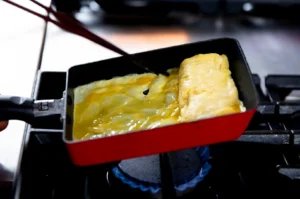
By Dio Asahi for Eat Drink Asia. It’s mid-morning, and the cook doesn’t look up. He stands over a rectangular pan, copper worn to a dull gold at the edges, and pours a thin skin of beaten egg across its surface. It hisses. Steam rises, warm and faintly sweet, and he tilts the pan just…
-
Seafood Restaurants in Singapore That Turn Crab Night Into a Full Table Ritual
Dio Asahi | October 6, 2026
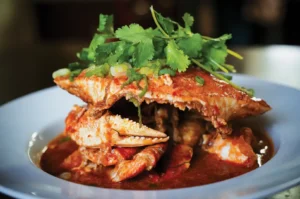
It always starts the same way for me. Someone lifts the lid off a plate of chilli crab, and the whole table leans in. Fingers reach before spoons do. Somebody tears the first piece of fried mantou, drags it through that sticky, sweet-savoury sauce, and the rest of us stop talking for a second. That…
-
Korean Street Food Is Built for Movement, Heat, and One-Handed Eating
Eda Wong | October 3, 2026
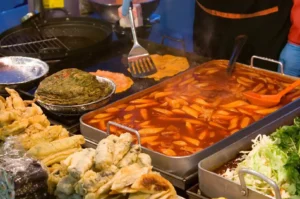
The first time I ate tteokbokki in Seoul, I burned my tongue standing up. It was late, the air was sharp with cold, and I had stopped at a small street food stall near a subway exit because the steam pulled me in. The woman handed me a paper cup of rice cakes in red…
-
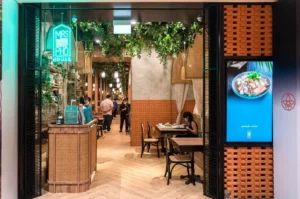
Mrs Pho and the Bowl That Makes Somerset Feel Like a Vietnamese Family Table
Eat Drink Asia Team | October 1, 2026
I wasn’t hungry when I walked into 313@somerset. I’d come for something else entirely; an errand, a shop I needed, the usual Orchard rush of people moving faster than the escalators. But somewhere on the first floor, past the noise, I caught the smell of star anise and beef bone, and my feet slowed down…
-
The Carving Knife at Colony, and the Way We Mark What Matters
Eda Wong | September 30, 2026
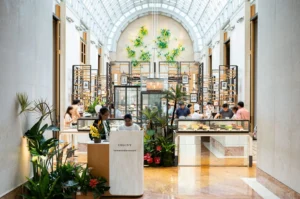
By Eda Wong for Eat Drink Asia. It’s late morning, and the light is doing most of the work. It pours through the high windows of Colony, at The Ritz-Carlton, Millenia Singapore, spilling across white tablecloths and the vintage prints on the walls. Marina Bay hums somewhere outside, but in here the room feels a…
-
Co Chung Vietnamese Restaurant and the Gỏi Cuốn That Makes Fresh Herbs Do the Work
Dio Asahi | September 29, 2026
I found it by accident, the way you find most things in a mall basement. I’d come down to Plaza Singapura’s B2 for something else entirely, drifting past the usual food-court noise, when I caught the smell of star anise and beef bone coming from a corner. I followed it. And there it was —…
-
Vietnamese Spring Roll: The Recipe That Only Works When the Herbs Stay Awake
Eda Wong | September 26, 2026
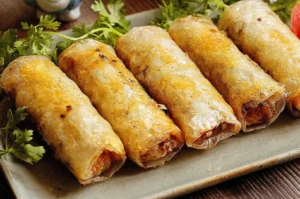
Fresh Vietnamese spring rolls, or gỏi cuốn, look delicate, but the recipe is really about control: barely softened rice paper, dry herbs, restrained noodles, clean protein, and a dipping sauce sharp enough to wake the whole thing up. This is not the fried version, chả giò or nem rán. This is the cool, translucent, herb-heavy…
-
Best Steakhouse Singapore: From Fire-Kissed Icons to Old-School Beef Plates
Eat Drink Asia Team | September 24, 2026
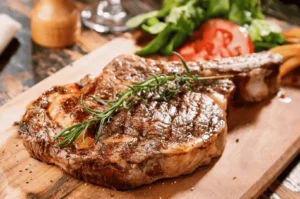
I didn’t set out to write about steak. It started with a bad day and a craving for something that pushed back when I bit into it. One dinner turned into a habit, and over a couple of years I found myself at counters, coffeeshops, and dining rooms all over this island, chasing the same…