It was close to eleven at night when I finally sat down.
The kind of hour when you’re not really hungry so much as unsettled, when you want something warm in front of you more than you want a proper meal. Al Mubin’s food court at Block 407, Ang Mo Kio Avenue 10, was still going — lights on, a couple of tables filled, the low clatter of a kitchen that doesn’t seem to know how to close.
I ordered the Nasi Goreng Sambal Ayam (S$9.40). It was marked Recommended on the menu, which usually means nothing. But I wanted to know one thing. On a menu this big, does a plate of sambal fried rice get any real attention or does it just get made?
Late Night Comfort at Al Mubin Restaurant
There is nothing much to describe about the setting, and I mean that kindly.
Al Mubin Restaurant sits like many heartland Indian restaurants in Singapore: fluorescent light, plastic chairs, a long laminated menu, and the soft churn of people coming in because they are hungry, not because the room is beautiful. It is a ground-floor food court kind of space, practical and familiar, the sort of place you remember by the food rather than the walls.
Honest Atmosphere
There is an honesty to that. Nobody here is performing. The uncle at the next table had his slippers off, one foot tucked under him, teh tarik going cold beside a folded newspaper. A delivery rider leaned against the counter waiting for an order, helmet still on.
This is not a room you come to for the room. It is a room you come to because it is open, nearby, and fast. On hot days, even a cold Milo or iced drink can feel like a refreshing treat before the food arrives.
Al Mubin has the same practical charm as the less polished side of Fortune Centre food, where the room matters less than whether the plate lands hot, fast, and useful. Read more here.
The Plate That Had to Prove Itself: Nasi Goreng Sambal Ayam

It arrived hot, steam lifting off the rice, and I did what I always do first. I dragged my fork through it to see how it moved.
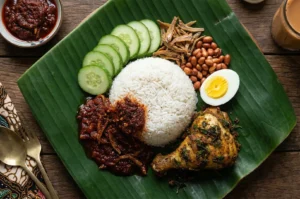
The grains came apart. Not clumped, not wet, not heavy with sauce. Each grain carried a rust-red coat, as if the sambal had been worked through the rice instead of poured over it. That is the first good sign. It told me the wok had done some work.
The way the rice carried the chilli made me think of this Eat Drink Asia sambal fried rice recipe, where the whole dish depends on cooking the paste properly before the grains ever hit the wok.
Aroma and Flavor
Then I brought a forkful up and smelled it. There was that cooked-chilli depth, rounder than raw chilli paste, with a little smoke at the edge. The sambal had been fried down properly. It tasted spicy but not wild. The rice had warmth, onion sweetness, and that slightly oily gloss you expect from a proper late-night fried rice. I would have liked the chilli to speak louder, but I also understood the restraint. This is a heartland restaurant feeding families, students, customers after work, and people who may not want supper to set them on fire.
The Rest of the Indian Food Menu, Watching

Once the Nasi Goreng Sambal Ayam proves the kitchen can handle heat, wok, and rice, the rest of Al Mubin Restaurant’s menu starts to make more sense. This is not a fried rice specialist. It is a late-night Indian food restaurant where prata, curry, noodles, grilled meat, naan, and sweet drinks all pull in different directions, each one offering another kind of comfort.
The menu at Al Mubin Restaurant tells you what kind of place this is: part Indian food counter, part late-night snack stop, part all-purpose comfort restaurant.
Double Egg Prata
The double egg prata is the kind of order that makes sense at this hour: crisp-edged, heavier than a plain prata, and built around egg rather than spectacle.
What makes it tempting is the contrast: flaky edges, a fluffy middle, warm egg, and curry with just enough spice to pull everything together. It is simple, filling, and practical, the sort of good food that makes sense when you want value for money more than polish.
Double Egg Cheese Prata
The double egg cheese prata is the richer version, the one you order when restraint has already left the table. The appeal is obvious: crispy flatbread, soft egg, and gooey cheese warming through the middle. Against that kind of comfort, a plate of fried rice has to work harder.
It also has that late-night snack logic: salty, stretchy, hot, and just a little excessive. The cheese gives it a smooth richness, while the egg keeps the prata from feeling thin. Add curry on the side and the whole thing becomes heavier, warmer, and more tasty than it has any right to be.
Butter Chicken and Garlic Naan
Butter chicken and garlic naan pull the menu toward creamy curry comfort. The promise is tender meat, aromatic spices, and naan soft enough to tear, dip, and drag through the sauce.
The dish’s appeal is in its rich flavors: creamy gravy, mild sweetness, a hint of smoke, and chicken that should feel tender rather than dry. The garlic naan matters because it gives your hands something to do, tearing through bread and chasing the sauce until the plate looks almost clean.
Chicken Tikka
Chicken tikka speaks in a different register. Instead of creamy curry, it leans toward spice, smoke, and grilled meat. On a menu this wide, it gives meat lovers another route: less sauce, more char, more direct flavour.
It is the kind of protein order that works when you want something juicy but not buried under gravy. The pleasure is in the edges: a little char, a little lemon, and the warmth of spices clinging to the meat. It feels more direct than butter chicken, almost sharper.
Mee Goreng
Mee goreng is the late-night noodle order that always seems to belong in a place like this.
The best versions have onions softened almost like caramelized onions, a squeeze of lemon, and a chilli heat that wakes up the noodles without flattening them. It is not delicate food. It is the kind of messy, satisfying plate that makes sense beside prata, Milo, and frothy teh tarik.
Roti John
Roti john sits somewhere between snack and meal. A crispy baguette, egg, onion, meat, and melted cheese make it louder and heavier than it first appears.
The bread gives crunch, the meat brings weight, and the egg binds it all into something sturdy enough to hold in your hands. Some versions lean sweet with sauce, almost like a little honey note against the savoury filling, while the onion keeps it from becoming too heavy.
Biryani and Palak Paneer

Biryani and palak paneer round out the menu’s slower side. One gives you fragrant rice, meat, spices, and a more generous plate; the other offers something creamy, green, and softer beside all the fried things. Together, they show how much variety the kitchen is trying to hold.
Biryani carries a different kind of appetite: rice, malaysian spices, herbs, meat, and a portion built for a fuller meal. Palak paneer moves more gently, with spinach, cheese, and a creamy texture that feels almost cooling beside spicy fried rice or mee goreng. If the menu has a quiet corner, this is where it sits.
What You Should Know
The practical bits are simple.
Location and Hours
Al Mubin Restaurant is at 407 Ang Mo Kio Avenue 10, #01-743. The appeal is obvious: it is a late-night, round-the-clock kind of place where rice is still being fried and tea is still being pulled when much of the estate has gone quiet.
There is also an Al Mubin outlet listed on Syed Alwi Road in Singapore, useful if you are looking for the same name closer to Little India. Menus can vary by outlet, so check before assuming every dish travels exactly the same way.
Ordering and Pricing

It is walk-in or delivery. No reservations, no ceremony, just order and eat.
Expect a practical spend: a plate of rice, mee goreng, prata, or a drink can stay affordable, while butter chicken, chicken tikka, palak paneer, biryani, garlic naan, or a larger meat-heavy meal will push the bill higher.
Halal and Tips
Al Mubin is commonly treated as a Muslim-friendly option, but if MUIS certification matters to you, verify it on-site before ordering.
One small tip: come off-peak if you can. Late does not always mean quiet here. This place can still hum close to midnight, so if you want faster food and a calmer table, aim for the odd hours between surges.
Closing this Flavorful Chapter

So does the Nasi Goreng Sambal Ayam carry the whole plate?
Mostly, yes. Not because it’s the best fried rice I’ve had, and not because it silences the prata and teh tarik around it. It carries the plate because someone cooked the sambal properly before the rice ever hit the wok, in a kitchen where it would have been so easy not to bother.
That’s the thing that stayed with me. In a place this busy, this sprawling, feeding this many people through the night, the small dish still got the small care it needed.
- The rice stayed separate.
- The sambal was cooked, not just spooned.
- The chicken belonged to the fried rice rather than sitting on it.
As it is, it’s honest food, hot and fast, made with more attention than the plastic chairs suggest.
I’d come again. Probably at the same unreasonable hour.

Connecting Generations: How Asiatic Food Builds Family Bonds Across Time
Dio Asahi | April 11, 2026
Whenever I smell toasted sesame oil hitting a hot wok, I am instantly transported back to a tiny, bustling kitchen from my childhood. The air would be thick with the aroma of ginger, garlic, and slow-simmering soy sauce. Before a single word was spoken, the meal was already telling a story. For many of us,…
-
A Comprehensive Resource for Oriental Foods Recipes for the Modern Home Cook
Eda Wong | April 10, 2026
For years, I thought cooking Asian food at home required something mystical. My stir-fries were soggy, lacking that smoky breath of the wok. My fried rice was inconsistent, sometimes clumpy, other times dry. My sauces tasted flat, missing the balance of savory, sweet, and tangy flavors I craved. I assumed restaurants had secrets I’d never…
-
Pour Decisions: The Best Bars in Singapore for Craft Beers and More
Dio Asahi | April 9, 2026
Walking through the humid streets of Singapore at dusk, you can feel the city transforming. The tropical heat fades into neon lights, and the clinking of glasses begins to echo from narrow shophouses and towering skyscrapers. Singapore boasts a dynamic bar scene that rivals any global metropolis. From opulent destinations like to the laid back charm,…
-
The 8 Best Chinese Restaurants in Singapore: From Dim Sum to Peking Duck
Dio Asahi | April 7, 2026
Singapore’s best chinese restaurants in singapore function less like isolated dining rooms and more like a networked system of technique. Across these chinese restaurants, you see branches of chinese cuisine expressed through roast mastery, controlled fermentation, seafood purity, and banquet choreography. This is not simply a guide to chinese food. It’s a mapped culinary journey…
-
The Neighbourhood Restaurant Test: How to Spot Truly Authentic Cuisine Restaurants in Your Area
Eda Wong | March 31, 2026
A friend texted me last week: “I’m outside this new Vietnamese place. How do I know if it’s legit before I waste my money?” It’s a question I get often. We’ve all been there, drawn in by a cool sign, only to get a plate of sad, sweet, tourist-grade pad thai that tastes like ketchup….
-
Cuisine in the World Meets Singapore: Inside Nakhon Kitchen’s Cross-Cultural Magic
Dio Asahi | March 26, 2026
There’s a rite of passage for any food lover living in the East of Singapore, and it involves a queue. Specifically, the perpetually long, snaking queue outside Nakhon Kitchen in Bedok. I’d heard the legends for years: authentic Thai food, rock-bottom prices, and a wait time that tests your commitment. So, on a Tuesday evening…
-
The Spice Route Secrets: A Deep Dive into Malay Ethnic Food
Eda Wong | March 24, 2026
My first time ordering Nasi Padang in Geylang Serai was overwhelming, I randomly picked dishes and was shocked by a $20 bill due to premium beef rendang and squid. That taught me to always ask seafood prices and that Malay food is a complex, modular cuisine. Malay food is everywhere in Singapore, in hawker centres,…
-
The Shokunin Spirit: How Japan’s Craftsman Philosophy Lives Inside Singapore’s Most Disciplined Omakase Counter
Dio Asahi | March 21, 2026
The fire is not roaring; it is breathing. In a small, darkened workshop in Sakai, a swordsmith watches the colour of the steel with eyes that have tracked the same transformation for forty years. He does not look at a clock. He listens to the hum of the charcoal. He waits for the metal to…
-
The Evolution of the Plate: How History Transformed Iconic Malaysian Dishes
Eda Wong | March 19, 2026
I used to think I understood Malaysian food. As a Singaporean, it’s practically in my DNA, right? Nasi lemak for breakfast, a cheeky roti canai for supper – I thought I had it all figured out. Then I spent a week eating my way through Penang and Kuala Lumpur, and I realised I knew absolutely…
-
The Soul of the Table: An Educational Guide to the Role of Food in Malaysian Culture
Eat Drink Asia Team | March 17, 2026
We still remember our first collective Rumah Terbuka (Open House) experience in Kuala Lumpur.Standing at the doorway of a home during Hari Raya, we were utterly paralyzed by the sheer volume of people and the aroma of Malaysian cooking. There were aunties ladling beef rendang and tables groaning under the weight of colourful kuih. “Do…