For years, I thought cooking Asian food at home required something mystical.
My stir-fries were soggy, lacking that smoky breath of the wok. My fried rice was inconsistent, sometimes clumpy, other times dry. My sauces tasted flat, missing the balance of savory, sweet, and tangy flavors I craved. I assumed restaurants had secrets I’d never learn.
They don’t.
They have systems.
Once I understood that Asian cooking isn’t magic, it’s repeatable technique, everything changed. This guide is built around that idea: teach the fundamentals once, and you can confidently cook delicious oriental foods recipes across Chinese, Japanese, Korean, Thai, and Vietnamese kitchens right in your home kitchen.
Not 60 random recipes.
Eighteen core dishes.
Transferable skills.
Why 18 Recipes Is the Sweet Spot for Asian Recipes
If you want 15–20 recipes, 18 is perfect. It’s comprehensive without turning into an encyclopedia.
These dishes teach:
- Rice handling — perfect for that fluffy fried rice or sticky Japanese rice
- Noodle timing — so your noodles are tender yet chewy, never mushy
- Stir-fry sequencing — mastering high heat to get that crispy, caramelized edge
- Broth logic — building layers of flavor in soups like pho or miso
- Sauce balance — the dance of salty soy sauce, sweet sugar, and tangy lime
- Fermentation basics — unlocking the umami depth of kimchi and miso
- Quick pickling — adding a refreshing crunch to side dishes
- Knife skills — chop vegetables and proteins uniformly for even cooking
Master these once, and you stop “following recipes.” You start cooking.
The Flavor DNA (Short Cultural Orientation of Asian Dishes)
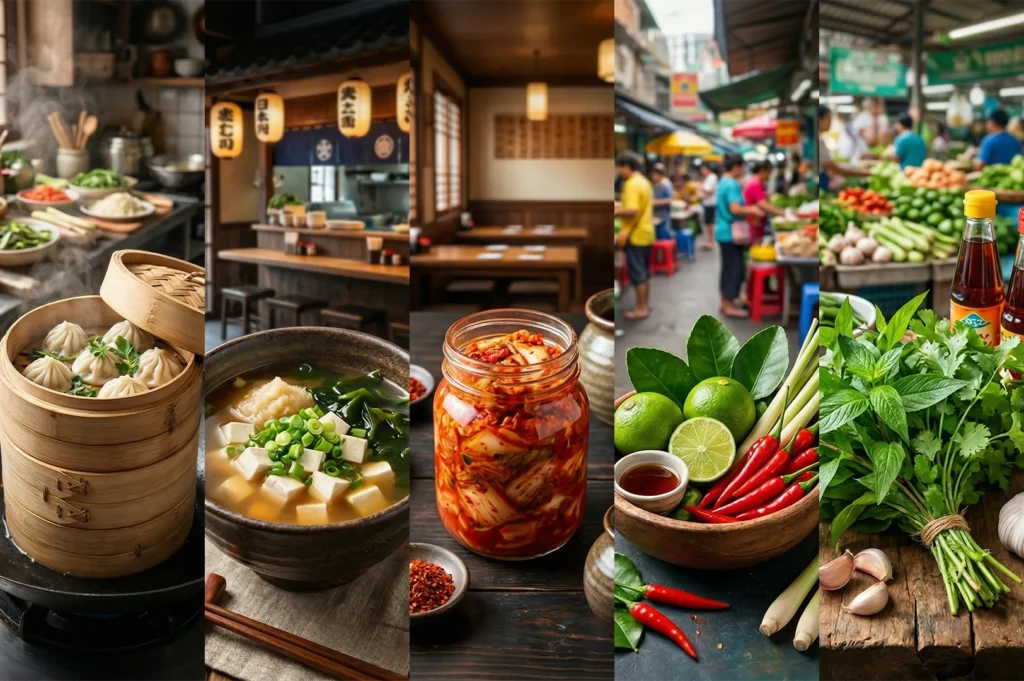
Before we cook, understand the core logic behind each cuisine’s flavors and techniques.
Chinese: High-heat stir fry logic with layered aromatics like garlic and onion; texture matters as much as taste, from crispy bok choy to tender beef.
Japanese: Precision and restraint. Quiet but exact seasoning using miso, mirin, and dashi to create delicate, balanced dishes.
Korean: Fermented foundations (jang), sesame fragrance, and contrast through banchan side dishes that bring texture and spice.
Thai: Balance is law, sweet, sour, salty, spicy in perfect tension, often garnished with fresh lime and herbs.
Vietnamese: Fresh herbs, light broths, and dipping sauces that tie everything together, like the warm, satisfying bowl of pho.
Once you see these patterns, the food stops feeling mysterious and becomes fun to make.
The 18 Core Oriental Foods Recipes That Teach Everything
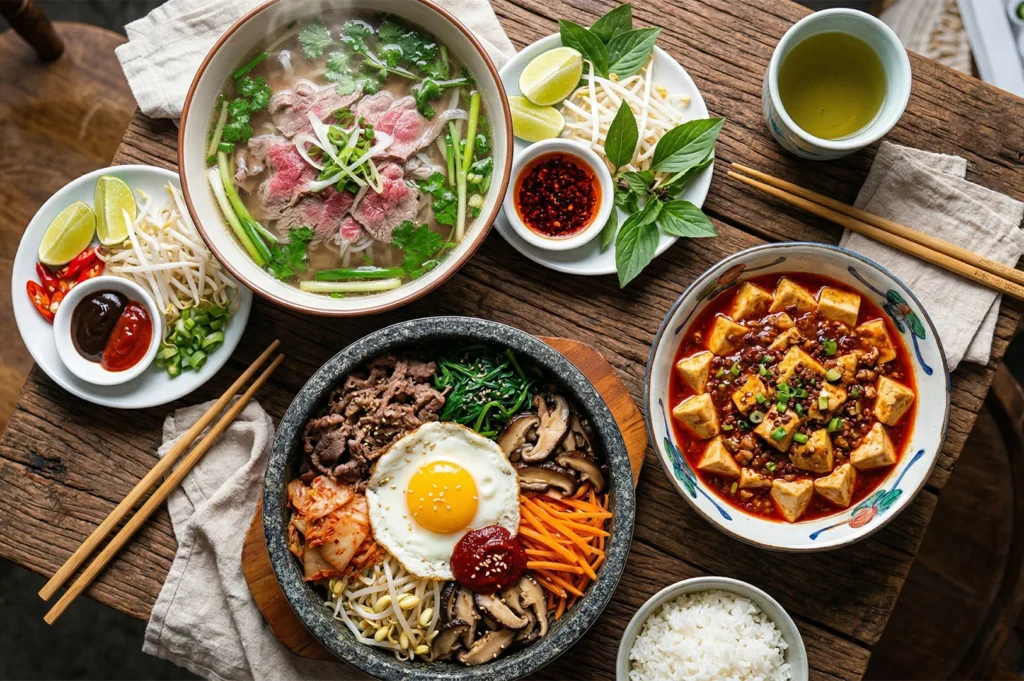
🇨🇳 Chinese (Heat + Sequencing)
- Egg Fried Rice
Teaches dry rice handling and high-heat sequencing. Perfect for transforming leftover rice into a crispy, savory meal. - Kung Pao Chicken (or tofu)
Aromatic stir fry workflow with a spicy, tangy sauce balanced by crunchy peanuts and tender protein. - Mapo Tofu
Layered umami from fermented doubanjiang and soft tofu simmered to silky perfection. - Steamed Fish with Ginger–Scallion
Steaming technique with fresh aromatics, finished with a drizzle of hot oil and soy sauce for a delicate, flavorful dish. - Tomato & Egg Stir-Fry
A fast, comforting weekday dish with fresh tomatoes, eggs, and simple seasoning, surprisingly easy and delicious.
🇯🇵 Japanese (Clarity + Control)
- Miso Soup
Foundational soup logic. Never boil miso to preserve its complex flavors; serve warm with tofu and scallions. - Tamagoyaki
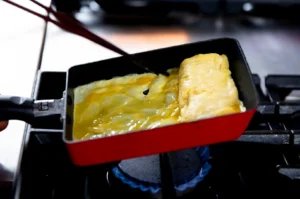
Rolled egg with a tender, slightly sweet texture that showcases heat control discipline. - Chicken Teriyaki
Soy–mirin glaze mastery that creates a glossy, flavorful coating over juicy chicken. - Gyudon
Thin-sliced beef simmered quickly with onion and soy sauce, served over rice for a satisfying quick lunch. - Onigiri
Rice balls seasoned and shaped for portable, tasty snacks or light meals.
In addition to these classic dishes, those exploring Japanese cuisine in Singapore should not miss the vibrant izakaya scene. Izakayas Singapore offer a lively atmosphere where you can enjoy a variety of small plates, sake, and casual dining experiences that complement the flavors of traditional Japanese cooking.
🇰🇷 Korean (Fermentation + Depth)
- Bibimbap
Component prep and mix-at-the-table format with fresh vegetables, protein, and spicy gochujang sauce. - Doenjang Jjigae
Fermented soybean stew rich in umami, perfect for a healthy, comforting dinner. - Kimchi Fried Rice
Leftover rice transformed with spicy kimchi, garlic, and vegetables into a flavorful, crispy dish.
🇹🇭 Thai (Balance + Sauce Logic)
- Pad Thai
Noodle timing and sweet/sour/salty harmony with crunchy peanuts, fresh lime, and tender shrimp or chicken. - Green Curry
Creamy coconut sanctuary with fragrant spices and tender vegetables simmered to perfection. - Som Tam–Inspired Salad
Pounding and maceration technique creates a tangy, crunchy salad bursting with fresh flavors.
🇻🇳 Vietnamese (Freshness + Broth)
- Phở-Inspired Quick Beef Noodle Soup
Broth shortcuts with fresh aromatics and tender beef slices make for a warm, satisfying bowl. - Gỏi Cuốn (Fresh Spring Rolls)
Knife skills and prep rhythm combine fresh vegetables, herbs, and protein wrapped in translucent rice dough; served with tangy peanut or hoisin dipping sauce.
Pantry Map for the Modern Home Kitchen: Building Blocks for Oriental Foods Recipes
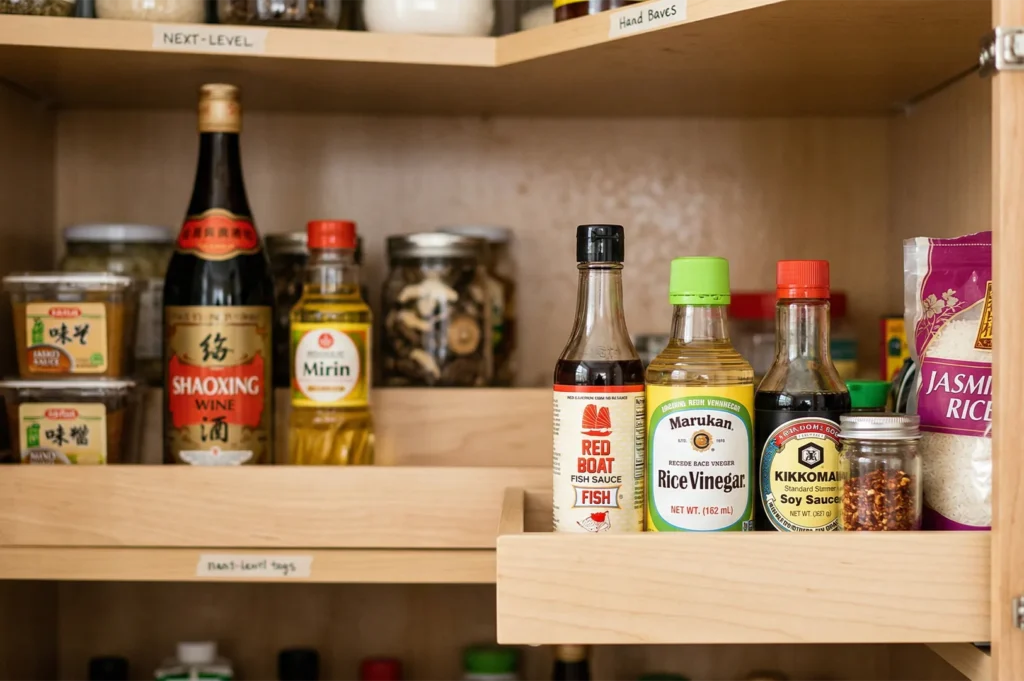
Instead of listing 60 ingredients, build your pantry in layers to keep your fridge stocked with essentials that unlock countless asian inspired dishes.
Must-Have: Cross-Cuisine Staples
Start here to cook flavorful dishes from scratch:
- Soy Sauce (Light for seasoning, dark for color and mild sweetness, Japanese shoyu for balance)
- Rice Vinegar for clean acidity in quick pickles and dipping sauces
- Toasted Sesame Oil — a few drops add a nutty finish
- Fish Sauce — the umami backbone of Thai and Vietnamese food (use sparingly)
- Chili Elements like gochujang, sambal, or dried chili flakes for spice
- Aromatics — garlic, ginger, scallions
- Cornstarch for velveting meat and glossy stir-fry sauces
Next-Level Staples (Unlock Authentic Taste Faster)
- Mirin — sweet Japanese rice wine for glazes and sauces
- Miso — white for mild sweetness, darker for deeper savoriness
- Oyster Sauce — savory-sweet backbone of Chinese stir-fries
- Shaoxing Wine — adds aroma depth to stir-fries and braises
Where to Buy
- Asian grocers offer the best variety and price
- Regular supermarkets carry essentials like soy sauce, rice vinegar, and sesame oil
- Online retailers for specialty items like hon-mirin and niche noodles
Core Skill Modules: Confidence Builders for Cooking Oriental Foods Recipes
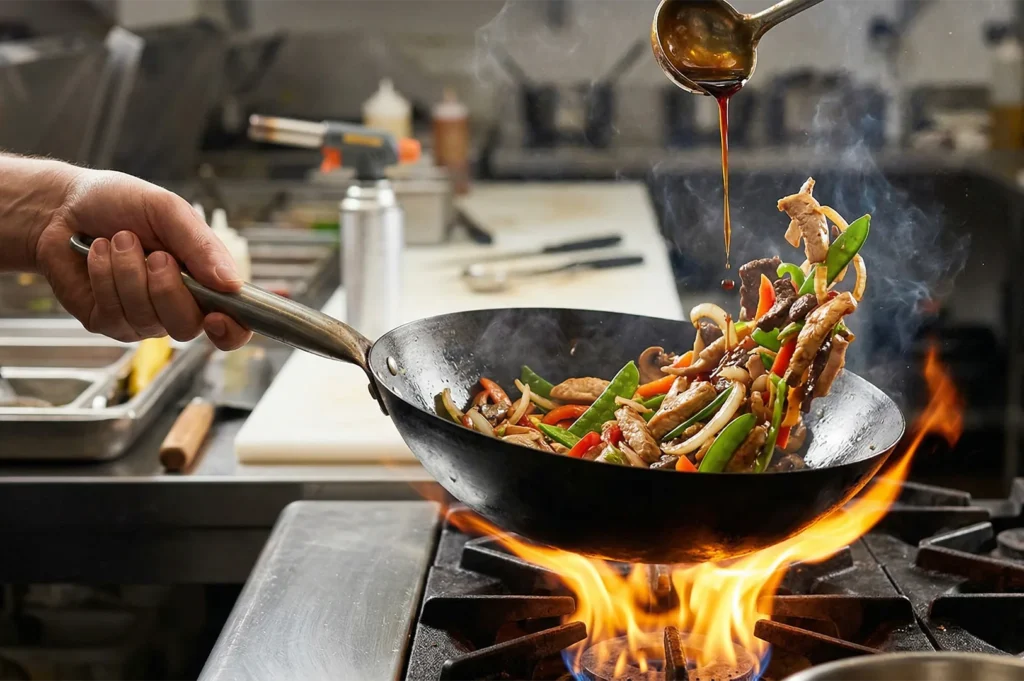
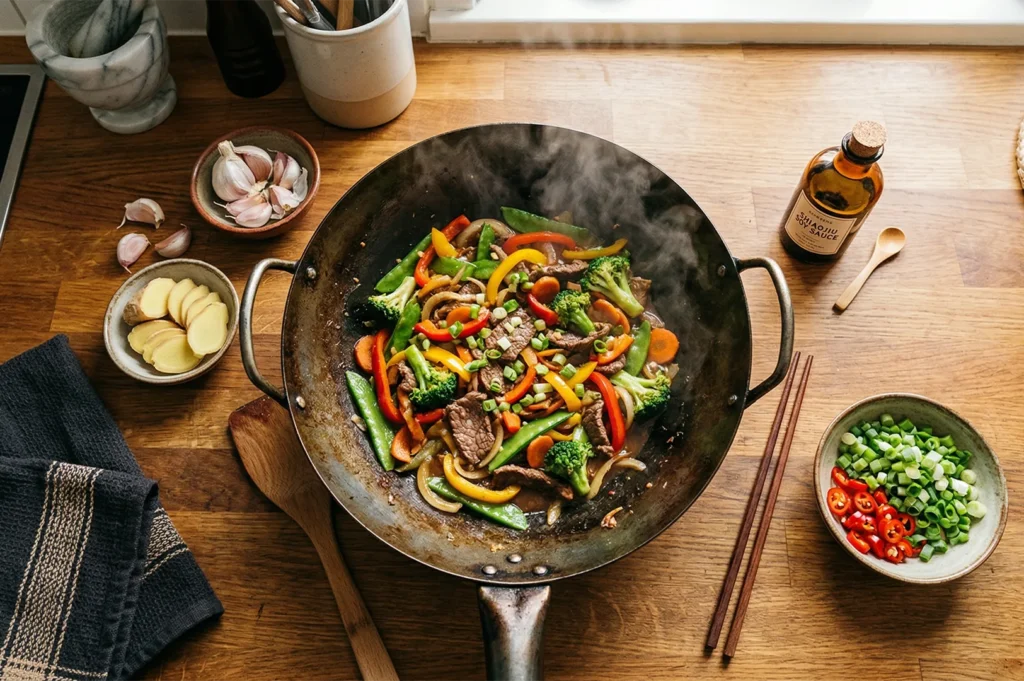
Stir-Frying Without Sogginess
- Prep everything first (mise en place)
- Use high heat to get that crispy, caramelized edge
- Cook in batches to avoid overcrowding the pan
- Add sauce last for a glossy, flavorful finish
Advanced trick: Some cooks use a blowtorch briefly for wok hei, experiment safely.
Velveting & “Passing-Through”
Lightly coat sliced meat or tofu with cornstarch and briefly par-cook in oil or water before stir-frying. This keeps protein tender and silky.
Rice Done Right
Three rules fix most problems:
- Rinse rice to remove excess starch
- Measure water and rice ratios precisely
- Rest rice after cooking for perfect texture
Use a rice cooker for easiest consistency, or stovetop with care.
Steaming Without Stress
- Use bamboo steamer or metal insert
- Keep water below food level to avoid sogginess
- Line baskets with parchment or cabbage leaves for easy cleanup
Steaming reheats leftovers beautifully without drying.
Knife Skills That Matter
- Uniform slices ensure even cooking
- Slice protein across the grain for tenderness
- Mince garlic and ginger efficiently to release flavors
You don’t need restaurant precision, just consistency.
Pitfalls for Beginners (And How to Fix Them)
Overcrowding the pan
→ Cook in two rounds to chase sear, not steam.
Saucing too early
→ Sauce finishes the dish, so add it last.
Wrong soy sauce confusion
→ Start with one all-purpose bottle; add dark soy only for color.
Fish sauce fear
→ Use drops, not splashes.
Mushy rice
→ Measure, rinse, and rest rice properly.
Obsessing over “authentic” without flexibility
→ Substitute by function: salt, acid, sweet, umami.
Where You Can Win: What Others Don’t Always Do
Many excellent sites exist:
- Just One Cookbook (Japanese clarity)
- Maangchi (Korean confidence)
- Hot Thai Kitchen (Thai balance logic)
- Serious Eats (technique depth)
What’s often missing?
- Cross-cuisine pantry by function
- A staged shopping plan
- Workflow design (one prep → multiple meals)
- Troubleshooting boxes
- Equipment advice for small modern kitchens
That’s where this guide stands apart.
Final Shift: Confidence Through Repetition
Cooking East and Southeast Asian food at home stopped feeling intimidating when I stopped chasing perfection and started mastering patterns.
Start with Egg Fried Rice.
Or Miso Soup.
Or Pad Thai.
Cook it three times.
Listen for garlic hitting hot oil.
Watch miso cloud broth.
Feel rice grains separate under your fork.
That moment, when it tastes right, is when the mystery disappears.
And when that happens, you’re no longer following recipes.
You’re cooking.

Meokja by Jungga Review: The Halal Korean Snack Table That Knows What It’s Doing
Eda Wong | October 10, 2026
I had not planned to eat at Meokja by Jungga. I was walking down North Bridge Road on a Tuesday, somewhere around the awkward hour between lunch and dinner, when I caught the smell of something frying and the low clatter of a kitchen working hard. I looked up, saw the sign, and my feet…
-
Seoul Bunsik Funan Review: The Comfort of Korean Street Food Without the Street
Eat Drink Asia Team | October 8, 2026
I have eaten ramyeon on a plastic stool in Seoul, close to midnight, with cold air biting at my ankles and the broth doing all the work of keeping me warm. Seoul Bunsik Funan is not that. This was a bright Tuesday afternoon, escalators humming behind me, the smell of mall air-con instead of street…
-
The Last Turn of Tamagoyaki in a Tsukiji Pan
Dio Asahi | October 7, 2026
By Dio Asahi for Eat Drink Asia. It’s mid-morning, and the cook doesn’t look up. He stands over a rectangular pan, copper worn to a dull gold at the edges, and pours a thin skin of beaten egg across its surface. It hisses. Steam rises, warm and faintly sweet, and he tilts the pan just…
-
Seafood Restaurants in Singapore That Turn Crab Night Into a Full Table Ritual
Dio Asahi | October 6, 2026
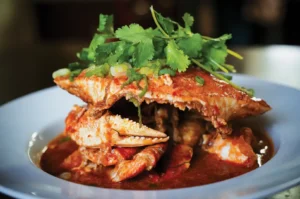
It always starts the same way for me. Someone lifts the lid off a plate of chilli crab, and the whole table leans in. Fingers reach before spoons do. Somebody tears the first piece of fried mantou, drags it through that sticky, sweet-savoury sauce, and the rest of us stop talking for a second. That…
-
Korean Street Food Is Built for Movement, Heat, and One-Handed Eating
Eda Wong | October 3, 2026
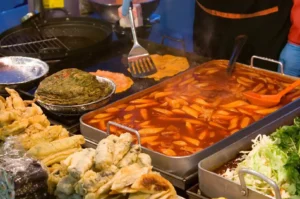
The first time I ate tteokbokki in Seoul, I burned my tongue standing up. It was late, the air was sharp with cold, and I had stopped at a small street food stall near a subway exit because the steam pulled me in. The woman handed me a paper cup of rice cakes in red…
-
Mrs Pho and the Bowl That Makes Somerset Feel Like a Vietnamese Family Table
Eat Drink Asia Team | October 1, 2026
I wasn’t hungry when I walked into 313@somerset. I’d come for something else entirely; an errand, a shop I needed, the usual Orchard rush of people moving faster than the escalators. But somewhere on the first floor, past the noise, I caught the smell of star anise and beef bone, and my feet slowed down…
-
The Carving Knife at Colony, and the Way We Mark What Matters
Eda Wong | September 30, 2026
By Eda Wong for Eat Drink Asia. It’s late morning, and the light is doing most of the work. It pours through the high windows of Colony, at The Ritz-Carlton, Millenia Singapore, spilling across white tablecloths and the vintage prints on the walls. Marina Bay hums somewhere outside, but in here the room feels a…
-
Co Chung Vietnamese Restaurant and the Gỏi Cuốn That Makes Fresh Herbs Do the Work
Dio Asahi | September 29, 2026
I found it by accident, the way you find most things in a mall basement. I’d come down to Plaza Singapura’s B2 for something else entirely, drifting past the usual food-court noise, when I caught the smell of star anise and beef bone coming from a corner. I followed it. And there it was —…
-
Vietnamese Spring Roll: The Recipe That Only Works When the Herbs Stay Awake
Eda Wong | September 26, 2026
Fresh Vietnamese spring rolls, or gỏi cuốn, look delicate, but the recipe is really about control: barely softened rice paper, dry herbs, restrained noodles, clean protein, and a dipping sauce sharp enough to wake the whole thing up. This is not the fried version, chả giò or nem rán. This is the cool, translucent, herb-heavy…
-
Best Steakhouse Singapore: From Fire-Kissed Icons to Old-School Beef Plates
Eat Drink Asia Team | September 24, 2026
I didn’t set out to write about steak. It started with a bad day and a craving for something that pushed back when I bit into it. One dinner turned into a habit, and over a couple of years I found myself at counters, coffeeshops, and dining rooms all over this island, chasing the same…