The cart glows at the edge of the lane just as the heat of the day finally loosens. A woman fans the coals with a flattened piece of cardboard, and the embers brighten orange under a row of skewers. Fat slides off the pork, hits the charcoal, and hisses upward in a thin curl of smoke. She turns each stick with two fingers, never looking, her hand moving in a steady rhythm I can almost set a clock to. The air thickens with woodsmoke and caramelizing sugar, and a small line forms without anyone seeming to organize it.
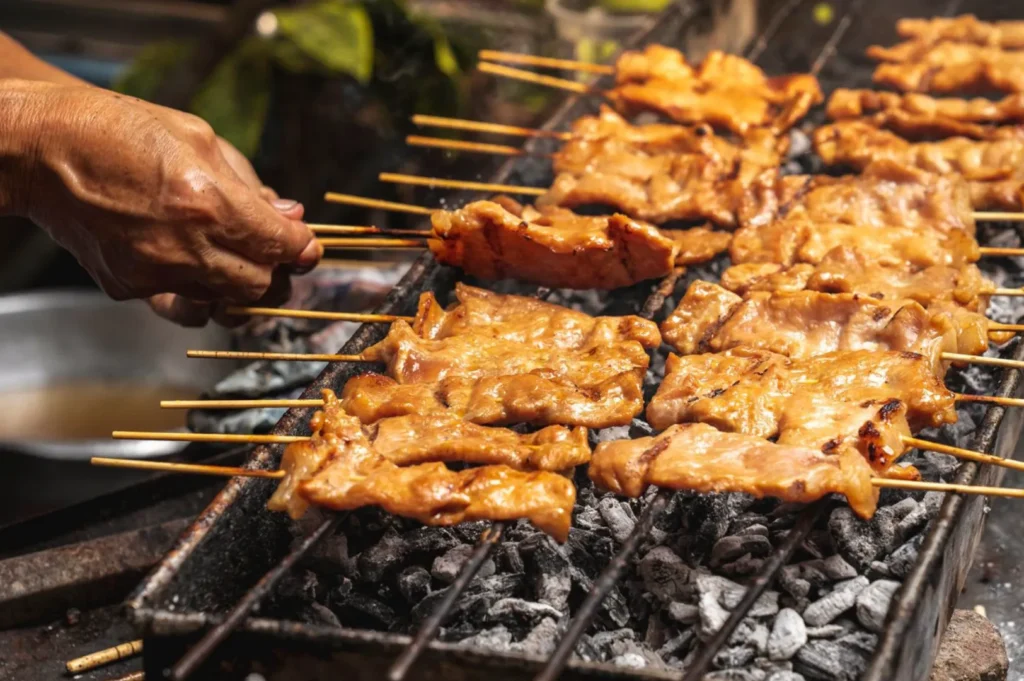
Thai street vendor grilling moo ping pork skewers over charcoal with bamboo sticks and wood smoke
What she is making is moo ping, pronounced roughly moo-ping: thin strips of pork threaded onto bamboo, marinated in a mix that usually leans on garlic, coriander root, fish sauce, and a touch of palm sugar, then grilled over charcoal until the edges char and the center stays tender. The bamboo skewers are soaked in water first, so they hold the meat without burning through. The marinade’s sugar is what gives the surface its dark, sticky lacquer, but it is also what makes the grilling unforgiving. Too much heat and the sugar blackens before the pork cooks; too little and the fat never renders. The whole thing lives or dies on heat control.
That control is the real craft here, and it is almost invisible. The vendor reads her grill like a map, knowing which corner runs hotter and which edge stays gentle, sliding skewers across zones without measuring anything. She turns each one at the precise moment the fat begins to weep, not before. It is muscle memory built over years, the kind of knowledge that never gets written down. In the early evening, the grill becomes a small fixed point in the neighborhood’s routine: students on the way home, motorbike riders pausing at the curb, families buying a handful of skewers before drifting into the night market. People eat standing, talking, the sticky rice passed in plastic bags. Nobody hurries the fire.
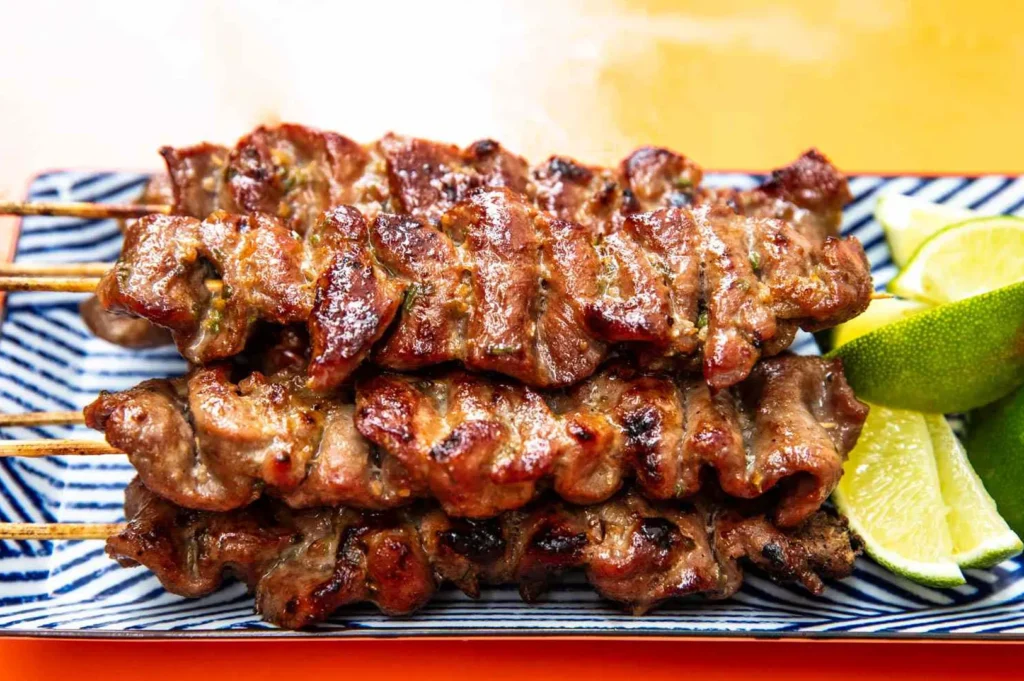
Grilled moo ping pork skewers with smoky char, bamboo sticks, and fresh lime wedges
What feels worth noticing now is how quietly this slow patience is being edged out. Gas burners are easier, cleaner, faster, and they spare the vendor the daily labor of coaxing charcoal to the right temperature. They also flatten the flavor, removing the smoke that gives moo ping its depth and the heat-reading skill that makes each batch slightly different. The convenience is real. So is the loss. A few stalls away, khao soi simmers in a metal pot—coconut curry and soft noodles under a brittle crown—another Chiang Mai staple that depends on patient heat. A skewer pulled off charcoal carries a char that gas cannot fake, and the hand that knows when to turn it is becoming rarer.
I keep returning to that turning hand. It asks for nothing, explains nothing, and yet it holds the whole thing together—a small fluency in fire and timing that a city builds quietly, one evening at a time.

The Golden Fold: How Thailand’s Street-Side Omelette Became a Morning Ritual
Dio Asahi | April 18, 2026
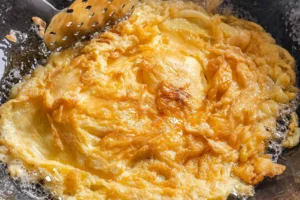
Dawn breaks over Bangkok with a familiar symphony. Before the intense heat settles and the traffic swells into a steady roar, the city streets belong to the food vendors. Amid the clatter of metal tools and the hum of early commuters, one sound stands out: the furious, bubbling sizzle of eggs hitting smoking-hot oil. This…

Lesson I Didn’t Expect: How Fourgather’s Easy Asian Recipes Taught Me to Cook at Home
Eda Wong | April 16, 2026
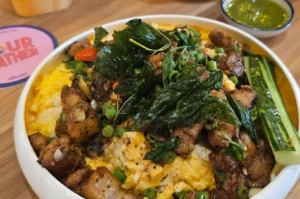
For the longest time, I was convinced that cooking authentic Thai food at home was out of my league. I imagined complex pastes, hours of simmering, and a mountain of ingredients I couldn’t pronounce. I was happy to leave it to the experts. But a casual dinner at Fourgather, a stylish Thai eatery in Telok…
-
Between Aesthetic and Appetite: The Modern Food Blogger’s Dilemma
Eda Wong | April 15, 2026
In our first, would probably say, emotional editorial, I would like to open with how there is a particular kind of silence that happens before a dish is eaten now. Not the quiet of anticipation, but the pause of positioning, a hand hovering just above the plate, adjusting the angle of a bowl so the…
-
Chasing Flavor: How Fook Kin Taught Us to Cook Asian Cuisine Recipes the Right Way
Eat Drink Asia Team | April 14, 2026
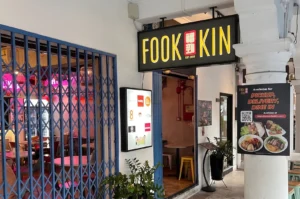
For years, we told ourselves that truly great Asian cooking was a mystical art form, a craft reserved for seasoned hawker uncles or Michelin-starred chefs with decades of experience. Our own attempts at home often felt like pale imitations, lacking that deep, smoky flavour or that perfect textural contrast we craved. Then, we had dinner…
-
Connecting Generations: How Asiatic Food Builds Family Bonds Across Time
Dio Asahi | April 11, 2026
Whenever I smell toasted sesame oil hitting a hot wok, I am instantly transported back to a tiny, bustling kitchen from my childhood. The air would be thick with the aroma of ginger, garlic, and slow-simmering soy sauce. Before a single word was spoken, the meal was already telling a story. For many of us,…
-
A Comprehensive Resource for Oriental Foods Recipes for the Modern Home Cook
Eda Wong | April 10, 2026
For years, I thought cooking Asian food at home required something mystical. My stir-fries were soggy, lacking that smoky breath of the wok. My fried rice was inconsistent, sometimes clumpy, other times dry. My sauces tasted flat, missing the balance of savory, sweet, and tangy flavors I craved. I assumed restaurants had secrets I’d never…
-
Pour Decisions: The Best Bars in Singapore for Craft Beers and More
Dio Asahi | April 9, 2026
Walking through the humid streets of Singapore at dusk, you can feel the city transforming. The tropical heat fades into neon lights, and the clinking of glasses begins to echo from narrow shophouses and towering skyscrapers. Singapore boasts a dynamic bar scene that rivals any global metropolis. From opulent destinations like to the laid back charm,…
-
The 8 Best Chinese Restaurants in Singapore: From Dim Sum to Peking Duck
Dio Asahi | April 7, 2026
Singapore’s best chinese restaurants in singapore function less like isolated dining rooms and more like a networked system of technique. Across these chinese restaurants, you see branches of chinese cuisine expressed through roast mastery, controlled fermentation, seafood purity, and banquet choreography. This is not simply a guide to chinese food. It’s a mapped culinary journey…
-
The Neighbourhood Restaurant Test: How to Spot Truly Authentic Cuisine Restaurants in Your Area
Eda Wong | March 31, 2026
A friend texted me last week: “I’m outside this new Vietnamese place. How do I know if it’s legit before I waste my money?” It’s a question I get often. We’ve all been there, drawn in by a cool sign, only to get a plate of sad, sweet, tourist-grade pad thai that tastes like ketchup….
-
Cuisine in the World Meets Singapore: Inside Nakhon Kitchen’s Cross-Cultural Magic
Dio Asahi | March 26, 2026
There’s a rite of passage for any food lover living in the East of Singapore, and it involves a queue. Specifically, the perpetually long, snaking queue outside Nakhon Kitchen in Bedok. I’d heard the legends for years: authentic Thai food, rock-bottom prices, and a wait time that tests your commitment. So, on a Tuesday evening…