The cart glows at the edge of the lane just as the heat of the day finally loosens. A woman fans the coals with a flattened piece of cardboard, and the embers brighten orange under a row of skewers. Fat slides off the pork, hits the charcoal, and hisses upward in a thin curl of smoke. She turns each stick with two fingers, never looking, her hand moving in a steady rhythm I can almost set a clock to. The air thickens with woodsmoke and caramelizing sugar, and a small line forms without anyone seeming to organize it.
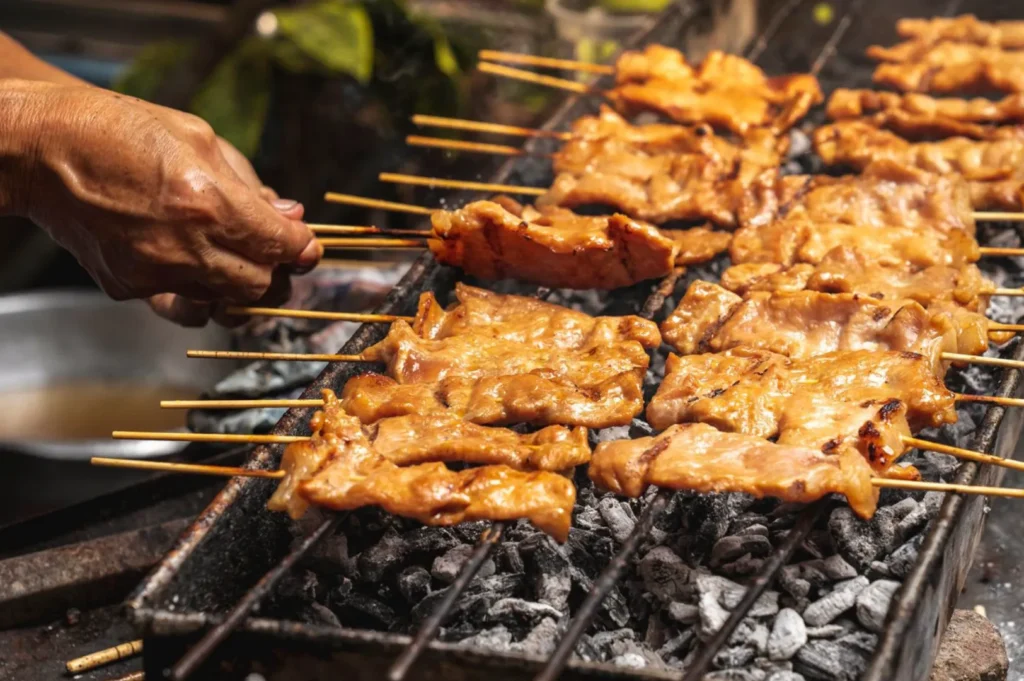
Thai street vendor grilling moo ping pork skewers over charcoal with bamboo sticks and wood smoke
What she is making is moo ping, pronounced roughly moo-ping: thin strips of pork threaded onto bamboo, marinated in a mix that usually leans on garlic, coriander root, fish sauce, and a touch of palm sugar, then grilled over charcoal until the edges char and the center stays tender. The bamboo skewers are soaked in water first, so they hold the meat without burning through. The marinade’s sugar is what gives the surface its dark, sticky lacquer, but it is also what makes the grilling unforgiving. Too much heat and the sugar blackens before the pork cooks; too little and the fat never renders. The whole thing lives or dies on heat control.
That control is the real craft here, and it is almost invisible. The vendor reads her grill like a map, knowing which corner runs hotter and which edge stays gentle, sliding skewers across zones without measuring anything. She turns each one at the precise moment the fat begins to weep, not before. It is muscle memory built over years, the kind of knowledge that never gets written down. In the early evening, the grill becomes a small fixed point in the neighborhood’s routine: students on the way home, motorbike riders pausing at the curb, families buying a handful of skewers before drifting into the night market. People eat standing, talking, the sticky rice passed in plastic bags. Nobody hurries the fire.
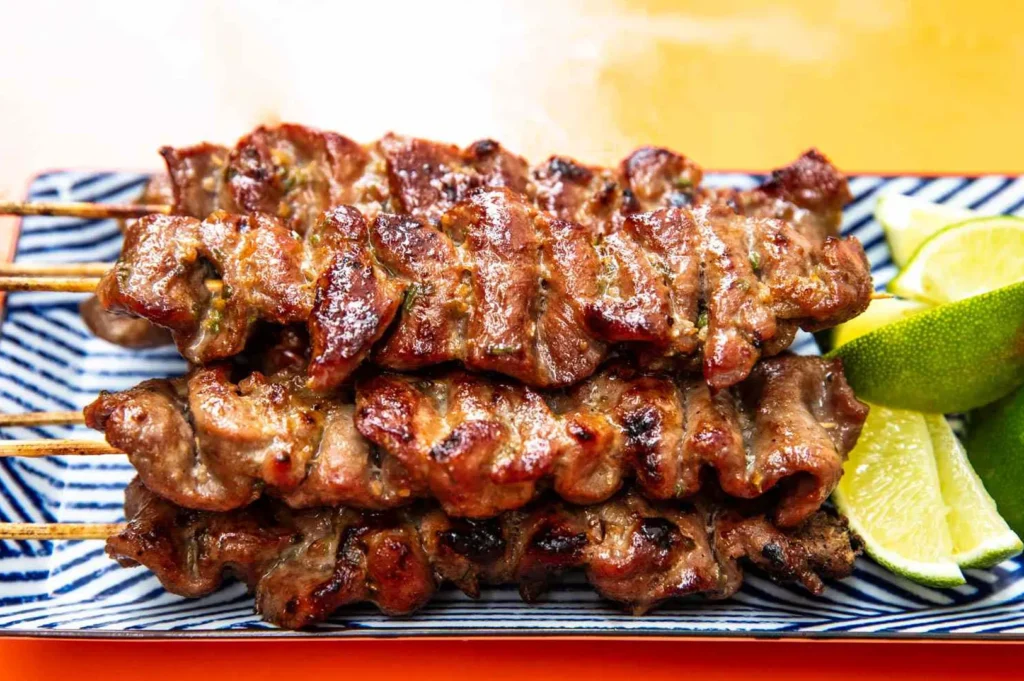
Grilled moo ping pork skewers with smoky char, bamboo sticks, and fresh lime wedges
What feels worth noticing now is how quietly this slow patience is being edged out. Gas burners are easier, cleaner, faster, and they spare the vendor the daily labor of coaxing charcoal to the right temperature. They also flatten the flavor, removing the smoke that gives moo ping its depth and the heat-reading skill that makes each batch slightly different. The convenience is real. So is the loss. A few stalls away, khao soi simmers in a metal pot—coconut curry and soft noodles under a brittle crown—another Chiang Mai staple that depends on patient heat. A skewer pulled off charcoal carries a char that gas cannot fake, and the hand that knows when to turn it is becoming rarer.
I keep returning to that turning hand. It asks for nothing, explains nothing, and yet it holds the whole thing together—a small fluency in fire and timing that a city builds quietly, one evening at a time.

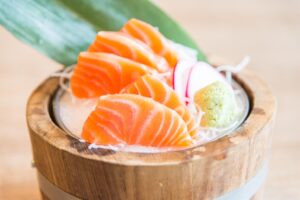
What Is Sashimi? A Guide to Raw Fish, Sliced Raw Fish, and Japanese Seafood
Eat Drink Asia Team | December 3, 2025
Sashimi is one of the clearest ways to understand Japanese cuisine because there is very little to hide behind. At its simplest, sashimi is sliced raw fish or seafood served without sushi rice, usually with soy sauce, wasabi, and simple garnishes such as daikon radish. But the dish is not just “raw fish on a…

Understanding Sake Alcohol Content: A Complete Guide to ABV and Flavor
Eda Wong | December 2, 2025
When exploring Japanese sake, many wonder about its grades and complex flavors. Sake’s unique profile offers remarkable versatility, enjoyed in various serving styles and paired with diverse dishes. One fundamental aspect is sake alcohol content. Is sake stronger than wine? How does its alcohol by volume (ABV) compare to beer? The answer is nuanced. Understanding…
-
Japanese Sake: The Complete Guide to Japan’s Traditional Rice Wine
Dio Asahi | November 29, 2025
Japanese Sake: The Complete Guide to Japan’s Traditional Rice Wine While sake has been Japan’s national beverage for over a millennium, its popularity across Asia is at an all-time high. Rooted in Japan’s traditional brewing methods and centuries-old origins. It symbolizes Japan’s cultural heritage and craftsmanship. Understanding this complex brewed alcoholic beverage opens doors to…

Best Japanese Foods in Japan: The Must-Try Dishes
Eda Wong | November 27, 2025
Japan’s culinary world extends far beyond well-known sushi and ramen, revealing a rich variety of regional specialties cherished by locals. While many travelers stick to popular Japanese foods in tourist areas, authentic flavors are best discovered in neighborhood markets, family-run eateries, and seasonal menus reflecting centuries of Japanese cooking tradition. Understanding Japanese cuisine requires more…
-
Japanese Food in Japan: The Ultimate Guide to Authentic Culinary Experiences
Eat Drink Asia Team | November 25, 2025
Experiencing Japanese food in Japan is fundamentally different from eating Japanese cuisine anywhere else. While sushi restaurants and ramen shops have spread globally, the authentic flavors, techniques, and cultural context of Japanese food can only be fully appreciated in its homeland. From meticulously selecting ingredients at peak freshness to centuries-old traditions shaping every meal, eating…
-
Food in Japan: A Complete Guide to Japanese Cuisine and Culinary Culture
Eda Wong | November 22, 2025
The gentle steam rising from a bowl of miso soup carries more than just the earthy aroma of fermented soybeans-it carries centuries of Japanese culture and culinary wisdom. When you eat in Japan, you’re not simply consuming a meal; you’re participating in a ritual that connects you to the seasons, the land, and a philosophy…
-
Ramune Marble Soda: History and Cultural Meaning of Japan’s Iconic Marble Soda
Dio Asahi | November 20, 2025
Among Japan’s beloved fizzy drinks, none evoke nostalgia and uniqueness quite like Ramune marble soda. Instantly recognizable by its quirky Codd neck bottle and glass marble seal, Ramune soda is an essential part of Japanese summer, cherished by generations for its refreshing taste and signature pop sound. This marble soda remains a staple at summer…
-
Hokkaido’s Best Seafood Treasures: Beyond Sushi and Sashimi
Eat Drink Asia Team | November 18, 2025
When visiting Hokkaido, Japan’s northernmost island, food lovers are greeted with some of the most highly regarded seafood specialties in the world. Hokkaido is famous for its abundance of fresh seafood and rich fishing grounds, thanks to the surrounding Sea of Japan, Pacific Ocean, and Sea of Okhotsk. These nutrient-packed waters yield a wide range…
-
The Art of Asian Tea Ceremony Traditions: Ancient Rituals and Cultural Values Across Asia
Dio Asahi | November 15, 2025
A cup of tea, in many parts of Asia, represents far more than a beverage-it is a conduit to ancestral tradition, intellectual pursuit, and the cultivation of mindfulness. Asian tea ceremony traditions turn the act of drinking tea into a sophisticated art form, layered with symbolism, philosophy, and socio-cultural values. Each gesture, from scooping powdered…

The Art of Slow-Cooked Curry Recipes: Time’s Magic in South Asian Cuisine
Eda Wong | November 13, 2025
Step into a South Asian kitchen, and the senses are instantly enveloped by the inviting aroma of food slowly simmering in a sturdy clay pot or heavy vessel. The allure is undeniable: in this space, slow-cooked curry recipes are a celebration of patient tradition, spices, and the richness of South Asian cuisine. Here, time and…