Steam rises from the pot, and a woman lifts a banana leaf over the open flame, turning it once, twice, until its stiff green softens and the surface goes glossy and pliant. She wipes it down with a damp cloth, then spoons hot rice into its center while the grains still steam. The leaf releases a green, grassy warmth the moment heat touches it, a scent halfway between cut grass and something sweeter. Her fingers fold the edges in quick, practiced creases, tuck the ends under, and the bundle sits in her palm, warm and sealed, ready to travel.

Fresh green banana leaves used for wrapping and steaming rice.
The leaf is daun pisang, pronounced roughly dow-oon pee-sahng, the broad blade of the banana plant used as wrapper, plate, and quiet seasoning all at once. The craft is simple to describe and harder to master. You pass the leaf briefly over flame or hot steam to soften it, because a cold leaf cracks and tears when you fold. You wipe it clean, never wash it heavily, and you wrap the rice while it is still hot.
That heat is the whole point. It coaxes a faint oil from the leaf into the grains, lending a perfume that no pot alone can give. If you’ve ever chased the comforting aroma in a steamed chicken rice recipe, you already know how much fragrance can live in plain grains. The rice comes out with a thin sheen and a smell that clings to your fingers long after the meal.
I have watched grandmothers do this without looking, mid-conversation, the folding so automatic it seems boneless. A wrapped parcel of rice is breakfast at a crowded market, lunch carried into a paddy field, food packed for a long bus ride home. The wrapping is portable warmth, a way to keep rice hot and fragrant for hours without a single container. There is etiquette in the unwrapping too: you peel the leaf back slowly, careful not to lose the grains stuck to its inner face, and you eat with attention to the steam escaping. The folding is often shared labor, several pairs of hands at one table, talking as they work.
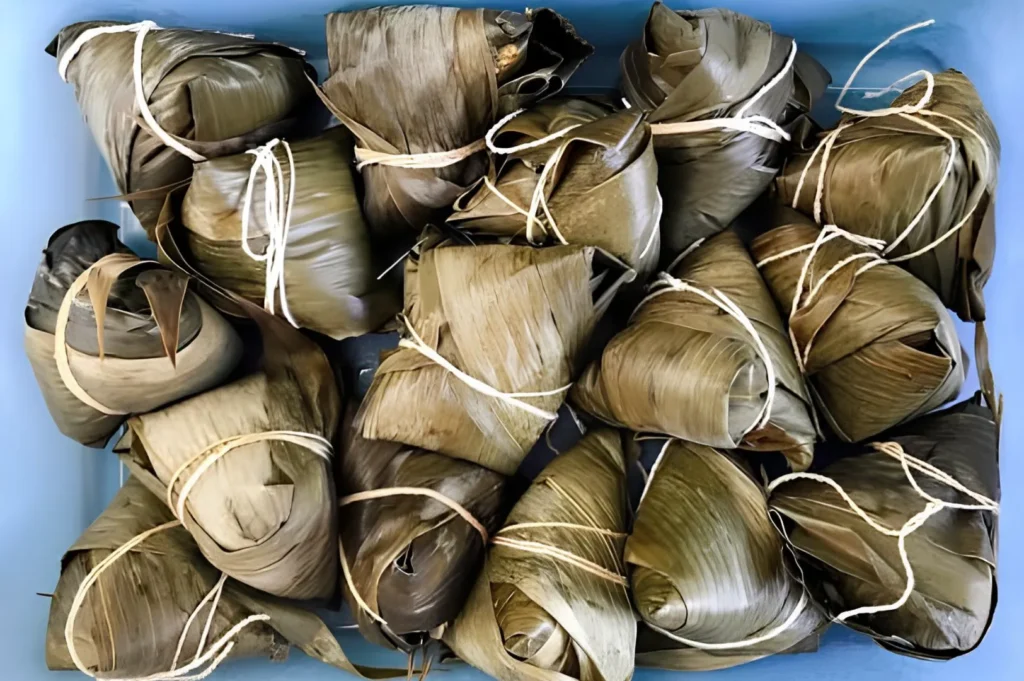
Traditional banana leaf wrapped rice parcels tied with natural string.
What stays with me now is how quietly this is slipping. Plastic and styrofoam wrap faster, seal tighter, cost less in effort. They keep rice hot, yes, but they give nothing back: no scent, no sheen, no green warmth rising when you open the parcel. The leaf asks more of you — a flame, a wiping cloth, hands that know the fold — and in return it seasons the food itself. That exchange, small and unhurried, is exactly what convenience cannot replicate, and exactly what we lose without noticing.
I think of the smell most of all. It is the reason some rice tastes like a particular kitchen, a particular pair of hands, a particular morning you cannot get back.

The Silent Language of the Table: How Traditional Food in China Speaks Through Generations
Eda Wong | April 28, 2026
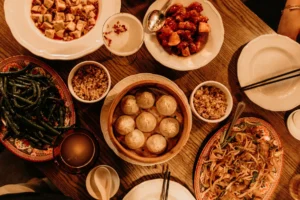
When I first tried to navigate a traditional Cantonese family dinner, I made a spectacularly embarrassing mistake. I sat down, looked at the sprawling, beautifully written menu, and confidently ordered an individual plate of sweet and sour pork just for myself. The table went completely quiet. My host gently nudged the menu back towards the…
-
The Golden Roux Revolution: Best Japanese Curry Singapore Spots That Redefine Comfort Food
Eat Drink Asia Team | April 25, 2026
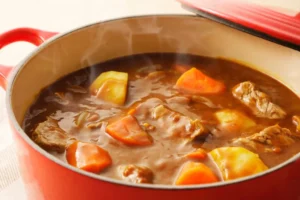
April 25, 2026 | Eat Drink Asia Team Last updated: September 17, 2026 We have always believed that a brilliant plate of Japanese curry is the ultimate culinary hug. Over the past eight months, we made it our personal mission to embark on a comprehensive culinary journey across Singapore, hunting down the absolute best bowls…

Noodle Masterpieces: Celebrating the Craft
Eat Drink Asia Team | April 24, 2026
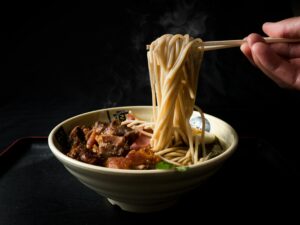
Noodles have a timeless place in the world of food, and Taste Our Traditions can attest that only few dishes are as universally loved. What makes a bowl of noodles truly stand out is not just the ingredients, but the artistry and skill behind their creation. Noodle-making is an ancient craft that demands patience, precision,…
-
Charcoal Smoke and Yakitori Evenings in Osaka
Eda Wong | April 24, 2026
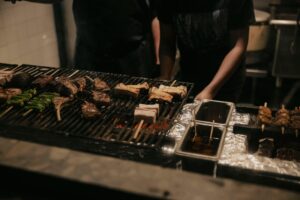
The first thing I noticed was the smoke. It didn’t rise all at once, but in thin, steady ribbons that curled upward from a narrow grill set just inches from the counter. The scent came first, warm and unmistakable, a mix of rendered chicken fat and binchōtan charcoal, clean but deeply present. Inside the small…
-
Cracking the Code of Telur Thai: Inside Egg Thai West Mall, a Kitchen That Tells a Story
Dio Asahi | April 23, 2026
I visited on a Tuesday around 7pm, completely exhausted from a long day of meetings and staring at screens. I wasn’t looking for a fancy culinary journey or a trend-setting dining experience. Honestly, I just wanted a quick, comforting meal that would hit the spot without emptying my wallet. That specific craving led me to…

Sanook Kitchen’s Thai Omelette Rice: A Heartland Answer to Singapore’s Thai Food Saturation
Eda Wong | April 21, 2026
If you live in Singapore, you know that finding Thai food is about as difficult as finding a humid day. We are spoiled for choice. From gritty hawker stalls serving fiery basil pork to upscale restaurants where a bowl of tom yum costs more than a taxi ride, the options are endless. But sometimes, you…
-
The Golden Fold: How Thailand’s Street-Side Omelette Became a Morning Ritual
Dio Asahi | April 18, 2026
Dawn breaks over Bangkok with a familiar symphony. Before the intense heat settles and the traffic swells into a steady roar, the city streets belong to the food vendors. Amid the clatter of metal tools and the hum of early commuters, one sound stands out: the furious, bubbling sizzle of eggs hitting smoking-hot oil. This…

Lesson I Didn’t Expect: How Fourgather’s Easy Asian Recipes Taught Me to Cook at Home
Eda Wong | April 16, 2026
For the longest time, I was convinced that cooking authentic Thai food at home was out of my league. I imagined complex pastes, hours of simmering, and a mountain of ingredients I couldn’t pronounce. I was happy to leave it to the experts. But a casual dinner at Fourgather, a stylish Thai eatery in Telok…
-
Between Aesthetic and Appetite: The Modern Food Blogger’s Dilemma
Eda Wong | April 15, 2026
In our first, would probably say, emotional editorial, I would like to open with how there is a particular kind of silence that happens before a dish is eaten now. Not the quiet of anticipation, but the pause of positioning, a hand hovering just above the plate, adjusting the angle of a bowl so the…
-
Chasing Flavor: How Fook Kin Taught Us to Cook Asian Cuisine Recipes the Right Way
Eat Drink Asia Team | April 14, 2026
For years, we told ourselves that truly great Asian cooking was a mystical art form, a craft reserved for seasoned hawker uncles or Michelin-starred chefs with decades of experience. Our own attempts at home often felt like pale imitations, lacking that deep, smoky flavour or that perfect textural contrast we craved. Then, we had dinner…