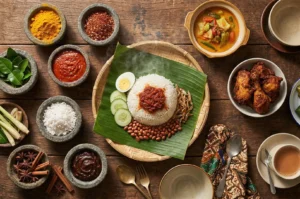
There are few meals as satisfying as Nasi Padang, a colourful feast where you choose from a variety of dishes to create your perfect plate. Over the years, I’ve explored Singapore’s Nasi Padang scene, especially in Kampong Glam, sampling everything from humble hawker stalls to renowned spots.
This list highlights the best halal Nasi Padang experiences nearby, each offering unique flavors, authenticity, or great value. But for those interested, click here to explore more about the vibrant dining scene across Asia, more specifically insights into Chinese restaurants that have shaped the region’s rich culinary heritage.
But for now grab your appetite and dive in!
Rumah Makan Minang – Halal Restaurant in Singapore for Traditional Nasi Padang
Nearest MRT: Bugis (EW/DT Line) – 5–7 minute walk
Price: $$ (Approx. S$8–S$15 per person)
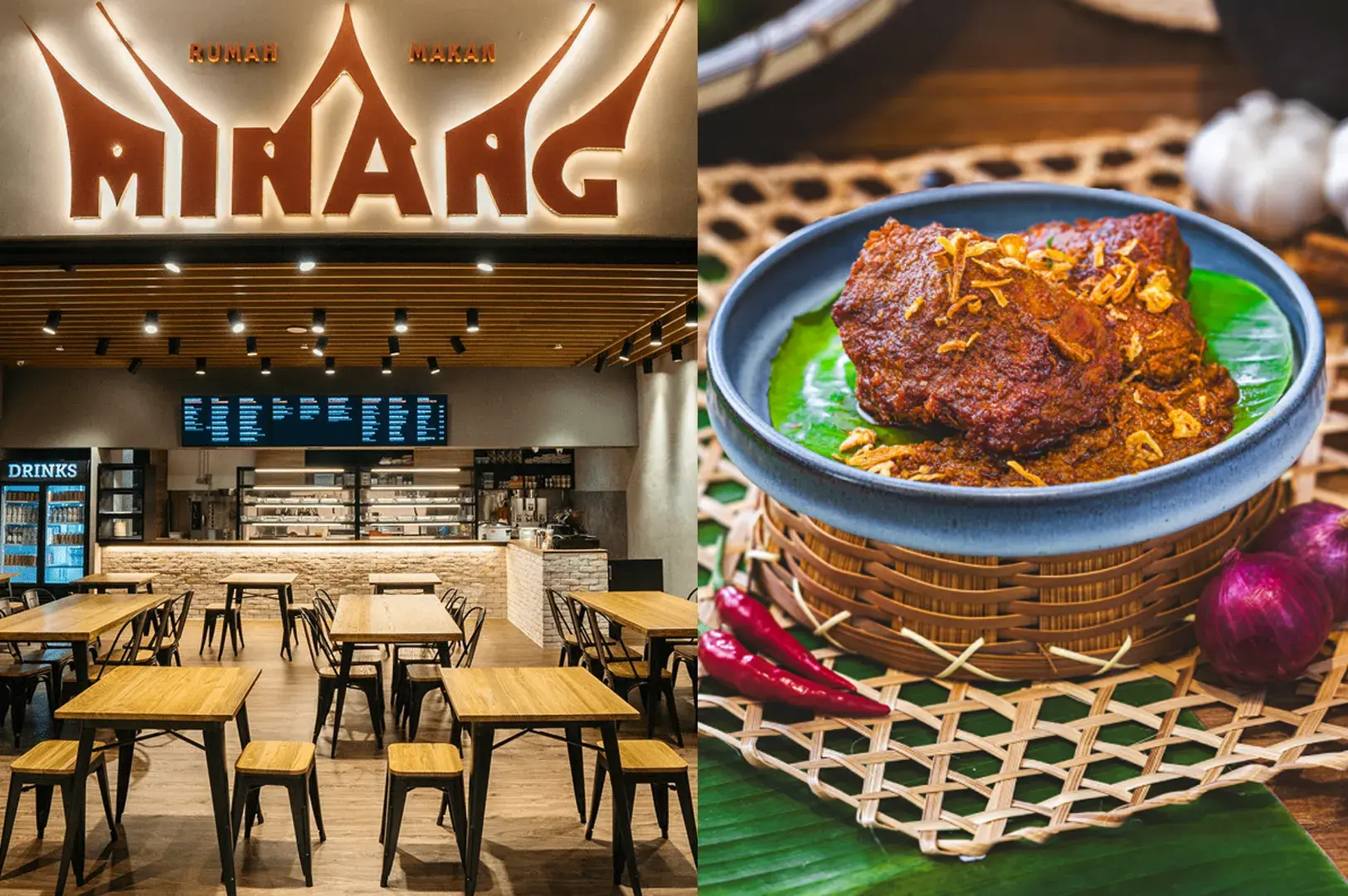
Rumah Makan Minang is one of the most familiar names for halal restaurant in Singapore searches around Kampong Gelam, with its main restaurant at Kandahar Street and a reputation built around Minangkabau-style nasi padang and beef rendang. The room feels busy in the best way: trays of curries, sambal dishes, vegetables, and fried items lined up behind the counter, each one adding colour and heat to the lunch rush. Its official site describes it as an Indonesian restaurant specialising in reasonably priced Minangkabau cuisine, including Nasi Padang and Beef Rendang, at 18 & 18A Kandahar Street.
The atmosphere is practical rather than polished. You come here for movement: diners pointing at dishes, staff portioning rice, coconut gravy sliding over the plate, and the warm smell of chilli, fried shallots, and slow-cooked beef in the air. It feels like Singapore halal food with history under its fingernails.
It feels especially suited to diners who want a real nasi padang rhythm. The food is direct, the service is brisk, and the setting keeps the focus where it should be: on the plate.
Signature dishes
The Beef Rendang is the anchor. It is dark, tender, and deeply spiced, with coconut milk and chilli reduced until the paste clings to the meat rather than flooding the rice. Each bite carries that slow-cooked pull: dry at the edges, rich in the centre, and fragrant with toasted spice.
The Tahu Telur is the dish to add if you are sharing. Crisp egg and tofu meet a sweet, nutty sauce, giving the table a lighter crunch beside the heavier rendang. If you want contrast, pair the meat with a chilli-forward fish or vegetable dish to cut through the richness.
The Perfect Session: Nasi padang purists and anyone craving traditional Malay cuisine in a heritage setting.
The Reality Check: Skip if you prefer a quiet, slow dining experience, lunch hours get lively and loud.
The Local Secret: Don’t miss adding Tahu Telur if sharing, a crisp eggy delight drizzled with sweet, nutty sauce that balances the heavier meat dishes.
Nasi Padang Sabar Menanti – Halal Restaurants Classic for Nasi Padang Regulars
Nearest MRT: Bugis (EW/DT Line) – 7–9 minute walk
Price: $$ (Approx. S$8–S$15 per person)
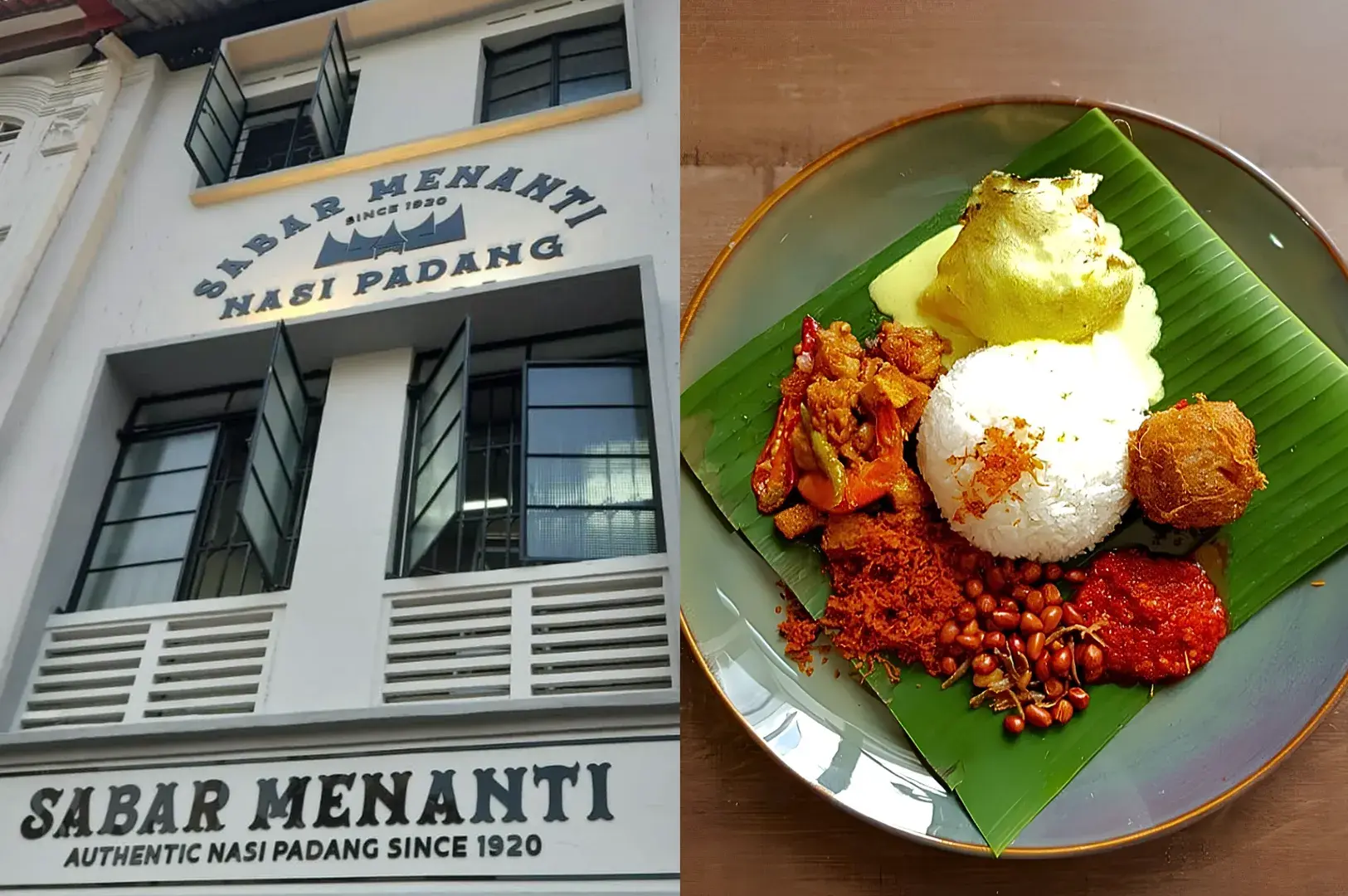
Sabar Menanti is part of Kampong Gelam’s nasi padang belt, a long-running Malay-Minangkabau name associated with generous rice plates and old-school dining. Its own site traces the restaurant back more than 57 years in the Kandahar Street area, with its current pickup address listed at 737 North Bridge Road.
The atmosphere is straightforward and family-friendly. It does not try to dress up the experience. You come for trays of curry, sambal, grilled chicken, vegetables, and rice, then eat while the room keeps moving around you.
There is a patience built into the name, but the service style is still practical. This is casual halal dining for Muslim diners, regulars, and groups who know what they want: a familiar plate, a clear queue, and flavours that do not need a long explanation.
Signature dishes
The Ayam Bakar is the dish that gives the meal smoke and sweetness. The grilled chicken should arrive with a gentle char on the skin, a sticky savoury glaze, and meat that stays juicy under the spice. It works best with rice, sambal, and something coconut-rich beside it.
The supporting dishes matter too. Sambal goreng, curry gravies, and vegetables turn the plate into something fuller: spicy, creamy, salty, and slightly sweet all at once. That is the pleasure of nasi padang here. The meal is not one flavour; it is a set of small negotiations.
The Perfect Session: Families or groups seeking familiar nasi padang flavours in a practical setting.
The Reality Check: Not for those looking for trendy décor or air-conditioned calm.
The Local Secret: Request sambal on the side if you’re wary of spice; it packs a serious kick.
Pagi Sore – Halal Certified Indonesian Dining for a Polished Meal
Nearest MRT: Telok Ayer (DT Line) – 3–5 minute walk
Price: $$$ (Approx. S$15–S$30 per person)
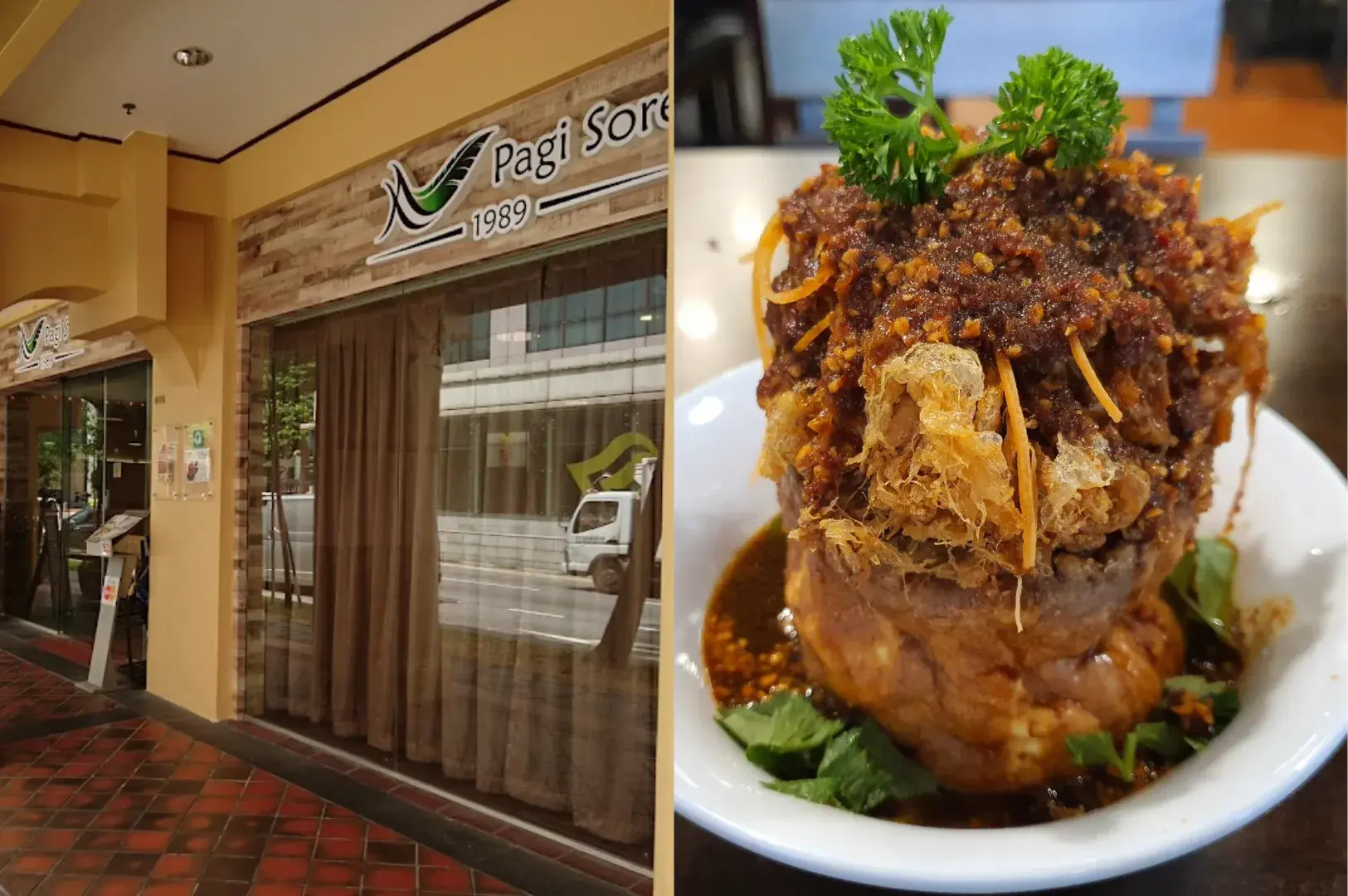
Pagi Sore is the polished option in this list, a halal Indonesian restaurant founded in 1989 by Chef Liyana Kwan and now helmed by the second generation. Its Far East Square location gives the meal a calmer, more restaurant-like frame than the tray-counter nasi padang spots around Bugis. The official site lists the restaurant at 88/90 Telok Ayer Street, Far East Square.
The room suits business lunches, family meals, and diners who want Indonesian flavours without the rush of a hawker queue. It feels more measured: tables set for sharing, staff moving with a smoother rhythm, and dishes arriving as composed plates rather than counter selections.
That polish does not erase the food’s warmth. The cooking still leans on traditional recipes, spice paste, coconut milk, chilli, fried shallots, and sauce, but the dining experience feels slower and more controlled.
Signature dishes
The Tahu Telor is the dish that sets the tone: crisp egg and tofu, sweet-savoury sauce, and a nutty finish that makes the whole thing feel playful rather than heavy. It brings crunch to a table that may otherwise lean rich.
For mains, the meat and vegetable dishes carry the deeper Indonesian profile: spice paste, coconut milk, heat, and sweetness layered into sauces that want rice nearby. The meal works best when ordered communally, with one crisp dish, one saucy meat dish, one vegetable, and something spicy to wake the table up.
The Perfect Session: Small groups, business lunches, and diners wanting heritage flavours in a polished setting.
The Reality Check: Not the cheapest option or a quick hawker meal.
The Local Secret: Order a variety of dishes to share; the meal shines when communal.
Hjh Maimunah Restaurant and Catering – Best Halal Restaurants Spread for Kampung-Style Food
Nearest MRT: Bugis (EW/DT Line) – 7–8 minute walk
Price: $$ (Approx. S$8–S$15 per person)
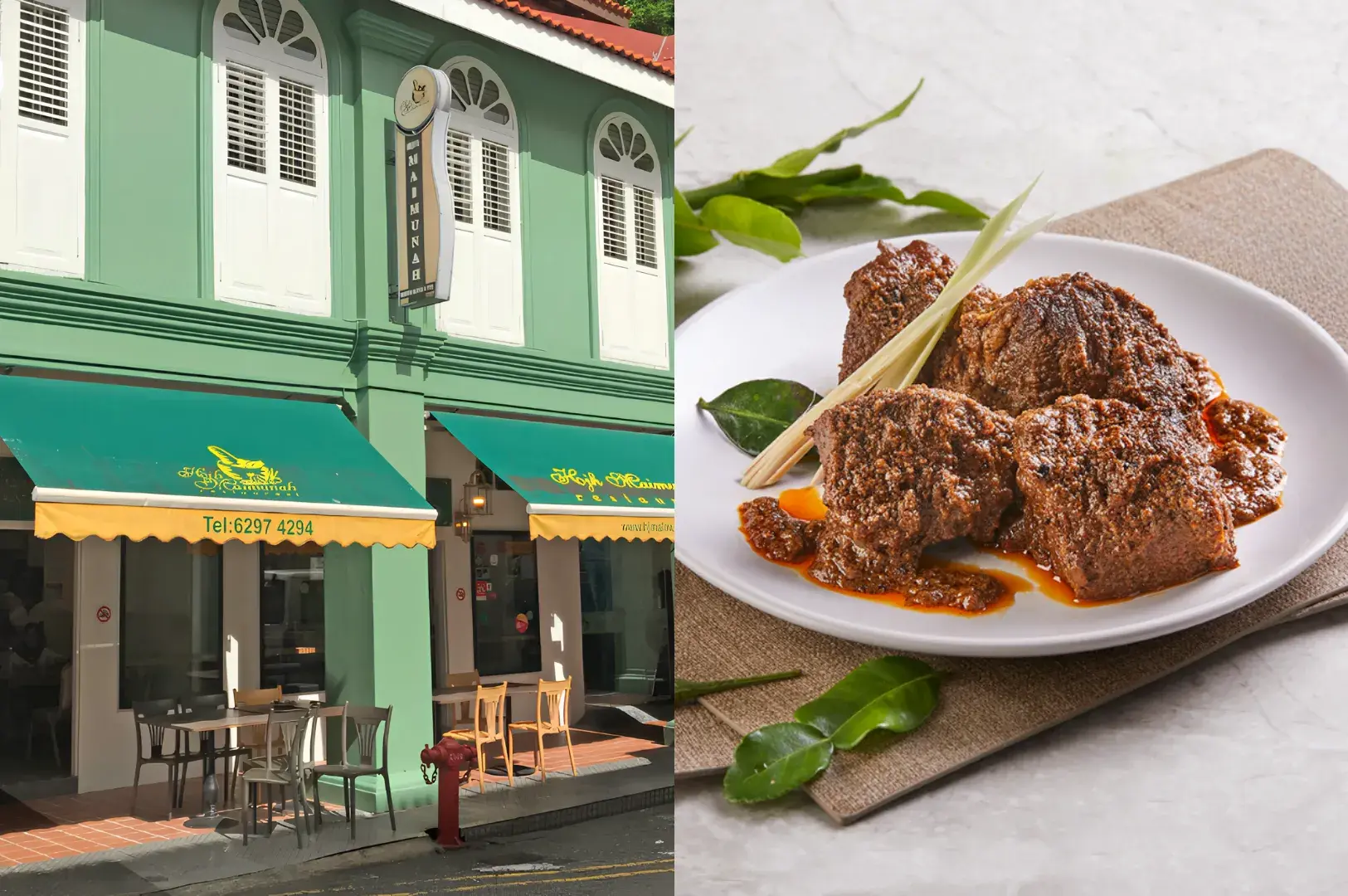
Hjh Maimunah is one of Singapore’s best-known names for traditional Malay and Indonesian food, with a Jalan Pisang outlet and a wider restaurant and catering presence built over decades. The brand highlights time-honoured nasi padang dishes, including Beef Rendang, Ayam Bakar Sunda, Lemak Siput Sedut, and Tahu Telur.
The atmosphere is bright, busy, and counter-led. Trays stretch across the display, each one calling for a different mood: dark rendang, green vegetables, chilli fish, sambal goreng, creamy gravies, fried chicken, and fried sides. It can feel like a feast before you have even ordered.
This is the place for variety. If some restaurants in Singapore are built around one signature, Hjh Maimunah works because the spread is the signature. The room feels alive, but that also means peak lunch can be intense.
Signature dishes
The Beef Rendang here leans comforting and generous, with tender beef wrapped in a warm, rounded sauce. It is rich without feeling dry, and it spreads easily over rice, carrying coconut, spice, and slow-cooked depth into every spoonful.
The Tahu Telur and Ayam Bakar Sunda are useful partners. One adds crisp eggy texture and sweetness, while the other brings grilled chicken and smokier edges. Add a vegetable dish or sambal side if you want the plate to breathe between the heavier flavours.
The Perfect Session: First-timers, large groups, or anyone wanting variety in halal food in Singapore.
The Reality Check: Avoid peak lunch hours if you prefer a calmer dining experience.
The Local Secret: Arrive early, around 11:30 am, for fresher trays and easier seating.
Pondok Makan Indonesia – Budget Halal Food Near Bugis
Nearest MRT: Bugis (DT/EW Line) – 4-minute walk
Price: $ (Approx. S$3–S$8 per item)
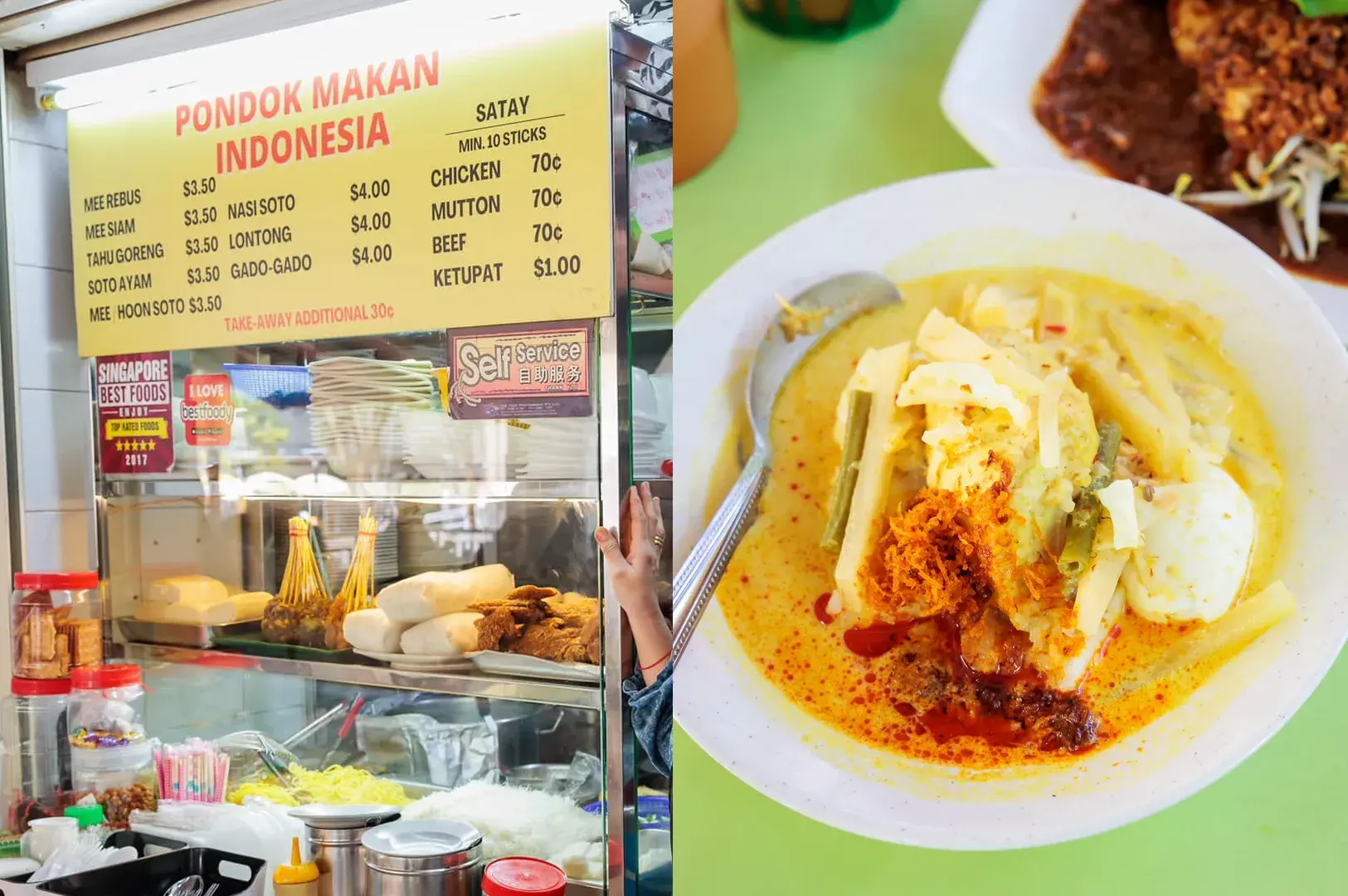
Pondok Makan Indonesia is the hawker-style option inside Albert Centre Market & Food Centre, close enough to Bugis and Arab Street to make it useful for a quick, budget-friendly meal. Current halal food guides describe it as an Indonesian hawker stall at Albert Centre Market & Food Centre, with Malay and Indonesian dishes such as mee rebus, mee siam, soto ayam, lontong, gado-gado, tahu goreng, satay, and nasi padang-style rice dishes.
The atmosphere is exactly what you expect from a hawker centre: warm air, quick orders, tight seating, and the smell of curry, peanut sauce, and fried food moving through the aisles. It is not polished, but that is the point.
This is where the list becomes more everyday. You eat here when you want strong flavour without spending much, and when plastic trays and shared tables feel like part of the meal rather than a compromise.
Signature dishes
The lontong is the comfort order: soft rice cakes sitting in vegetable curry, with coconut richness, cabbage sweetness, and spice that warms slowly rather than shouts. It feels gentle at first, then fuller as the gravy settles into the rice cakes.
The tahu goreng, mee rebus, and gado-gado offer different textures: crisp tofu under peanut sauce, thick potato gravy over noodles, and vegetables tied together by nutty dressing. If rendang is available, add it for deeper spice and a meatier plate.
The Perfect Session: Budget-conscious diners seeking a genuine hawker meal.
The Reality Check: Not suitable if you need air-conditioning or spacious seating.
The Local Secret: Come before noon; rendang and gado-gado often sell out early.
Bumbu Restaurant – Halal Certification Confidence for Family Meals and Special Celebrations
Nearest MRT: Bugis (EW/DT Line) – 3–5 minute walk
Price: $$$ (Approx. S$10–S$20 per person)
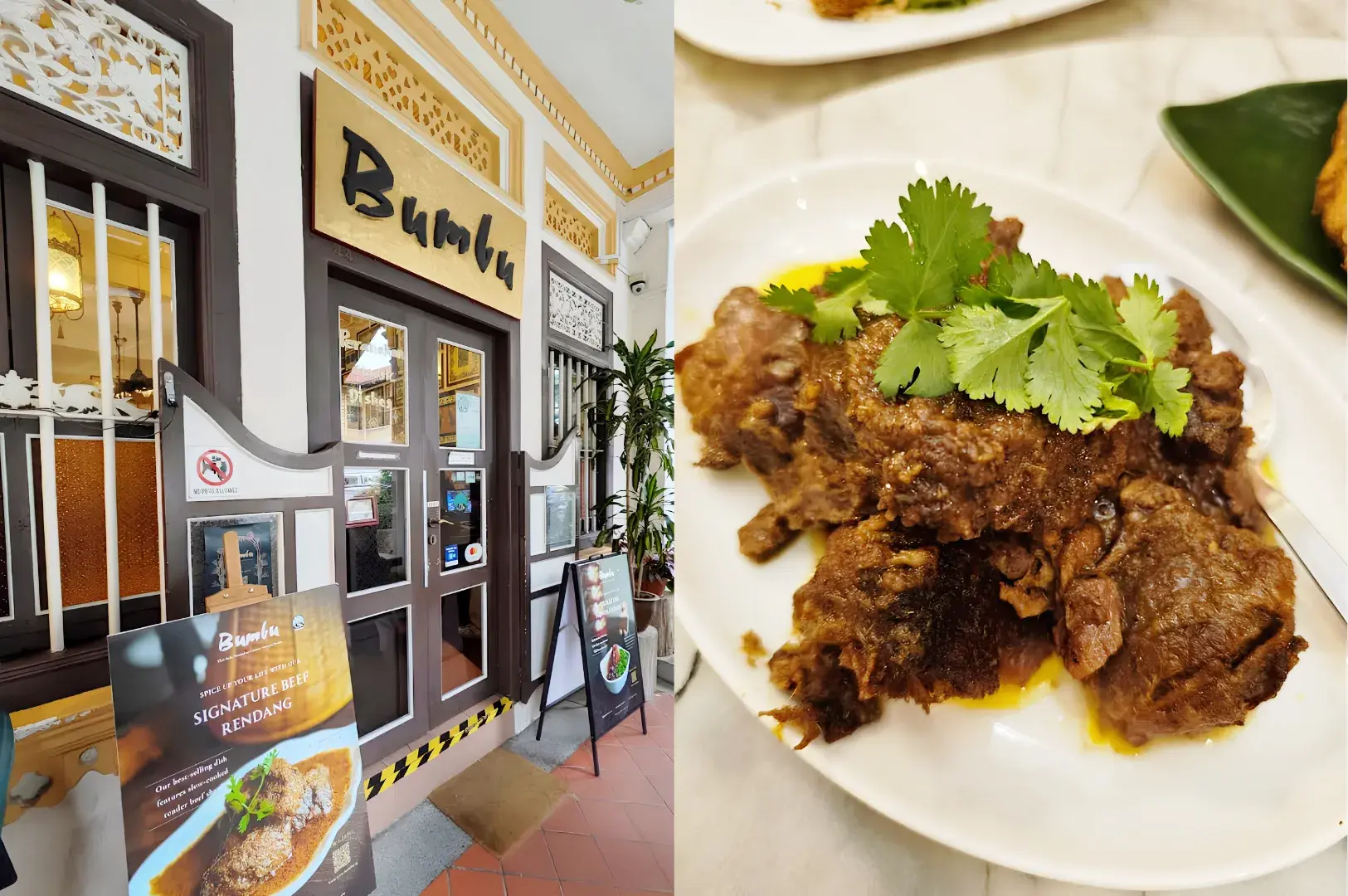
Bumbu Restaurant gives the Kampong Gelam meal a more dressed-up setting, with a shophouse feel and a menu that blends Indonesian, Thai, Malay, and Peranakan touches. Current halal listings place Bumbu at 44 Kandahar Street and note it as halal certified; when halal certification specifically matters, diners should still check the on-site certificate or the MUIS directory before eating.
The atmosphere is more comfortable than the counter-service nasi padang spots. It suits family gatherings, special celebrations, and meals where you want the table to feel settled. The room carries a heritage charm without becoming too formal.
Service feels more restaurant-like, which changes the pace of the meal. You sit, order, share, and let the dishes arrive one by one instead of building a plate from trays.
Signature dishes
The Beef Rendang is the safe anchor: tender meat, aromatic spice, and a sauce deep enough to make rice feel necessary. It is not just about heat. The pleasure is in the slow richness, the way coconut and spice cling to the beef.
The Tahu Telur is the textural counterpoint: a crisp tower of fried tofu and egg dressed in sweet, nutty sauce. It brings crunch, height, and a little theatre to the table, which is why it works well for family-style ordering.
The Perfect Session: Date nights, family meals, or introducing someone to Indonesian food in a comfortable setting.
The Reality Check: Not for those craving the fast-paced traditional nasi padang queue experience.
The Local Secret: Reserve ahead, especially for weekends and dinner times.
Expanding Your Halal Dining Experience in Singapore
If you’re ready to explore beyond nasi padang, Singapore’s halal restaurant scene is wonderfully diverse. From halal cafes serving handmade pasta and waffles to vibrant halal restaurants offering grilled meats and seafood, the city caters to every craving.
The one thing worth remembering is assurance. A MUIS halal certified or MUIS certified restaurant is certified through MUIS, the Islamic Religious Council of Singapore. A Muslim owned restaurant, a kitchen using halal ingredients, or a place described as halal-friendly may not always mean the same thing. Some restaurants may serve alcohol, so when MUIS halal status matters to you or your group, check the current certificate before booking.
Halal Cafes & Casual Eats
- Penny University & Fika Swedish Café: These halal cafes in Kampong Gelam serve up fresh, locally sourced produce and specialties like Swedish meatballs and coconut ice cream, perfect for casual brunches or special celebrations.
- Beanstro at Marina Bay Sands: A halal cafe with a premium selection of brunch items, including fluffy pancakes and hearty burgers topped with crispy fried onions and cheese.
Halal Buffets & Hotel Dining
- Ginger at Beach Road (Parkroyal Collection Marina Bay): Known for its Southeast Asia-inspired halal buffet, featuring local favourites like nasi lemak, mee goreng, and slow-braised beef rendang.
- Peppermint at Parkroyal Collection Marina Bay: A farm-to-table halal buffet restaurant offering over 40 dishes, including Singapore laksa with seafood and plant-based options.
Unique Halal Dining Spots
- Captain Kim Korean BBQ: A MUIS halal certified Korean BBQ and hotpot buffet with over 60 varieties of halal-certified meats and vegetables, including their famous kimchi and fried chicken.
- The Dim Sum Place: A halal certified dim sum place offering authentic Cantonese dim sum with local flavours, such as crystal shrimp dumplings and molten salted egg custard buns.
As the spice-laden afternoon fades into evening, you might crave a shift in energy. To trade the heat of the sambal for the smoky char of a Japanese grill, exploring an Izakaya Singapore Beyond Dinner is the perfect way to cap off your culinary journey.
The Soul of the Plate
Kampong Glam is truly the heart of Nasi Padang culture in Singapore. Each of these places tells a different story through its food, from century-old recipes to humble hawker fare.
I’ll be honest, even after years of exploring, I still get that flutter of excitement when I see a fresh tray of Rendang being brought out from the kitchen. It’s a reminder that no matter how much the city changes, these flavors remain our anchor.

Pour Decisions: The Best Bars in Singapore for Craft Beers and More
Dio Asahi | April 9, 2026
Walking through the humid streets of Singapore at dusk, you can feel the city transforming. The tropical heat fades into neon lights, and the clinking of glasses begins to echo from narrow shophouses and towering skyscrapers. Singapore boasts a dynamic bar scene that rivals any global metropolis. From opulent destinations like to the laid back charm,…
-
The 8 Best Chinese Restaurants in Singapore: From Dim Sum to Peking Duck
Dio Asahi | April 7, 2026
Singapore’s best chinese restaurants in singapore function less like isolated dining rooms and more like a networked system of technique. Across these chinese restaurants, you see branches of chinese cuisine expressed through roast mastery, controlled fermentation, seafood purity, and banquet choreography. This is not simply a guide to chinese food. It’s a mapped culinary journey…
-
The Neighbourhood Restaurant Test: How to Spot Truly Authentic Cuisine Restaurants in Your Area
Eda Wong | March 31, 2026
A friend texted me last week: “I’m outside this new Vietnamese place. How do I know if it’s legit before I waste my money?” It’s a question I get often. We’ve all been there, drawn in by a cool sign, only to get a plate of sad, sweet, tourist-grade pad thai that tastes like ketchup….
-
Cuisine in the World Meets Singapore: Inside Nakhon Kitchen’s Cross-Cultural Magic
Dio Asahi | March 26, 2026
There’s a rite of passage for any food lover living in the East of Singapore, and it involves a queue. Specifically, the perpetually long, snaking queue outside Nakhon Kitchen in Bedok. I’d heard the legends for years: authentic Thai food, rock-bottom prices, and a wait time that tests your commitment. So, on a Tuesday evening…
-
The Spice Route Secrets: A Deep Dive into Malay Ethnic Food
Eda Wong | March 24, 2026
My first time ordering Nasi Padang in Geylang Serai was overwhelming, I randomly picked dishes and was shocked by a $20 bill due to premium beef rendang and squid. That taught me to always ask seafood prices and that Malay food is a complex, modular cuisine. Malay food is everywhere in Singapore, in hawker centres,…
-
The Shokunin Spirit: How Japan’s Craftsman Philosophy Lives Inside Singapore’s Most Disciplined Omakase Counter
Dio Asahi | March 21, 2026
The fire is not roaring; it is breathing. In a small, darkened workshop in Sakai, a swordsmith watches the colour of the steel with eyes that have tracked the same transformation for forty years. He does not look at a clock. He listens to the hum of the charcoal. He waits for the metal to…
-
The Evolution of the Plate: How History Transformed Iconic Malaysian Dishes
Eda Wong | March 19, 2026
I used to think I understood Malaysian food. As a Singaporean, it’s practically in my DNA, right? Nasi lemak for breakfast, a cheeky roti canai for supper – I thought I had it all figured out. Then I spent a week eating my way through Penang and Kuala Lumpur, and I realised I knew absolutely…
-
The Soul of the Table: An Educational Guide to the Role of Food in Malaysian Culture
Eat Drink Asia Team | March 17, 2026
We still remember our first collective Rumah Terbuka (Open House) experience in Kuala Lumpur.Standing at the doorway of a home during Hari Raya, we were utterly paralyzed by the sheer volume of people and the aroma of Malaysian cooking. There were aunties ladling beef rendang and tables groaning under the weight of colourful kuih. “Do…
-
Asian Food Comfort Trends: Why Broths and Bowls are Dominating Globally
Eda Wong | March 14, 2026
I still remember the first time I faced a “build-your-own” Mala Xiang Guo counter. I stood there, plastic tongs in hand, completely paralyzed by the mountain of choices. Lotus root? Kelp knots? three different types of tofu skin? My anxiety spiked. I panicked, grabbed way too much luncheon meat, and ended up with a $28…
-
The Fifth Element: A Masterclass on Umami in East Asian Cuisine
Dio Asahi | March 12, 2026
I’ll never forget the first time I made miso soup from scratch. Not the instant kind, but the “proper” way. I boiled water, dissolved miso paste, added tofu, and waited. It tasted flat, salty and cloudy but missing the deep, satisfying flavor I loved in Japanese restaurants. I thought maybe I needed better miso. Years…