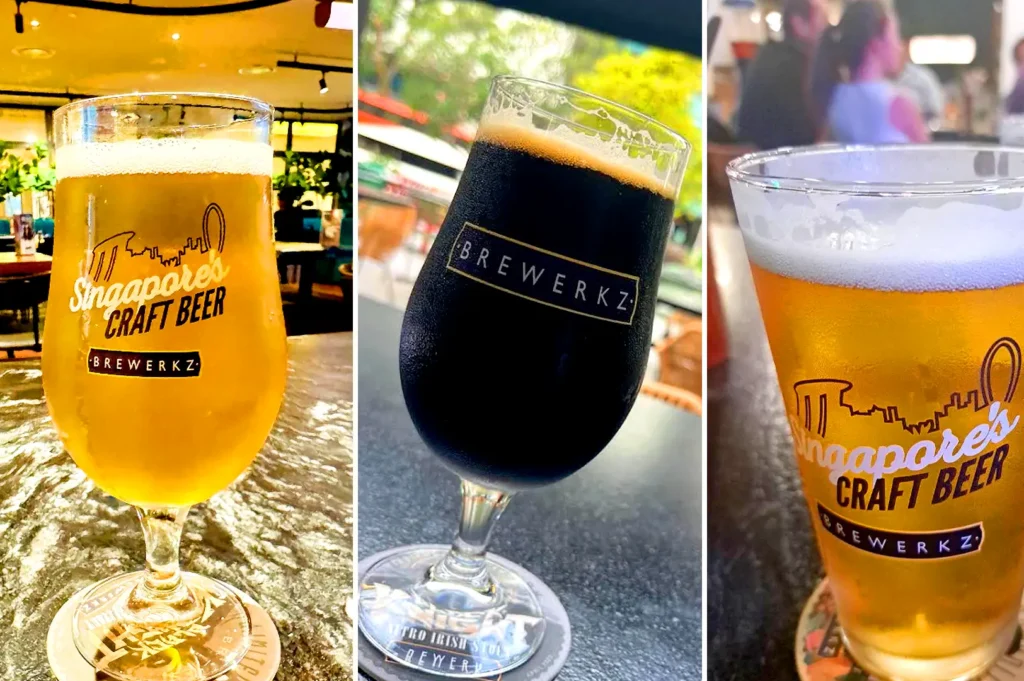
Four small glasses can tell you a lot about a brewery. At Brewerkz at Orchard Rendezvous Hotel, the menu lists a four-glass beer sampler for S$28, with four 130ml pours that run from a gentle Golden Ale to a 7.5% Double IPA. It works as a short tour of one brewery’s range, poured side by side. This Brewerkz review starts with that sampler because it explains the whole branch. The beer is the opening argument, and the kitchen continues it.
A Brewery Restaurant at the Top of Orchard Road
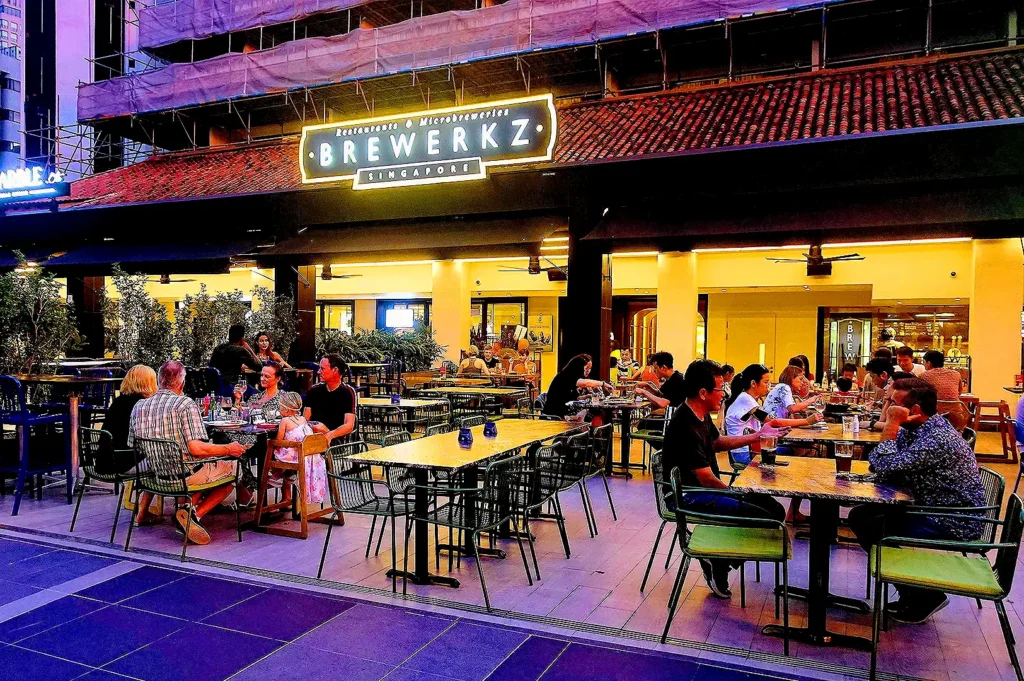
Brewerkz has been brewing since 1997. That gives it a longer brewing history than many newer names on Singapore’s craft beer scene. The Orchard Rendezvous outlet carries the name as a full-service restaurant, not a standing-room taproom.
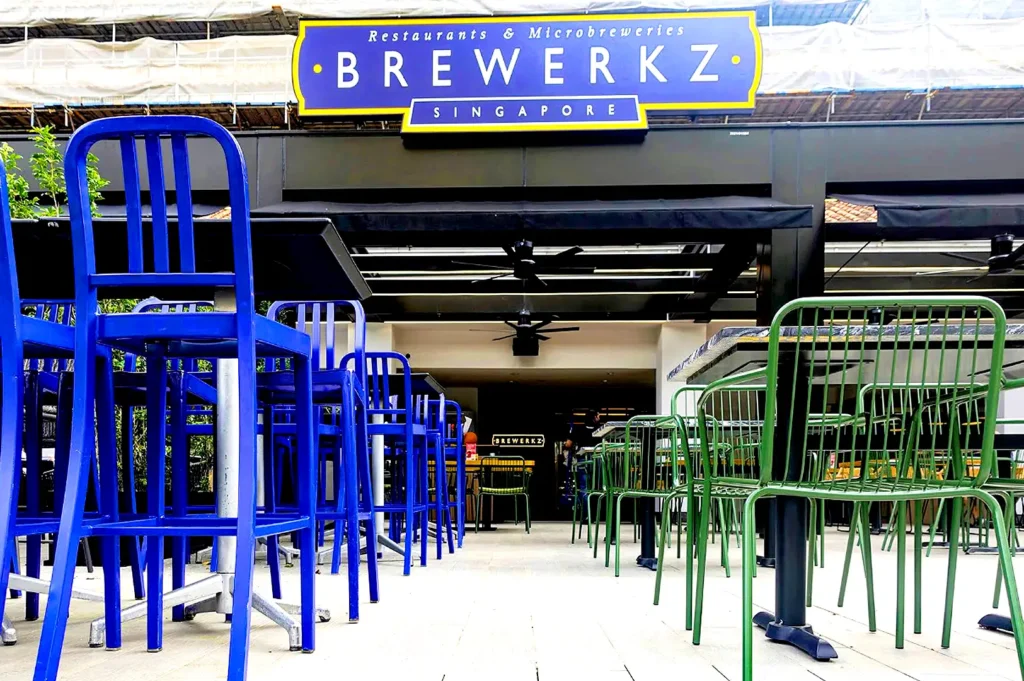
Official descriptions mention contemporary interiors, a stylish indoor bar and alfresco seating. The numbers back up that sense of scale: 172 seats, with 80 indoors and 92 outside. That’s more outdoor seating than indoor, which says something about how the space is meant to be used.
The Orchard branch also has its own identity. Brewerkz at One Fullerton leans on the Marina Bay waterfront. This one is a hotel restaurant at the Tanglin end of Orchard Road, built for sitting down, ordering properly and staying a while. It suits a meal more than a quick stop on a bar crawl.
What Brewerkz Pours
The beer focus here is Brewerkz’s own Singapore-brewed range, with signature and seasonal styles. The brewery’s catalogue includes an English-style IPA, an Oatmeal Stout and the Chain Reaction Modern IPA. Availability at Orchard can change, though, so I’d treat that wider list as background. The sampler is what the Orchard menu actually lists.
Here’s what each glass brings to the comparison:
- Golden Ale (4.9%): The gentlest starting point. Brewerkz describes biscuit-like malt, smooth bitterness and subtle floral-citrus notes.
- Bohemian Pilsner (5.0%): Crisp, with mild honey notes and balanced bitterness. It’s the clean reference point for everything after it.
- Circuit Breaker New England IPA (5.9%): This is where the sampler turns tropical. The brewery links it to mango, cempedak and pineapple. The cempedak reference gives the brewery’s description a distinctly Southeast Asian touch.
- 4AM Double IPA (7.5%): The loudest glass. At 7.5% ABV, it is the strongest beer in the sampler.
The order matters. If I were working through it, I’d go from Golden Ale to Pilsner, then Circuit Breaker, and finish with 4AM. Moving from malt and crispness to tropical fruit and then resinous bitterness lets each beer make its case before a stronger one takes over.
The sampler also helps you choose your next full glass. Drinkers who like lighter, food-friendly beers will probably settle on the Golden Ale or Pilsner. Hop lovers will lean toward Circuit Breaker. The 4AM Double IPA is better saved for last, or for someone who wants intensity over ease.
Where the Kitchen Picks Up the Thread
The dish that connects most clearly to the bar is the Golden Ale Fish & Chips (S$28). Seasonal fish goes into a batter made with Brewerkz’s own Golden Ale, served with fries and white tartar sauce. That’s the brewery’s identity carried straight into the kitchen.
The obvious pairing is the same beer in the glass. A Golden Ale with smooth bitterness and floral-citrus notes should sit comfortably beside fried fish and a creamy tartar sauce, without crowding either. The crisp Bohemian Pilsner is a sensible alternative.
For something heavier, the American Cowboy Burger (S$28) comes with crispy bacon, cheddar and house BBQ sauce. On paper, that’s rich, smoky and sweet. I’d consider the 4AM Double IPA here, since its pronounced bitterness has plenty of fat and sauce to work against.
Groups have a simpler option. The Brewerkz Platter (S$54) brings calamari, peppercorn chicken, sausages, truffle fries, chips and salsa. Shared with a sampler or two, it turns the table into a tasting session.
What Could Be Better
The main drawback comes with the format. This is a brewery-led restaurant, and the focus stays on Brewerkz’s own beers. That’s useful if you want to explore one established Singapore brewery in depth. It’s less satisfying if your idea of a Singapore craft beer bar involves comparing many independent guest breweries on one visit. A specialist multi-brewery taproom may be a better fit for that kind of exploration.
Timing is the second catch. The restaurant stays open until midnight, but food orders stop at 9:45pm and drinks at 10:45pm. If you’re coming after a late shift or a long evening on Orchard Road, the kitchen may already be closed when you arrive. Anyone arriving late should check both ordering cutoffs rather than assume service continues until midnight.
Craft Beer by Ki-setsu takes a different approach, pairing a compact draught selection with Japanese izakaya dishes, while Brewerkz builds its restaurant experience around its own brewing portfolio.
Who Should Visit
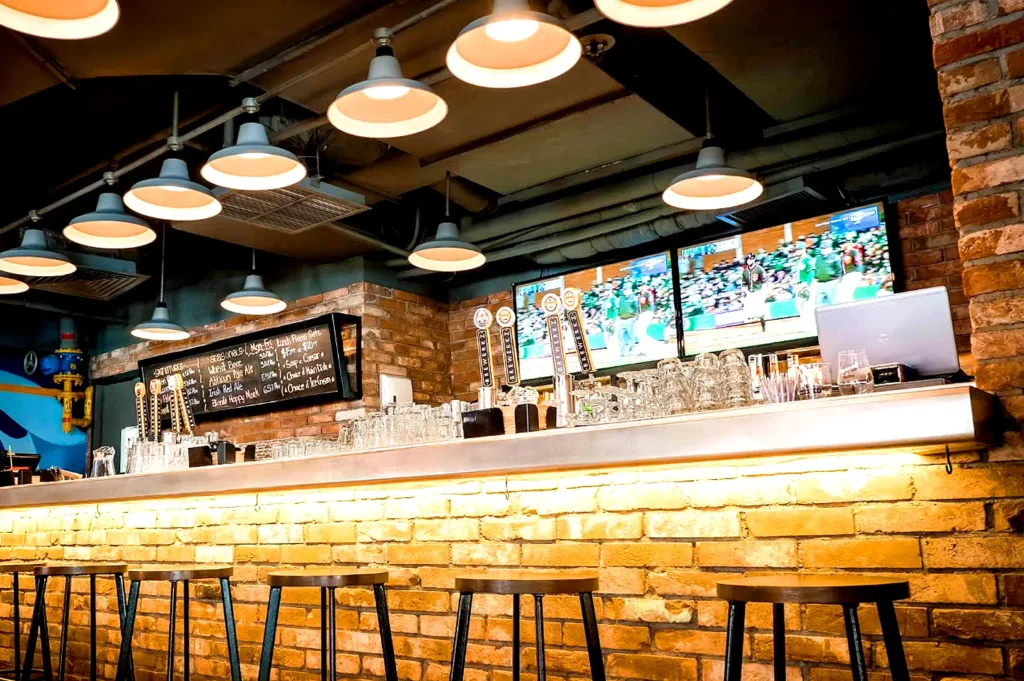
This branch suits Orchard visitors who want a proper meal with their beer, along with groups who need space and a shared menu. It also works well for anyone curious about craft beer in Singapore who wants a structured introduction to one brewery’s styles, from pilsner to double IPA.
Drinkers chasing rare guest kegs, or anyone hoping for a late-night meal, may be happier somewhere else.
For drinkers more interested in comparing different breweries, our craft beer round up covers a wider mix of Singapore taprooms and brewery restaurants.
Practical Details and Verdict
- Address: #01-08, Orchard Rendezvous Hotel, 1 Tanglin Road, Singapore 247905
- Nearest MRT: Orchard
- Hours: Daily, 12pm to midnight
- Last orders: Food at 9:45pm, drinks at 10:45pm
- Reservations: Available through the official outlet page
- Seating: 80 indoor and 92 outdoor seats
- Spend: A main course plus the sampler comes to roughly S$54 to S$62, before 10% service charge and GST
Is it worth the detour? Yes, if you come for the connection between glass and plate. Brewerkz at Orchard Rendezvous pours its own beers, puts four of them side by side for S$28, and then puts one of them into the fish batter. That kind of follow-through is the reason to make the trip.

Pour Decisions: The Best Bars in Singapore for Craft Beers and More
Dio Asahi | April 9, 2026
Walking through the humid streets of Singapore at dusk, you can feel the city transforming. The tropical heat fades into neon lights, and the clinking of glasses begins to echo from narrow shophouses and towering skyscrapers. Singapore boasts a dynamic bar scene that rivals any global metropolis. From opulent destinations like to the laid back charm,…
-
The 8 Best Chinese Restaurants in Singapore: From Dim Sum to Peking Duck
Dio Asahi | April 7, 2026
Singapore’s best chinese restaurants in singapore function less like isolated dining rooms and more like a networked system of technique. Across these chinese restaurants, you see branches of chinese cuisine expressed through roast mastery, controlled fermentation, seafood purity, and banquet choreography. This is not simply a guide to chinese food. It’s a mapped culinary journey…
-
The Neighbourhood Restaurant Test: How to Spot Truly Authentic Cuisine Restaurants in Your Area
Eda Wong | March 31, 2026
A friend texted me last week: “I’m outside this new Vietnamese place. How do I know if it’s legit before I waste my money?” It’s a question I get often. We’ve all been there, drawn in by a cool sign, only to get a plate of sad, sweet, tourist-grade pad thai that tastes like ketchup….
-
Cuisine in the World Meets Singapore: Inside Nakhon Kitchen’s Cross-Cultural Magic
Dio Asahi | March 26, 2026
There’s a rite of passage for any food lover living in the East of Singapore, and it involves a queue. Specifically, the perpetually long, snaking queue outside Nakhon Kitchen in Bedok. I’d heard the legends for years: authentic Thai food, rock-bottom prices, and a wait time that tests your commitment. So, on a Tuesday evening…
-
The Spice Route Secrets: A Deep Dive into Malay Ethnic Food
Eda Wong | March 24, 2026
My first time ordering Nasi Padang in Geylang Serai was overwhelming, I randomly picked dishes and was shocked by a $20 bill due to premium beef rendang and squid. That taught me to always ask seafood prices and that Malay food is a complex, modular cuisine. Malay food is everywhere in Singapore, in hawker centres,…
-
The Shokunin Spirit: How Japan’s Craftsman Philosophy Lives Inside Singapore’s Most Disciplined Omakase Counter
Dio Asahi | March 21, 2026
The fire is not roaring; it is breathing. In a small, darkened workshop in Sakai, a swordsmith watches the colour of the steel with eyes that have tracked the same transformation for forty years. He does not look at a clock. He listens to the hum of the charcoal. He waits for the metal to…
-
The Evolution of the Plate: How History Transformed Iconic Malaysian Dishes
Eda Wong | March 19, 2026
I used to think I understood Malaysian food. As a Singaporean, it’s practically in my DNA, right? Nasi lemak for breakfast, a cheeky roti canai for supper – I thought I had it all figured out. Then I spent a week eating my way through Penang and Kuala Lumpur, and I realised I knew absolutely…
-
The Soul of the Table: An Educational Guide to the Role of Food in Malaysian Culture
Eat Drink Asia Team | March 17, 2026
We still remember our first collective Rumah Terbuka (Open House) experience in Kuala Lumpur.Standing at the doorway of a home during Hari Raya, we were utterly paralyzed by the sheer volume of people and the aroma of Malaysian cooking. There were aunties ladling beef rendang and tables groaning under the weight of colourful kuih. “Do…
-
Asian Food Comfort Trends: Why Broths and Bowls are Dominating Globally
Eda Wong | March 14, 2026
I still remember the first time I faced a “build-your-own” Mala Xiang Guo counter. I stood there, plastic tongs in hand, completely paralyzed by the mountain of choices. Lotus root? Kelp knots? three different types of tofu skin? My anxiety spiked. I panicked, grabbed way too much luncheon meat, and ended up with a $28…
-
The Fifth Element: A Masterclass on Umami in East Asian Cuisine
Dio Asahi | March 12, 2026
I’ll never forget the first time I made miso soup from scratch. Not the instant kind, but the “proper” way. I boiled water, dissolved miso paste, added tofu, and waited. It tasted flat, salty and cloudy but missing the deep, satisfying flavor I loved in Japanese restaurants. I thought maybe I needed better miso. Years…