The oil is already hot when she reaches for the leaves.
It’s late morning in a kitchen off a quiet lane, and a woman I’ve been watching stands over a blackened wok, tearing bitter gourd leaves by hand into a small heap. The garlic hits the oil first, sharp and loud. Then the leaves go in, and the smell shifts — green, faintly medicinal, a little sour. She doesn’t taste as she goes. She already knows. A crack of egg, a quick fold, and the bitterness folds in with it, softening but never disappearing.
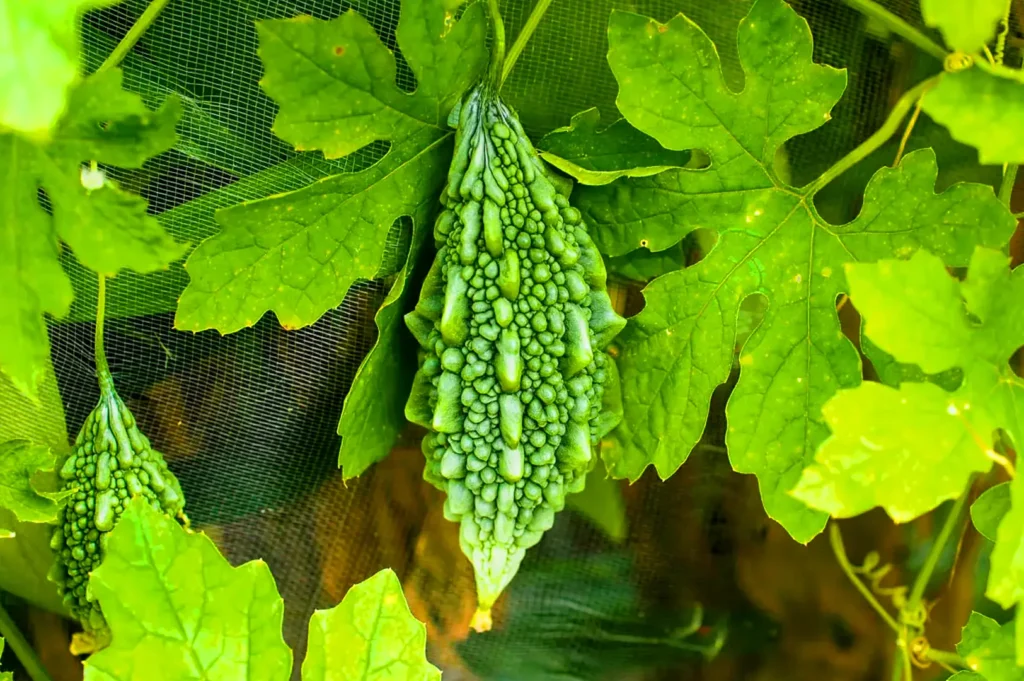
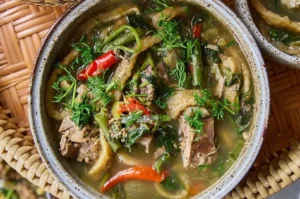
It is bitter melon leaf — kyet-hin-ga in Myanmar homes, the leafy top of the same climbing vine that gives the knobbly gourd. Where the gourd is famous for its sting, the leaves carry a quieter, rounder bitterness, closer to a strong green tea than a shock. Cooks tear them young and tender, before the plant grows coarse, and they wilt them fast in hot oil with garlic and egg, sometimes a handful of dried shrimp. The heat tames the sharpest edge without erasing it. That is the whole point. The dish is not meant to be pleasant in the easy sense. It is meant to be understood.
In a Burmese home, bitterness is not an accident to be fixed. It’s a seat at the table. A meal here often runs on contrast — a sour soup, a rich curry, a fresh raw plate, and something bitter to hold the middle. The bitter leaf is the balancing weight, the thing that keeps a heavy lunch from tiring the mouth. Elders speak of it as cooling, good for the body, the kind of food you eat because it does you good and not because it flatters you. Children are eased into it slowly, a small spoonful beside the rice, until one day the bitterness stops being a punishment and starts being a comfort they miss when it’s gone.
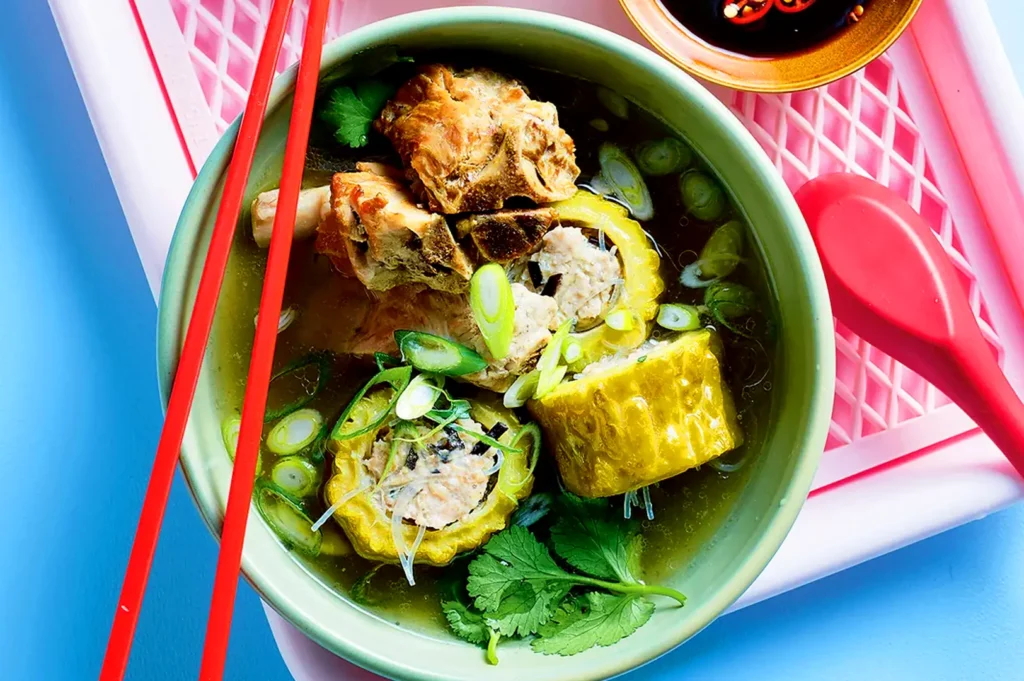
What stays with me is how unhurried it all is. There’s no attempt to make the leaf sweeter, prettier, easier. In kitchens that could reach for a milder green from the market stall, this cook still tears the bitter tops by hand, still trusts that her family wants the taste, not the apology for it. It would be simpler to leave it out. She doesn’t. That quiet refusal to soften everything feels increasingly rare an Eat Drink Asia highlight.
She tips the eggy leaves onto a plate and sets it down without ceremony. Bitter, warm, a little smoky.
Some flavours ask to be loved right away. This one asks only that you stay long enough to grow into it.

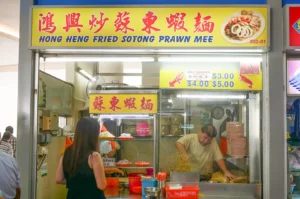
Hong Heng Fried Sotong Prawn Mee: Where Squid Turns Chewy, Broth Turns Glossy, and Time Turns Quiet
Eda Wong | June 23, 2026
There is something deeply comforting about a hawker centre right before the lunch rush hits. I visited Tiong Bahru Market on a Tuesday around 10:30 am, hoping to beat the infamous queue at Hong Heng Fried Sotong Prawn Mee. Even at that early hour, a line of six people had already formed, waiting quietly under…

Cuppage Plaza Food for People Who Hate Obvious Places: Restaurants That Feel Like a Detour Off Orchard
Dio Asahi | June 20, 2026
Orchard Road is a brilliant, trend-setting celebration of flavours, but its gleaming mega-malls can sometimes feel a bit predictable. If you are an urban food enthusiast seeking genuine culinary journeys rather than polished franchise menus, the true heart of the district lies slightly hidden. Cuppage Plaza is a fascinating, liminal space that operates almost like…
-
Makgeolli Bowls and the Soft Grain of Korean Rice Wine
Eda Wong | June 19, 2026
The monsoon rain drums a steady, heavy rhythm against the fogged windows of a narrow tavern in Jongno, muffling the chaotic pulse of the city outside. Inside, the air hangs warm, thick with the scent of toasted mung beans and a subtle, yeasty tang. A dented brass kettle tips forward, and a chalk-white, opaque liquid…
-
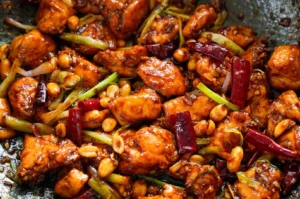
Kung Pao Chicken Sauce Is the Real Test: Why It Turns Glossy, Sharp, and Addictive
Eat Drink Asia Team | June 18, 2026
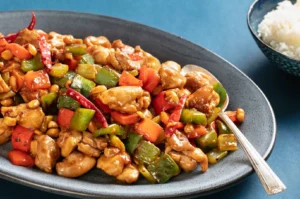
Kung pao chicken is often described by its main ingredients: diced chicken, dried chillies, peanuts, spring onions, and Sichuan peppercorns. But anyone who has cooked it at home knows the truth: the dish succeeds or fails because of the sauce. The sauce decides whether kung pao chicken tastes lively and balanced, or flat, sticky, and…
-
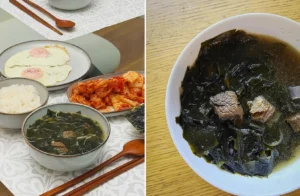
Jeju’s Seaweed Soup and the Memory of Birthday Tables
Dio Asahi | June 17, 2026
The sharp winter wind rattles the low stone walls of a Jeju Island kitchen, but inside, the air is thick with steam and the deeply marine scent of boiling kelp. An elderly woman stands by a bubbling steel pot, watching the dark green fronds swell and twist in the rolling water. She adds a splash…
-
Chicken Pao Recipe for People Who Respect Heat: Why Kung Pao Works Only When Timing Is Tight
Eda Wong | June 16, 2026
I remember my first attempt at cooking gong bao ji ding a few years ago. I wanted to recreate that authentic, trend-setting dish I had experienced at a traditional Sichuan restaurant, a meal that felt like a genuine celebration of flavours. I heated my wok until it was smoking, tossed in a handful of dried…
-
A Shu Yan Sichuan Cuisine Review Written in Pepper and Smoke: Chicken Pao That Wakes Up the Table
Dio Asahi | June 13, 2026
I used to think of authentic Sichuan food as a sheer test of endurance. For a long time, I assumed the goal was simply to survive the fiery onslaught of chillies rather than actually taste anything. But my recent culinary journey at Shu Yan Sichuan Cuisine completely rewired how I understand this region’s flavour map….
-
In Luang Prabang, Or Lam Carries the Taste of Sakhan
Eda Wong | June 12, 2026
The damp morning mist still clings to the teakwood houses of Luang Prabang as an elderly cook tends to a glowing charcoal brazier. Sparks jump lightly into the cool air, illuminating the blackened belly of an aluminium pot. Inside, a thick, dark liquid bubbles rhythmically, releasing an incredibly aromatic cloud of charred lemongrass, sweet Thai…
-
The Malayan Council, Reviewed: Local Food in Malaysia, Plated Like a Memory
Eat Drink Asia Team | June 11, 2026
Our Eat Drink Asia team spends a lot of time debating what makes a truly unforgettable meal. The team has previously published articles exploring the redefinition of comfort food. That is exactly what led me to The Malayan Council at 71 Bussorah Street. I visited on a Friday around 7:30 pm, just as the weekend…
-
Sushi in Singapore: Why There Is a Style for Every Budget
Eda Wong | June 11, 2026
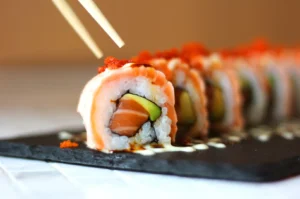
Few Japanese dishes have travelled as successfully across Asia as sushi. What began as a culinary tradition deeply rooted in Japan has evolved into something remarkably diverse in Singapore. Today, sushi in Singapore can mean many different things. It can be a quick lunch grabbed from a conveyor belt restaurant, a carefully curated omakase meal…