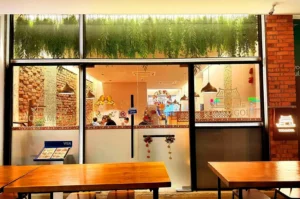
The afternoon heat in the outskirts of Phnom Penh settles like a thick blanket over the wooden stilt houses. Underneath the corrugated tin roof of an open-air kitchen, the air carries a heavy, sharp scent that instantly commands attention, a deeply pungent, earthen aroma of crushed fish and salt. An elderly woman sits on a low stool, a heavy cleaver rhythmically striking a scarred wooden block. She is mincing small, silvery fish into a coarse paste, the sound of metal on wood echoing through the humid air. Nearby, large earthen clay pots sit quietly in the shadows. Inside them, the true work is already happening, hidden from view.
In that pungency is a familiar truth of Asian cuisine: fermentation is often the quiet engine of flavour. What lies inside those heavy pots is prahok (pronounced prah-hok), the fermented fish paste that forms the unapologetic backbone of Cambodian cuisine. At its core, prahok is an exercise in preservation and patience. During the brief dry season, millions of small mudfish are harvested from the Tonle Sap lake, crushed, heavily salted, and packed into earthen jars. Left to ferment for months or even years under the intense tropical heat, the fish breaks down completely. The proteins transform into a dense, greyish-brown paste that is remarkably high in umami. It is a profoundly intense ingredient. A single spoonful tastes aggressively salty and sharp on its own, but when dissolved into a boiling broth or mashed with lime and chillies, it creates a rich, complex depth that defines the authentic taste of Khmer cooking.
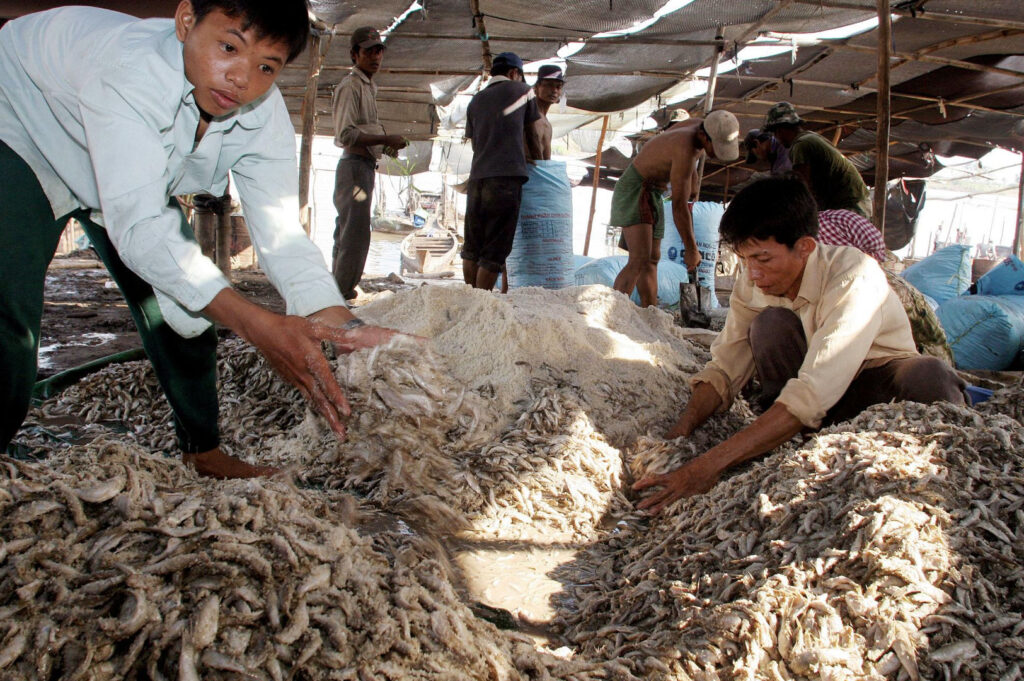
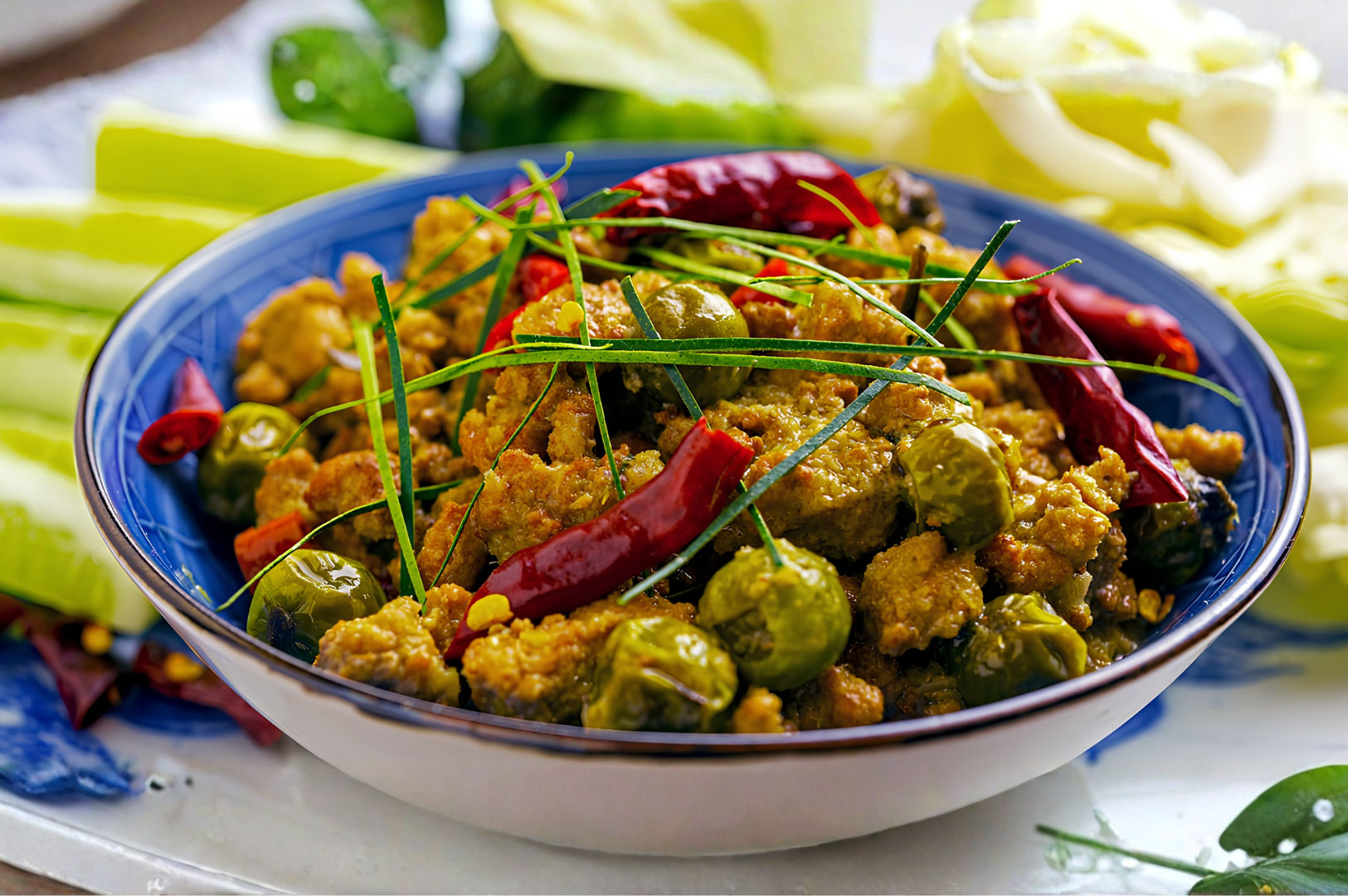
In Cambodia, the prahok pot is far more than a pantry staple; it is an anchor of everyday food memory and a record of the shifting seasons. The rhythm of rural life is tied to the annual fish harvest, turning the messy, communal work of scaling and salting into vital shared experiences for the entire village. A meal without prahok often feels incomplete to a local palate. It is the invisible force that gives body to a clear green papaya soup and the savoury edge to a fiery dipping sauce. It signals a deep connection to the land and water, offering families a reliable source of protein and deep, flavourful comfort long after the floodwaters of the great lake have receded.
Today, this ancient culinary journey faces a quiet tension. Modern urbanisation brings the convenience of factory-produced seasoning cubes and imported MSG, which offer an easier, odourless shortcut to flavour. For many younger city dwellers, the pungent aesthetic of a bubbling clay pot of fermenting fish feels out of step with fast-paced, modern life. Yet, authentic prahok demands that we confront the visceral reality of our food. It refuses to be sanitised or neatly packaged. It requires a surrender to time and the slow, microbial breakdown of nature, standing as a stubborn reminder that the most profound flavours cannot be rushed by industrial efficiency.
Watching the woman carefully seal her earthen jar, the air remains thick with the scent of salt and time. There is no rush, no immediate gratification. The paste will sit in the dark, slowly transforming, quietly waiting to bring life to a future meal.

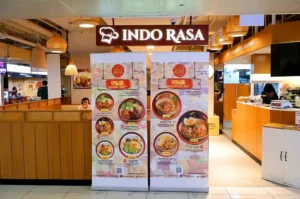
Indo Rasa Singapore and the Nasi Goreng That Measures a Kitchen’s Confidence
Eat Drink Asia Team | August 25, 2026
There’s a dish I order when I want to know a kitchen quickly. Not the specialty. Not the thing the menu is proud of. I order the fried rice. Because nasi goreng has nowhere to hide. It’s rice, chilli, chicken, egg, a few crackers, some cucumber. Everyone thinks they can make it. Most people can….
-
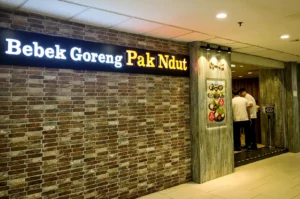
Bebek Goreng Pak Ndut and the Fried Duck That Makes Nasi Goreng Feel Too Polite
Eda Wong | August 22, 2026
The duck arrived and made a sound before I’d even touched it. Not the plate, the skin. When my fork pressed against it, there was a small, dry crackle, the kind you feel in your fingers before you hear it. That’s when I understood I wasn’t eating a soft meal. This was something with edges….
-
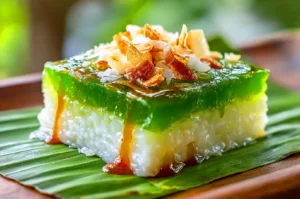
The Coconut Spoon That Shapes Nyonya Kueh Salat
Eda Wong | August 21, 2026
By Eda Wong for Eat Drink Asia. Steam curls up from a tray in the back of the kitchen, and the whole room smells green. Pandan, crushed and knotted, pushed through wet cloth until the leaves give up their colour. An auntie leans over the tray with a spoon carved from coconut shell, dark and…
-
Chicken Nasi Goreng Recipe: What Leftover Rice Becomes After the Wok Gets Serious
Dio Asahi | August 20, 2026
There’s a container of rice at the back of my fridge most weeks. Cold, a little hard, forgotten from a dinner two nights ago. Some people see that and think of waste. I see the start of something better. Because leftover rice doesn’t want to be reheated. It wants to be fried. And when it…
-
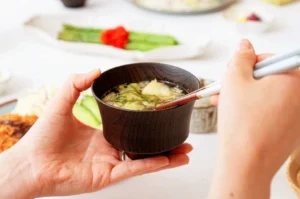
The First Ladle of Miso Soup in a Tokyo Breakfast Shop
Dio Asahi | August 19, 2026
By Dio Asahi for Eat Drink Asia. The shop is barely wider than a hallway. Seven stools, a counter worn smooth, and behind it a woman ladling soup into small ceramic bowls before anyone has ordered it. Steam lifts off the surface and fogs the window against the cold morning. The bowl reaches me warm…
-
Chirashi Don Best Picks When Bowls Between the Sushi Counter and Lunch Are the Current Mood
Eat Drink Asia Team | August 18, 2026
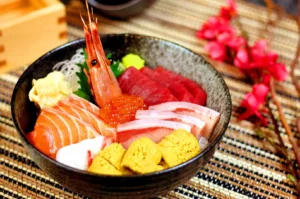
There’s a specific kind of hunger that a chirashi don answers. It’s not the hunger for a full sushi omakase, with its slow ceremony and its quiet counter watching. And it’s not the hunger for something thrown together and forgotten by three o’clock. It sits somewhere in between — fish and rice in one bowl,…
-
Kopi Through the Cloth: Why the Strain Matters
Eda Wong | August 17, 2026
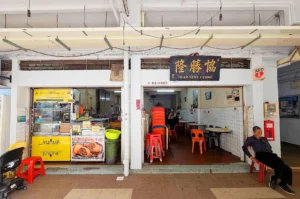
By Eda Wong for Eat Drink Asia. It is not yet seven, and the uncle at Heap Seng Leong has the pot going. He works the sock strainer over the tin cup with both hands, dipping and lifting, dipping and lifting, coaxing the coffee through the worn cloth. Steam rises between his fingers. The smell…
-
SBCD Korean Tofu House and the Comfort Logic of Bubbling Soondubu
Eda Wong | August 15, 2026
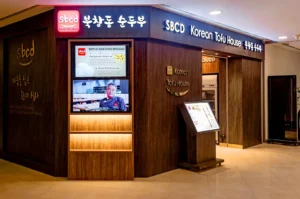
It was raining the afternoon I went. Not the polite kind, the sort that drums against the glass of Guoco Tower and makes you glad you’re already underground. I hadn’t planned on soondubu. I’d planned on something quick, something I could eat between the errands piling up in my head. But the rain does something…
-
The Knife Work at Hanashizuku Japanese Cuisine, Three Floors Above the Noise
Eda Wong | August 14, 2026
By Eda Wong for Eat Drink Asia. The lift doors open on a floor of Cuppage Plaza that has seen better decades. Peeling signage. A corridor that smells faintly of old carpet and cigarette smoke drifting from somewhere. Then a door slides shut behind me, and the noise falls away. Inside Hanashizuku Japanese Cuisine, the…
-
Todamgol Restaurant and the Comfort Logic Behind Famous Korean Foods
Dio Asahi | August 13, 2026
It was close to nine on a Friday when I finally found the door. Tanjong Pagar was doing its usual thing, full tables spilling onto five-foot ways, soju bottles catching the light, someone laughing too loudly two doors down. I almost walked past Todamgol. Then the smell reached me. Fermented, smoky, a little sharp. The…