By Dio Asahi for Eat Drink Asia.
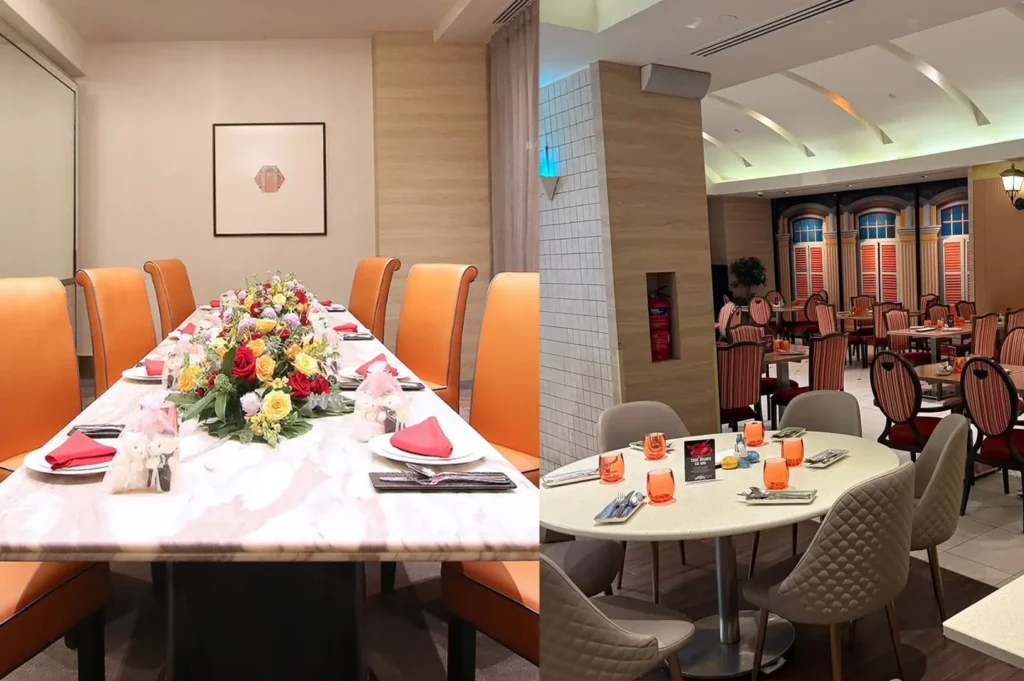
It’s a Saturday evening, and someone across the room is carrying a birthday cake. The candles are lit, the walk is careful, and a whole table turns to watch. Plates clink. A child laughs somewhere. The room at Carousel, inside Royal Plaza on Scotts, isn’t quiet — it hums the way a family kitchen hums when too many people are home at once.
I’ve come for the seafood counter, and I circle it twice before I take anything.
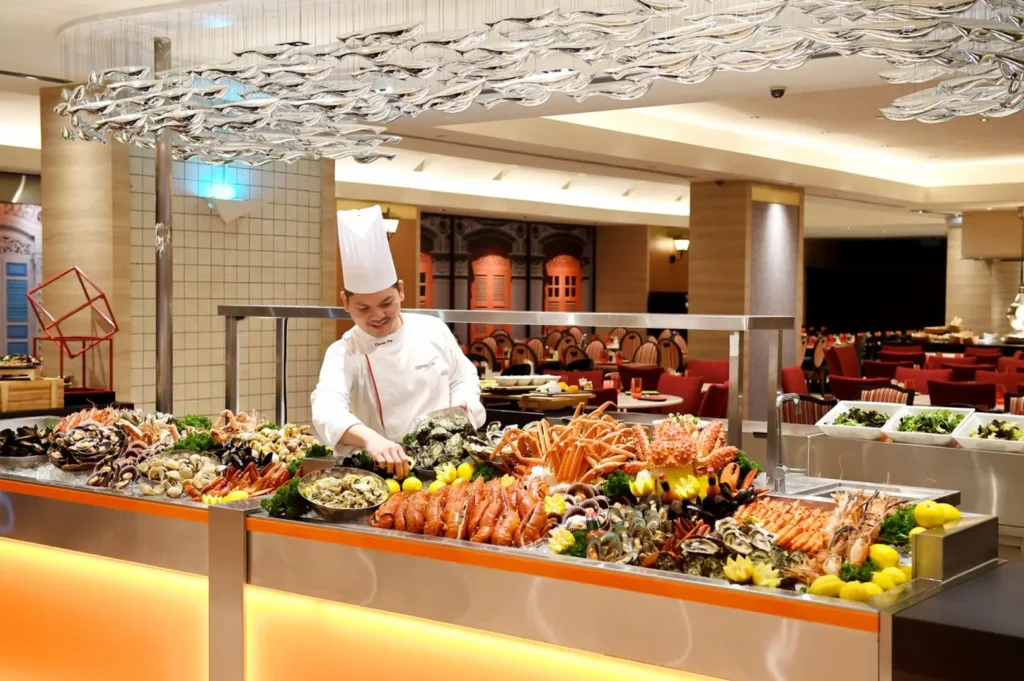
There’s a low bank of crushed ice, and the shellfish rest on it like they’ve just come in from somewhere cold. Oysters, freshly shucked. Snow crab legs stacked in pale bundles. Prawns, mussels, scallops, clams, and a few lobsters holding court at the end. A chef works the counter, opening oysters one by one, the small knife finding the hinge, the shell giving with a soft crack.
I take an oyster first. It’s clean and briny, the taste of cold water and nothing else. Then the crab — firm, cool, naturally sweet, the kind of sweetness you don’t need to dress up. I eat slowly, standing near the ice, before I’ve even thought about a proper plate.
What stays with me isn’t the abundance, though there’s plenty of that. It’s who’s standing beside me.
To my left, a family in tudung fills their plates without pausing to ask a single question. To my right, an older couple debates whether to go back for more prawns. This is a halal-certified room, and that certification is doing quiet, generous work. It means the whole table — every uncle, every cousin, every friend with a different plate at home — can eat from the same spread. Nobody sits out. Nobody eats around the edges of the meal.
That’s rarer than it sounds. In a city that prides itself on eating together, we still often eat apart — this stall for one group, that kitchen for another. A buffet like this collapses those lines for an evening. Premium seafood and halal assurance sharing the same ice counter is a small thing, until you watch a family of three generations reach for the same crab legs and realise how few places let them do that.
I think that’s the part worth recognising. Not the lobster, not the Alaskan king crab that turns up on weekends. The ordinary miracle of a shared table wide enough to hold everyone.
For a wider look at how shared meals carry culture across generations, read our Educational Guide to the Role of Food in Malaysian Culture
The cake reaches its table now. There’s a small cheer, the off-key start of a song. My plate has gone warm at the edges, the ice on the crab long melted.
I don’t reach for my phone. I just sit for a moment, watching a room full of people who all found something they could eat, together, on a Saturday.
Some meals feed you. A few remind you that eating was never meant to be done alone.

Thai Cuisine in Singapore: Finding the Best Authentic Flavors
Eat Drink Asia Team | December 9, 2025
The unmistakable aroma of lemongrass, galangal, and fiery spices mingles with the bustling night air in Singapore, setting the stage for a dining experience that wakes the soul and tantalizes the senses. Thai cuisine in Singapore has become an essential part of the city’s culinary landscape, offering a complete blend of vibrant flavor, tangy notes,…

The Ultimate Guide to Thai Food: Flavors, Traditions, and Culinary Adventures
Dio Asahi | December 6, 2025
Thai cuisine is one of the world’s most beloved and complex culinary traditions, captivating food enthusiasts globally with its masterful balance of flavors and vibrant presentations. From bustling Bangkok street stalls to high-end international restaurants, Thai food has become a global phenomenon that evolves while maintaining its authentic roots. What sets Thai cuisine apart from…
-
How to Drink Sake: Your Guide to Enjoying Japanese Sake Wine
Eda Wong | December 5, 2025
As Japan’s national beverage, this traditional sake is present at celebrations, quiet dinners, and spiritual offerings, weaving itself into the very fabric of daily life and reflecting Japan’s deep-rooted cultural heritage. Yet, for many outside of Japan, it remains a delightful mystery. You might find yourself wondering, how do you drink sake properly to unlock…
-
What Is Sashimi? A Guide to Raw Fish, Sliced Raw Fish, and Japanese Seafood
Eat Drink Asia Team | December 3, 2025
Sashimi is one of the clearest ways to understand Japanese cuisine because there is very little to hide behind. At its simplest, sashimi is sliced raw fish or seafood served without sushi rice, usually with soy sauce, wasabi, and simple garnishes such as daikon radish. But the dish is not just “raw fish on a…

Understanding Sake Alcohol Content: A Complete Guide to ABV and Flavor
Eda Wong | December 2, 2025
When exploring Japanese sake, many wonder about its grades and complex flavors. Sake’s unique profile offers remarkable versatility, enjoyed in various serving styles and paired with diverse dishes. One fundamental aspect is sake alcohol content. Is sake stronger than wine? How does its alcohol by volume (ABV) compare to beer? The answer is nuanced. Understanding…
-
Japanese Sake: The Complete Guide to Japan’s Traditional Rice Wine
Dio Asahi | November 29, 2025
Japanese Sake: The Complete Guide to Japan’s Traditional Rice Wine While sake has been Japan’s national beverage for over a millennium, its popularity across Asia is at an all-time high. Rooted in Japan’s traditional brewing methods and centuries-old origins. It symbolizes Japan’s cultural heritage and craftsmanship. Understanding this complex brewed alcoholic beverage opens doors to…

Best Japanese Foods in Japan: The Must-Try Dishes
Eda Wong | November 27, 2025
Japan’s culinary world extends far beyond well-known sushi and ramen, revealing a rich variety of regional specialties cherished by locals. While many travelers stick to popular Japanese foods in tourist areas, authentic flavors are best discovered in neighborhood markets, family-run eateries, and seasonal menus reflecting centuries of Japanese cooking tradition. Understanding Japanese cuisine requires more…
-
Japanese Food in Japan: The Ultimate Guide to Authentic Culinary Experiences
Eat Drink Asia Team | November 25, 2025
Experiencing Japanese food in Japan is fundamentally different from eating Japanese cuisine anywhere else. While sushi restaurants and ramen shops have spread globally, the authentic flavors, techniques, and cultural context of Japanese food can only be fully appreciated in its homeland. From meticulously selecting ingredients at peak freshness to centuries-old traditions shaping every meal, eating…
-
Food in Japan: A Complete Guide to Japanese Cuisine and Culinary Culture
Eda Wong | November 22, 2025
The gentle steam rising from a bowl of miso soup carries more than just the earthy aroma of fermented soybeans-it carries centuries of Japanese culture and culinary wisdom. When you eat in Japan, you’re not simply consuming a meal; you’re participating in a ritual that connects you to the seasons, the land, and a philosophy…
-
Ramune Marble Soda: History and Cultural Meaning of Japan’s Iconic Marble Soda
Dio Asahi | November 20, 2025
Among Japan’s beloved fizzy drinks, none evoke nostalgia and uniqueness quite like Ramune marble soda. Instantly recognizable by its quirky Codd neck bottle and glass marble seal, Ramune soda is an essential part of Japanese summer, cherished by generations for its refreshing taste and signature pop sound. This marble soda remains a staple at summer…