There’s a container of rice at the back of my fridge most weeks. Cold, a little hard, forgotten from a dinner two nights ago. Some people see that and think of waste. I see the start of something better.
Because leftover rice doesn’t want to be reheated. It wants to be fried. And when it hits a hot wok with garlic, sambal, and a slick of sweet soy, it stops being an afterthought and becomes the whole point of dinner.
Chicken nasi goreng is the meal I make when I’m tired but still want to eat well. It’s fast, it’s forgiving, and it turns fridge scraps into something smoky and savoury-sweet. Faster than delivery, honestly. And it tastes like someone actually cooked for you.
Let me walk you through how I make it.
Ingredients You’ll Need for Indonesian Fried Rice (Nasi Goreng Indonesian)
For 2 servings of this easy nasi goreng recipe, you’ll need:
- 2 cups cooked day-old white long grain rice (preferably jasmine rice or other long grain rice; the drier and cooler, the better for perfect rice grains that separate easily)
- 200g boneless chicken thigh, diced small (stays juicy under high heat)
- 2 eggs (beaten egg or for frying sunny side up)
- 3 garlic cloves, minced (part of the essential spice paste)
- 2 shallots, finely sliced (fried shallots add extra crunch as garnish)
- 1 red chilli or chilli padi, thinly sliced (add chilli to taste for that signature heat)
- 1 to 2 spring onions (green onions), sliced thinly for freshness
- 1 tablespoon kecap manis (the Indonesian sweet soy sauce that gives nasi goreng Indonesian fried its signature caramelized color and flavour)
- 1 teaspoon light soy sauce or dark soy sauce (for extra depth)
- 1 to 2 teaspoons sambal oelek (Indonesian chili paste, available in Asian grocery stores or the Asian aisle of your local supermarket)
- ½ teaspoon toasted belacan or shrimp paste (optional but adds umami and more flavour)
- Vegetable oil (for stir fry and frying eggs)
- For serving: sliced cucumber slices, tomato slices, fried shallots, prawn crackers, extra sambal oelek, and lime wedges
You can find most ingredients in Asian grocery stores or the Asian aisle of local supermarkets. Kecap manis, sambal oelek, and belacan are staples for authentic nasi goreng Indonesian fried rice, and a bottle lasts a long time.
If You’re Missing Something
Missing | Use Instead | What Changes |
|---|---|---|
1 tbsp dark soy sauce + 1–2 tsp brown sugar | Less syrupy, still close | |
Sambal oelek | Chilli paste or chopped fresh chilli | Adjust salt and heat |
Belacan | Fish sauce, dried shrimp, or oyster sauce | Umami shifts, still delicious |
Shallots | Red onion | Slightly sharper flavour |
Deep frying pan or large frying pan | Cook in smaller batches | |
Don’t stress about having everything perfect. This simple recipe celebrates flexibility and the magic of leftover cooked rice transformed by a fragrant spice paste. |
Before You Start: The Role of Day-Old Rice in Nasi Goreng Indonesian Fried
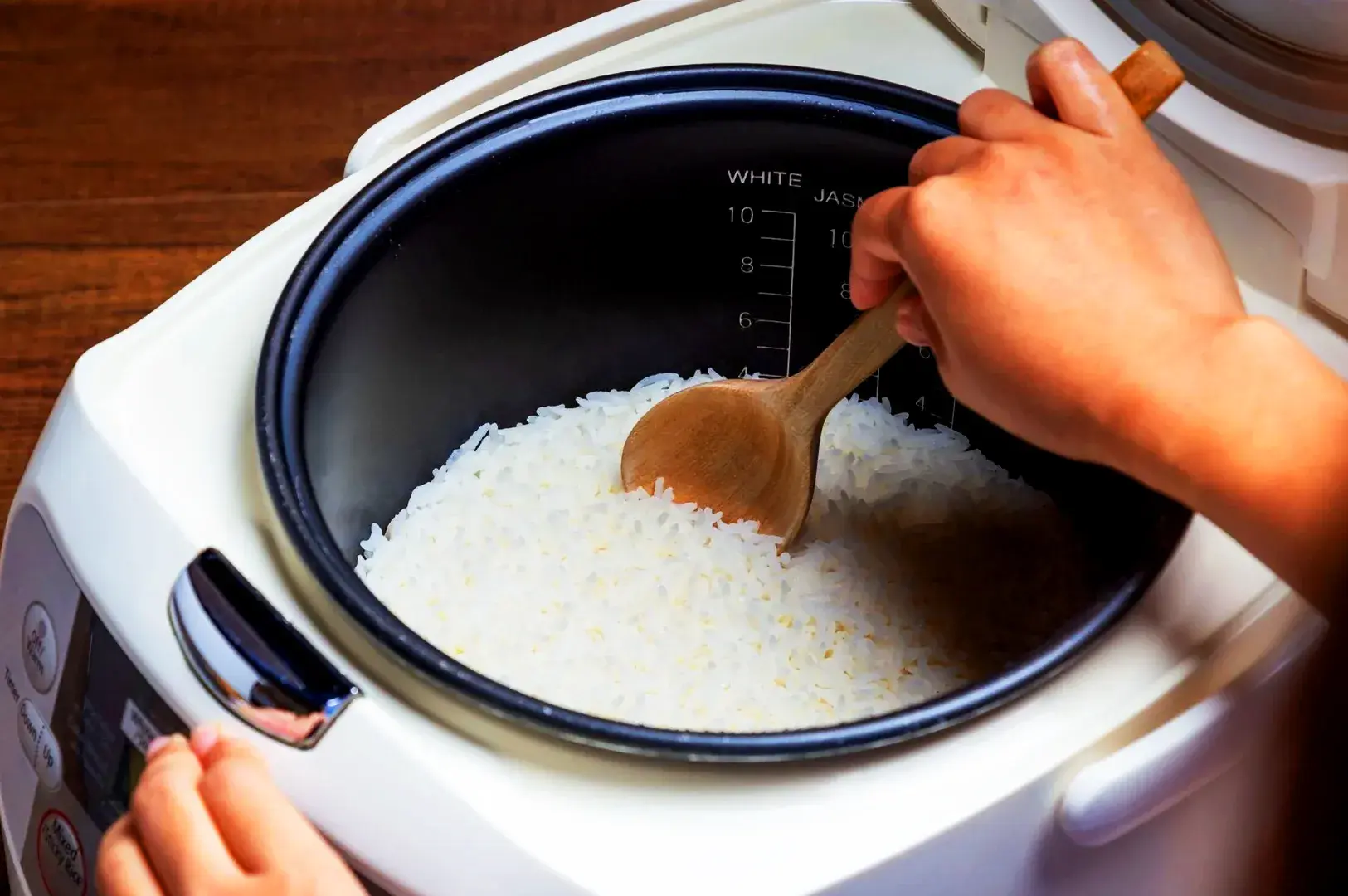
Here’s the one non-negotiable: Use cold, day-old cooked ricefor the best nasi goreng Indonesian fried rice.
Freshly cooked rice holds too much moisture, causing the rice grains to clump and steam rather than fry. When you stir fry day-old rice, the grains separate beautifully, absorbing the sweet, spicy, and smoky flavours without turning soggy or bit dry.
Eatdrinkers tip: No leftover rice? Cook white long grain rice, spread it out on a tray to cool uncovered for about 30 minutes to an hour in the fridge or at room temperature. This dries out the surface and makes it easier to stir fry.
Breaking up the rice clumps before cooking ensures every grain gets coated in the kecap manis and spice paste, giving you that glossy, caramelized finish that makes this dish absolutely delicious.
Step-by-Step Guide to Making the Best Nasi Goreng Indonesian Fried Rice
Prep time: 10–15 minutes
Cook time: 8–12 minutes
Serves: 2
The secret to the best nasi goreng Indonesian fried rice lies in the rhythm of the stir fry and layering of flavours.
- Mix the sauce: In a small bowl, combine kecap manis, light or dark soy sauce, sambal oelek, and belacan if using. This spice paste is the heart of the dish and adds extra flavour.
- Prep the rice: Use a fork or your hands to gently break up the cold cooked rice into loose rice grains.
- Cook the eggs: Heat vegetable oil in a deep frying pan or wok over medium heat. Fry eggs sunny side up with runny yolk or scramble them into the rice later. Set aside.
- Sear the chicken: Heat the pan until hot, add vegetable oil, and add diced chicken thigh in a single layer. Let it sit briefly before stir frying to get a golden sear. Cook until just done, then remove and set aside.
- Fry the aromatics: Add a little more oil if needed, then fry finely chopped shallots, garlic, chilli, and the spice paste until fragrant. Watch the garlic carefully—it can burn quickly.
- Add rice: Add rice to the pan, pressing down gently with your spatula to break up any remaining clumps. Toss and stir fry so every grain gets coated and heated through.
- Add sauce: Pour in the sauce mixture gradually—add half, toss, taste, then add more until the rice turns a glossy brown. This slow caramelization is what makes nasi goreng Indonesian fried rice unique.
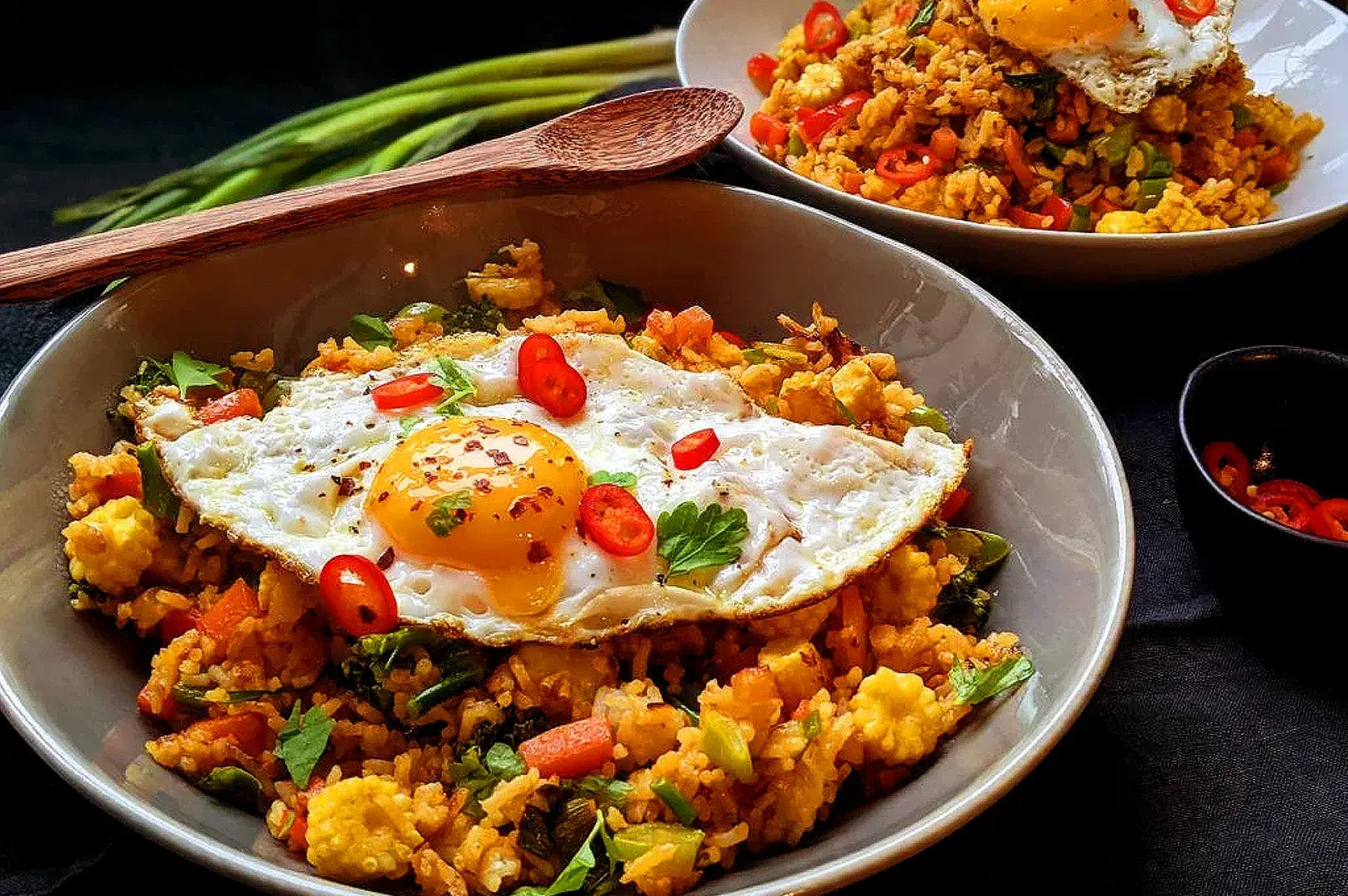
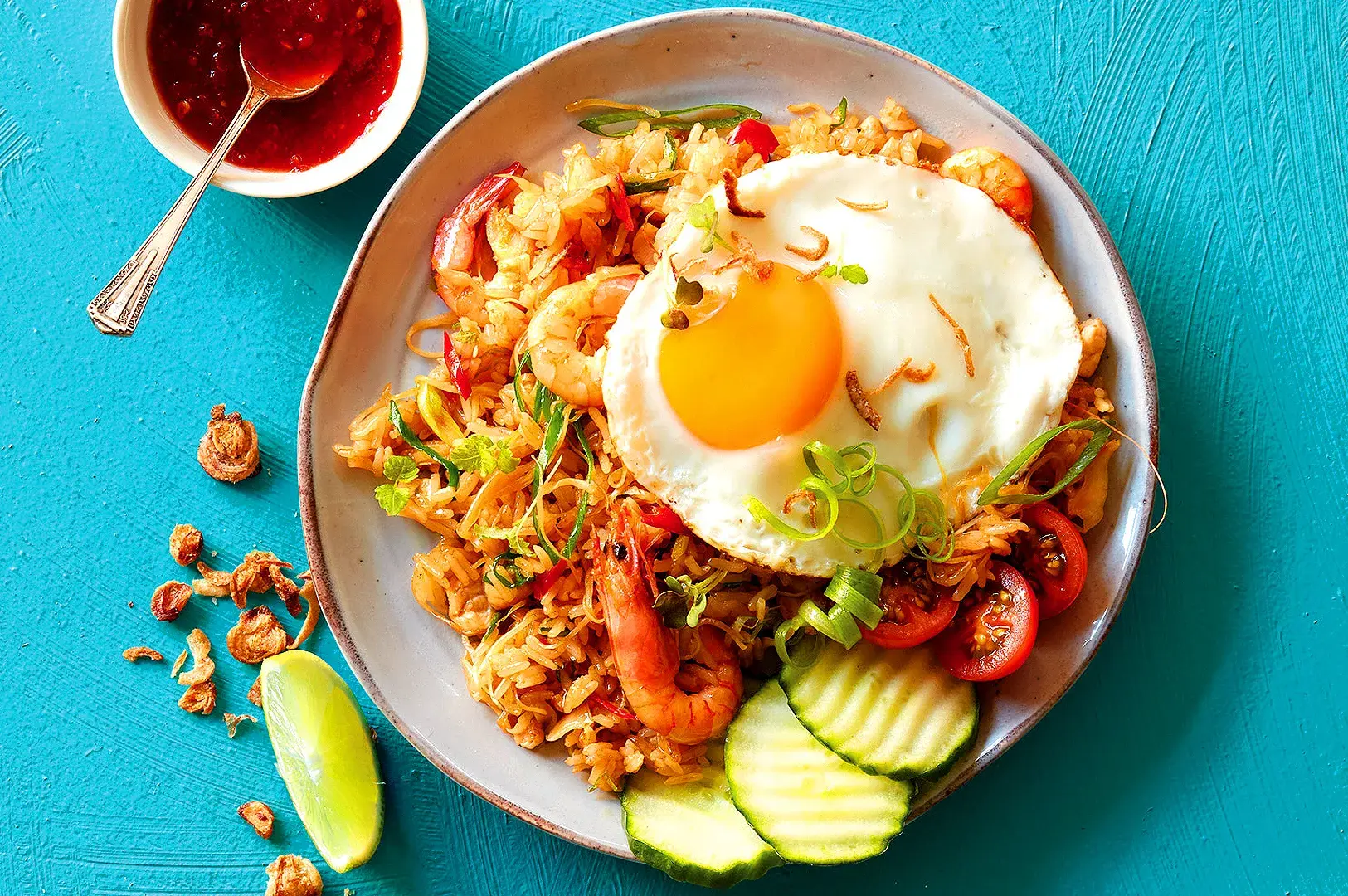
- Finish and serve: Return the chicken to the pan, scatter sliced green onions, and toss briefly. Plate the rice, top with the fried egg, and serve immediately with sliced cucumber slices, tomato slices, fried shallots, prawn crackers, sambal oelek, and lime wedges on the side.
Tips for Authentic Goreng Indonesian Fried Rice Flavour
- Use a well-preheated wok or deep frying pan to achieve that elusive smoky “wok hei” aroma.
- Cook in small batches to avoid crowding, which traps steam and makes the rice bit dry instead of crisp.
- Adding the sauce late in the cooking process helps caramelize the rice grains rather than steaming them.
- Garnish generously with fried shallots for crunch and extra flavour.
- For a gluten free version, make your own kecap manis using tamari and palm sugar.
Serving Suggestions: How to Serve Nasi Goreng Indonesian Style
Nasi goreng Indonesian fried rice is delicious on its own as a main meal, but it also makes a fantastic side dish.
Traditional serving suggestions include:
- A fried egg with runny yolk on top, so the yolk melts into the rice
- Freshly sliced cucumber slices and tomato slices for cooling contrast
- Prawn crackers (kerupuk) for crunch
- Extra sambal oelek or chilli on the side to add heat
- Lime wedges to squeeze over for a bright, tangy finish
These accompaniments balance the rich, sweet, and smoky notes of the fried rice, making every bite super tasty and satisfying, and for those seeking halal options, Eat Drink Asia offers a great guide to halal restaurants in Singapore.
What Makes Nasi Goreng So Special?
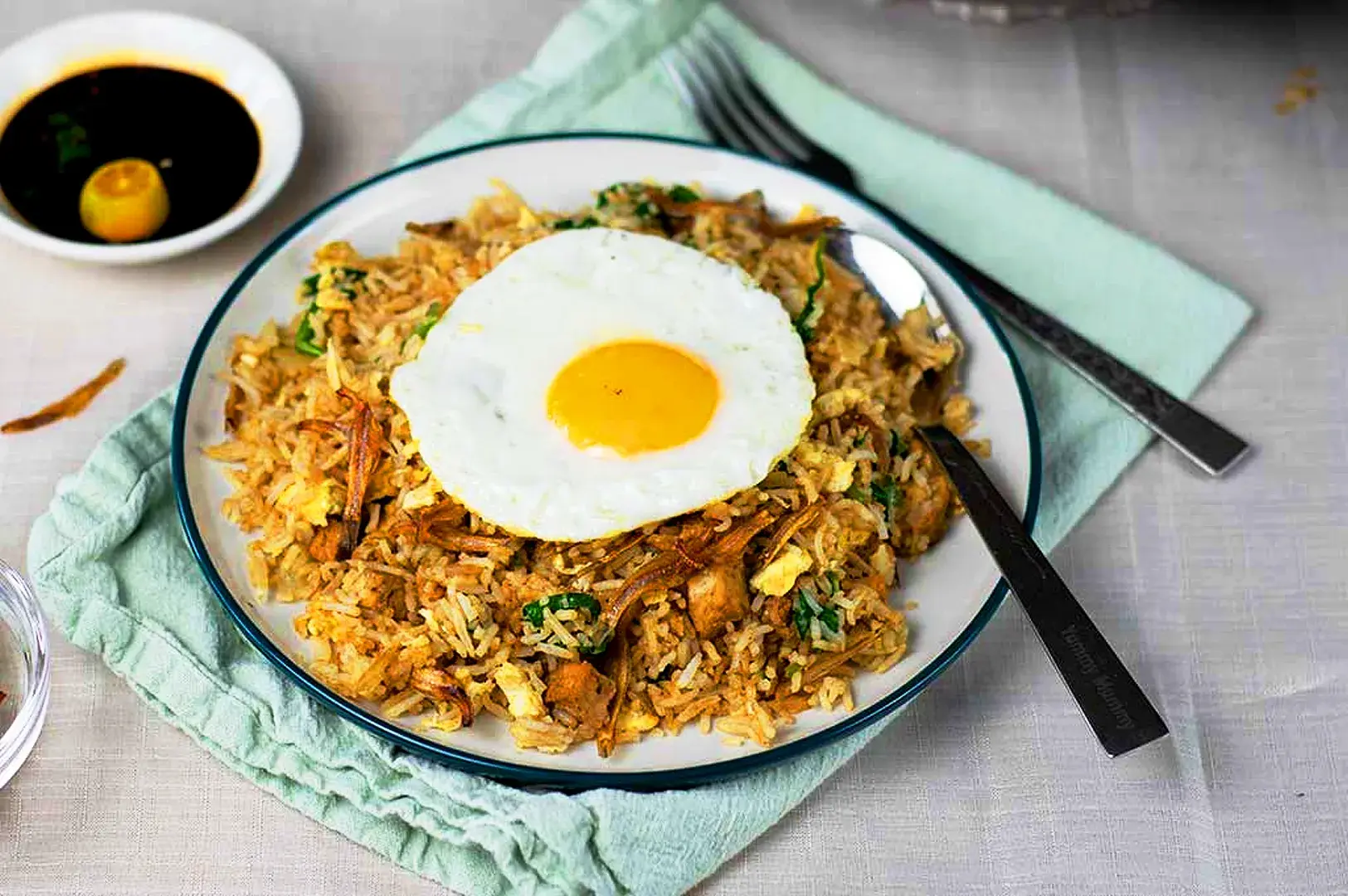
This simple recipe celebrates the heart of Indonesian fried rice — transforming everyday cooked rice into an absolutely delicious, flavour-packed meal. Whether you call it nasi goreng Indonesian style or just fried rice, the magic is in the spice paste, the caramelized rice grains, and the fresh garnishes that bring it all together; just as nasi goreng brings me comfort, so does a warm bowl of Japanese curry. Both dishes tell stories through their rich, layered flavours and humble origins. If you enjoy exploring authentic tastes and the cultural narratives behind them, trying Japanese curry could be a delightful next step in your culinary journey.
Eat, Drink, Cook Your Own at Home
Nasi goreng doesn’t ask you to be precise. It asks you to be a little bold.
Cold rice, a hot pan, some garlic and sweet soy and chilli. Chicken cooked fast enough to stay tender. That’s the whole trick. There’s no single correct version, no test you can fail. The dish has fed families across the region for generations precisely because it works with whatever’s on hand.
So the next time you find that forgotten container of rice at the back of the fridge, don’t sigh at it. Heat the wok. Give it ten minutes and a little nerve.
You’ll be surprised what leftovers can become.

Crunch, Sweet, and Heat: The Irresistible Textures of Southeast Asian Snacks
Dio Asahi | February 17, 2026
In the humid, sticky heat of Southeast Asia, where your shirt clings to your back and the air is thick with the sharp scent of oxidising oil, there’s a particular clink that always gets me. It’s the sound of a metal spatula striking a wok, a rhythmic percussion that’s as familiar to me now as…
-
The Living Pantry: How Geography and Trade Shaped the Food in the Southeast Region
Eat Drink Asia Team | February 14, 2026
To understand the plate is to understand the map. If you were to trace the spice routes of the 15th century or follow the monsoon winds that carried merchant ships across the Indian Ocean, you would find yourself at the epicenter of the world’s most vibrant pantry. The food in the Southeast region of Asia…
-
A Symphony of Senses: Why Southeast Asian Food is the World’s Greatest Culinary Journey
Dio Asahi | February 12, 2026
If you were to stand at a busy intersection in Bangkok, Ho Chi Minh City, or Jakarta and close your eyes, your nose would tell you a story before your eyes ever could. There is a specific, intoxicating perfume that defines Southeast Asian food: the sharp tang of lime juice hitting a hot wok, the…
-
The Alchemy of the Wok: The Story of Singapore-Style Bee Hoon
Eda Wong | February 10, 2026
Across the humid evening air of Singapore, a rhythmic clatter echoes from hawker stalls to high-rise kitchens—the sound of a metal spatula against a seasoned wok. Within that intense heat, rice vermicelli noodles undergoes a profound transformation, absorbing the golden hues of curry powder, the savory depths of soy sauce, and the smoky “breath” of…
-
The Sizzle of the Wok: An Exploration of Fried Bee Hoon Across Southeast Asia
Eat Drink Asia Team | February 7, 2026
Across Southeast Asia, from bustling hawker centers to family kitchens, the sizzle of rice vermicelli noodles hitting a hot wok is a universal comfort. Few dishes capture the spirit of Asian noodle culture as well as fried bee hoon. This stir fry, made with thin rice noodles, delivers a tasty meal any time of the…
-
The Silk of the East: A Deep Dive into Bee Hoon and the Art of Rice Vermicelli
Eda Wong | February 5, 2026
Across the bustling kitchens of Southeast Asia, one humble ingredient has woven itself into the fabric of countless beloved dishes. Bee hoon, the delicate rice vermicelli that transforms from brittle strands into silky noodles, represents centuries of culinary tradition and innovation. Whether you’ve savored Singapore noodles in a hawker center or encountered fried bee hoon…
-
The Eternal Hearth: A Journey Through the Soul of Indian Foods Vegetarian Traditions
Dio Asahi | February 3, 2026
In the vibrant tapestry of global gastronomy, few cultures have elevated the plant-based plate to an art form quite like India. While much of the world has recently turned toward meat alternatives for health or environmental reasons, Indian cuisine has been centered on the vegetable for millennia. This isn’t merely a dietary choice; it is…
-
The Essence of Jeju Citron Tea: A Distinctive Profile of Yuja Tea in Korea
Dio Asahi | January 31, 2026
Imagine sitting in a quiet, sun-drenched teahouse overlooking the dramatic volcanic coastline of Jeju Island. The steam rising from your cup carries an aroma that is at once familiar and yet entirely new—a version of Korean citron tea, or yuja cha, that tastes of sea salt, volcanic soil, and generations of island tradition. As you…
-
Korean Citron Tea: Health Benefits and Wellness Secrets
Eat Drink Asia Team | January 29, 2026
As the seasons change and a chill enters the air, many of us seek out comforting rituals to support our well-being. Imagine wrapping your hands around a steaming cup of Korean citron tea—also known as yuja-cha—its bright, citrus aroma soothing and revitalizing with every sip. More than just a winter treat, Korean citron tea is…
-
When the Izakaya Becomes the Plan: Izakaya Singapore Top Picks for After-Work Reset
Dio Asahi | January 28, 2026
January 28, 2026 | Dio Asahi Last updated: September 14, 2026 As you step behind the humble noren curtain, you’re greeted by glowing lanterns, sizzling charcoal-grilled skewers, and warm welcomes. This is izakaya, Japan’s casual pub, a vibrant part of Singapore’s dining scene. More than just yakitori and sake, izakayas offer a lively setting for social…