By Eda Wong for Eat Drink Asia.
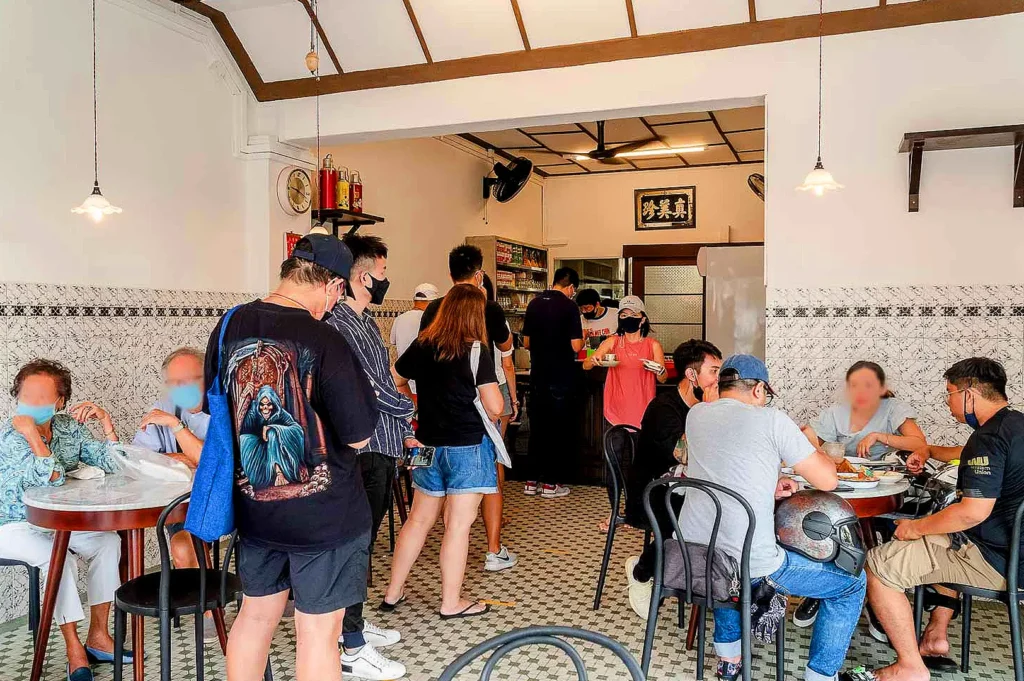
It’s not quite eight, and the pastel-blue shophouse is already awake. Kopi cups clink against saucers. A ceiling fan turns slow overhead. Someone folds a newspaper at a marble-topped table, and the man behind the counter moves without hurry, sliding buns across in a rhythm he’s clearly done ten thousand times. The East Coast light comes in low and warm. Nobody rushes. This is a room that has kept the same morning for longer than most of the people in it have been alive.
Chin Mee Chin Confectionery has stood here since 1925, and the years show with a gentle honesty — in the worn tiles, the fogged glass cases, the familiar choreography of regulars slipping into seats that already know them. It’s exactly the kind of lived-in authenticity Eat Drink Asia comes looking for.
I order the round kaya bun, soft-boiled eggs, and kopi.
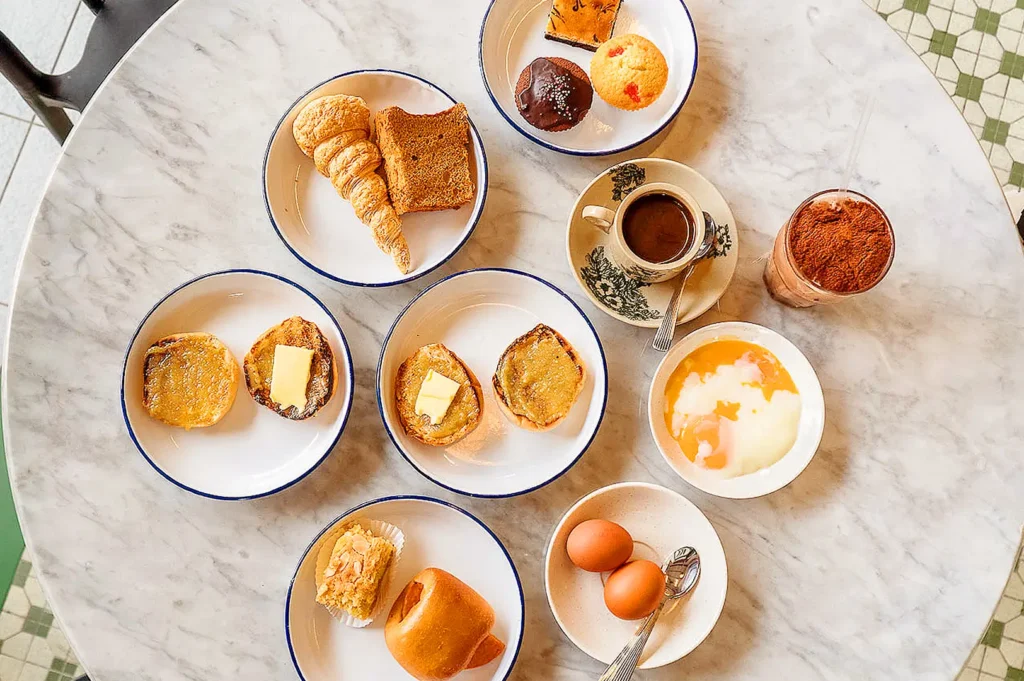
The bun is the point. It arrives warm and domed, pillowy under the fingers, the kind of soft that gives way before you’ve decided to bite. Inside, the housemade kaya carries a creamy coconut sweetness, and beneath it, a cold slab of butter — hard, salted, slow to melt against the warm bread. That contrast is the whole thing: warm and cold, sweet and salt. It’s a small architecture, but nothing about it feels accidental.
The kaya is where the craft hides. It’s cooked here, slow, coconut and egg and sugar coaxed together until it turns thick and smooth. You can taste the difference between something stirred with patience and something poured from a jar. This one tastes like patience.
I dip a corner of the bun into the soft-boiled egg, dark with a splash of soy, and eat the way this room seems to want you to — unhurried, present, in no argument with the clock.
There’s something worth noticing in how Singapore holds onto mornings like this. In a city that rebuilds itself constantly, the kopitiam breakfast stays. It’s one of the few tables where the whole multicultural spread of the place sits down together — the kopi from one tradition, the kaya from another, the soft egg a habit shared across all of them. These rituals survive because people keep choosing them. A bun and a cup, eaten the same way, morning after morning, become a kind of quiet inheritance.
I think about the sleeker cafés a few streets over — the ones with careful lighting and long tables built for laptops and lingering. There’s nothing wrong with them. But this is a different thing. Chin Mee Chin doesn’t ask you to stay. It feeds you, warmly and honestly, and lets you go back to your day. It’s lived-in rather than designed. You feel the years in it, not the marketing.
Convenience would have flattened all of this long ago. A packet of kaya, a faster bun, a quicker turn of tables. That the round bun still arrives warm, still domed, still made the slow way, feels like a small act of holding on.
I finish the last corner, the butter finally soft, the coconut lingering.
Outside, the morning has properly begun. Inside, the fan still turns, and the next bun is already crossing the counter.

Cuisine in the World Meets Singapore: Inside Nakhon Kitchen’s Cross-Cultural Magic
Dio Asahi | March 26, 2026
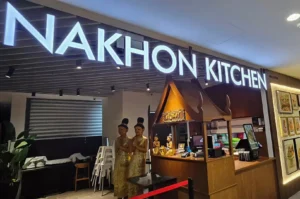
There’s a rite of passage for any food lover living in the East of Singapore, and it involves a queue. Specifically, the perpetually long, snaking queue outside Nakhon Kitchen in Bedok. I’d heard the legends for years: authentic Thai food, rock-bottom prices, and a wait time that tests your commitment. So, on a Tuesday evening…
-
The Spice Route Secrets: A Deep Dive into Malay Ethnic Food
Eda Wong | March 24, 2026
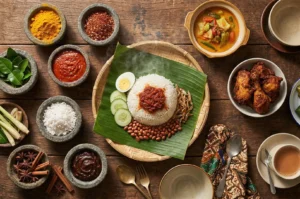
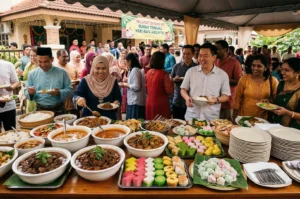
My first time ordering Nasi Padang in Geylang Serai was overwhelming, I randomly picked dishes and was shocked by a $20 bill due to premium beef rendang and squid. That taught me to always ask seafood prices and that Malay food is a complex, modular cuisine. Malay food is everywhere in Singapore, in hawker centres,…
-
The Shokunin Spirit: How Japan’s Craftsman Philosophy Lives Inside Singapore’s Most Disciplined Omakase Counter
Dio Asahi | March 21, 2026
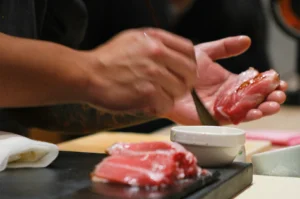
The fire is not roaring; it is breathing. In a small, darkened workshop in Sakai, a swordsmith watches the colour of the steel with eyes that have tracked the same transformation for forty years. He does not look at a clock. He listens to the hum of the charcoal. He waits for the metal to…
-
The Evolution of the Plate: How History Transformed Iconic Malaysian Dishes
Eda Wong | March 19, 2026
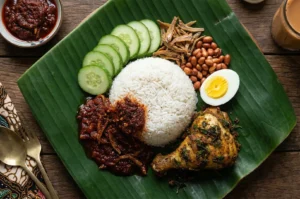
I used to think I understood Malaysian food. As a Singaporean, it’s practically in my DNA, right? Nasi lemak for breakfast, a cheeky roti canai for supper – I thought I had it all figured out. Then I spent a week eating my way through Penang and Kuala Lumpur, and I realised I knew absolutely…
-
The Soul of the Table: An Educational Guide to the Role of Food in Malaysian Culture
Eat Drink Asia Team | March 17, 2026
We still remember our first collective Rumah Terbuka (Open House) experience in Kuala Lumpur.Standing at the doorway of a home during Hari Raya, we were utterly paralyzed by the sheer volume of people and the aroma of Malaysian cooking. There were aunties ladling beef rendang and tables groaning under the weight of colourful kuih. “Do…
-
Asian Food Comfort Trends: Why Broths and Bowls are Dominating Globally
Eda Wong | March 14, 2026
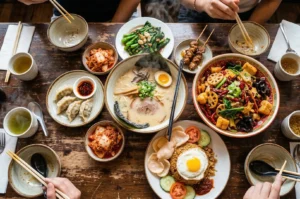
I still remember the first time I faced a “build-your-own” Mala Xiang Guo counter. I stood there, plastic tongs in hand, completely paralyzed by the mountain of choices. Lotus root? Kelp knots? three different types of tofu skin? My anxiety spiked. I panicked, grabbed way too much luncheon meat, and ended up with a $28…
-
The Fifth Element: A Masterclass on Umami in East Asian Cuisine
Dio Asahi | March 12, 2026
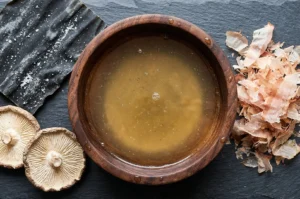
I’ll never forget the first time I made miso soup from scratch. Not the instant kind, but the “proper” way. I boiled water, dissolved miso paste, added tofu, and waited. It tasted flat, salty and cloudy but missing the deep, satisfying flavor I loved in Japanese restaurants. I thought maybe I needed better miso. Years…
-
Why My Quest Ended at Yummy Western (409 AMK)
Dio Asahi | March 10, 2026
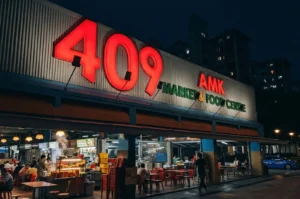
There’s a specific magic to a late-night supper hunt in Singapore. It’s the ritual of chasing a craving through the humidity to find that one stall that hits the spot. For me, that meant a pilgrimage to Ang Mo Kio Avenue 10. I arrived at 10 PM on a Friday, just as the ‘supper soul’…
-
A Taste of Time: My Dinner at Guan Hoe Soon
Eda Wong | March 7, 2026
There’s something special about visiting a place that has seen decades of Singapore’s history unfold. Guan Hoe Soon, tucked away on Joo Chiat Road, holds the title of Singapore’s oldest Nyonya restaurant, and you can feel that heritage the moment you step inside. I’d heard about it for years, a place where recipes aren’t just…
-
The 6 Best Halal Restaurant in Singapore for Authentic Nasi Padang
Eda Wong | March 5, 2026
There are few meals as satisfying as Nasi Padang, a colourful feast where you choose from a variety of dishes to create your perfect plate. Over the years, I’ve explored Singapore’s Nasi Padang scene, especially in Kampong Glam, sampling everything from humble hawker stalls to renowned spots. This list highlights the best halal Nasi Padang…