By Eda Wong for Eat Drink Asia.
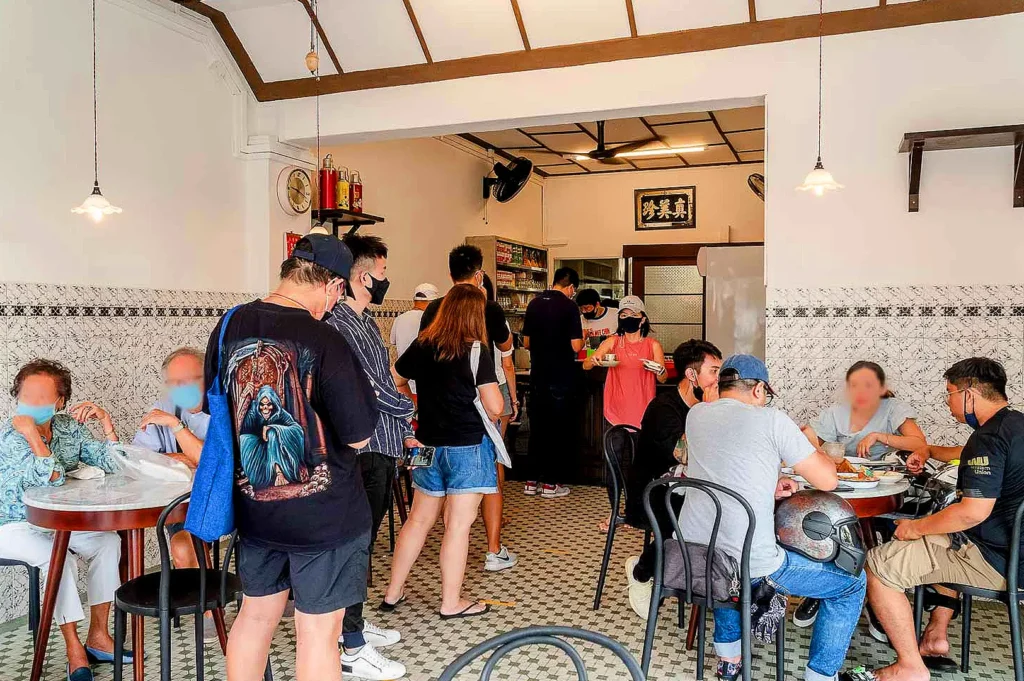
It’s not quite eight, and the pastel-blue shophouse is already awake. Kopi cups clink against saucers. A ceiling fan turns slow overhead. Someone folds a newspaper at a marble-topped table, and the man behind the counter moves without hurry, sliding buns across in a rhythm he’s clearly done ten thousand times. The East Coast light comes in low and warm. Nobody rushes. This is a room that has kept the same morning for longer than most of the people in it have been alive.
Chin Mee Chin Confectionery has stood here since 1925, and the years show with a gentle honesty — in the worn tiles, the fogged glass cases, the familiar choreography of regulars slipping into seats that already know them. It’s exactly the kind of lived-in authenticity Eat Drink Asia comes looking for.
I order the round kaya bun, soft-boiled eggs, and kopi.
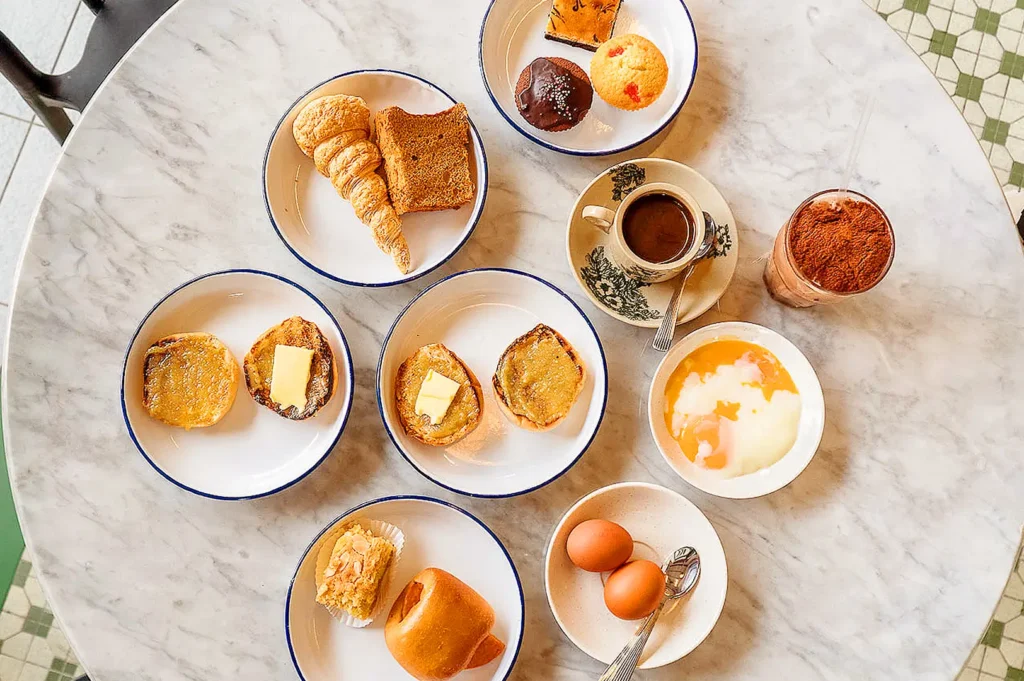
The bun is the point. It arrives warm and domed, pillowy under the fingers, the kind of soft that gives way before you’ve decided to bite. Inside, the housemade kaya carries a creamy coconut sweetness, and beneath it, a cold slab of butter — hard, salted, slow to melt against the warm bread. That contrast is the whole thing: warm and cold, sweet and salt. It’s a small architecture, but nothing about it feels accidental.
The kaya is where the craft hides. It’s cooked here, slow, coconut and egg and sugar coaxed together until it turns thick and smooth. You can taste the difference between something stirred with patience and something poured from a jar. This one tastes like patience.
I dip a corner of the bun into the soft-boiled egg, dark with a splash of soy, and eat the way this room seems to want you to — unhurried, present, in no argument with the clock.
There’s something worth noticing in how Singapore holds onto mornings like this. In a city that rebuilds itself constantly, the kopitiam breakfast stays. It’s one of the few tables where the whole multicultural spread of the place sits down together — the kopi from one tradition, the kaya from another, the soft egg a habit shared across all of them. These rituals survive because people keep choosing them. A bun and a cup, eaten the same way, morning after morning, become a kind of quiet inheritance.
I think about the sleeker cafés a few streets over — the ones with careful lighting and long tables built for laptops and lingering. There’s nothing wrong with them. But this is a different thing. Chin Mee Chin doesn’t ask you to stay. It feeds you, warmly and honestly, and lets you go back to your day. It’s lived-in rather than designed. You feel the years in it, not the marketing.
Convenience would have flattened all of this long ago. A packet of kaya, a faster bun, a quicker turn of tables. That the round bun still arrives warm, still domed, still made the slow way, feels like a small act of holding on.
I finish the last corner, the butter finally soft, the coconut lingering.
Outside, the morning has properly begun. Inside, the fan still turns, and the next bun is already crossing the counter.

The Alchemy of the Wok: The Story of Singapore-Style Bee Hoon
Eda Wong | February 10, 2026
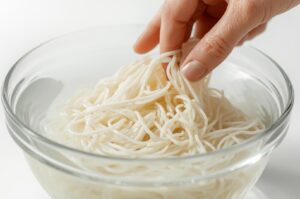
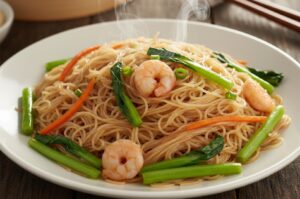
Across the humid evening air of Singapore, a rhythmic clatter echoes from hawker stalls to high-rise kitchens—the sound of a metal spatula against a seasoned wok. Within that intense heat, rice vermicelli noodles undergoes a profound transformation, absorbing the golden hues of curry powder, the savory depths of soy sauce, and the smoky “breath” of…
-
The Sizzle of the Wok: An Exploration of Fried Bee Hoon Across Southeast Asia
Eat Drink Asia Team | February 7, 2026
Across Southeast Asia, from bustling hawker centers to family kitchens, the sizzle of rice vermicelli noodles hitting a hot wok is a universal comfort. Few dishes capture the spirit of Asian noodle culture as well as fried bee hoon. This stir fry, made with thin rice noodles, delivers a tasty meal any time of the…
-
The Silk of the East: A Deep Dive into Bee Hoon and the Art of Rice Vermicelli
Eda Wong | February 5, 2026
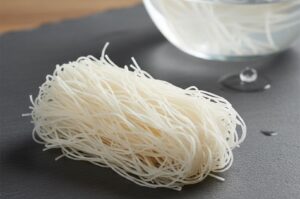
Across the bustling kitchens of Southeast Asia, one humble ingredient has woven itself into the fabric of countless beloved dishes. Bee hoon, the delicate rice vermicelli that transforms from brittle strands into silky noodles, represents centuries of culinary tradition and innovation. Whether you’ve savored Singapore noodles in a hawker center or encountered fried bee hoon…
-
The Eternal Hearth: A Journey Through the Soul of Indian Foods Vegetarian Traditions
Dio Asahi | February 3, 2026
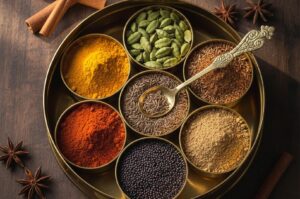
In the vibrant tapestry of global gastronomy, few cultures have elevated the plant-based plate to an art form quite like India. While much of the world has recently turned toward meat alternatives for health or environmental reasons, Indian cuisine has been centered on the vegetable for millennia. This isn’t merely a dietary choice; it is…
-
The Essence of Jeju Citron Tea: A Distinctive Profile of Yuja Tea in Korea
Dio Asahi | January 31, 2026
Imagine sitting in a quiet, sun-drenched teahouse overlooking the dramatic volcanic coastline of Jeju Island. The steam rising from your cup carries an aroma that is at once familiar and yet entirely new—a version of Korean citron tea, or yuja cha, that tastes of sea salt, volcanic soil, and generations of island tradition. As you…
-
Korean Citron Tea: Health Benefits and Wellness Secrets
Eat Drink Asia Team | January 29, 2026
As the seasons change and a chill enters the air, many of us seek out comforting rituals to support our well-being. Imagine wrapping your hands around a steaming cup of Korean citron tea—also known as yuja-cha—its bright, citrus aroma soothing and revitalizing with every sip. More than just a winter treat, Korean citron tea is…
-
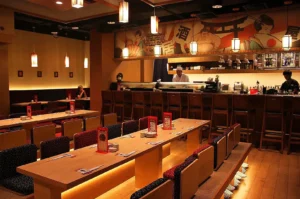
When the Izakaya Becomes the Plan: Izakaya Singapore Top Picks for After-Work Reset
Dio Asahi | January 28, 2026
January 28, 2026 | Dio Asahi Last updated: October 12, 2026 As you step behind the humble noren curtain, you’re greeted by glowing lanterns, sizzling charcoal-grilled skewers, and warm welcomes. This is izakaya, Japan’s casual pub, a vibrant part of Singapore’s dining scene. More than just yakitori and sake, izakayas offer a lively setting for social…
-
Yuja Tea: Korea’s Traditional Citron Tea
Dio Asahi | January 27, 2026
The golden, aromatic steam rising from a cup of yuja tea carries centuries of Korean tradition and wellness wisdom. This caffeine-free citrus beverage has warmed Korean hearts through countless winters, offering both comfort and powerful health benefits in every sip. Made from the Korean citron known as yuja fruit, this simple Korean tea represents one…
-
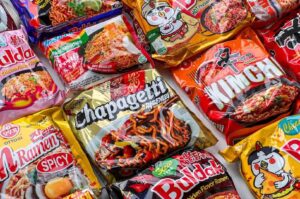
The Global Phenomenon of Korean Instant Noodle: A Cultural and Culinary Journey
Eda Wong | January 24, 2026
In the high-octane streets of South Korea, where the “pali-pali” (hurry-hurry) culture defines the pace of life, one dish stands as the ultimate equalizer of speed and satisfaction: Korean ramyeon. While the world often uses the terms ramen and ramyeon interchangeably, the Korean version is a distinct entity. It is not merely a quick snack…
-
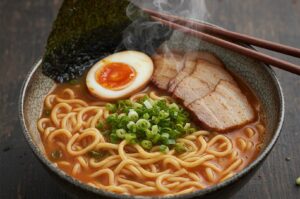
Traditional Ramyeon: The Soulful Heart of Korean Noodle Culture
Eat Drink Asia Team | January 20, 2026
In the bustling culinary landscape of South Korea, few comfort foods can match the satisfaction of a steaming bowl of ramyeon. While outside of Korea, “ramyeon” often brings to mind Korean instant noodles or instant ramen, true ramyeon Korean style refers to the artful, freshly prepared noodle soup enjoyed in homes and at local restaurants…