The first time I ate breakfast in Chinatown, I got it wrong.
I arrived at eleven, hungry and hopeful, and found the kopi stalls already turning toward lunch. The porridge uncle was packing up. The toast man had switched to slicing char siew. I ate a rushed plate of noodles standing near a pillar, sweating, and left feeling like I’d missed something.
I had. I’d missed the morning itself.
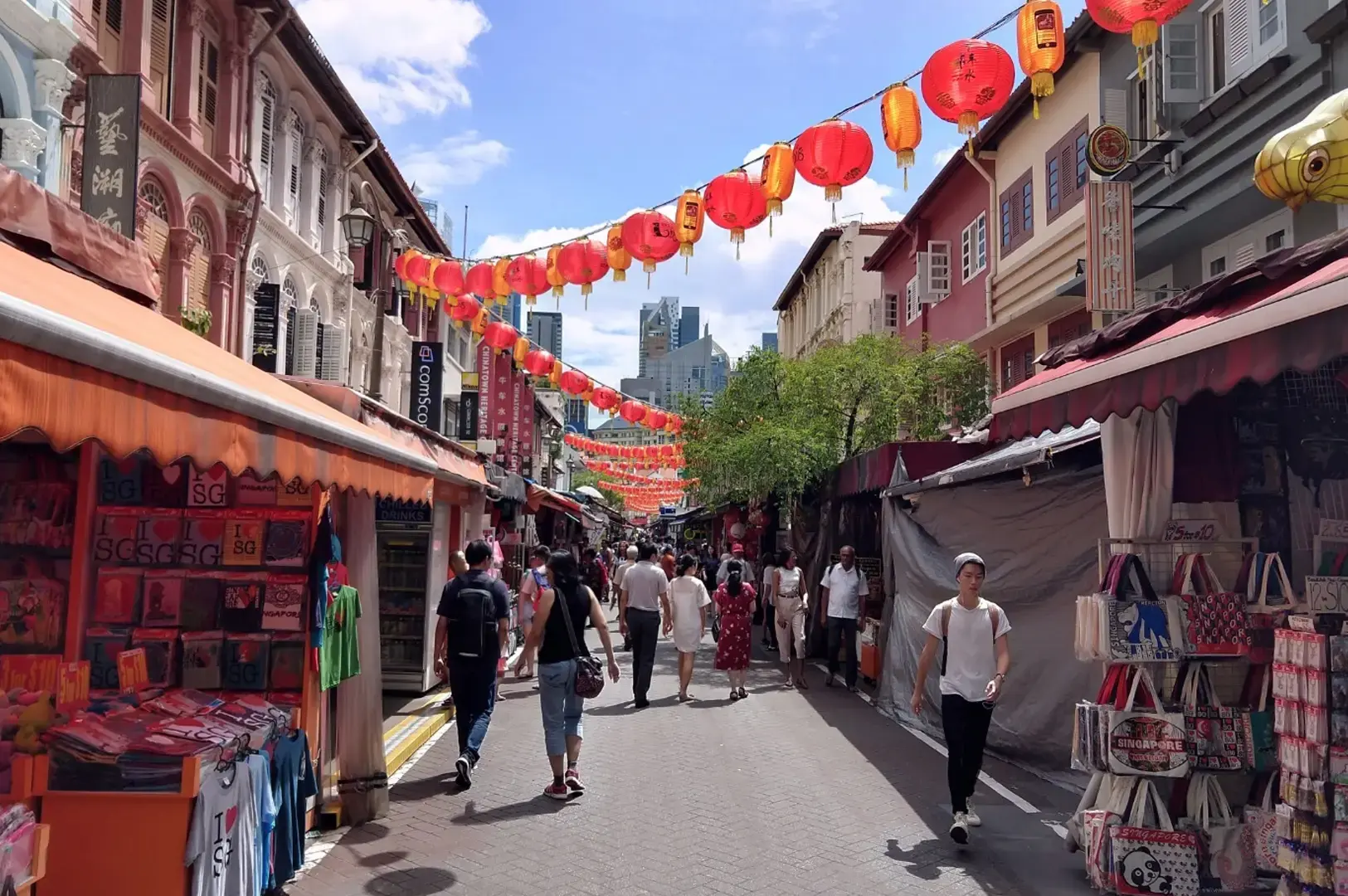
Chinatown doesn’t wake up all at once. It opens by steam, stall by stall, and if you want to understand it, you have to arrive before the day gets loud. Go early enough, and you’ll find something more honest than a food guide can promise: a neighbourhood eating its way through its own history, one small cup at a time.
How Migration Built the Menu
Here’s the thing most people miss. The name says “Chinatown,” but the breakfast table tells a wider story.
A Diverse Culinary Map
Singapore grew as a port city, and in the 1800s people came from everywhere — Hainan, Canton, Teochew and Hokkien regions of China, but also South India, the Malay world, Indonesia. They came for work, and they brought their food. Not the polished versions. The practical ones. Food that had to be cheap, fast, hot, and close to where the labour was.
If you want to follow Singapore’s Chinese food traditions beyond the breakfast table, continue with our guide to the best Chinese restaurants in Singapore.
What To Know
That’s why breakfast at Chinatown isn’t one cuisine. It’s a map of flavours and textures, served across many hawker stalls and hawker centres.
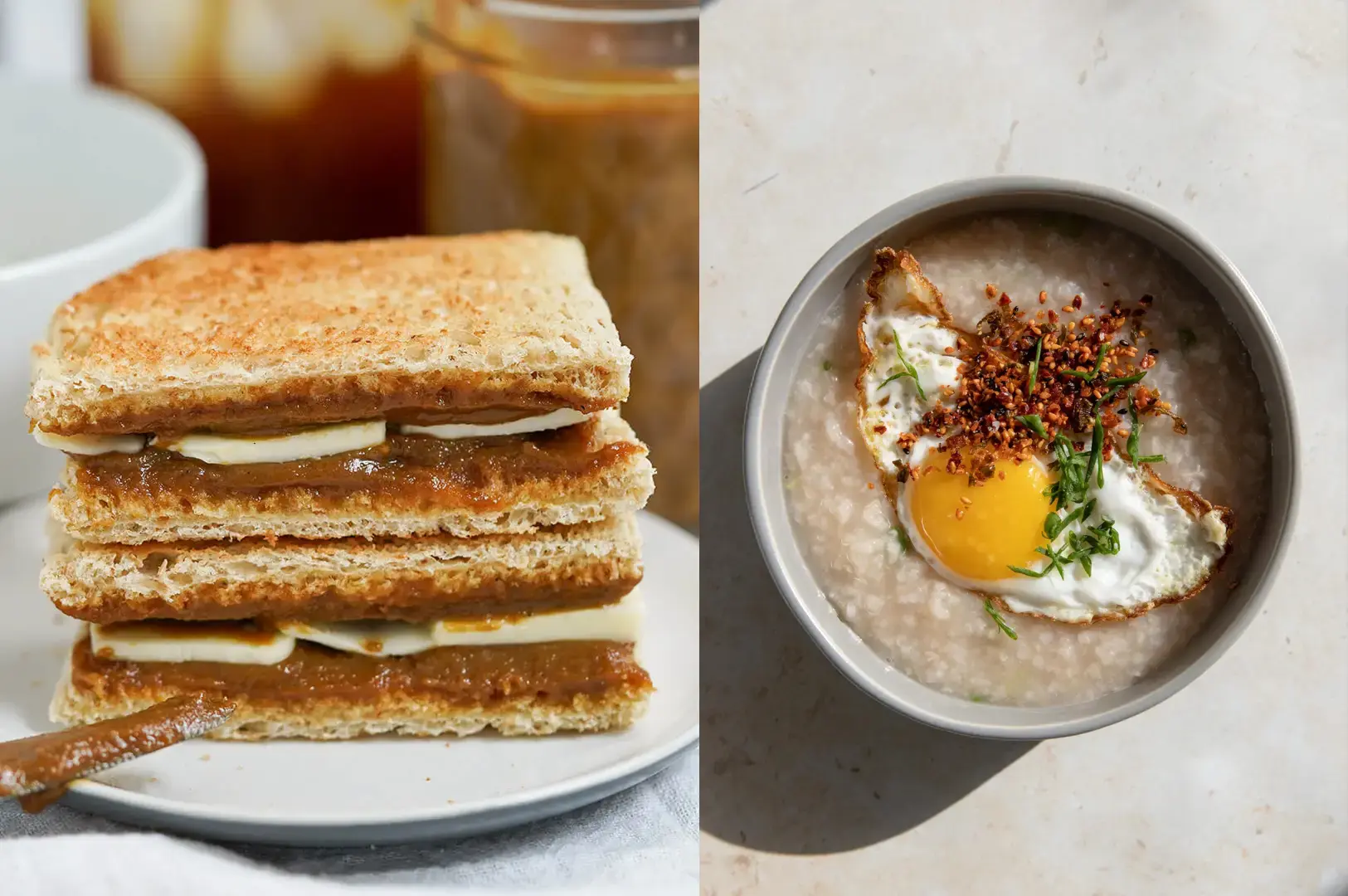
- The kaya toast is Hainanese, born from cooks who learned to work Western kitchens and made something new. The black sesame toast is another iconic choice, its nutty paste thickly spread over crisp bread, a sweet and rich treat that melts gently on the tongue.
- The congee is Cantonese, smooth and forgiving, a silky bowl of comfort often served with tender slices of fish or minced pork.
- The noodles carry Teochew lightness, delicate strands swimming in broth or tossed with sauces.
- The kopi — that thick, sweet coffee — grew from Hokkien coffee-stall culture. At places like Nanyang Old Coffee on South Bridge Road, the robust aroma of freshly brewed kopi mingles with the condensed milk sweetness, a signature drink that locals grab on their way to work.
- Walk a short walk from Chinatown MRT and you pass the Sri Mariamman Temple, Jamae Mosque, the old shrines. The Indian-Muslim and Malay presence sits right there in the morning too, in prata folded thin, in nasi lemak wrapped and ready.
The Role of Hawker Centres
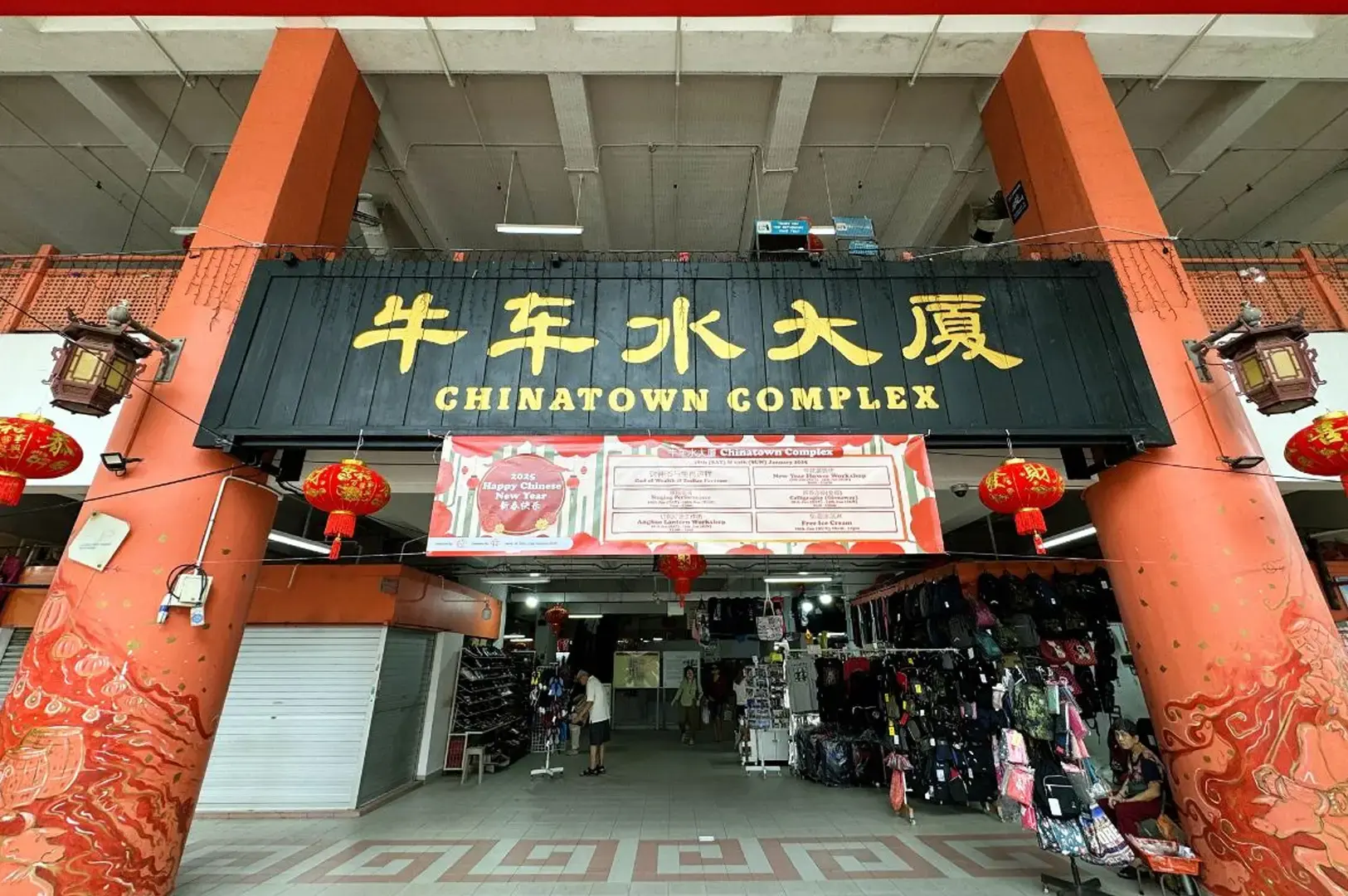
The Chinatown Complex Food Centre, Singapore’s largest hawker centre, is the beating heart of this morning ritual. Built in 1981 to house the last of the street hawkers, it brings the hawker stalls indoors, packed with locals and avid fans of authentic breakfast dishes.
Here, you can sample everything from braised pork rice — a filling bowl of tender pork simmered in dark soy sauce — to the pork floss cheese egg rolls, a savory and slightly sweet treat wrapped in crisp dough.
The signature toast sandwich at some stalls layers pork chop, luncheon meat, melted cheese, and condensed milk for a rich, satisfying bite that reflects the fusion of cultures in Chinatown’s breakfast scene. I find that worth sitting with. Migration didn’t create a tidy menu. It created a table where toast, porridge, rice rolls, noodles, and tea could sit beside one another and somehow belong.
What to Eat First
Don’t try to eat everything. I’ve watched people order six dishes at once and finish none of them warm.
Anchor Your Breakfast
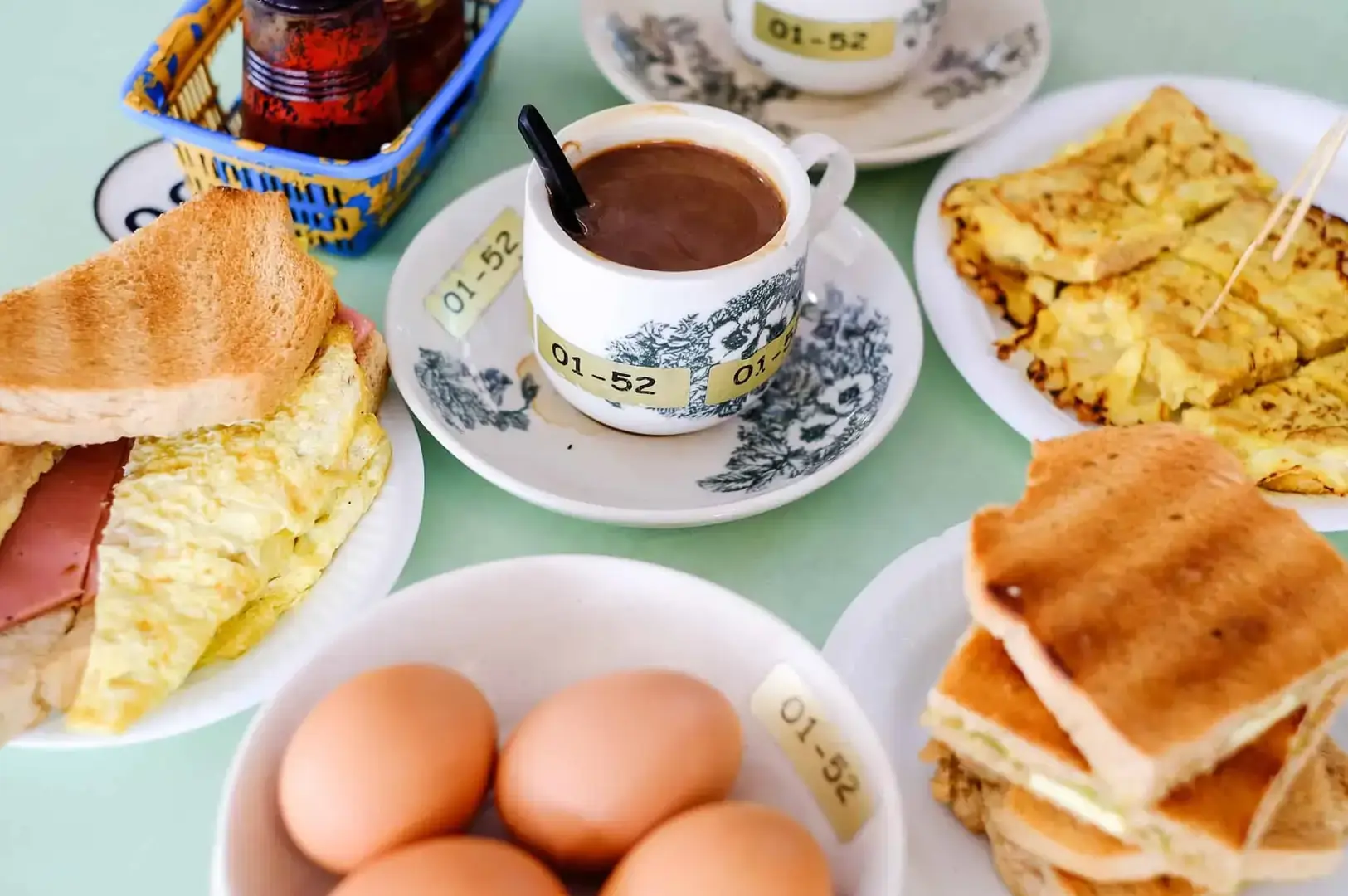
Pick an anchor. I’d start with the classic: kaya toast, soft-boiled eggs, and kopi. A set usually runs around S$4 to S$6, the kopi on its own about S$1.30 to S$2.
Good kaya toast is about contrast. The toast crisp, the butter still cool and firm inside it, the kaya fragrant with coconut and pandan. You crack the soft-boiled eggs into a saucer, add a splash of dark soy and a shake of white pepper, and dip the toast in. The kopi has to be strong enough to stand up to all that sweetness. When it works, the whole thing balances — hot, sweet, salty, sharp.
Add a Soft Dish
Then add one soft dish.
- Porridge is my usual second stop, especially the smooth Cantonese kind that feels like something your grandmother would make. It should be thick and steaming, never watery or gluey.
- Chee cheong fun — those slippery rice rolls, cut to order and drizzled with sweet sauce — costs around S$3 to S$5 and slides down easy in the heat.
- Yam cake is another gentle option; it should hold its shape without turning stiff.
EDA tip: Order your toast set and your porridge from different stalls, then share. One person queues for toast, another for porridge, and you meet at the table. Hawker breakfast is built for this kind of small teamwork. Save the heavy things — chicken rice, roast meats, char kway teow, or even hokkien mee — for later. They’re lunch dishes wearing a morning disguise, and they’ll still be there at eleven.
Where to Go
Chinatown has several breakfast zones, not one street. Each has its own mood.
Maxwell Food Centre
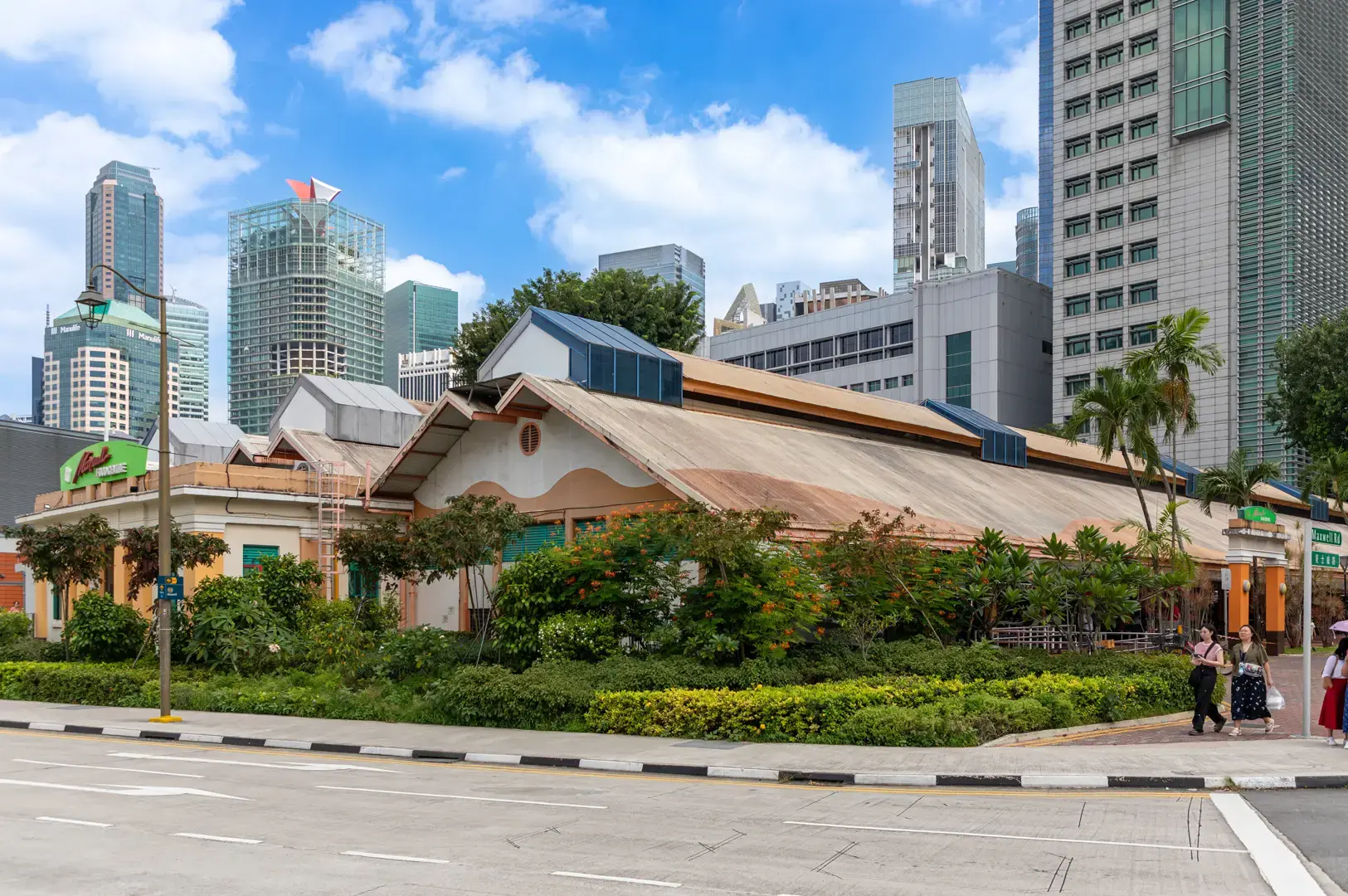
This is where I send first-timers. It’s central, easy to find, and forgiving. This is where you’ll find Zhen Zhen Porridge, a bowl of smooth, thick congee for around S$3 to S$5 that gets cooked down until it’s silk. Fish, chicken, century egg — take your pick. It’s the kind of porridge that makes you slow down.
Chinatown Complex Food Centre
For when you want scale and grit. It’s the largest hawker center in Singapore, hundreds of stalls stacked across floors, more local than polished. Tucked inside at #02-48 on Smith Street is The 1950s Coffee, a Michelin-listed kopi stall that keeps things beautifully plain — kaya toast, soft-boiled eggs, and traditional black coffee, the Hainanese breakfast done the old way. You’d walk past it without noticing. That’s part of the charm.
Hong Lim Market & Food Centre
My pick for kopi and toast with real depth. Zheng Ming Cha Shi here is known for kaya butter toast and proper traditional sets, sometimes around S$4.80. It’s a quieter, working-crowd sort of place.
EDA tip: Go between 7:30 and 9:30am. That’s the true breakfast window — kopi stalls in full swing, porridge still steaming, elderly regulars settling in, and none of the lunch queues. By 10:30, the whole place tilts toward heavier food.
How to Order Without Stress
This is where most people freeze. Don’t.
Hawker culture is fast, but it isn’t hostile. The trick is to decide before you reach the front.
- Walk one loop first. Look at what people are actually eating, not photographing.
- Then queue, and keep your order simple. “Kopi” gets you sweet coffee with condensed milk. “Kopi si” swaps in evaporated milk. “Teh” is tea.
- Point at a dish if you’re unsure — nobody minds.
- Some stalls are self-service, meaning you carry your own food.
- Some ask for your table number.
- Pay at the stall, usually in cash, though many now take payment apps. Carry small notes.
- When you’re done, return your tray. It’s a small courtesy, but it’s the rhythm of the place.
Small Detours Near Chinatown MRT
If you are wondering how to stretch breakfast without turning it into lunch, keep the route simple. Start near Chinatown MRT, eat one proper dish, then leave room for a small toast, drink, or shared snack in the middle of the morning. This works especially well on weekdays, when the breakfast vibes are calmer and you can actually hear the kopi cups clink.
Black Sesame Toast for the Second Bite
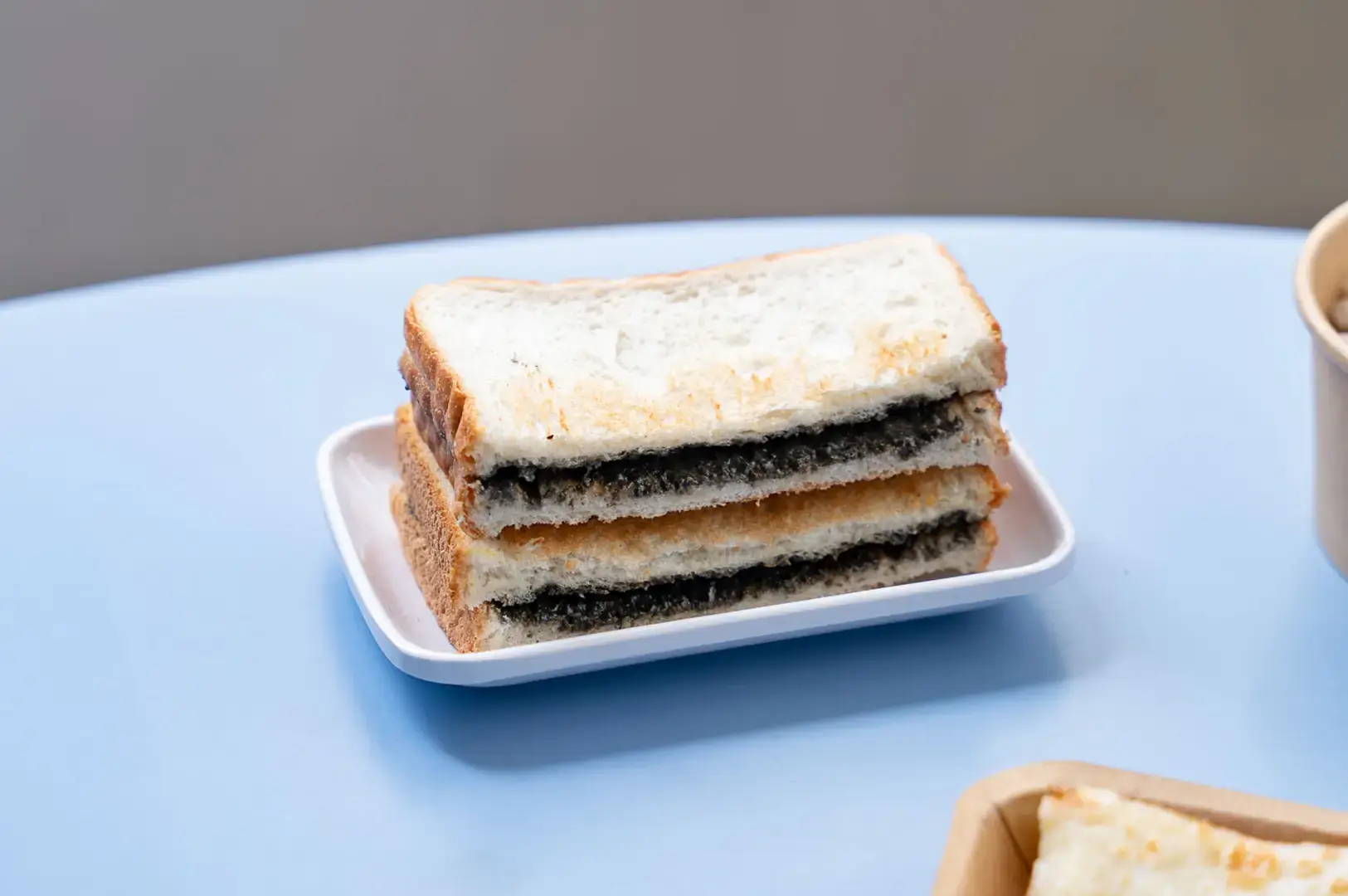
After kaya toast, black sesame toast is the one thing I would add if you still want something sweet. The taste is nuttier and darker than kaya, with a richer paste that suits people who like dessert flavours but do not want a full portion of cake or ice cream.
Nanyang Old Coffee as a Familiar Stop
Nanyang Old Coffee is useful because it gives the morning a fixed point. Its Chinatown listing places it on South Bridge Road near Chinatown MRT, and the brand frames itself around old-style Nanyang coffee culture, with roasted coffee traditions and local breakfast appeal.
If you want to keep exploring Singapore’s slower coffee-and-food culture after breakfast, Eat Drink Asia guide to the best cafés in Singapore is a natural next stop.
Weekends, Opening Hours, and What to Expect
On weekends, expect more visitors, slower movement around popular stalls, and less chance of finding a table immediately. Always check current opening hours before making a special trip.
For a casual post-breakfast plan, keep expectations light:
- Comment less on the queue and more on turnover.
- Go with the sun still low, before the lunch crowd arrives.
- Share one extra toast instead of ordering too much.
Before Noon
The last time I did this properly, I sat at Maxwell with a bowl of porridge, a fan clacking somewhere overhead, an old man beside me reading his paper without a word. The kopi was strong. The morning was slow.
That’s what I’d wish for you.
Breakfast in Chinatown isn’t a single dish, and it isn’t a tourist stop to tick off. It’s a city learning how to eat together before the day gets loud — toast from one tradition, porridge from another, tea poured the way three different communities each figured out how to make it.
Go early. Order simply. Let one bowl surprise you.
The rest, you’ll remember without a photo.

When Curry Learns to Breathe
Dio Asahi | June 24, 2026
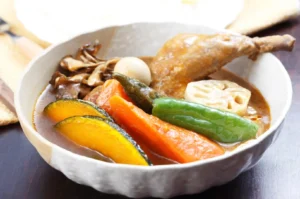
The rain taps lightly against the glass of a quiet Japanese diner, turning the pavement outside a slick, silver grey. Inside, the bowl arrives with steam first, then colour: pumpkin orange, aubergine purple, and a dark curve of chicken set against a broth that looks too light to carry so much heat. The spoon touches…
-
Hong Heng Fried Sotong Prawn Mee: Where Squid Turns Chewy, Broth Turns Glossy, and Time Turns Quiet
Eda Wong | June 23, 2026
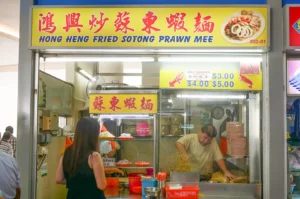
There is something deeply comforting about a hawker centre right before the lunch rush hits. I visited Tiong Bahru Market on a Tuesday around 10:30 am, hoping to beat the infamous queue at Hong Heng Fried Sotong Prawn Mee. Even at that early hour, a line of six people had already formed, waiting quietly under…

Cuppage Plaza Food for People Who Hate Obvious Places: Restaurants That Feel Like a Detour Off Orchard
Dio Asahi | June 20, 2026
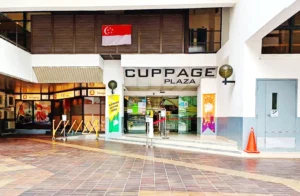
Orchard Road is a brilliant, trend-setting celebration of flavours, but its gleaming mega-malls can sometimes feel a bit predictable. If you are an urban food enthusiast seeking genuine culinary journeys rather than polished franchise menus, the true heart of the district lies slightly hidden. Cuppage Plaza is a fascinating, liminal space that operates almost like…
-
Makgeolli Bowls and the Soft Grain of Korean Rice Wine
Eda Wong | June 19, 2026
The monsoon rain drums a steady, heavy rhythm against the fogged windows of a narrow tavern in Jongno, muffling the chaotic pulse of the city outside. Inside, the air hangs warm, thick with the scent of toasted mung beans and a subtle, yeasty tang. A dented brass kettle tips forward, and a chalk-white, opaque liquid…
-
Kung Pao Chicken Sauce Is the Real Test: Why It Turns Glossy, Sharp, and Addictive
Eat Drink Asia Team | June 18, 2026
Kung pao chicken is often described by its main ingredients: diced chicken, dried chillies, peanuts, spring onions, and Sichuan peppercorns. But anyone who has cooked it at home knows the truth: the dish succeeds or fails because of the sauce. The sauce decides whether kung pao chicken tastes lively and balanced, or flat, sticky, and…
-
Jeju’s Seaweed Soup and the Memory of Birthday Tables
Dio Asahi | June 17, 2026
The sharp winter wind rattles the low stone walls of a Jeju Island kitchen, but inside, the air is thick with steam and the deeply marine scent of boiling kelp. An elderly woman stands by a bubbling steel pot, watching the dark green fronds swell and twist in the rolling water. She adds a splash…
-
Chicken Pao Recipe for People Who Respect Heat: Why Kung Pao Works Only When Timing Is Tight
Eda Wong | June 16, 2026
I remember my first attempt at cooking gong bao ji ding a few years ago. I wanted to recreate that authentic, trend-setting dish I had experienced at a traditional Sichuan restaurant, a meal that felt like a genuine celebration of flavours. I heated my wok until it was smoking, tossed in a handful of dried…
-
A Shu Yan Sichuan Cuisine Review Written in Pepper and Smoke: Chicken Pao That Wakes Up the Table
Dio Asahi | June 13, 2026
I used to think of authentic Sichuan food as a sheer test of endurance. For a long time, I assumed the goal was simply to survive the fiery onslaught of chillies rather than actually taste anything. But my recent culinary journey at Shu Yan Sichuan Cuisine completely rewired how I understand this region’s flavour map….
-
In Luang Prabang, Or Lam Carries the Taste of Sakhan
Eda Wong | June 12, 2026
The damp morning mist still clings to the teakwood houses of Luang Prabang as an elderly cook tends to a glowing charcoal brazier. Sparks jump lightly into the cool air, illuminating the blackened belly of an aluminium pot. Inside, a thick, dark liquid bubbles rhythmically, releasing an incredibly aromatic cloud of charred lemongrass, sweet Thai…
-
The Malayan Council, Reviewed: Local Food in Malaysia, Plated Like a Memory
Eat Drink Asia Team | June 11, 2026
Our Eat Drink Asia team spends a lot of time debating what makes a truly unforgettable meal. The team has previously published articles exploring the redefinition of comfort food. That is exactly what led me to The Malayan Council at 71 Bussorah Street. I visited on a Friday around 7:30 pm, just as the weekend…