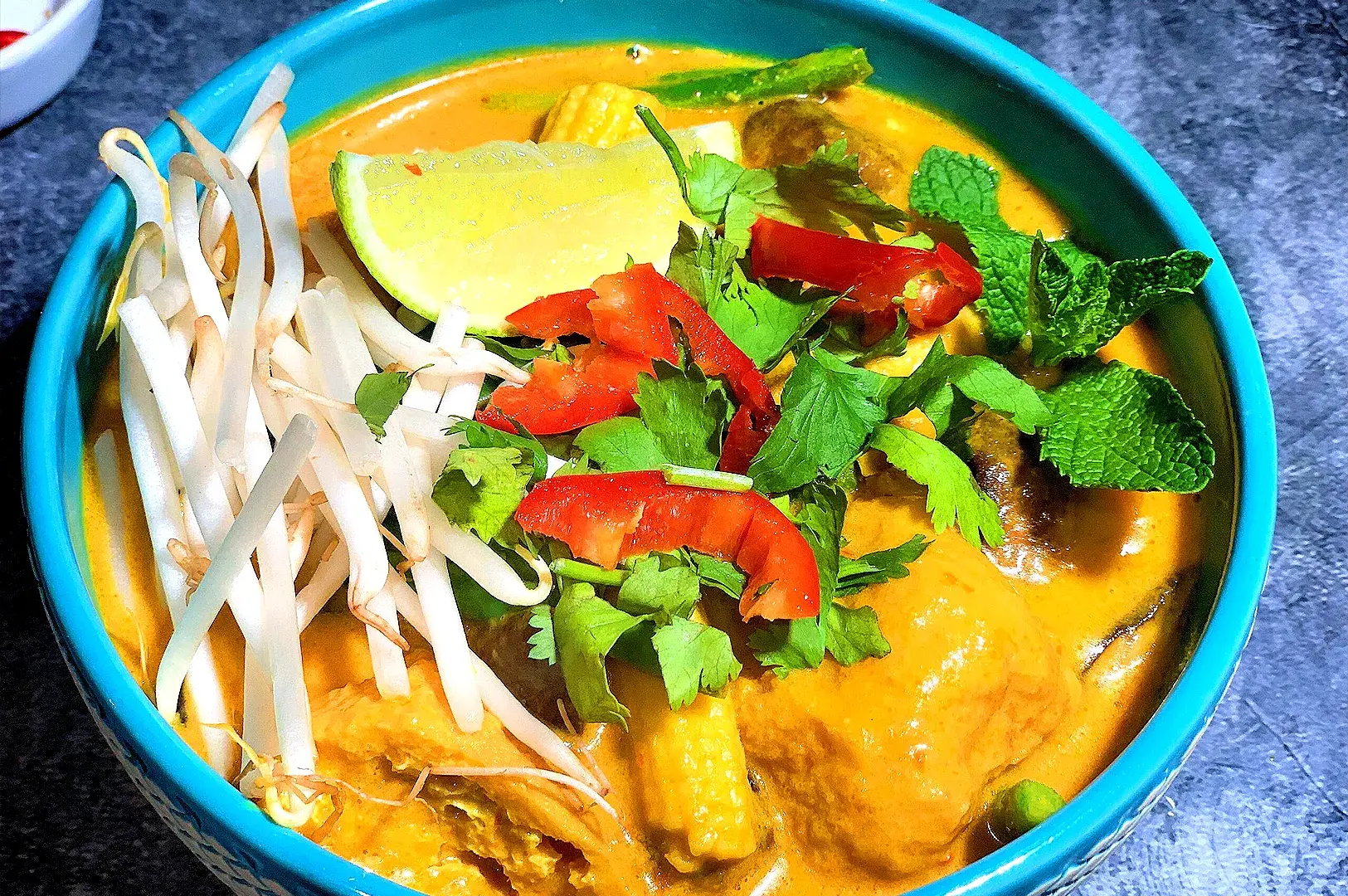
The first vegetarian laksa I made tasted like coconut soup with chilli, not laksa.
I thought I was doing it right, stirring paste into warm coconut milk with tofu puffs. It looked the part but lacked depth. Seafood usually provides that depth, prawn shells, dried shrimp, fish cake sweetness.
I learned that depth can’t be added at the end; it must be built from the start. A vegetarian laksa lives or dies in the broth. Get the rempah right, fry it well, and the missing seafood won’t feel like a gap.
So we start with the pot, not the toppings.
What Kind of Laksa This Is: A Coconut-Rich Curry Paste Journey
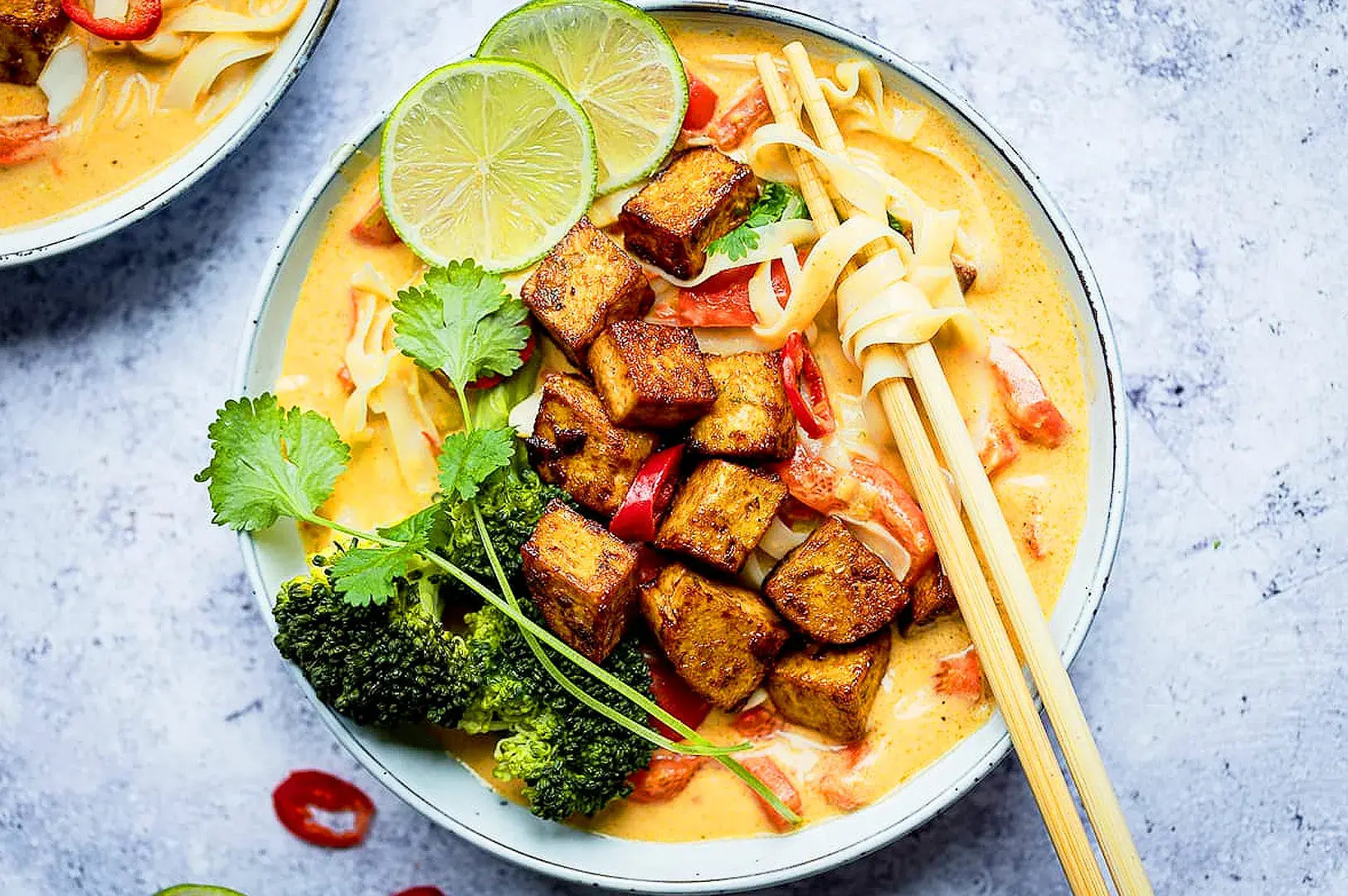
This is a vegetarian curry laksa, a creamy, coconut-rich laksa lemak built to cradle noodles and fresh vegetables. Unlike the tangy, sour asam laksa, which leans heavily on fish-based broths, this version embraces a plant based identity without sacrificing the soul of the dish.
I want to be honest: this won’t replicate the exact briny, seafood-infused Katong laksa you might be craving. There are no cockles, no fish cakes, no fish sauce to deepen the broth. Instead, it keeps the comforting logic of curry laksa alive, a fragrant laksa paste fried until aromatic, a luscious coconut broth, springy rice noodles, spongy tofu puffs, and a bright lift of herbs and lime juice. That’s the delicious soup we’re aiming for here.
You may also check an Asian vegetarian meal reviewed at Herbivore Japanese Vegetarian Restaurant, which explores vegetarian twists on Japanese cuisine, blending tradition with innovative plant-based ingredients.
The Ingredients (Serves 3–4)
For the broth:
- 4–5 tablespoons store bought laksa paste or homemade (more on this below)
- 4 tablespoons neutral oil for a gentle stir fry
- 1 litre vegetable or mushroom stock (for umami depth)
- 400ml coconut milk (add more coconut milk if you like it creamier)
- 1 tablespoon soy sauce (or vegan alternative)
- 1 teaspoon coconut sugar or brown sugar, plus more to taste
- Salt to taste
- Aromatic additions: chopped onions, minced garlic, fresh ginger, lemongrass, and kaffir lime leaves
For the bowl:
- 1 packet Unicurd tofu puffs, halved to soak up the broth
- A handful of mushrooms (shiitake or oyster)
- Fresh greens like broccoli or bok choy
- 2 large handfuls bean sprouts
- Thick bee hoon or rice vermicelli (cooked noodles prepared separately)
To finish:
- Torn laksa leaf (or substitute with Vietnamese coriander or mint)
- Crispy fried shallots
- Halved calamansi or lime for a squeeze of fresh acidity
- Sambal or dipping sauce on the side for those who crave heat
Eatdrinkers Tip: Many curry pastes labeled vegetarian sneak in dried shrimp or fish extract. Always check the label carefully or visit specialty vegetarian stores for assured plant based options.
The Method, Step by Step: Building a Delicious Laksa Soup
Step 1 — Fry the Laksa Paste Like You Mean It
Heat oil in a pot over medium heat. Add the laksa paste and stir fry patiently.
Watch for these signs:
- The paste darkens to a deep orange
- The sharp raw aroma mellows into a rich, rounded fragrance
- Oil begins to bead around the edges, signaling the spices have bloomed
This step takes 5 to 10 minutes depending on moisture content. It’s the foundation of your broth’s depth, so don’t rush.
Eatdrinkers Tip: Use enough oil to prevent scorching. The fat is essential to coax out the complex flavors of other spices in the paste.
Step 2 — Add Stock and Aromatics
Pour in your vegetable or mushroom stock along with chopped onions, minced garlic, sliced ginger, bruised lemongrass, and kaffir lime leaves.
Simmer gently for 5 to 10 minutes, letting the broth soak up the fragrant layers. This step builds the savory backbone that replaces seafood depth.
Step 3 — Gently Incorporate Coconut Milk
Lower the heat and stir in the coconut milk slowly. Maintain a soft simmer, never a boil, to prevent the broth from splitting into oily curds.
Taste and adjust seasoning with soy sauce, coconut sugar, and salt. A squeeze of lime juice at the end brightens the rich, creamy base.
Step 4 — Simmer Tofu Puffs and Vegetables
Halve the tofu puffs so they absorb the broth fully. Add them along with mushrooms and greens like broccoli.
Simmer 5 to 8 minutes, pressing gently with a ladle to help the broth seep in, while keeping the vegetables crisp-tender.
Step 5 — Prepare the Noodles Separately
Cook your rice noodles or ramen in boiling water according to package instructions. Drain and toss with a little oil to prevent sticking.
Never cook the noodles directly in the laksa broth, they will soak up all the liquid and leave you with a dry, thin soup.
Step 6 — Assemble and Garnish
Layer the bowl with noodles first, then bean sprouts, tofu puffs, and greens.
Ladle the hot, fragrant laksa soup over the top.
Sprinkle torn laksa leaves and fried shallots. Serve immediately with lime wedges and your favorite dipping sauce or sambal.
A 45-Minute Workflow for Weeknight Laksa
| Time | Task |
|---|---|
| 0:00 | Prep tofu puffs, vegetables, and noodles |
| 0:10 | Measure or blend your smooth paste |
| 0:15 | Fry the laksa paste until aromatic and darkened |
| 0:25 | Add stock and aromatics, simmer |
| 0:30 | Stir in coconut milk gently; add tofu and veggies |
| 0:35 | Cook noodles separately |
| 0:42 | Taste, adjust seasoning, assemble bowls |
| 0:45 | Garnish and serve |
Using store bought laksa paste and pre-cut veggies, you can have this delicious soup ready in under 30 minutes.
For those interested in exquisite dining experiences, be sure to check out our article on the best omakase Singapore: https://eatdrinkasia.com/best-omakase-singapore/
Avoid These Laksa Blunders
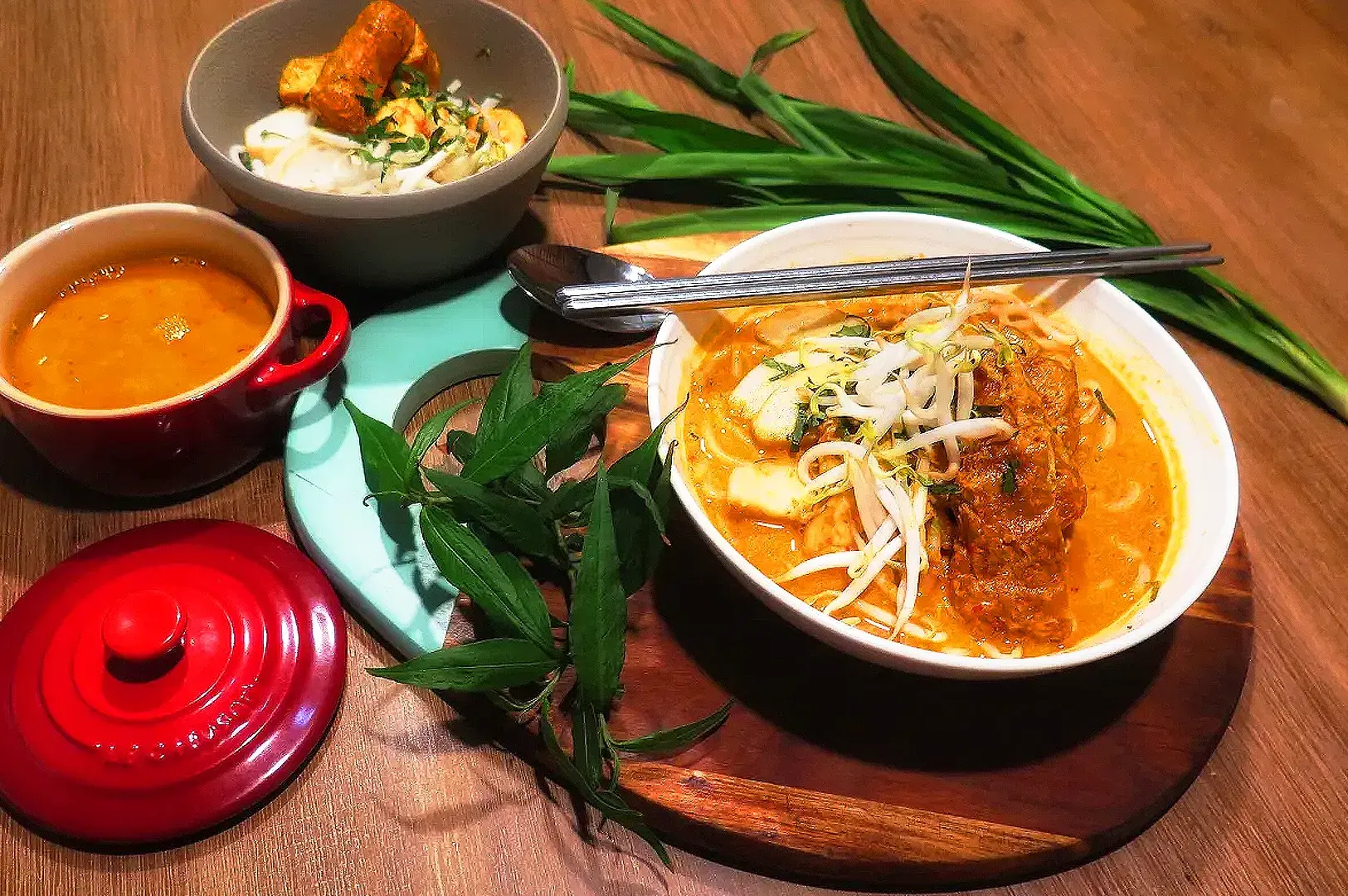
These are the ones I've made myself, or watched friends make.
Flat broth that tastes like vegetable soup. The paste wasn't fried long enough. For the pot in front of you, stir in a little soy sauce, mushroom stock, or a teaspoon of white miso. Next time, fry the rempah longer.
Split coconut milk. Heat was too high. Lower it, stir, and finish with lime. The texture suffers but the flavour survives.
Soggy noodles. They sat in the broth. Blanch separately and only assemble what you'll eat right away. Store leftovers in separate containers.
Bland tofu puffs. Added too late, or left whole. Cut them, simmer them at least 5 minutes, press them into the soup.
Too spicy for the family. Add more coconut milk and stock, serve extra noodles to dilute. Brighten with lime rather than fighting heat with more chilli.
Eatdrinkers tip: If the broth ever tastes "vegetarian in a bad way," the fix is almost always umami, not more chilli. Soy sauce, miso, shiitake water, fried shallots. Build the savoury, not the spice.
FAQ: Honest Answers to Common Laksa Questions
- Can it really taste rich without seafood?
Yes, but only if you build the broth intentionally with fried rempah, coconut milk, mushrooms, and tofu puffs soaking up the flavors. - Do I need homemade paste?
No. Store-bought laksa paste works well for quick meals. Homemade lets you tailor the spice blend and control ingredients, but it’s a weekend project, not a weeknight must. - What about low carb options?
Swap out rice noodles for spiralized zucchini or shirataki noodles to keep it low carb while still enjoying the creamy broth. - Can I freeze leftovers?
The broth freezes beautifully. Keep cooked noodles and fresh toppings separate and add them fresh when reheating.
This recipe is a testament to how plant based recipes can capture the soul of traditional dishes without compromise. The balance of fragrant curry paste, creamy coconut, and fresh herbs creates a hot soup that comforts and satisfies every craving.
One Last Thing
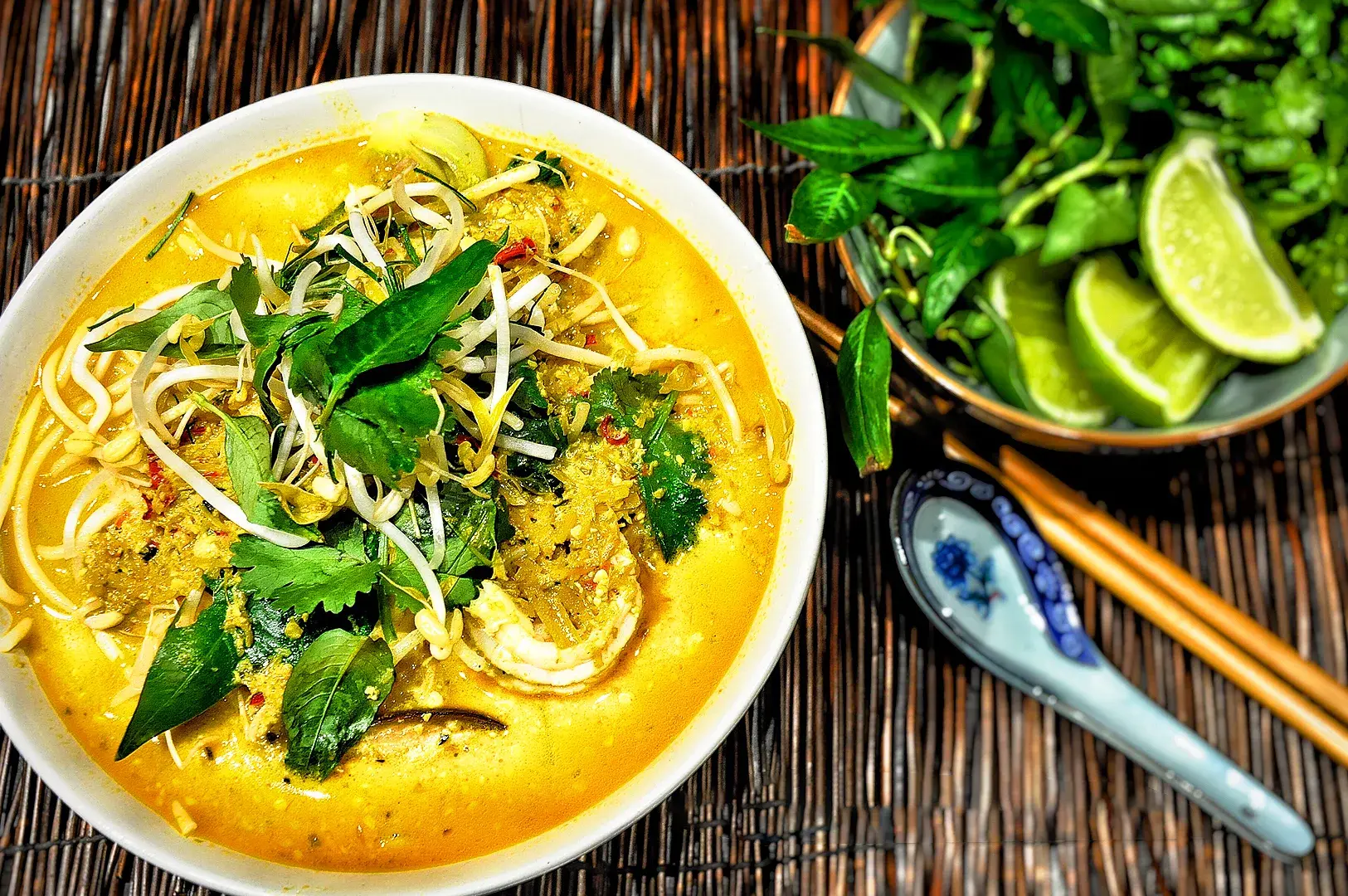
The version that finally tasted right wasn't the one with the fanciest ingredients. It was the one where I stood over the pot and fried the paste until it smelled cooked, then let the coconut milk in gently, off the boil.
That's the whole secret, really. A vegetarian laksa doesn't win by pretending the seafood was never there. It wins by building depth somewhere else, patiently, from the bottom of the pot up.
So don't be discouraged if your first bowl tastes a little hollow. Mine did. Fry the rempah longer next time. Taste as you go. The bowl that stays with you is closer than you think.

Tong Ah Eating House Review: A Chinatown Breakfast That Still Begins with Kaya Toast
Eda Wong | September 19, 2026
I almost walked past it. I’d been looking for the old triangular building, the red-and-white one you see in every photo of Keong Saik, the one that made Tong Ah feel like a landmark before you’d even ordered anything. But that’s not where it lives anymore. It’s a few doors down now, at 35 Keong…
-
Breakfast at Chinatown Singapore: How Migration Built the City’s Morning Table
Eat Drink Asia Team | September 17, 2026
The first time I ate breakfast in Chinatown, I got it wrong. I arrived at eleven, hungry and hopeful, and found the kopi stalls already turning toward lunch. The porridge uncle was packing up. The toast man had switched to slicing char siew. I ate a rushed plate of noodles standing near a pillar, sweating,…
-
The Bitter Leaf Folded Into a Burmese Home Kitchen
Eda Wong | September 16, 2026
The oil is already hot when she reaches for the leaves. It’s late morning in a kitchen off a quiet lane, and a woman I’ve been watching stands over a blackened wok, tearing bitter gourd leaves by hand into a small heap. The garlic hits the oil first, sharp and loud. Then the leaves go…
-
Best Sushi Singapore: From Premium Japanese Restaurants to Exclusive Deals from Affordable Sushi Trains
Dio Asahi | September 15, 2026
I’ve been eating sushi in this city for years now, from S$1.50 plates rolling past on a belt to omakase counters where the bill made me sit up straight. Somewhere along the way I stopped chasing “the best” and started noticing something else — that good sushi answers a mood, not a ranking. Some nights…
-
Al Mubin Restaurant and the Nasi Goreng Sambal Ayam That Has to Carry the Whole Plate
Eda Wong | September 12, 2026
It was close to eleven at night when I finally sat down. The kind of hour when you’re not really hungry so much as unsettled, when you want something warm in front of you more than you want a proper meal. Al Mubin’s food court at Block 407, Ang Mo Kio Avenue 10, was still…
-
Yassin Kampung Admiralty Review: When Sambal Fried Rice Becomes the Whole Point
Eat Drink Asia Team | September 10, 2026
I ordered the sambal fried rice first, before I’d even properly read the menu. That’s usually a mistake at a place like this. Yassin Kampung @ Admiralty is the kind of restaurant that keeps trying to pull your attention elsewhere — toward stingray, toward crab, toward hotplates that arrive still hissing. But I’d come with…
-
The Bamboo Basket Holding Chiang Mai’s Sticky Rice
Dio Asahi | September 9, 2026
By Dio Asahi for Eat Drink Asia. The lid comes off, and the steam rises first. It’s a warm afternoon in Chiang Mai, and on the table sits a small woven bamboo basket, still holding the heat of the pot it came from. Someone’s grandmother lifts the top and sets it aside without looking. Inside,…
-
Sambal Fried Rice Recipe for People Who Know the Chilli Paste Does the Heavy Lifting
Dio Asahi | September 8, 2026
I used to add the rice too early. The oil would be hot, the sambal barely a minute in, and I’d tip in the cold rice because I was hungry and impatient. Every time, the same result: rice stained red but tasting of nothing much. Sharp. Raw. Flat where it should have been deep. It…
-
Hup Lok at Havelock Road: A Teochew Fish Soup Carrying Memory Forward
Eda Wong | September 8, 2026
The bowl arrives before anything else does. Steam lifts off it in slow ribbons, carrying the smell of ginger and something warmer underneath: the round, boozy note of hua tiao wine settling into fish. I lean in before I even pick up my spoon. The broth is pale gold and cloudy, thick enough that it…
-
Fresh Sashimi Singapore: Places for Clean Cuts, Quiet Counters, and Fish That Still Feels Alive
Eda Wong | September 5, 2026
I didn’t grow up eating raw fish. For years, sashimi felt like something you learned to appreciate rather than something you loved. Cold, foreign, a little intimidating. Then one afternoon, at a quiet counter, a chef placed a single slice of chutoro in front of me and said nothing. I ate it. And I understood….