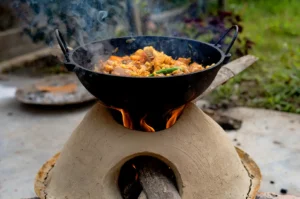
The December wind cuts sharply through the narrow alleys of Temple Street, but the ambient heat from the glowing charcoal stoves pushes the chill away. A cook stands before a long row of blackened clay pots, working with a rhythmic, almost meditative focus. Plumes of white steam rise into the night air, carrying the heavy, sweet aroma of cured pork fat, dark soy sauce, and wood smoke. As the cook periodically lifts the lids, a fierce, crackling hiss erupts from the porous clay. They are not just cooking rice; they are carefully managing a delicate, high-stakes balance of heat and time, listening closely to the sizzle to know exactly when the moisture has vanished.
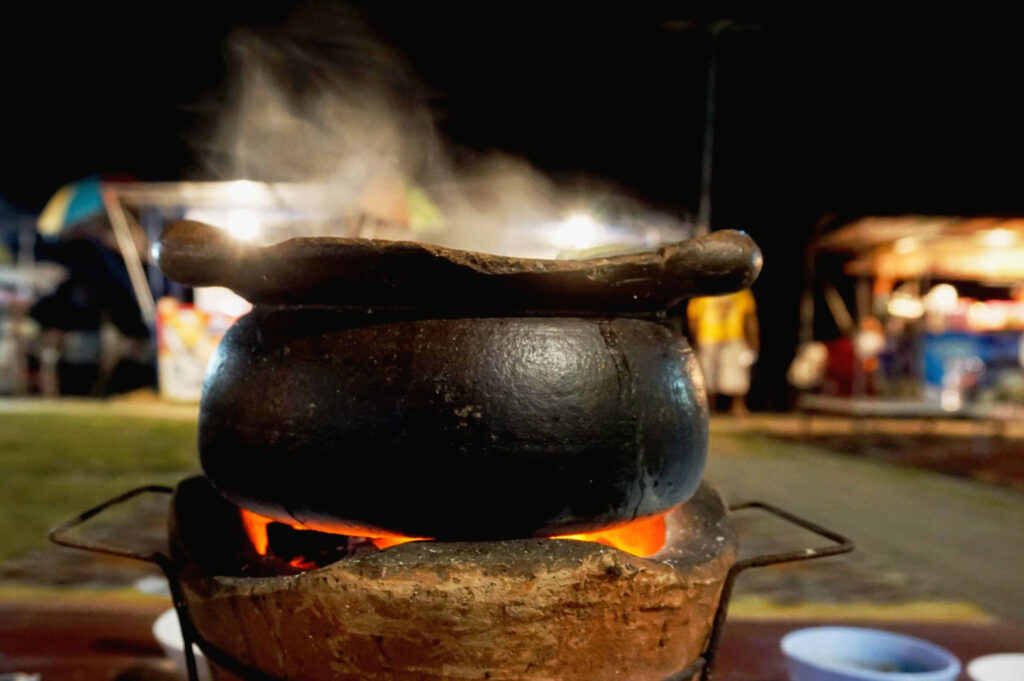
This is bo zai fan, Hong Kong’s traditional winter clay pot rice. While the surface is adorned with rich ingredients—waxed duck, Chinese sausage, or marinated spare ribs—the true soul of the dish lies buried at the bottom. The ultimate prize is fan zeu, the golden, scorched rice crust that forms where the grains meet the intensely hot clay. Creating this crust is an exacting craft. As the rice absorbs the savoury drippings from the meat above, the cook must continually rotate the heavy, unglazed pot over the open flame. The goal is to aggressively toast the rice against the curved walls without letting it cross the line into bitter ash. It yields a thin, glass-like layer of caramelised starch that snaps sharply between your teeth.
In a city defined by its frantic pace, the arrival of clay pot rice season signals a collective, deliberate pause. It is a quintessential winter ritual, a shared experience where diners huddle around wobbly folding tables in thick coats, waiting thirty minutes or more for a single bowl. Eating it requires its own careful etiquette. You must first lift away the tender, sauce-soaked rice and meats, gently scraping the sides of the bowl to unearth the hidden crust. Sharing a pot with friends means negotiating who gets the largest shard of that intensely flavourful, crispy foundation. It is a celebration of flavours that turns a simple grain into a profound, warming comfort against the damp urban winter.
What makes the scorched crust so compelling today is its stubborn defiance of modern convenience. In a culinary landscape increasingly dominated by automated rice cookers and rapid food delivery, genuine fan zeu cannot be shortcut. It demands an open flame, a seasoned pot, and a cook willing to stand in the smoke, listening to the rice hiss. Electric cookers yield soft, predictable uniformity, but the clay pot offers a beautiful, calculated imperfection. It is a bold reminder that some of the most satisfying textures are born from the very edges of burning, requiring human intuition rather than a simple timer.
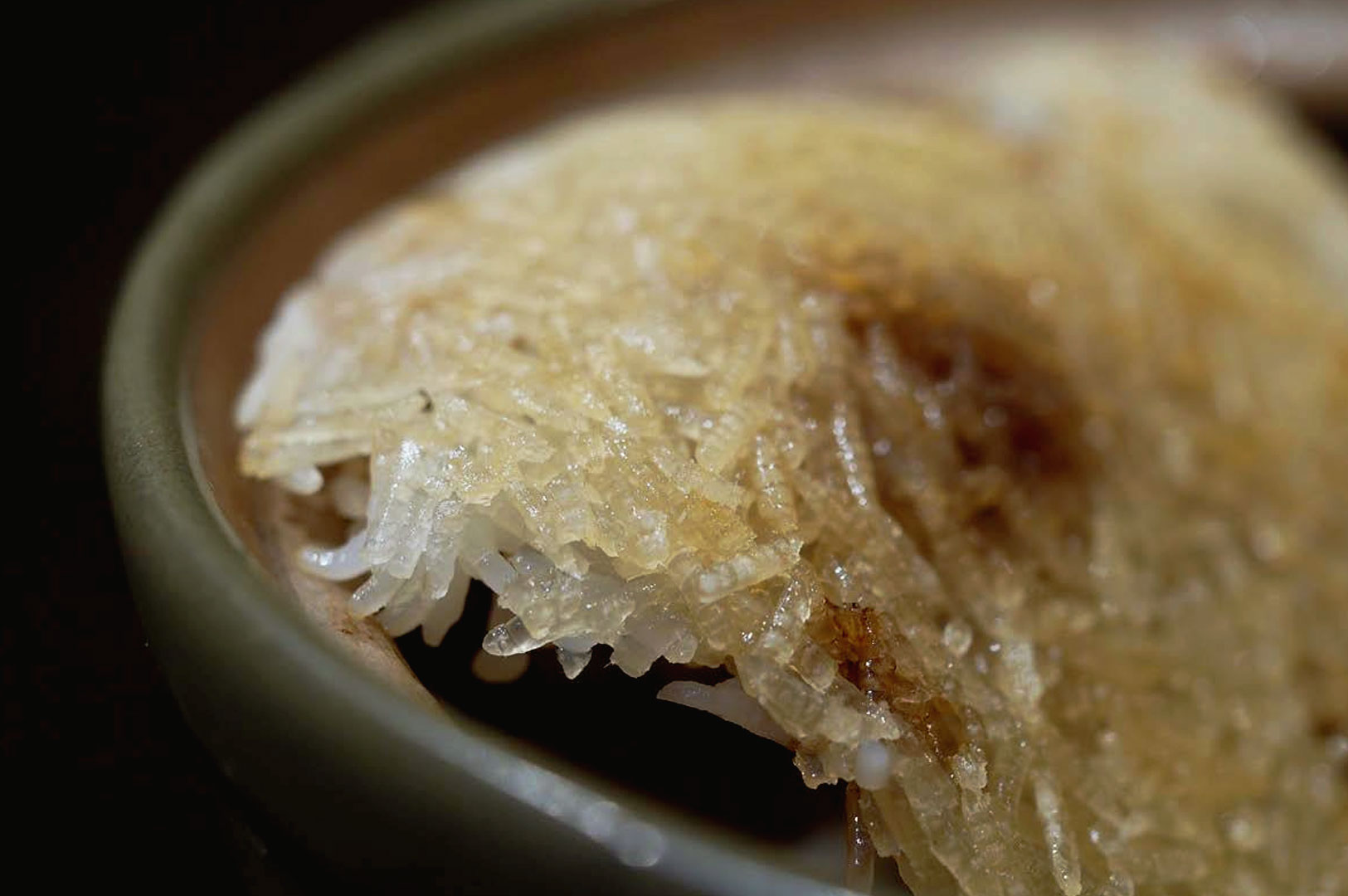
Prying the final piece of golden crust from the bottom of the cooling pot, the effort feels entirely justified. It tastes of roasted earth, rendered fat, and the specific, smoky chill of a Hong Kong winter. It is a quiet testament to the enduring value of patience.
For anyone chasing that same comfort at home, even the most searched-for Hainanese chicken rice cooking instructions can’t replace the practiced ear of a cook listening for the rice to hiss.

Best Fish Soup in Singapore: Bowls Where the Broth Is the Whole Point
Eat Drink Asia Team | October 15, 2026
I don’t remember when fish soup became my quiet meal. It just did. On days when I couldn’t decide what I wanted, when the weather turned grey, when I needed something warm that asked nothing of me, I’d end up hunched over a bowl, breathing in the steam before the first spoonful. I’ve eaten a…
-
The Clay Stove Heat Beneath a Lao Grilled River Fish
Eda Wong | October 14, 2026
By Eda Wong for Eat Drink Asia It’s late afternoon, and the river is the colour of weak tea. A woman crouches beside a small clay stove at the edge of the bank, feeding it slivers of charcoal. Smoke lifts, thin and grey, and drifts toward the water. On a bamboo skewer, a whole fish…
-
The National Dish of Indonesia Is Not One Plate: Why a Country of Islands Needs Many Icons
Dio Asahi | October 13, 2026
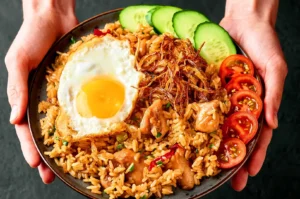
The first time someone asked me for the national dish of Indonesia, I answered nasi goreng without thinking. It seemed obvious: fried rice darkened with kecap manis, often topped with a fried egg, familiar from warungs and late-night street food stalls. That answer is not wrong. It is simply too small. Indonesian food is regional,…

Sapporo in a Bowl: Soup Curry by Ki-setsu Comes to Singapore
Eda Wong | October 12, 2026
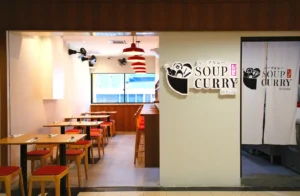
Ask most Singaporeans to picture Japanese curry and a familiar image probably comes to mind: a plate of rice beneath thick brown gravy, perhaps with a breaded cutlet sliced neatly across the top. It is rich, sweet-edged, comforting and, by now, almost as recognisable as ramen or donburi. Head to the fourth floor of Fortune…
-
Meokja by Jungga Review: The Halal Korean Snack Table That Knows What It’s Doing
Eda Wong | October 10, 2026
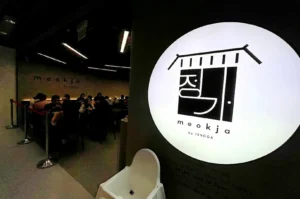
I had not planned to eat at Meokja by Jungga. I was walking down North Bridge Road on a Tuesday, somewhere around the awkward hour between lunch and dinner, when I caught the smell of something frying and the low clatter of a kitchen working hard. I looked up, saw the sign, and my feet…
-
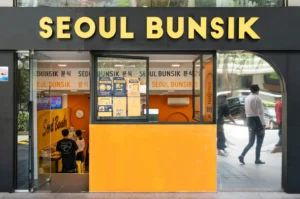
Seoul Bunsik Funan Review: The Comfort of Korean Street Food Without the Street
Eat Drink Asia Team | October 8, 2026
I have eaten ramyeon on a plastic stool in Seoul, close to midnight, with cold air biting at my ankles and the broth doing all the work of keeping me warm. Seoul Bunsik Funan is not that. This was a bright Tuesday afternoon, escalators humming behind me, the smell of mall air-con instead of street…
-
The Last Turn of Tamagoyaki in a Tsukiji Pan
Dio Asahi | October 7, 2026
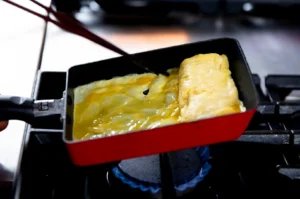
By Dio Asahi for Eat Drink Asia. It’s mid-morning, and the cook doesn’t look up. He stands over a rectangular pan, copper worn to a dull gold at the edges, and pours a thin skin of beaten egg across its surface. It hisses. Steam rises, warm and faintly sweet, and he tilts the pan just…
-
Seafood Restaurants in Singapore That Turn Crab Night Into a Full Table Ritual
Dio Asahi | October 6, 2026
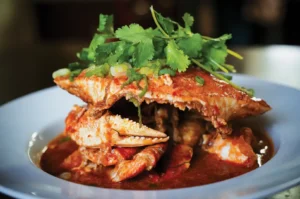
It always starts the same way for me. Someone lifts the lid off a plate of chilli crab, and the whole table leans in. Fingers reach before spoons do. Somebody tears the first piece of fried mantou, drags it through that sticky, sweet-savoury sauce, and the rest of us stop talking for a second. That…
-
Korean Street Food Is Built for Movement, Heat, and One-Handed Eating
Eda Wong | October 3, 2026
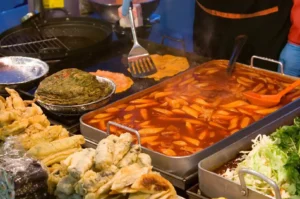
The first time I ate tteokbokki in Seoul, I burned my tongue standing up. It was late, the air was sharp with cold, and I had stopped at a small street food stall near a subway exit because the steam pulled me in. The woman handed me a paper cup of rice cakes in red…
-
Mrs Pho and the Bowl That Makes Somerset Feel Like a Vietnamese Family Table
Eat Drink Asia Team | October 1, 2026
I wasn’t hungry when I walked into 313@somerset. I’d come for something else entirely; an errand, a shop I needed, the usual Orchard rush of people moving faster than the escalators. But somewhere on the first floor, past the noise, I caught the smell of star anise and beef bone, and my feet slowed down…