The narrow alleyway in Yau Ma Tei smells of charcoal and dark soy sauce, a thick coastal humidity pressing against the glow of the stoves. An elderly cook stands before a row of blackened sand-clay pots, a long metal tong in his right hand. He does not watch the flames; he listens to them. There is a subtle, shifting rhythm in the air. The wet, heavy bubbling of simmering rice slowly gives way to a sharp, staccato crackle. It is the sound of moisture surrendering to extreme heat. He swiftly tilts the pot at an angle, letting the fire lick the curved edges. This brief, fiery moment sets the stage for a deeply authentic culinary journey.
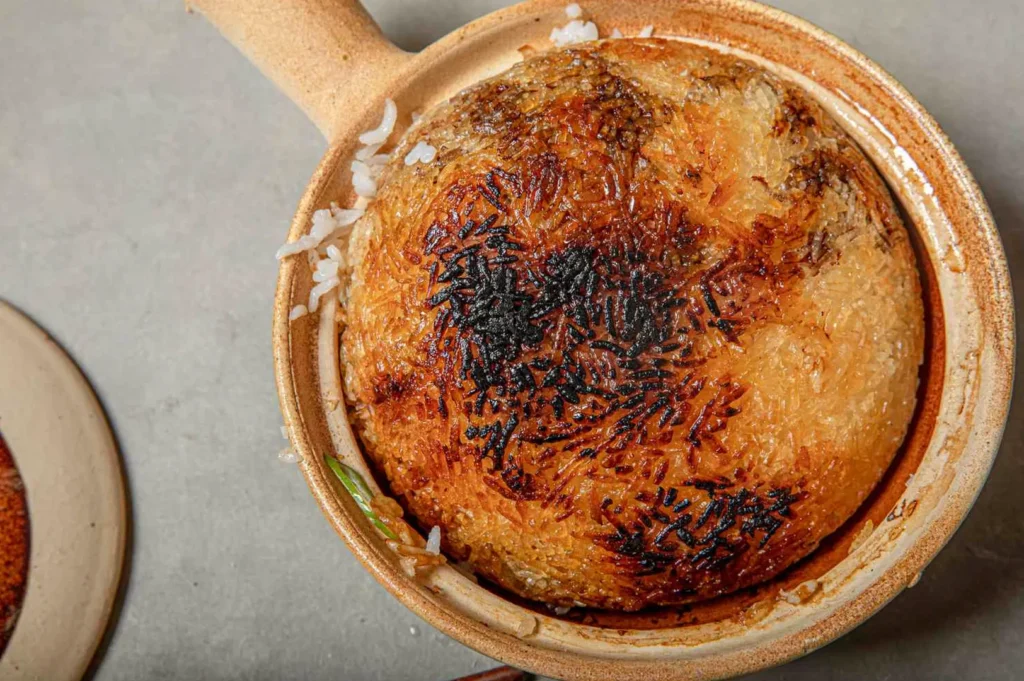
This audible shift announces the birth of fan jiu (pronounced faahn-jeew), the golden, scorched rice crust that clings to the bottom of a traditional claypot. It is not burnt rice, but rather a deliberate caramelisation of starches. Creating this layer requires an intense, technique-led understanding of temperature and timing. The craft demands that the cook rotates the unglazed pot over the open flame at the exact moment the water evaporates, slicking the inner sides with a thin thread of pork lard or peanut oil. This fat seeps down to the base, frying the bottom grains until they harden into a crisp, cohesive shell. When scraped free with a metal spoon, it shatters into fragrant, brittle shards that taste deeply of smoke and toasted earth.
Across southern Chinese neighbourhoods, waiting for these scorched edges is a fundamental shared experience during the cooler, damp monsoon months. Diners gather around folding tables, leaning over steaming pots of cured sausages, marinated chicken, and salted fish. But the meat is often just the prelude. The true celebration of flavours happens at the bottom of the bowl. Extracting the fan jiu is a communal ritual, an act of patience where friends take turns chiselling away the golden crust, sharing the fragmented pieces. It signals a shift in the evening’s pace. You cannot hurry a claypot, and you cannot rush the scraping. The meal forces you to slow down, transforming a simple dinner into a quiet, interactive event. In many parts of Asia, meals like this reflect communal dining traditions in Asia, built around the shared centre of the table where flavour, conversation, and care are passed hand to hand.
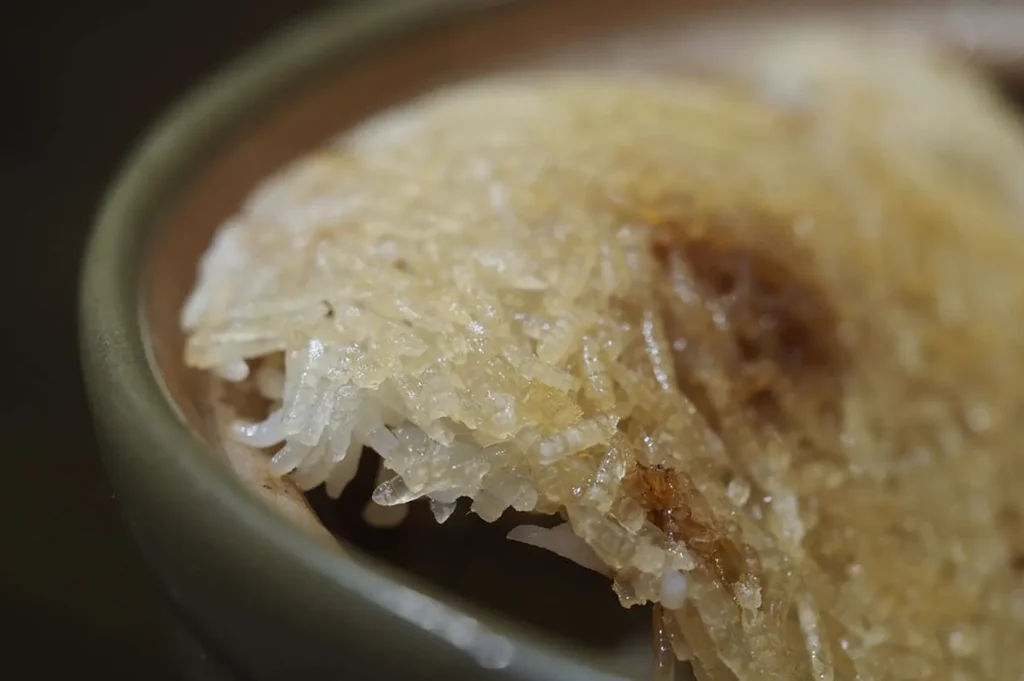
What feels so vital about this charred layer today is its stubborn refusal to adapt to modern culinary convenience. In a landscape dominated by non-stick rice cookers and automated timers that actively prevent rice from sticking, the intentional scorching of grains feels like a quiet rebellion. Electric appliances yield perfectly uniform, soft bowls of rice, but they cannot replicate the rough, uneven texture of an open charcoal fire. The crust demands physical effort, constant vigilance, and a willingness to embrace the messy, unpredictable nature of traditional cooking. It is a trend-setting reminder that beauty is sometimes found in the scorched, imperfect edges.
Setting the spoon down, the residual warmth of the claypot lingers against the cool evening air. The brittle crunch of the last piece of rice fades into a rich, roasted memory. It is a profound, flavourful testament to the simple power of listening, waiting, and letting the fire do its work.

Not Just Seafood: How Araya Shouten Keeps Japanese Fishing Culture Alive in Singapore
Eat Drink Asia Team | August 26, 2026
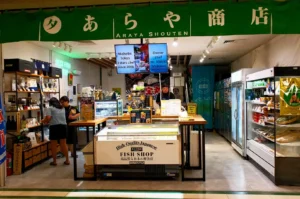
Japanese cuisine has long been admired for its attention to seasonality, precision, and respect for ingredients. However, behind every piece of sashimi or carefully prepared seafood dish lies a story that begins far away from the dining table, often with fishermen, coastal communities, and generations of knowledge passed down through time. At Araya Shouten, seafood…
-
The Ginger Shoyu Ramen at Ramen Soshiji, Where Orchard Goes Quiet
Dio Asahi | August 26, 2026
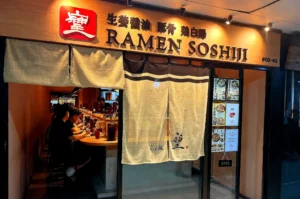
By Dio Asahi for Eat Drink Asia. The lift opens on the third floor of Orchard Plaza, and for a second I don’t know which way to turn. The corridor is dim and still, the kind of quiet that feels almost accidental in this part of town. A few doors down, an unmarked entrance. Inside,…
-
Indo Rasa Singapore and the Nasi Goreng That Measures a Kitchen’s Confidence
Eat Drink Asia Team | August 25, 2026
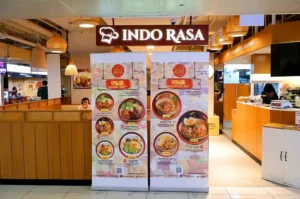
There’s a dish I order when I want to know a kitchen quickly. Not the specialty. Not the thing the menu is proud of. I order the fried rice. Because nasi goreng has nowhere to hide. It’s rice, chilli, chicken, egg, a few crackers, some cucumber. Everyone thinks they can make it. Most people can….
-
Bebek Goreng Pak Ndut and the Fried Duck That Makes Nasi Goreng Feel Too Polite
Eda Wong | August 22, 2026
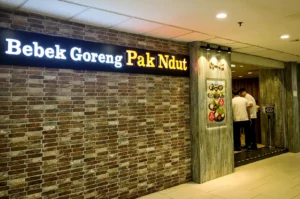
The duck arrived and made a sound before I’d even touched it. Not the plate, the skin. When my fork pressed against it, there was a small, dry crackle, the kind you feel in your fingers before you hear it. That’s when I understood I wasn’t eating a soft meal. This was something with edges….
-
The Coconut Spoon That Shapes Nyonya Kueh Salat
Eda Wong | August 21, 2026
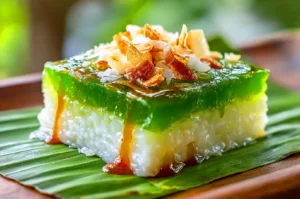
By Eda Wong for Eat Drink Asia. Steam curls up from a tray in the back of the kitchen, and the whole room smells green. Pandan, crushed and knotted, pushed through wet cloth until the leaves give up their colour. An auntie leans over the tray with a spoon carved from coconut shell, dark and…
-
Chicken Nasi Goreng Recipe: What Leftover Rice Becomes After the Wok Gets Serious
Dio Asahi | August 20, 2026
There’s a container of rice at the back of my fridge most weeks. Cold, a little hard, forgotten from a dinner two nights ago. Some people see that and think of waste. I see the start of something better. Because leftover rice doesn’t want to be reheated. It wants to be fried. And when it…
-
The First Ladle of Miso Soup in a Tokyo Breakfast Shop
Dio Asahi | August 19, 2026
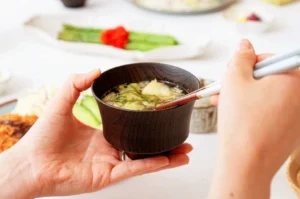
By Dio Asahi for Eat Drink Asia. The shop is barely wider than a hallway. Seven stools, a counter worn smooth, and behind it a woman ladling soup into small ceramic bowls before anyone has ordered it. Steam lifts off the surface and fogs the window against the cold morning. The bowl reaches me warm…
-
Chirashi Don Best Picks When Bowls Between the Sushi Counter and Lunch Are the Current Mood
Eat Drink Asia Team | August 18, 2026
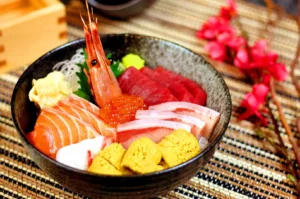
There’s a specific kind of hunger that a chirashi don answers. It’s not the hunger for a full sushi omakase, with its slow ceremony and its quiet counter watching. And it’s not the hunger for something thrown together and forgotten by three o’clock. It sits somewhere in between — fish and rice in one bowl,…
-
Kopi Through the Cloth: Why the Strain Matters
Eda Wong | August 17, 2026
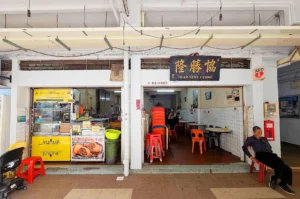
By Eda Wong for Eat Drink Asia. It is not yet seven, and the uncle at Heap Seng Leong has the pot going. He works the sock strainer over the tin cup with both hands, dipping and lifting, dipping and lifting, coaxing the coffee through the worn cloth. Steam rises between his fingers. The smell…
-
SBCD Korean Tofu House and the Comfort Logic of Bubbling Soondubu
Eda Wong | August 15, 2026
It was raining the afternoon I went. Not the polite kind, the sort that drums against the glass of Guoco Tower and makes you glad you’re already underground. I hadn’t planned on soondubu. I’d planned on something quick, something I could eat between the errands piling up in my head. But the rain does something…