By Eda Wong for Eat Drink Asia.
Steam curls up from a tray in the back of the kitchen, and the whole room smells green. Pandan, crushed and knotted, pushed through wet cloth until the leaves give up their colour. An auntie leans over the tray with a spoon carved from coconut shell, dark and worn smooth at the edges from years of the same motion. She pours the custard slowly, tilting the spoon so the pale jade batter runs across the rice without breaking it. She doesn’t rush. The rice below has already set, packed tight and glossy. Her hand moves like she’s done this ten thousand times, because she has.
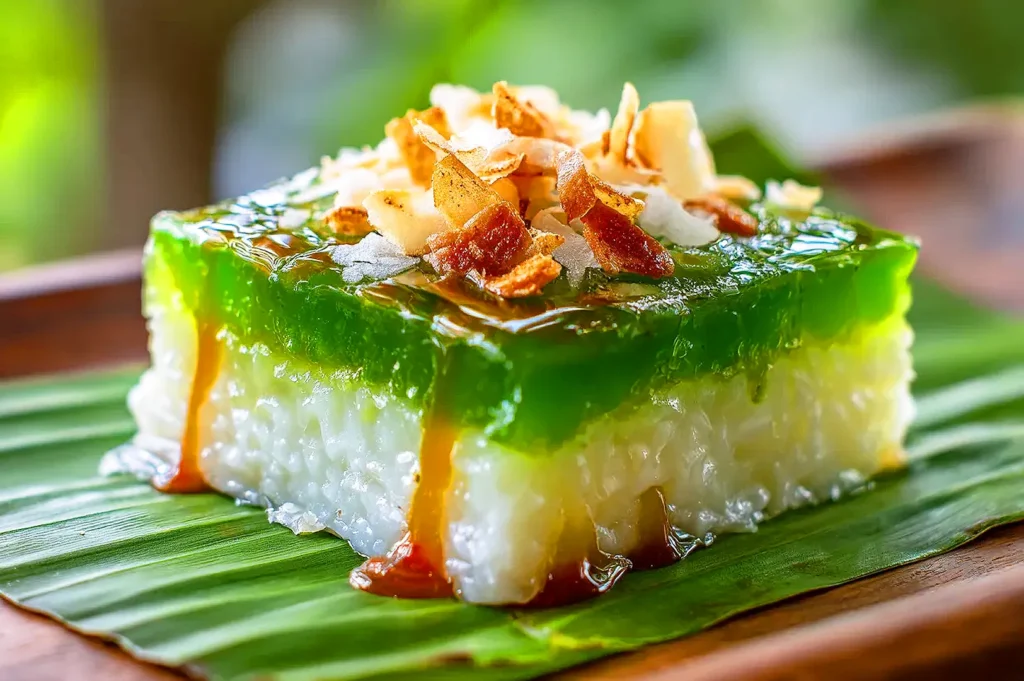
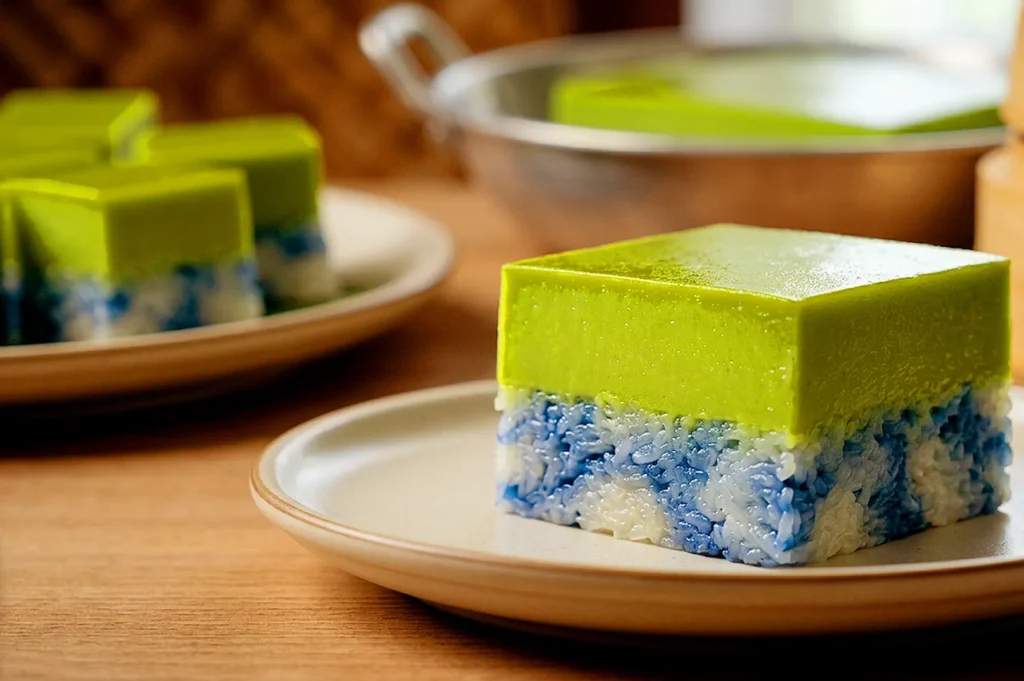
What she’s making is kueh salat, said roughly “kweh sah-lat,” a two-layered Peranakan steamed cake. The base is glutinous rice, cooked with coconut milk until each grain sits close against the next, firm enough to hold. On top goes the custard — pandan and coconut and egg, steamed until it just sets, soft but not loose. The colours matter: white rice below, that deep pandan green above.
The coconut spoon is the quiet hero here. Metal scrapes and cuts; a coconut-shell spoon is gentle. It lets the custard slide over the rice in thin, even layers, so the two halves meet cleanly instead of bleeding into each other. Pour too fast, or too hot, and the layers muddy. The custard has to go on warm and unhurried, one patient ladle at a time.
You learn this in a home kitchen, not a class.
Kueh like this was made for occasions — weddings, Lunar New Year, prayers, the long afternoons before a gathering. In Peranakan households, it was the women who held this knowledge. Mothers and grandmothers and aunties, hands stained pandan-green, passing down not recipes on paper but the feel of a thing. How firm the rice should press. How the custard should wobble when it’s ready. Knowledge kept in muscle and memory, taught by standing beside someone at the stove until your hands knew it too.
There’s a shortcut now, and I understand why people reach for it. Premix packets, powdered pandan, custard that sets from a sachet and hot water. It saves an afternoon. It works, mostly.
If you’re curious, we wrote up a simple bandung drink recipe too — another bright, familiar shortcut from the same pantry of sweet comforts.
But the handmade custard layer is where kueh salat holds its soul. Real pandan, squeezed by hand. Coconut milk that turns the top rich instead of merely sweet. The spoon, tilting, laying it down slow. You can taste the difference between something poured with care and something stirred from a box. One tastes like effort. The other tastes like Tuesday.
The auntie sets the tray back into the steamer and wipes the coconut spoon on her apron. She’ll use it again tomorrow, and the day after.
Some tools outlast the hands that hold them. This one carries every layer it has ever poured.

Takoyaki: The Sizzling Heart of Japan Food Culture
Dio Asahi | January 3, 2026
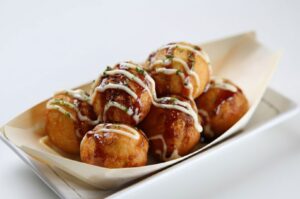
What is Takoyaki and Why Does it Matter in Japanese Food Culture? In the bright heart of Osaka, the sizzle of takoyaki batter signals one of Japan food culture’s most beloved street foods. Lines form at street stalls drawn by the delicious food aromas of sweet-savory sauce and bonito flakes dancing on golden spheres. Takoyaki,…
-
Everything You Need for a Flawless Bubble Tea Cake
Eda Wong | January 1, 2026
The global bubble tea phenomenon has evolved beyond drinks into the world of baking, creating one of the most exciting dessert trends of recent years. Bubble tea cake combines the beloved flavors of milk tea with the satisfying chew of boba pearls, all wrapped up in an adorable bubble tea cake that’s perfect for any…
-
Pad Thai Dish: Everything You Need to Know About the Rice Noodles That Make It Authentic
Eat Drink Asia Team | December 30, 2025
Pad Thai is more than just a staple of Thai Food; it’s a Global Phenomenon. From bustling street carts in Bangkok to high-end Thai Restaurants in New York, this iconic Pad Thai Dish has captured the hearts and palates of food lovers everywhere. The best Pad Thai rivals what you would find in a typical…
-
Thailand Food Pad Thai: Thailand’s Iconic Stir-Fried Noodle Dish
Eda Wong | December 27, 2025
Few dishes capture the essence of Thailand food culture like authentic Pad Thai. This beloved stir fried noodle dish is more than a meal-it’s a symbol of Thai identity, a perfect balance of sweet, savoury, and sour flavors, and a window into the soul of Thai cuisine. Whether you want to eat Pad Thai from…
-
Why Fish Curry is a Special Indian Cuisine
Dio Asahi | December 25, 2025
Along India’s vast and vibrant coastline, stretching over 7,500 kilometers, the sea offers its generous bounty to a cuisine renowned for its regional variations. Nowhere is the diversity of the Indian subcontinent more deliciously expressed than in a humble bowl of fish curry. Through this article, we’ll journey across India’s coasts and kitchens, exploring the…
-
Tikka Masala: The Story Behind One of the Most Iconic Dishes in India’s Food Cuisine
Eat Drink Asia Team | December 23, 2025
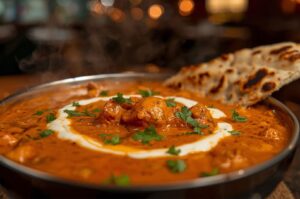
Ask anyone to name a famous Indian dish, and chances are “Tikka Masala” will be one of the first things they say. This creamy, vibrant, and aromatic curry has become a global symbol for the food cuisine in India, celebrated from street food stalls in Delhi to upscale Indian restaurants around the world. Its rich…
-
Cuisines in India: A Journey Through the Diverse Regional Food Traditions of the Subcontinent
Dio Asahi | December 20, 2025
Indian cuisine is celebrated for its spectacular diversity, bursting with flavors, regional traditions, and culinary innovations. From the spice-laden gravies of Northern Indian cuisine and tandoor-fresh breads, to coconut-laced Southern Indian cuisine, fragrant rice dishes in the East, and the robust, spicy curries and street food of the West, the foods of India reflect not…
-
Green Tea with Milk: A Tale of Two Teas from Taiwan and Thailand
Eda Wong | December 18, 2025
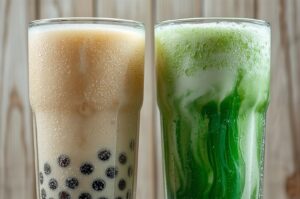
The simple combination of green tea with milk has sparked a culinary phenomenon across Asia, creating a diverse family of beverages that are both comforting and refreshing. While many countries have embraced this pairing, two nations stand out for their iconic and wildly different interpretations: Taiwan and Thailand. Each has cultivated a unique culture around…
-
The Emerald Journey: Exploring Asia’s Green Milk Tea Culture
Eat Drink Asia Team | December 16, 2025
A vibrant, emerald-hued wave is sweeping across Asia, delighting taste buds and defining modern café culture. From street-side stalls in Bangkok to chic tea houses in Taipei, green milk tea—sometimes simply called green tea with milk—has blossomed from a simple concept into a beloved, refreshing drink with countless regional interpretations and profound cultural significance. Whether…
-
Thai Green Milk Tea: The Complete Guide to Thailand’s Refreshing Emerald Delight
Eda Wong | December 13, 2025
Picture a tall glass filled with crushed ice, its emerald-green contents swirled with ribbons of creamy white milk—this is thai green milk tea, one of Southeast Asia’s most visually striking and refreshing drinks. Known locally as cha khiao nom yen, this popular drink has captured hearts across Asia and beyond with its distinctive pale green…