By Eda Wong for Eat Drink Asia.
It’s late morning, and the light is doing most of the work.
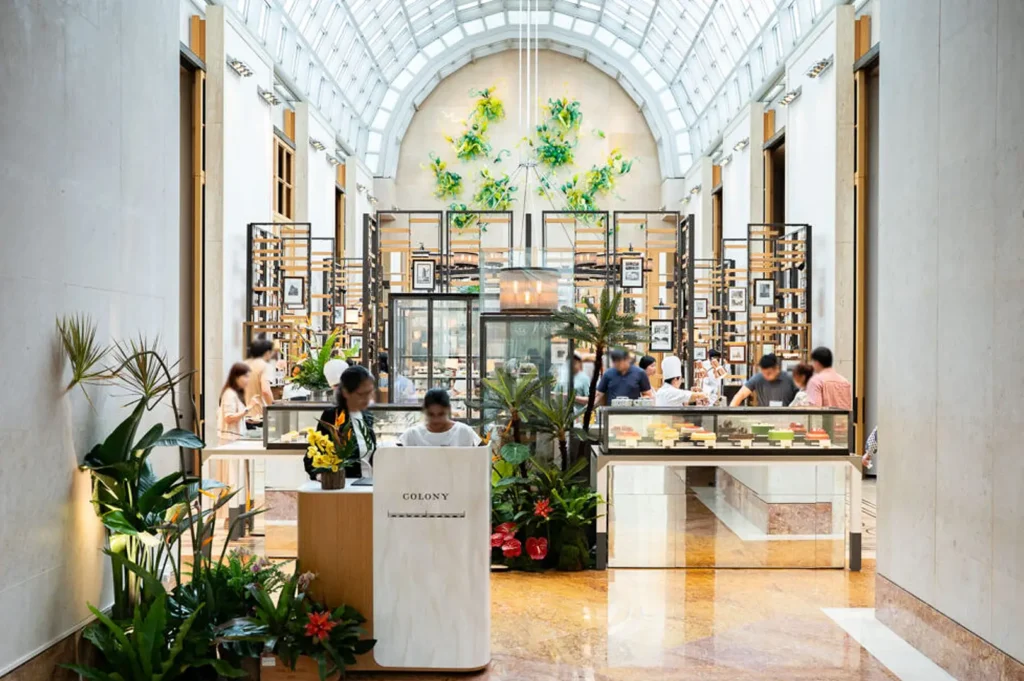
It pours through the high windows of Colony, at The Ritz-Carlton, Millenia Singapore, spilling across white tablecloths and the vintage prints on the walls. Marina Bay hums somewhere outside, but in here the room feels a step removed from it — slower, quieter, held.
I go to the carving station first. I always do.
A roast rests under the warm lamp, its edges bronzed and crackling, the centre still pink when the knife goes in. Juices gather beneath the blade and pool on the board. The carver works without hurry, laying down slices thin enough to fold. The smell of it — that deep, fatty warmth of roasting meat — reaches you before you’re anywhere near the plate.
I take a slice, and then I wander to the cold seafood on ice and take a prawn. Sweet, clean, cold. I eat it without sauce, because it doesn’t need one, and that small fact tells me more than any menu could.
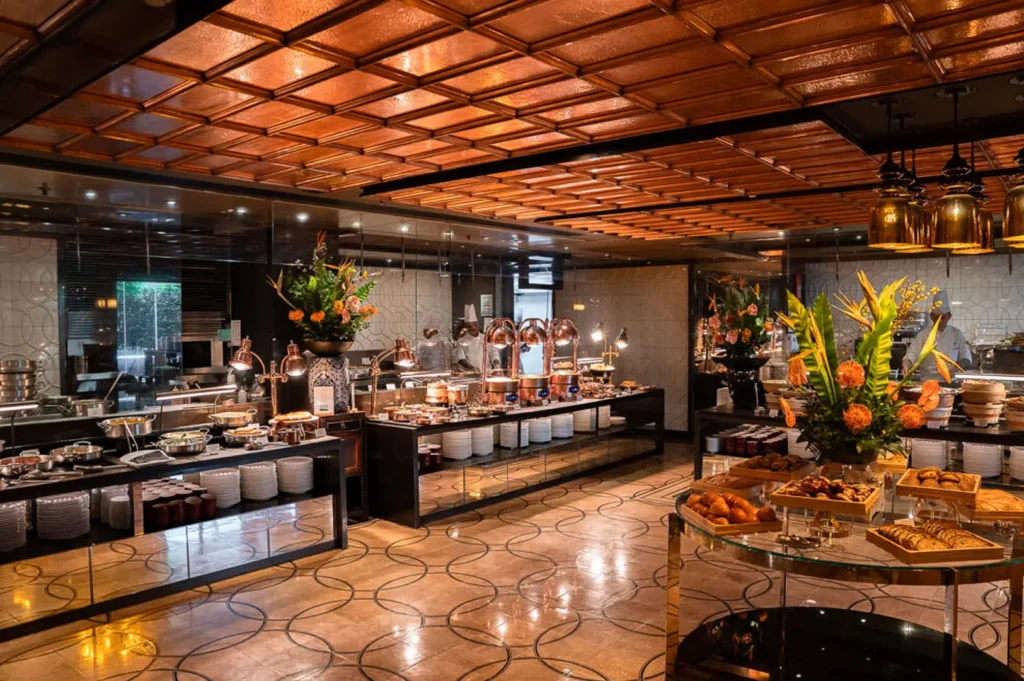
This is what Colony does. It builds a buffet around seven open kitchens, each one its own small world with its own team — Indian curries in one corner, Chinese dishes in another, local plates, Western grills, the seafood, the desserts. Nothing feels thrown together. You move through it the way you’d move through a conversation, one thought leading gently to the next.
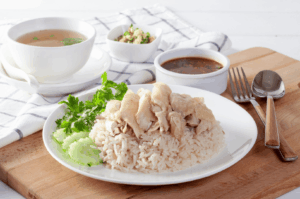
And here is the thing I keep turning over. In the middle of all that international abundance sits Hainanese chicken rice. A pot of curry that could have come from a shophouse down the road. The food we grew up on, plated in a hotel dining room with linen and quiet service.
That’s not a small thing.
Because a hotel buffet, for many of us, is how we mark the days that matter. The anniversary. The graduation. The birthday where three generations pull two tables together and someone insists on paying. We don’t go to Colony for a Tuesday lunch. We go when there’s something to hold onto — and we bring our home food with us into the grand room, and eat it there, together, on the good plates.
For a broader look at how hotel buffets turn abundance into a celebration table, read top hotel buffets in Singapore
There’s a tension in that I’ve never quite settled. The abundance asks you to take everything, and something in me wants to take less — one perfect slice of roast, one sweet prawn, the chicken rice I could get anywhere but chose to eat here. The room offers you the world. What you reach for, often, is what already tastes like home.
Maybe that’s what’s worth noticing. Not the scale of it. The restraint inside the scale — the plate you build when you could build any plate, and what that plate says about you.
I finish the roast slowly. The light has shifted a little on the tablecloth.
Somewhere behind me, a family is singing, badly and happily, over a cake. Nobody minds.
Some meals feed you. A few mark the hour you’ll remember later, when the light was warm and the people were all still at the table.

Best Japanese Foods in Japan: The Must-Try Dishes
Eda Wong | November 27, 2025
Japan’s culinary world extends far beyond well-known sushi and ramen, revealing a rich variety of regional specialties cherished by locals. While many travelers stick to popular Japanese foods in tourist areas, authentic flavors are best discovered in neighborhood markets, family-run eateries, and seasonal menus reflecting centuries of Japanese cooking tradition. Understanding Japanese cuisine requires more…
-
Japanese Food in Japan: The Ultimate Guide to Authentic Culinary Experiences
Eat Drink Asia Team | November 25, 2025
Experiencing Japanese food in Japan is fundamentally different from eating Japanese cuisine anywhere else. While sushi restaurants and ramen shops have spread globally, the authentic flavors, techniques, and cultural context of Japanese food can only be fully appreciated in its homeland. From meticulously selecting ingredients at peak freshness to centuries-old traditions shaping every meal, eating…
-
Food in Japan: A Complete Guide to Japanese Cuisine and Culinary Culture
Eda Wong | November 22, 2025
The gentle steam rising from a bowl of miso soup carries more than just the earthy aroma of fermented soybeans-it carries centuries of Japanese culture and culinary wisdom. When you eat in Japan, you’re not simply consuming a meal; you’re participating in a ritual that connects you to the seasons, the land, and a philosophy…

Ramune Marble Soda: History and Cultural Meaning of Japan’s Iconic Marble Soda
Dio Asahi | November 20, 2025
Among Japan’s beloved fizzy drinks, none evoke nostalgia and uniqueness quite like Ramune marble soda. Instantly recognizable by its quirky Codd neck bottle and glass marble seal, Ramune soda is an essential part of Japanese summer, cherished by generations for its refreshing taste and signature pop sound. This marble soda remains a staple at summer…
-
Hokkaido’s Best Seafood Treasures: Beyond Sushi and Sashimi
Eat Drink Asia Team | November 18, 2025
When visiting Hokkaido, Japan’s northernmost island, food lovers are greeted with some of the most highly regarded seafood specialties in the world. Hokkaido is famous for its abundance of fresh seafood and rich fishing grounds, thanks to the surrounding Sea of Japan, Pacific Ocean, and Sea of Okhotsk. These nutrient-packed waters yield a wide range…
-
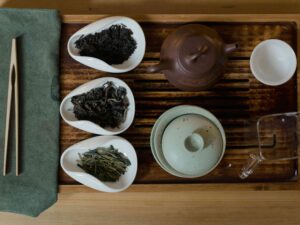
The Art of Asian Tea Ceremony Traditions: Ancient Rituals and Cultural Values Across Asia
Dio Asahi | November 15, 2025
A cup of tea, in many parts of Asia, represents far more than a beverage-it is a conduit to ancestral tradition, intellectual pursuit, and the cultivation of mindfulness. Asian tea ceremony traditions turn the act of drinking tea into a sophisticated art form, layered with symbolism, philosophy, and socio-cultural values. Each gesture, from scooping powdered…

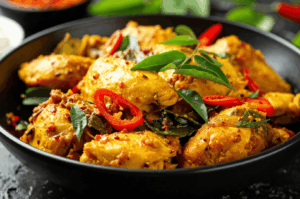
The Art of Slow-Cooked Curry Recipes: Time’s Magic in South Asian Cuisine
Eda Wong | November 13, 2025
Step into a South Asian kitchen, and the senses are instantly enveloped by the inviting aroma of food slowly simmering in a sturdy clay pot or heavy vessel. The allure is undeniable: in this space, slow-cooked curry recipes are a celebration of patient tradition, spices, and the richness of South Asian cuisine. Here, time and…
-
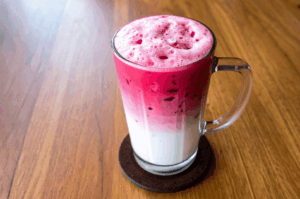
Bandung Drink Recipe: A Singaporean Rose Syrup Drink Tradition
Eat Drink Asia Team | November 11, 2025
Step into any night market or hawker centre in Singapore, and you’ll spot a vibrant, glowing glass filled with a cold, beautiful drink-Bandung. Known for its iconic blush-pink hue and refreshing taste, this rose syrup drink is an integral part of Singapore’s beverages scene and a cherished tradition in Southeast Asian gatherings. More than just…
-
The Ultimate Hainanese Chicken Rice Recipe: A Deep Dive
Eda Wong | November 8, 2025
To wander through Singapore’s bustling hawker centres on a humid evening is to experience a symphony of sights, sounds, and smells. Among the many other dishes sizzling away, one plate stands out for its elegant simplicity: Hainanese Chicken Rice. It arrives without fanfare-gleaming slices of poached chicken over fragrant rice, flanked by a trio of…
-
Bubble Tea Origins: How Taiwan Created a Global Beverage Phenomenon
Dio Asahi | November 6, 2025
From Taipei to New York, a single drink has captured the world’s taste buds: bubble tea. This beverage, known as pearl milk tea or boba tea, and also known as boba in many regions, is celebrated for its delightful combination of sweet, creamy tea and signature chewy tapioca pearls. What began as a novel creation…