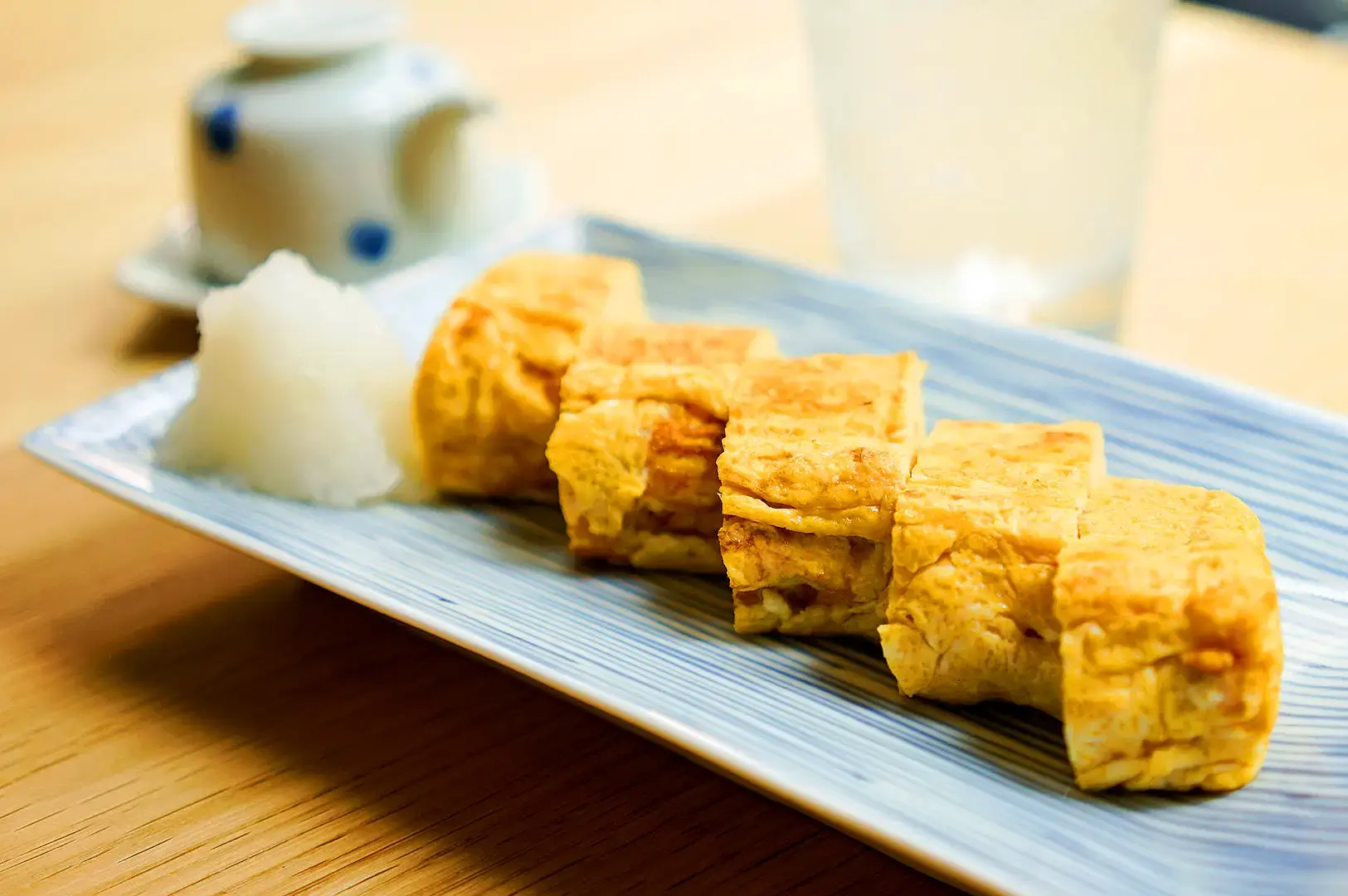
Dashimaki tamago is one of those dishes that looks quieter than it is.
At first glance, it is just a rolled egg. Pale, soft, sliced neatly, often served beside steamed rice, miso soup, and grated daikon radish. But once you make it, you realise it is not really about eggs alone. It is about how broth changes texture, how medium heat asks for patience, and how a thin layer of egg can become something tender enough to feel almost custardy.
If you love Japanese food, this is one of the best small dishes to practise at home because it shows how Japanese cuisine can turn simple ingredients into something delicate, savoury, and deeply comforting.
Dashimaki Recipe at a Glance
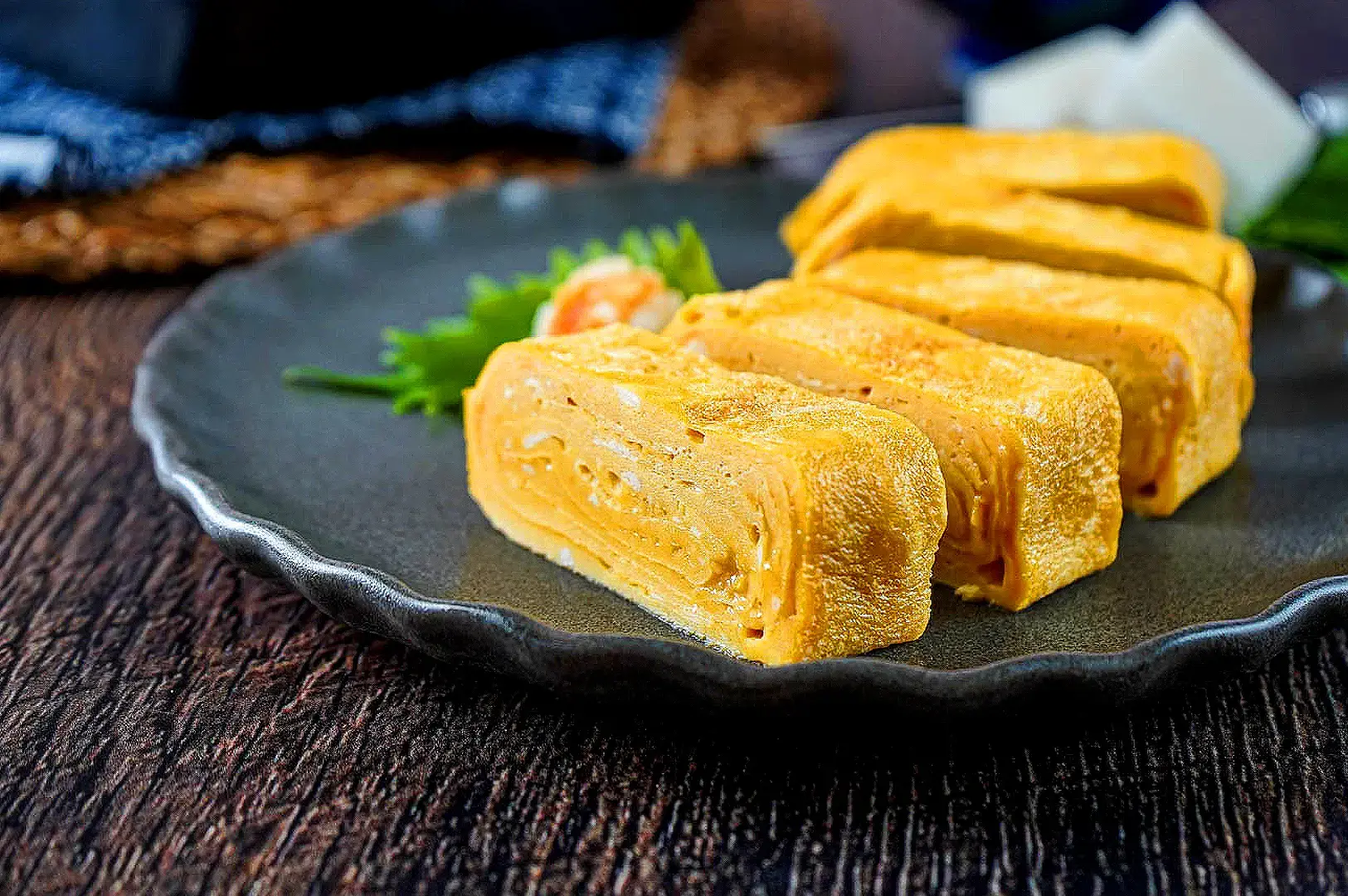
Dashimaki tamago is a Japanese rolled omelette made with eggs and dashi stock. It behaves differently from a western omelette because the egg mixture contains more liquid. That dashi gives the finished rolled omelette its soft, savoury, almost custardy texture.
Time, Yield, and Difficulty
- Prep time: 10 minutes
- Cook time: 10 to 15 minutes
- Total time: 20 to 25 minutes
- Serves: 2
- Difficulty: Medium, mostly because of the rolling
- Best pan: Rectangular tamagoyaki pan, but a small nonstick pan or round pan works
The goal is not a dry, firm omelette. The goal is soft layers that hold together just enough while still tasting like Japanese soup stock.
What Is Dashimaki Tamago Japanese Rolled Omelette?
Dashimaki tamago, sometimes written as dashi maki tamago, is a Japanese rolled omelette. Beaten eggs are mixed with dashi stock, light soy sauce, mirin, granulated sugar, and salt, then cooked one thin layer at a time. Each egg layer is rolled into the last until all the egg mixture becomes one soft log.
It is often confused with tamagoyaki, but they are not exactly the same. Tamagoyaki usually has little or no dashi, so it is firmer and easier to roll. Dashimaki tamago carries more dashi mixture, which makes it softer, juicier, and more delicate. Atsuyaki tamago tends to be thicker, sweeter, and firmer, which is why it holds up better in bento boxes and sushi restaurants.
For the restaurant side of that same quiet precision, Eat Drink Asia’s piece on best omakase Singapore shows how small Japanese courses turn restraint into storytelling.
Ingredients for Dashimaki Tamago
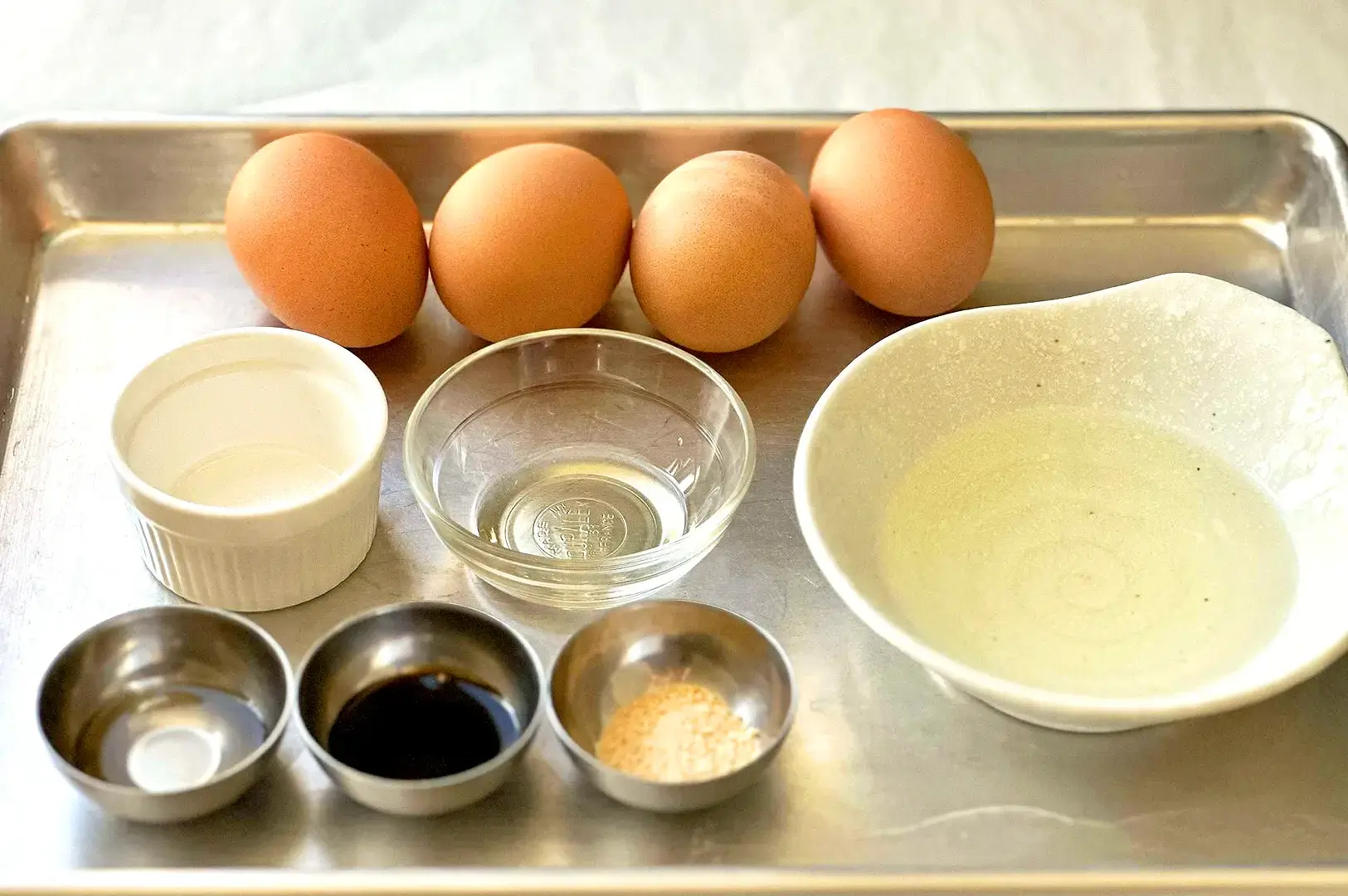
This is the basic recipe I would hand to someone trying to make dashimaki tamago for the first time. It has enough dashi to taste clearly, but not so much that the roll fights you at every turn.
For the Egg Mixture
- 3 large eggs
- 45 to 60 ml dashi stock
- 1 tsp light soy sauce, usukuchi soy sauce if you have it
- 1 tsp mirin
- 1 to 2 tsp granulated sugar, to taste
- Pinch of salt
- Vegetable oil, for the pan
To Serve
- Grated daikon radish
- A small splash of soy sauce
- Steamed rice, miso soup, or pickles
For dashi, homemade awase dashi made with kombu and bonito flakes gives the cleanest flavour. Instant dashi powder is honest weekday cooking. Use about 1 tsp instant dashi powder to 240 ml hot water, then measure only what you need. Do not add too much soy sauce. If you only have regular Japanese soy sauce instead of white soy sauce or usukuchi, use it lightly so the omelette stays pale.
Equipment You Need
A tamagoyaki pan makes the roll neater, but it is not required. A rectangular tamagoyaki pan or square pan gives the most even shape. A copper tamagoyaki pan conducts heat beautifully, but it is expensive and less forgiving. For most home cooks, a nonstick rectangle pan is easier.
Best Beginner Setup
- Rectangular tamagoyaki pan, square pan, or small round frying pan
- Chopsticks or a thin spatula
- Folded paper towel
- Separate bowl for seasoning
- Measuring cup with a spout
- Bamboo mat or bamboo sushi mat
- Optional wooden lid if you already use one for rolling
The folded paper towel matters more than it looks. Dip it in vegetable oil and keep the oil soaked paper towel beside the stove. You will use the oiled paper towel to lightly grease the pan between layers. A thin film of oil keeps the roll moving without making it greasy.
How to Make Dashimaki Tamago
1. Mix the Dashi Seasoning
In a separate bowl, combine the dashi stock, soy sauce, mirin, sugar, and salt. Stir until the sugar dissolves. Taste before adding it to the eggs. It should be savoury, lightly sweet, and balanced, not aggressively salty.
2. Beat the Eggs Gently
Crack the eggs into a bowl and cut through the yolks and egg whites with chopsticks. Do not whip. Too much air creates air bubbles and uneven layers. This is not a soufflé. Add the dashi mixture and stir gently. For a smoother dashimaki tamago recipe, strain the beaten eggs into a measuring cup. It catches stubborn strands of egg whites and makes repeated pouring easier.
3. Heat and Oil the Frying Pan
Set the frying pan over medium heat. Dip the folded paper towel in vegetable oil and wipe the pan with a thin, even layer. The pan is ready when a drop of egg makes a gentle sizzling sound. No sound means the pan is too cold. Angry crackling means the cooking temperature is too high.
4. Pour the First Thin Layer
Pour in just enough egg mixture to cover the base. Tilt the pan so the egg runs into every corner and fills the empty space. If bubbles rise, pop them with chopsticks.
5. Start Rolling While the Egg Is Still Soft
Start rolling from the far side toward you. Use chopsticks, a spatula, or a wooden lid if that is how you learned from tamagoyaki recipes. The first roll may look a little wrinkled, but that is fine. It will become the centre of the rolled egg and disappear inside later layers.
6. Re-Oil, Pour, and Repeat
Slide the roll back to the far end of the pan. Wipe the exposed pan with the oiled paper towel, then lift the roll slightly and pour another thin layer of egg underneath it. This fresh egg acts like glue between the old cooked egg and the new layer.
Repeat until you use all the egg mixture: roll, move, oil, pour. Roll, move, oil, pour. Rhythm matters more than speed.
7. Shape It While Hot
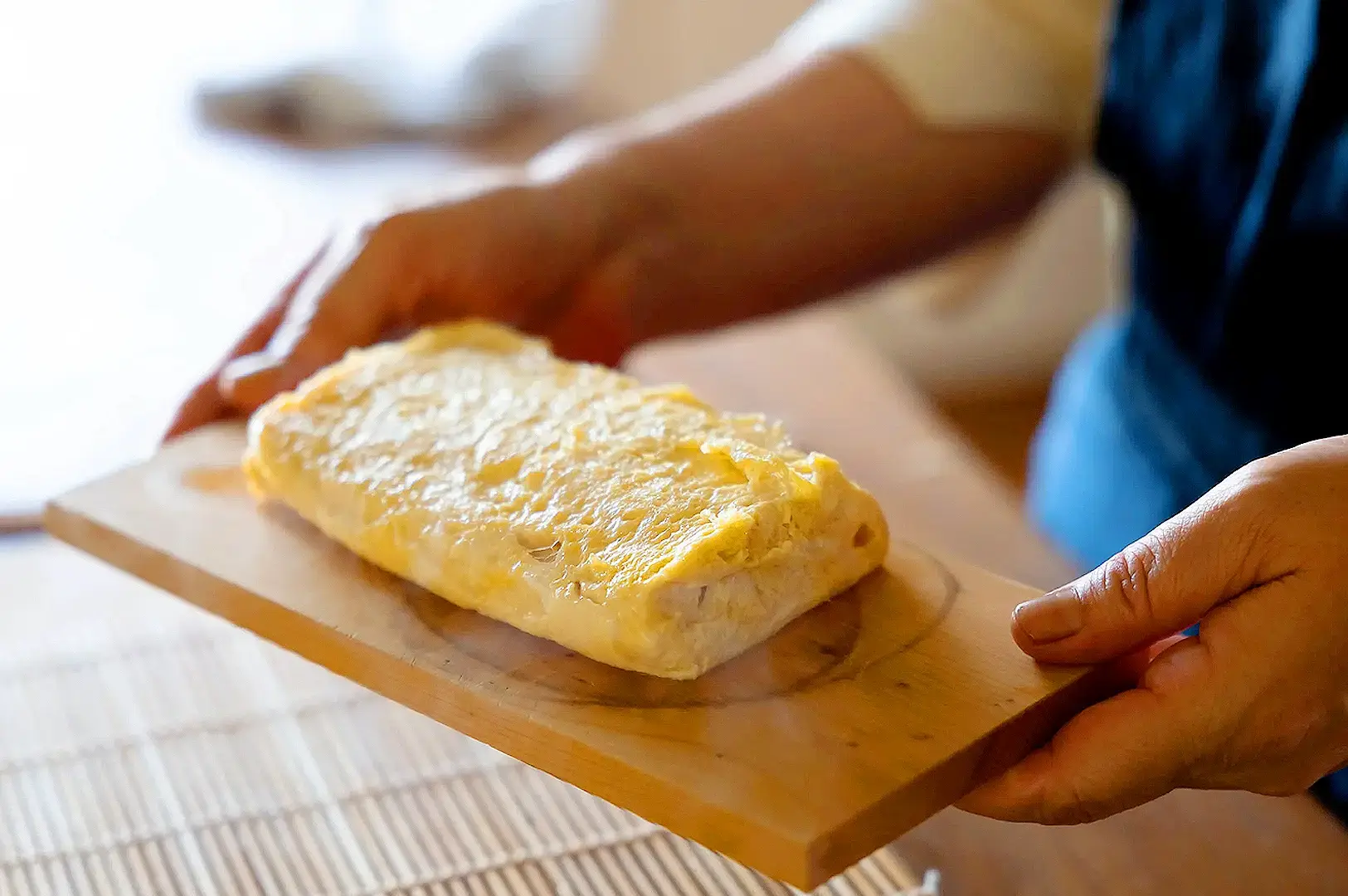
When the omelette is done, transfer it to a sushi mat or bamboo mat. Wrap and press gently for about five minutes. This helps turn a wobbly home roll into a cleaner log. Do not squeeze too hard. Too much pressure pushes out the dashi.
8. Slice and Serve
Slice the dashimaki into thick pieces while warm. Serve with grated daikon, grated daikon radish, and just a dash of soy sauce. Dashimaki is best eaten right away. The same dashi that makes it tender can weep out if it sits too long.
How Much Dashi Stock Should You Use?
For beginners, start with 45 ml dashi for 3 eggs. This gives you enough broth flavour without making the Japanese rolled omelette too fragile.
Dashi Levels by Skill
- Beginner: 3 eggs plus 45 ml dashi
- Confident home cook: 3 eggs plus 60 ml dashi
- Soft restaurant-style attempt: 3 eggs plus 80 to 100 ml dashi
Every extra splash of dashi makes the omelette more delicious and less obedient. That is the trade. A delicious dashimaki tamago recipe is not about forcing restaurant softness on the first try. It is about building enough control to handle more broth later.
What to Serve with Dashimaki Tamago and Miso Soup
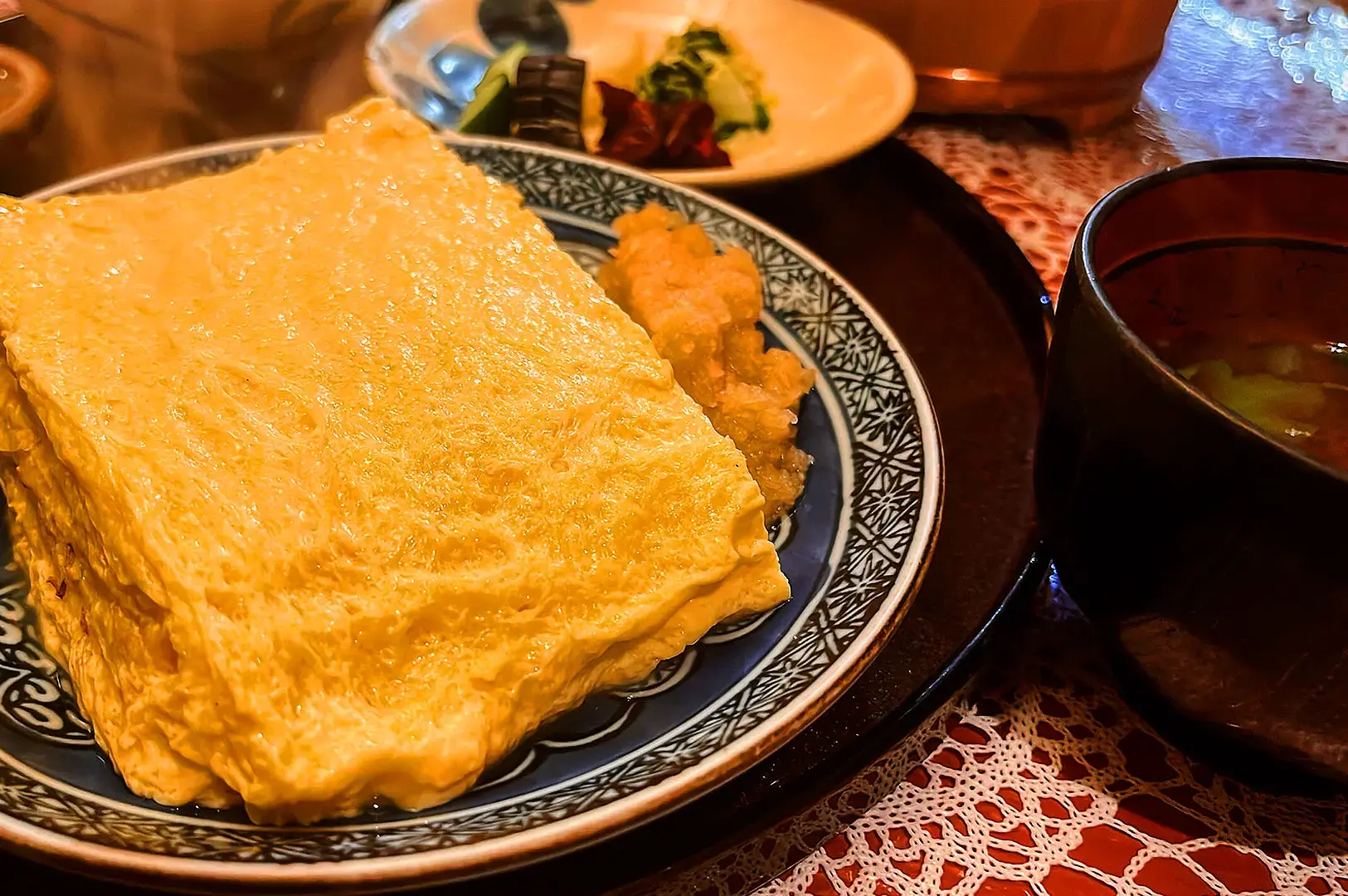
At home, dashimaki works beautifully as part of a Japanese breakfast. I like it beside steamed rice, miso soup, pickles, and maybe grilled fish. The aroma is quiet but comforting: warm egg, bonito, soy, and the clean steam of rice.
This is where the dish starts to make sense as Japanese food. The same dashi that seasons the rolled egg can also sit beneath miso soup and other Japanese dishes. Learning dashimaki is really learning how Japanese cuisine uses stock to season food that does not look like soup.
If dashimaki feels like the quiet side of Japanese comfort, izakaya Singapore guide shows how small plates carry that same relaxed rhythm into dinner.
Cost, Shopping Notes, and Recipe Ratings
Dashimaki is a cheap dish to love. Eggs, dashi, soy sauce, mirin, sugar, and oil are modest ingredients, and each batch uses only small amounts. You do not need a copper pan, white soy sauce, or restaurant tools for your first try.
If you are buying equipment, start with a basic nonstick tamagoyaki pan. A copper tamagoyaki pan can come later, once you know you enjoy the rhythm. If you are reading recipe ratings before cooking, check whether the recipe creator uses a beginner dashi ratio or a restaurant-style one. Some dark instructions from glossy videos make the process look effortless, but a high-dashi roll takes practice.
Before You Cook
Before you make dashimaki tamago, remember what the dish is asking from you. Not speed. Not force. Not a perfect restaurant shape on the first attempt. It asks for medium heat, thin layers, and attention. It asks you to trust the half cooked surface, to keep the oiled paper towel nearby, and to use all the egg mixture slowly rather than flooding the pan.
Start with 45 ml dashi. Keep the layers thin. Let the rhythm teach your hands. The good roll is closer than you think.

Island Penang Kitchen Review: Penang Food, Wok Smoke, and Assam Laksa in Clementi
Eat Drink Asia Team | November 12, 2026
I smelled the wok before I found the door. It drifted across the void deck of Block 721, past bicycles chained to railings and an uncle reading the papers on a stone bench. Burnt soy, pork lard, and that faint scorched edge you only get from a pan pushed past polite heat. Then, a few…
-
The Quiet Ferment Behind a Jar of Thai Pickled Garlic
Eda Wong | November 11, 2026
By Eda Wong for Eat Drink Asia. The jar sits on the windowsill of a shophouse kitchen in Bangkok, between a bottle of fish sauce and a tin of mismatched spoons. Morning light comes through it, turning the liquid inside the color of weak tea. Behind me, a pot of rice porridge ticks and bubbles…
-
Malaysian Chinese Food Speaks in Texture: The Craft Behind Every Bite
Dio Asahi | November 10, 2026
The first person who taught me to eat with my teeth was a woman whose name I never learned. Years ago, in a coffee shop in Ampang, we ended up sharing a table because every other seat was taken. Fans clacked overhead. A bowl of yong tau foo steamed between us. Before she ate, she…
-
Romantic Restaurants Singapore: Date Night Restaurants Where the Food Is Not an Afterthought
Eda Wong | November 7, 2026
The worst date I ever planned had a beautiful view. It was a rooftop, years ago. The skyline glittered, the candles flickered in little glass jars, and the table looked like something you would save on Pinterest. Then the pasta arrived lukewarm and tasted of very little. We spent most of the evening admiring the…
-
Captain Kim Korean BBQ Hotpot Buffet Review: Halal Korean BBQ and Hotpot with a 90-Minute Clock
Eat Drink Asia Team | November 5, 2026
The timer started the moment we sat down. Nobody announced it dramatically. A server simply wrote a time on a small slip of paper and tucked it under the edge of the grill. Ninety minutes. My friend looked at the paper, then at the buffet line, then back at me. “We should probably move,” she…
-
The Daily Cut and the Small Arithmetic of a Lunch Bowl
Eda Wong | November 4, 2026
By Eda Wong for Eat Drink Asia. It’s 12:40pm, and the basement of One Raffles Place smells of rice, citrus, and the cold breath of air-conditioning. The queue at The Daily Cut moves in short steps. Lanyards swing against shirts. A woman ahead of me stares at the glass counter as if it were an…
-
The Steam Around Fish Balls in a Hong Kong Noodle Stall
Dio Asahi | November 4, 2026
By Dio Asahi for Eat Drink Asia. It’s a little past seven in the morning, and the stall is already breathing. Steam rolls off a deep metal pot near the front and fogs the glass where a row of fish cakes hangs on hooks. A ladle knocks against the rim. Somewhere behind me, a stool…
-
Muk-Bang Korean Restaurant: Where Dinner Arrives Bubbling, Not Quietly
Dio Asahi | November 3, 2026
It was a Wednesday, a little after 6pm, and somewhere behind me a pot hissed on a portable burner. The broth climbed the sides, popping softly against the metal, while a child at the next table leaned forward to watch. His mother caught the back of his shirt and pulled him gently away. That was…

Korean Halal Food Singapore: What Actually Changes in Kimchi Stew, Fried Chicken, and the Grill
Eda Wong | October 31, 2026
Korean food can look simple from the table. A red bowl of kimchi stew. A tray of glossy fried chicken. Beef hissing on a grill. Banchan arriving in small dishes before anyone has even opened the menu. It feels familiar now, especially in Singapore, where Korean food has moved from novelty to everyday craving. But…
-
Sandaime Bunji Review: Beef Tongue, Oden, and the Quiet Comfort of Millenia Walk
Eat Drink Asia Team | October 29, 2026
It was raining when I got to Millenia Walk. The warm, sideways kind that follows you under every shelter. I came for the beef tongue. That is what many diners associate with Sandaime Bunji, the Japanese izakaya at 9 Raffles Boulevard, #01-14/15 Millenia Walk. But by the time I shook out my umbrella at the…