By Dio Asahi for Eat Drink Asia.
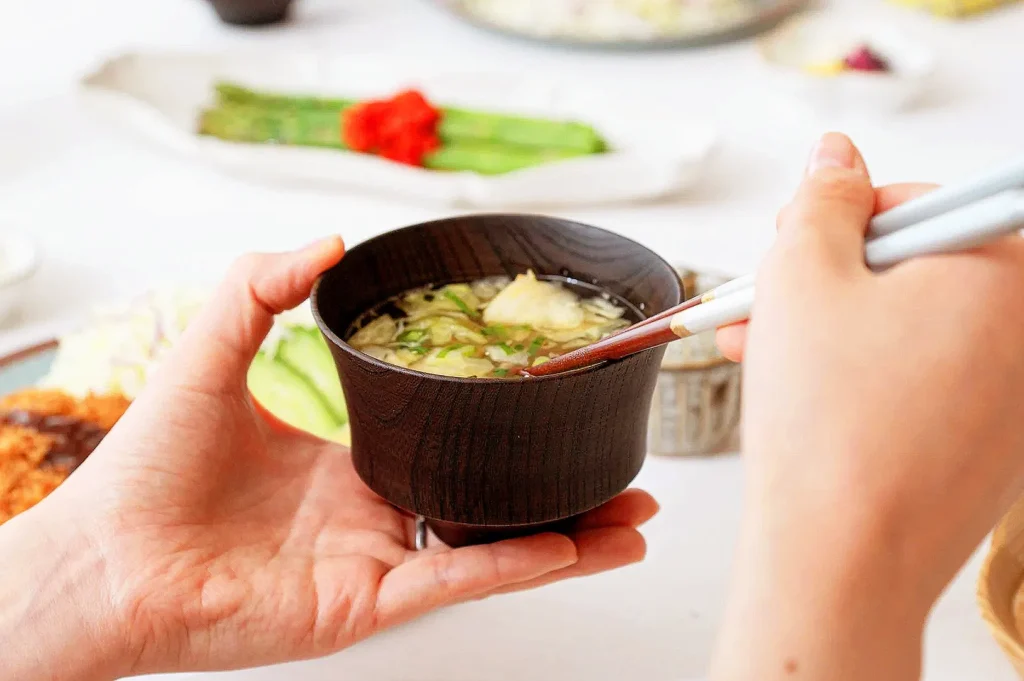
The shop is barely wider than a hallway. Seven stools, a counter worn smooth, and behind it a woman ladling soup into small ceramic bowls before anyone has ordered it. Steam lifts off the surface and fogs the window against the cold morning. The bowl reaches me warm in both hands, heavier than it looks. There’s a smell first — something salted, deep, almost like the sea remembered rather than tasted. Then the sip. Cloudy, gentle, faintly sweet under the salt. Outside, a train sighs into the station. Inside, nobody speaks yet.
What I’m holding is miso soup — 味噌汁, roughly “mee-so shiru.” At its simplest, it’s fermented soybean paste dissolved into dashi, a stock usually drawn from kombu seaweed and dried bonito flakes. That’s the whole architecture. The miso brings the salt and the funk, that living, fermented depth. The dashi brings the quieter thing underneath — a savoury base the Japanese call umami, which is less a flavour you name than one you feel settle in the back of the throat.
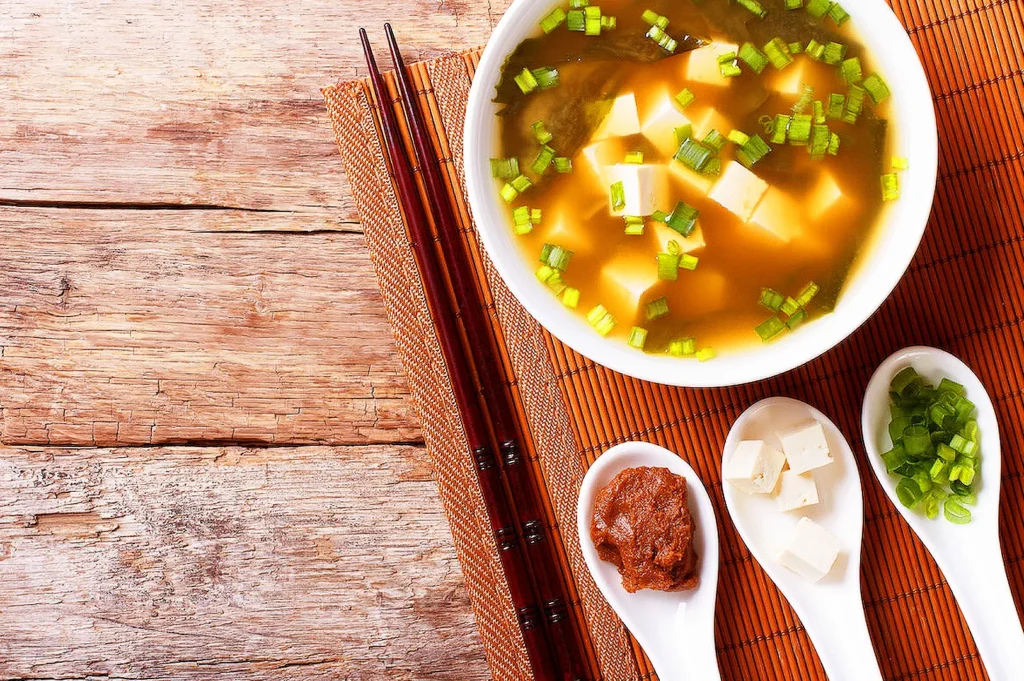
There’s often a little inside the broth. Cubes of soft tofu, a few slippery strands of wakame, sometimes sliced green onion floating on top. But the soup isn’t really about what’s in it. It’s about the liquid itself, and the way it arrives hot and unhurried, at the start of the day, without ceremony.
Watch a Tokyo breakfast shop at seven in the morning and you notice the rhythm before you notice the food. People arrive alone, mostly. They sit, they receive the bowl, they eat with a kind of practiced quiet. The soup is rarely the main dish — it comes beside rice, grilled fish, a raw egg. But it’s the first thing lifted, the first warmth of the morning. There’s an etiquette to it, too: you drink from the bowl, tilting it, rather than spooning. It signals something small and communal. Everyone here is doing the same thing at the same hour, in the same silence, before the city asks anything of them.
The craft hides in the timing. Dashi is warmed, but the miso is stirred in only at the end, off the strongest heat — never boiled. Boil it, and the miso turns flat and sour, the living quality cooked out of it. The woman behind the counter dissolves it through a small strainer with the back of a ladle, so no lumps remain, seconds before serving.
You can buy miso in a packet now. Tear, pour, add hot water, done. It’s not bad, and I understand why a tired morning reaches for it. But the packet version is a copy of a gesture, not the gesture itself, it is not what Eat Drink Asia stands for. The handmade bowl carries the memory of someone deciding not to let it boil — a small, deliberate act of care, repeated at dawn, for strangers.
I finished the bowl before I’d finished thinking about it. The woman was already ladling the next.
Some mornings ask for nothing more than that. Warmth, handed over. A quiet way of being fed.

The Steam Around Fish Balls in a Hong Kong Noodle Stall
Dio Asahi | November 4, 2026
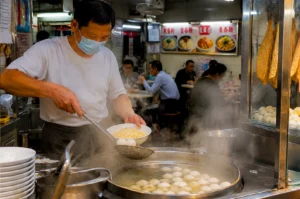
By Dio Asahi for Eat Drink Asia. It’s a little past seven in the morning, and the stall is already breathing. Steam rolls off a deep metal pot near the front and fogs the glass where a row of fish cakes hangs on hooks. A ladle knocks against the rim. Somewhere behind me, a stool…
-
Muk-Bang Korean Restaurant: Where Dinner Arrives Bubbling, Not Quietly
Dio Asahi | November 3, 2026
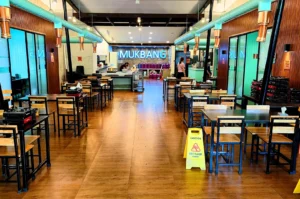
It was a Wednesday, a little after 6pm, and somewhere behind me a pot hissed on a portable burner. The broth climbed the sides, popping softly against the metal, while a child at the next table leaned forward to watch. His mother caught the back of his shirt and pulled him gently away. That was…

Korean Halal Food Singapore: What Actually Changes in Kimchi Stew, Fried Chicken, and the Grill
Eda Wong | October 31, 2026
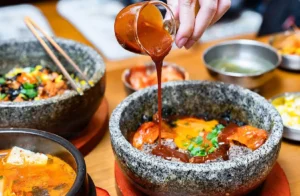
Korean food can look simple from the table. A red bowl of kimchi stew. A tray of glossy fried chicken. Beef hissing on a grill. Banchan arriving in small dishes before anyone has even opened the menu. It feels familiar now, especially in Singapore, where Korean food has moved from novelty to everyday craving. But…
-
Sandaime Bunji Review: Beef Tongue, Oden, and the Quiet Comfort of Millenia Walk
Eat Drink Asia Team | October 29, 2026
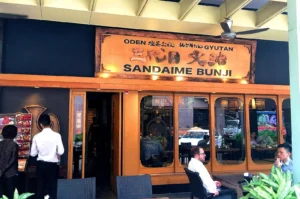
It was raining when I got to Millenia Walk. The warm, sideways kind that follows you under every shelter. I came for the beef tongue. That is what many diners associate with Sandaime Bunji, the Japanese izakaya at 9 Raffles Boulevard, #01-14/15 Millenia Walk. But by the time I shook out my umbrella at the…
-
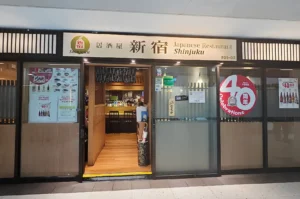
Shinjuku Restaurant, Where Cuppage Plaza Keeps Japanese Comfort Food Uncomplicated
Dio Asahi | October 27, 2026
I almost walked past Shinjuku Restaurant. That is easy to do in Cuppage Plaza. Step away from the polish of Orchard Road and the building feels older, quieter, and much less interested in catching your attention. Shinjuku sits on the ground floor at 5 Koek Road, behind a frontage that gives little away about the…
-
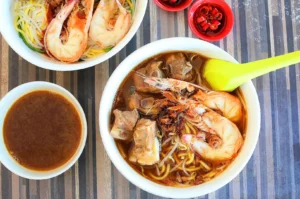
Prawn Mee in Singapore: Bowls Where the Broth Tastes Like Time
Eda Wong | October 24, 2026
I do not remember the first bowl of prawn mee I ever ate. But I remember the smell: that deep, roasted-shell darkness that fills a coffee shop before you have even sat down. My grandfather used to say you could tell a good prawn noodle stall from the doorway, just by breathing. Over the years,…
-
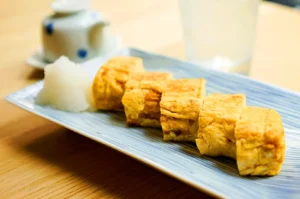
How to Make Dashimaki Tamago, the Japanese Rolled Omelette That Tastes Like Broth
Eat Drink Asia Team | October 22, 2026
Dashimaki tamago is one of those dishes that looks quieter than it is. At first glance, it is just a rolled egg. Pale, soft, sliced neatly, often served beside steamed rice, miso soup, and grated daikon radish. But once you make it, you realise it is not really about eggs alone. It is about how…
-
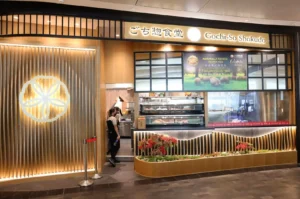
The Lunch Hour Slows Down at Gochi-So Shokudo
Dio Asahi | October 21, 2026
By Dio Asahi for Eat Drink Asia. It’s just past noon, and the lifts keep opening. Suits spill out, lanyards swinging, phones already halfway to their ears. But inside Gochi-So Shokudo, tucked into One Raffles Place, something else is happening. People are sitting down. Actually sitting. Chopsticks lifting, shoulders dropping a little, the room warm…
-
Kintamani Singapore Review: Can an All-You-Can-Eat Buffet Still Taste Like Indonesia?
Dio Asahi | October 20, 2026
I walked into Kintamani Singapore with one question in mind. Buffets ask food to wait. Rendang, sambal, grilled meats, and fried seafood all sit under heat while diners circle the spread. That is not necessarily kind to Indonesian dishes built around texture, reduction, chilli, coconut, and freshly cooked aromatics. So I was less interested in…
-
Pagi Sore Indonesian Restaurant Est 1989 Review: A Second-Generation Kitchen That Still Knows Its Own Voice
Eda Wong | October 17, 2026
The first thing I noticed at Pagi Sore Indonesian Restaurant was the smell. Not the sharp, showy kind. Something slower: coconut milk, lemongrass, chilli, fried egg, and the deep warmth of spice paste drifting out from a wood-heavy dining room while Far East Square kept moving outside. I walked over on a Wednesday evening, just…