At a narrow lunch table in Bangkok, the bottle arrives before the rice has stopped steaming. It is clear glass, refilled many times, its plastic cap slightly stained from years of fingers and heat. Beside it sits a small bowl of sliced chillies floating in amber liquid, the cut edges pale and sharp. Someone nudges it towards the centre, not as an announcement but as a gesture of readiness. The spoon taps porcelain. The fan turns above us. From the kitchen comes the smell of garlic, hot oil, and fish sauce meeting flame for one brief, salty second.
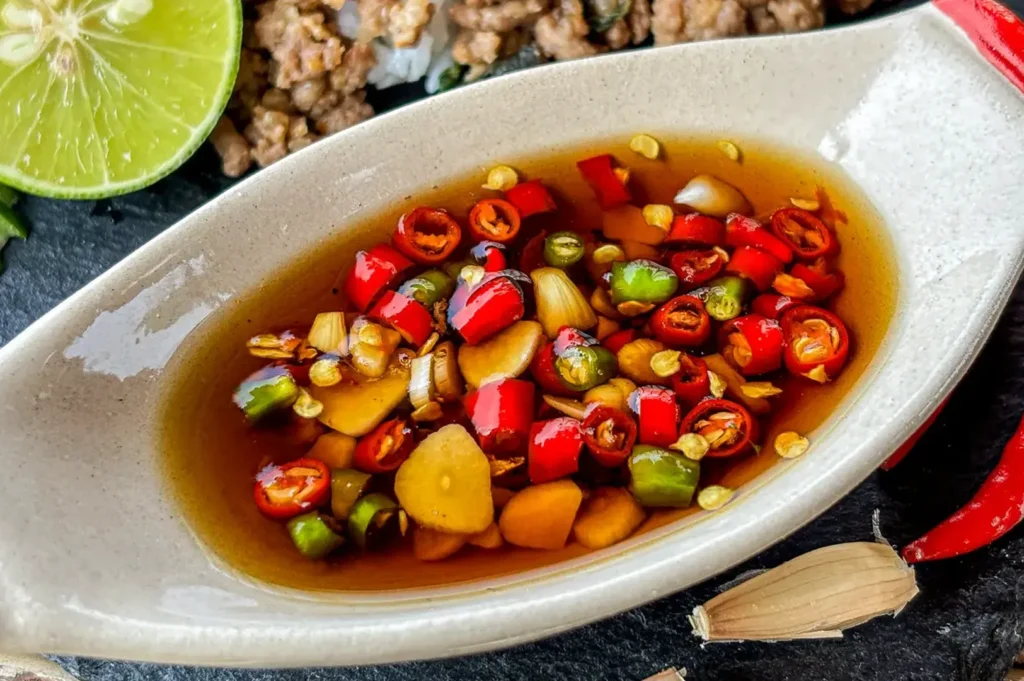
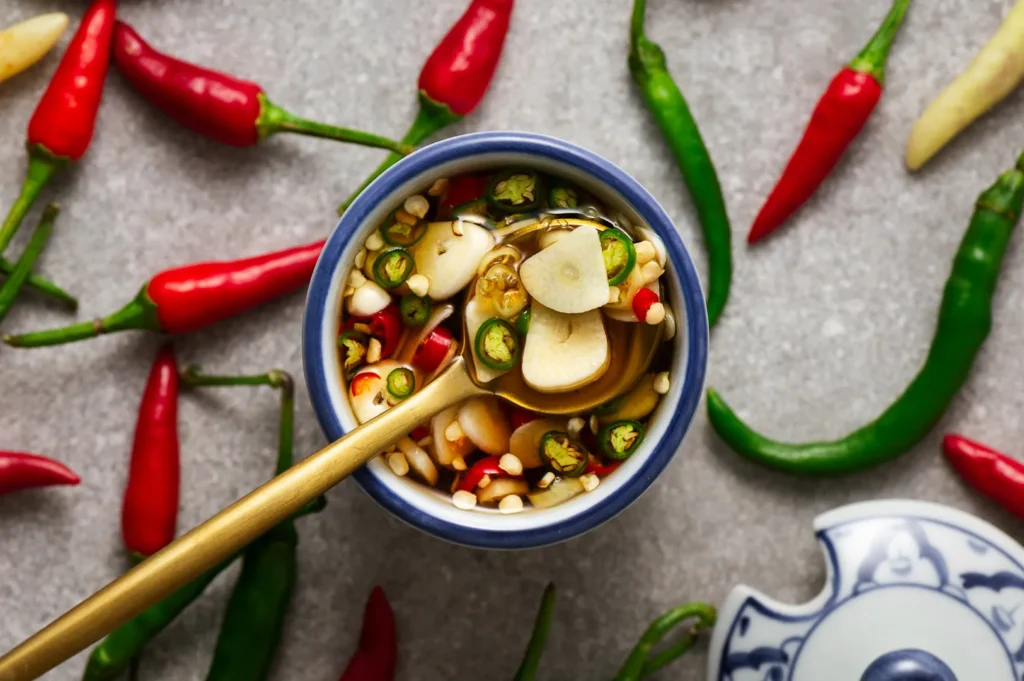
This is nam pla — น้ำปลา — pronounced roughly “nahm plah”, Thai fish sauce. In plain terms, it is a liquid seasoning made from fish and salt, left to transform slowly until it becomes clear, savoury, and deeply aromatic. At the table, it does not behave like a sauce poured for abundance. It works more quietly than that. A few drops can pull sweetness forward, sharpen a bowl of rice, or give soup a firmer edge. In many Thai meals, it appears as part of prik nam pla, fish sauce with sliced chillies, sometimes lime and garlic. The craft begins long before the table: in the patience of salting, pressing, waiting, and drawing off a liquid that carries depth without heaviness.
What interests Eat Drink Asia is not only its flavour, but the way people use it. At a shared table, seasoning is both personal and social. You adjust your own spoonful, not the whole dish. You taste first, then decide. Too much fish sauce can flatten a meal into salt; too little can leave it polite but unfinished. This small act teaches restraint without making restraint feel severe. It also holds memory. Someone may add more chillies because that is how their father ate noodles. Someone else may avoid touching the bottle because the cook has already balanced the dish. These choices happen quickly, almost invisibly, yet they reveal how people carry appetite, habit, and respect into the same bowl.
There is a tension now between convenience and care. Fish sauce comes in sachets with takeaway meals, in neat supermarket bottles, in polished restaurant cruets designed to look clean rather than lived in. None of this is wrong; food has to move with the speed of the city. But something changes when the table loses the small, shared grammar of seasoning. The old bottle with its cloudy rim asks for attention. It asks you to notice before you alter. It reminds you that flavour is not only built in the kitchen, but completed in relation to others.
By the end of lunch, the bowl of chillies has darkened slightly, its seeds resting at the bottom like sand. The bottle returns to the side of the table. Nothing dramatic has happened. Still, the meal feels more exact because of that quiet liquid, waiting to be used carefully.

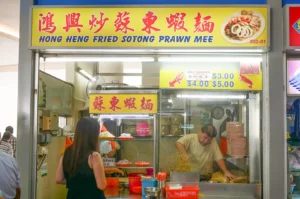
Hong Heng Fried Sotong Prawn Mee: Where Squid Turns Chewy, Broth Turns Glossy, and Time Turns Quiet
Eda Wong | June 23, 2026
There is something deeply comforting about a hawker centre right before the lunch rush hits. I visited Tiong Bahru Market on a Tuesday around 10:30 am, hoping to beat the infamous queue at Hong Heng Fried Sotong Prawn Mee. Even at that early hour, a line of six people had already formed, waiting quietly under…

Cuppage Plaza Food: Hidden Japanese Restaurants and Dining Gems Near Orchard
Dio Asahi | June 20, 2026
Orchard Road is a brilliant, trend-setting celebration of flavours, but its gleaming mega-malls can sometimes feel a bit predictable. If you are an urban food enthusiast seeking genuine culinary journeys rather than polished franchise menus, the true heart of the district lies slightly hidden. Cuppage Plaza is a fascinating, liminal space that operates almost like…
-
Makgeolli Bowls and the Soft Grain of Korean Rice Wine
Eda Wong | June 19, 2026
The monsoon rain drums a steady, heavy rhythm against the fogged windows of a narrow tavern in Jongno, muffling the chaotic pulse of the city outside. Inside, the air hangs warm, thick with the scent of toasted mung beans and a subtle, yeasty tang. A dented brass kettle tips forward, and a chalk-white, opaque liquid…
-
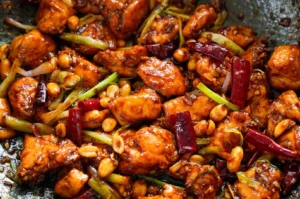
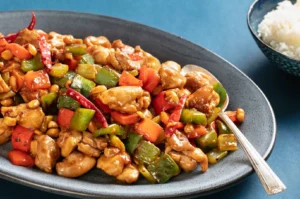
Kung Pao Chicken Sauce Is the Real Test: Why It Turns Glossy, Sharp, and Addictive
Eat Drink Asia Team | June 18, 2026
Kung pao chicken is often described by its main ingredients: diced chicken, dried chillies, peanuts, spring onions, and Sichuan peppercorns. But anyone who has cooked it at home knows the truth: the dish succeeds or fails because of the sauce. The sauce decides whether kung pao chicken tastes lively and balanced, or flat, sticky, and…
-
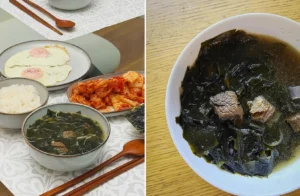
Jeju’s Seaweed Soup and the Memory of Birthday Tables
Dio Asahi | June 17, 2026
The sharp winter wind rattles the low stone walls of a Jeju Island kitchen, but inside, the air is thick with steam and the deeply marine scent of boiling kelp. An elderly woman stands by a bubbling steel pot, watching the dark green fronds swell and twist in the rolling water. She adds a splash…
-
Chicken Pao Recipe for People Who Respect Heat: Why Kung Pao Works Only When Timing Is Tight
Eda Wong | June 16, 2026
I remember my first attempt at cooking gong bao ji ding a few years ago. I wanted to recreate that authentic, trend-setting dish I had experienced at a traditional Sichuan restaurant, a meal that felt like a genuine celebration of flavours. I heated my wok until it was smoking, tossed in a handful of dried…
-
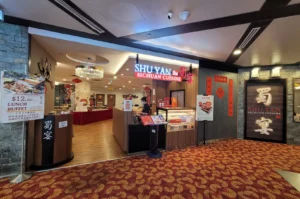
A Shu Yan Sichuan Cuisine Review Written in Pepper and Smoke: Chicken Pao That Wakes Up the Table
Dio Asahi | June 13, 2026
I used to think of authentic Sichuan food as a sheer test of endurance. For a long time, I assumed the goal was simply to survive the fiery onslaught of chillies rather than actually taste anything. But my recent culinary journey at Shu Yan Sichuan Cuisine completely rewired how I understand this region’s flavour map….
-
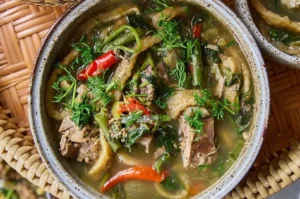
In Luang Prabang, Or Lam Carries the Taste of Sakhan
Eda Wong | June 12, 2026
The damp morning mist still clings to the teakwood houses of Luang Prabang as an elderly cook tends to a glowing charcoal brazier. Sparks jump lightly into the cool air, illuminating the blackened belly of an aluminium pot. Inside, a thick, dark liquid bubbles rhythmically, releasing an incredibly aromatic cloud of charred lemongrass, sweet Thai…
-
The Malayan Council, Reviewed: Local Food in Malaysia, Plated Like a Memory
Eat Drink Asia Team | June 11, 2026
Our Eat Drink Asia team spends a lot of time debating what makes a truly unforgettable meal. The team has previously published articles exploring the redefinition of comfort food. That is exactly what led me to The Malayan Council at 71 Bussorah Street. I visited on a Friday around 7:30 pm, just as the weekend…
-
Sushi in Singapore: Why There Is a Style for Every Budget
Eda Wong | June 11, 2026
Few Japanese dishes have travelled as successfully across Asia as sushi. What began as a culinary tradition deeply rooted in Japan has evolved into something remarkably diverse in Singapore. Today, sushi in Singapore can mean many different things. It can be a quick lunch grabbed from a conveyor belt restaurant, a carefully curated omakase meal…