There’s a dish I order when I want to know a kitchen quickly.
Not the specialty. Not the thing the menu is proud of. I order the fried rice.
Because nasi goreng has nowhere to hide. It’s rice, chilli, chicken, egg, a few crackers, some cucumber. Everyone thinks they can make it. Most people can. But there’s a difference between rice that’s been cooked and rice that’s been decided, and you can taste that difference in the first mouthful.
So when I sat down at Indo Rasa Singapore, I skipped the pempek. I skipped the oxtail everyone talks about. I ordered nasi goreng.
The Room Before the Plate at Indo Rasa Singapore
Far East Plaza does not try to impress you.
It is an old mall on Scotts Road, a short walk from Orchard MRT, and it wears its age plainly: worn tiles, small shopfronts, the low hum of a place that has fed people for decades without asking for applause. You come here for the food tucked into corners, not for the setting.
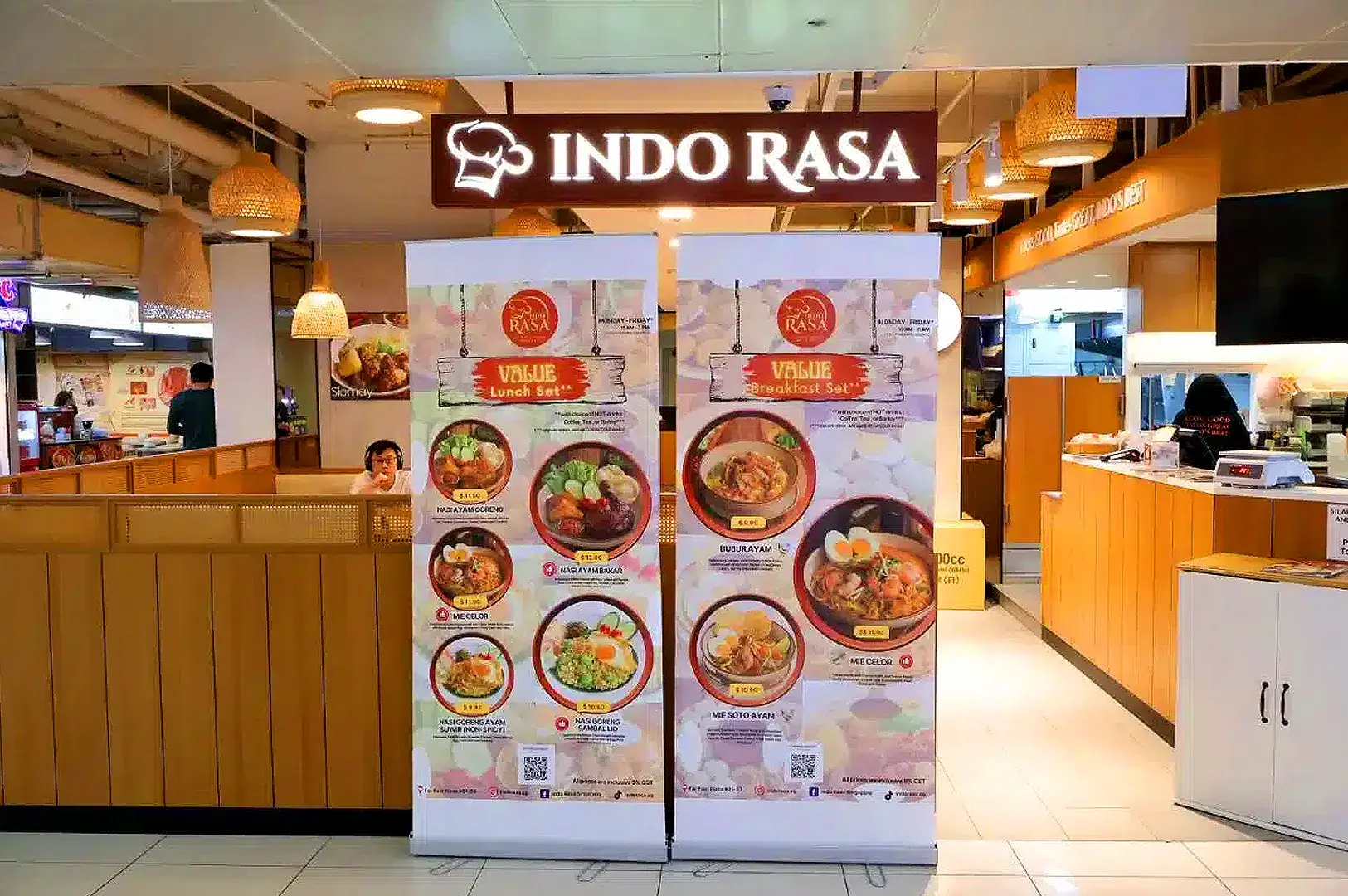
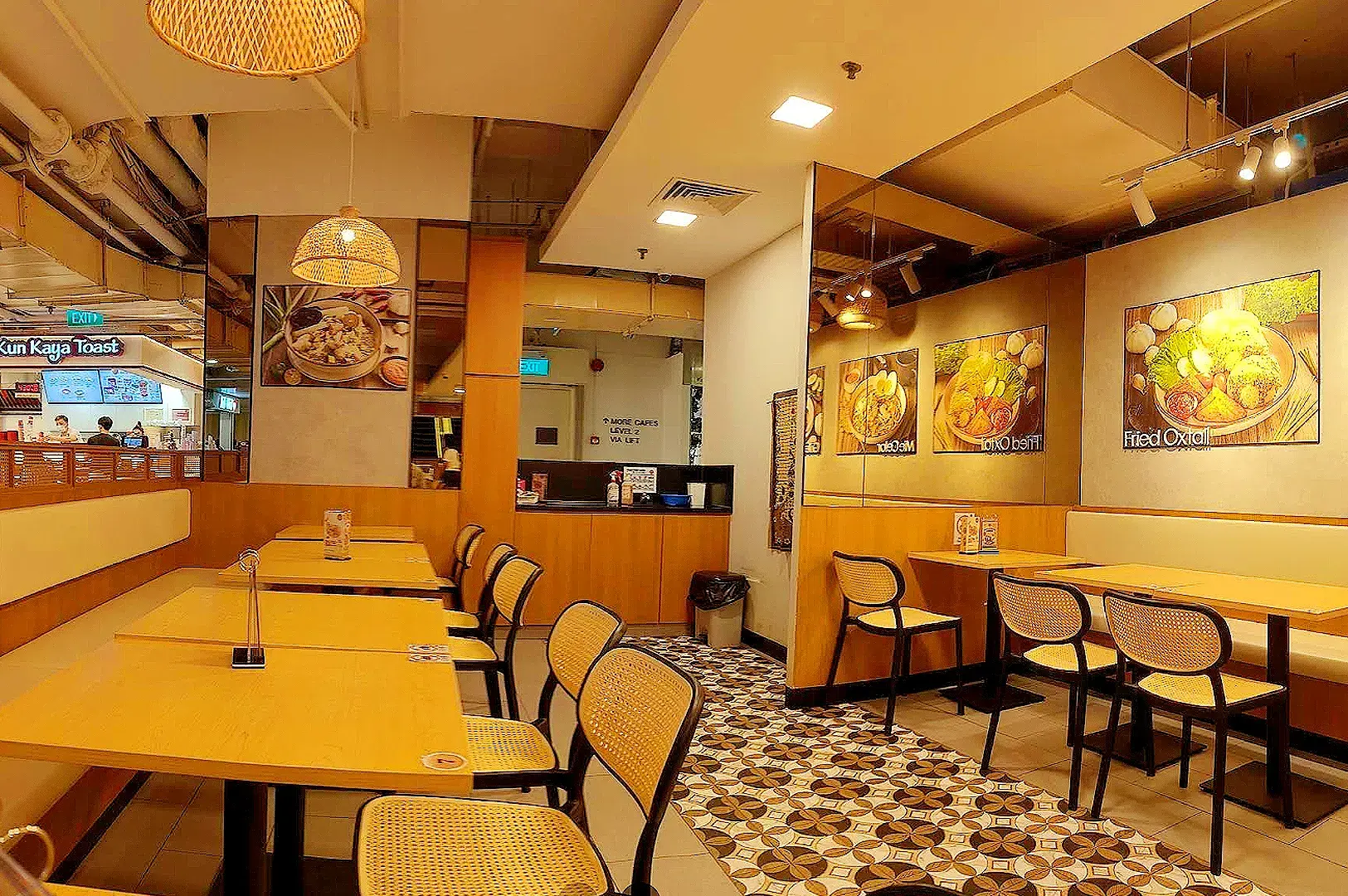
Indo Rasa Singapore sits on the ground floor at #01-23 Far East Plaza. It is compact, with tables set close together, the kind of room where you overhear the next table’s order and it does not bother you. There was no queue when I came, just after the lunch rush had thinned. A staff member pointed me to a seat without fuss.
What the Menu Tells You
The menu is long, reflecting the rich flavours of Indonesian cuisine. It moves from Palembang specialties to grilled meats, rice plates, noodles, drinks, and desserts.
A few dishes explain the kitchen’s range quickly:
- Pempek, the Palembang fish cake served with dark, sharp cuko sauce
- Mie celor, with coconut milk, yellow noodles, prawns, boiled egg, bean sprouts, and fried tofu
- Ayam goreng w, fried chicken served with fried tofu and tahu tempe
- Ayam bakar w, grilled chicken with special bbq sauce served with fried tofu and tempeh
- Ikan bakar and ikan goreng, with some options listed as bakar w o rice or goreng w o rice
- Nasi udang petai balado, with spicy chili belacan prawns, stink beans, salted egg, diced tomato, and rice
- Soursop smoothie and es kacang merah for something sweet and cooling
It is the kind of menu that could scatter a kitchen thin. Part of what I wanted to know was whether the everyday dishes still got attention when so much else was competing for it.
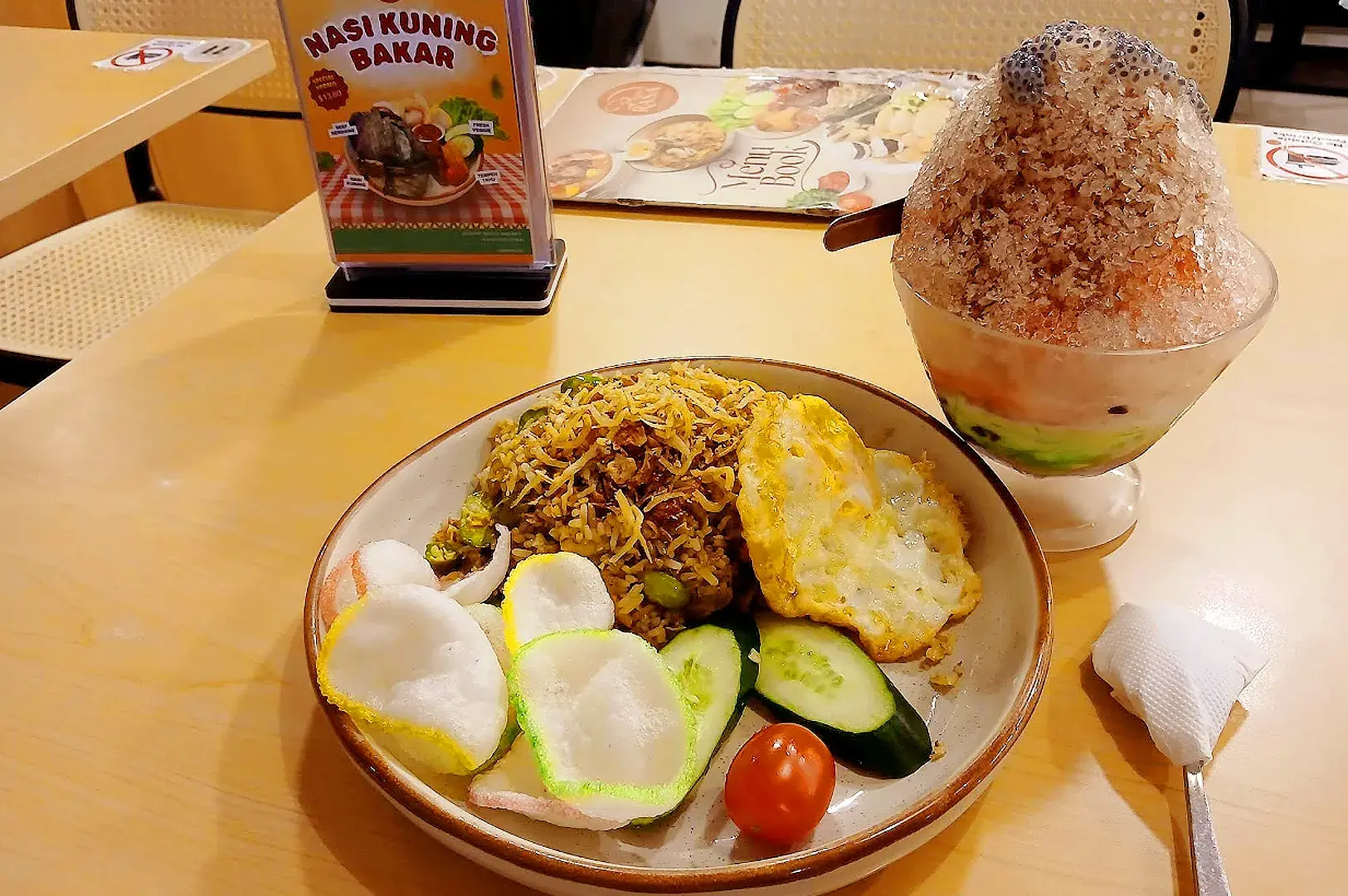
I ordered two plates: the Nasi Goreng Ayam Suwir as the control, and the Nasi Goreng Sambal Ijo as the harder question.
The First Plate: Nasi Goreng Ayam Suwir
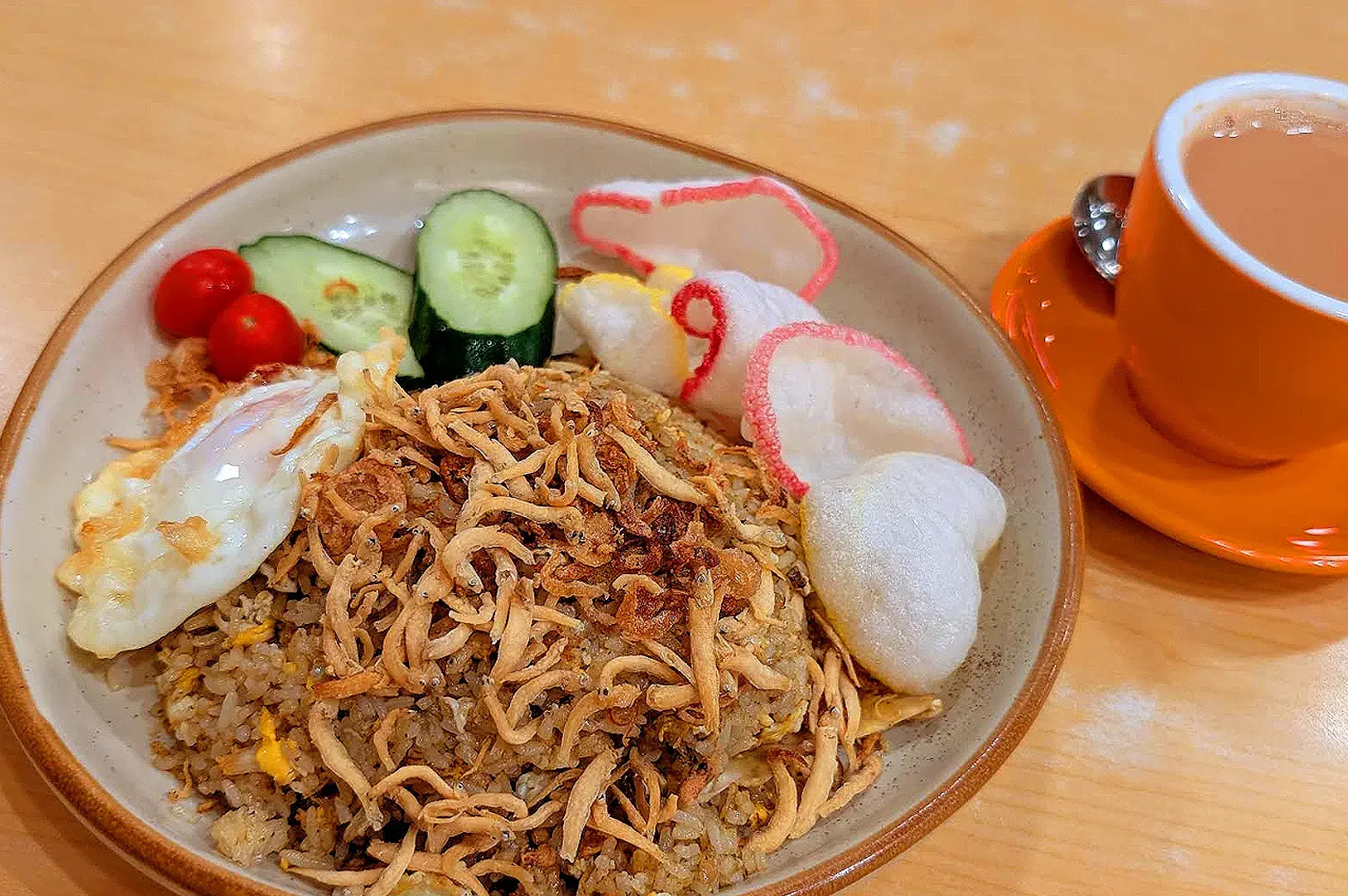
The Ayam Suwir came first, and I noticed the smell before the plate landed. Not sweet, not heavy. Something toasted sat underneath the aroma of garlic and fried onions, the kind of quiet char that tells you the rice has met proper heat.
The first thing I checked was the rice. I always do. I dragged my fork through it and the grains moved apart, separate, each one carrying a light brown stain rather than clumping into a wet mass. That told me most of what I needed to know. Someone here understands that nasi goreng has to move across the plate, not sit in a puddle of its own oil.
The shredded chicken ran through the rice rather than sitting awkwardly on top. That matters more than it sounds. Suwir should feel pulled into the dish, not added as a dry protein afterthought. Here, the chicken made the rice feel more domestic, like something cooked to be eaten rather than staged.
What Worked on the Plate
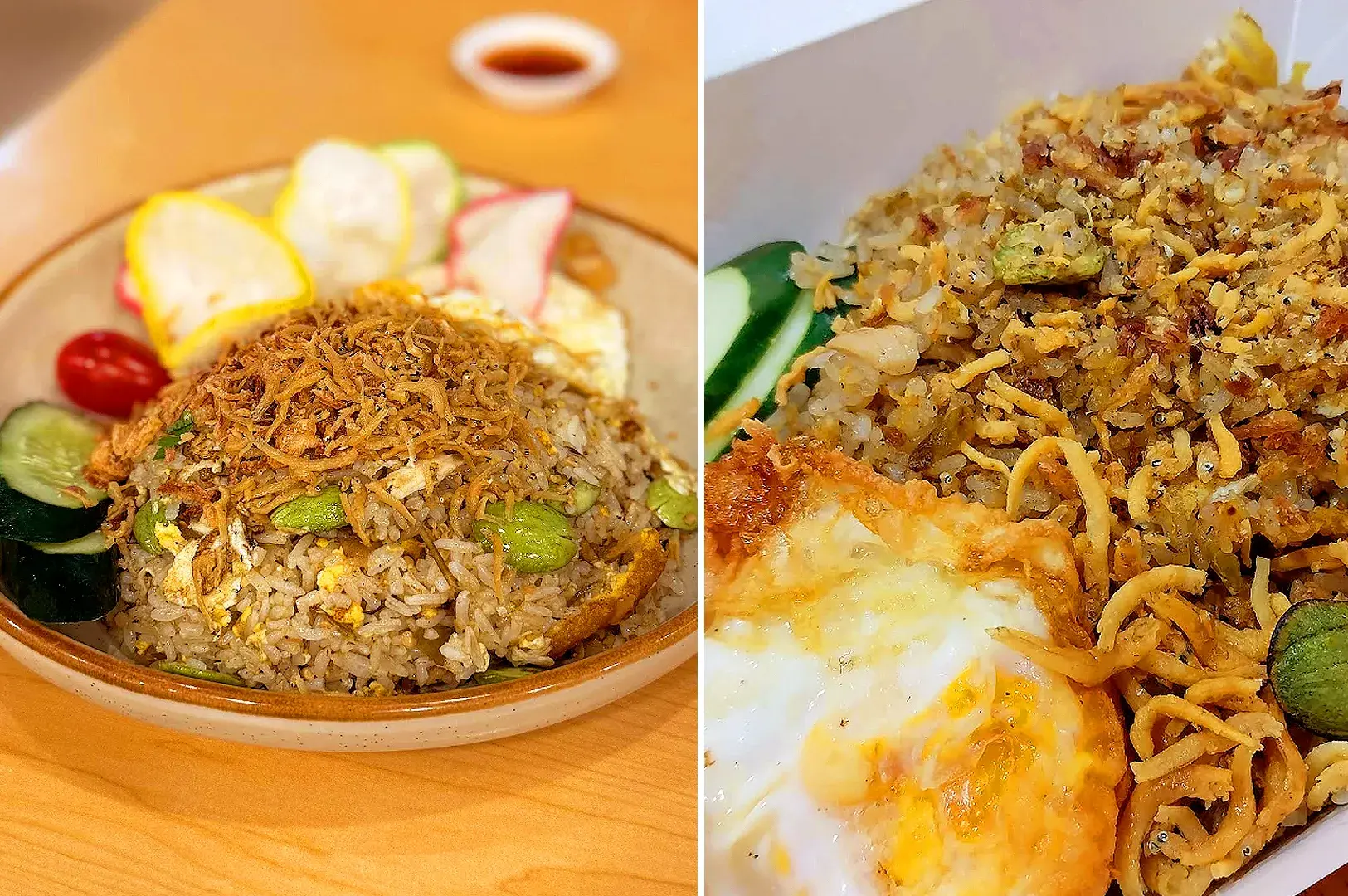
On top was a sunny side up egg with crisp, lacy edges. I broke the yolk and let it run. This is where many plates of nasi goreng collapse. The yolk floods, the rice softens, and the whole thing turns into comfort mush. Here, the rice stayed composed.
Around the plate were:
- Cucumber, cold and clean
- Cherry tomatoes, adding a small burst of acidity
- Onion crackers, still crisp rather than decorative
- A lemon slice, useful for a zesty lift
After a few forkfuls of warm, seasoned rice, those small edges mattered. They gave the mouth somewhere to rest.
It was a good plate. Not loud. Controlled.
Where the Kitchen Shows Itself: Nasi Goreng Sambal Ijo
Green chilli does not flatter anything.
Kecap manis is forgiving. Its sweetness can cover a lot. But sambal ijo is bright, sharp, and slightly bitter, and it exposes bland rice the way daylight exposes a rushed paint job. If the base underneath is flat, the green chilli only makes it flatter.
The Nasi Goreng Sambal Ijo arrived a shade paler than the first, flecked through with green. There was heat in it, not punishing, but present. The spice built across a few bites and settled warmly at the back of the throat. Underneath the chilli, I caught the small salty hit of anchovies, that ikan bilis crackle that gives Indonesian fried rice its savoury spine.
For those interested in making it at home, the chicken nasi goreng recipe captures the perfect balance of spices and flavors that define this classic Indonesian fried rice.
Why This Plate Mattered More
The supporting cast was familiar: sunny side up egg, onion crackers, cucumber, and cherry tomatoes. But here the fried onions did more, adding a sweet, toasted depth that met the green chilli halfway.
What worked was that the rice held its own against all of it. The sambal did not have to carry a weak base. It sat on top of rice that already knew what it was doing.
That is the whole test. A timid kitchen hides behind toppings, piling on garnish, heat, sauce, or extra spices to distract from grains that never got hot enough. This kitchen did not need the distraction. The rice was the evidence. Everything else was testimony.
I finished more of the sambal ijo than I meant to.
A Glance Beyond the Nasi Goreng
I ordered one more thing to check my reading: the Ayam Bakar, grilled chicken with special bbq sauce served alongside fried tofu, tahu tempe, cucumber, cherry tomatoes, lettuce, and onion crackers.
The chicken was soft, honestly seasoned, and it took well to a spoonful of sambal cobek belacan on the side. The special bbq sauce brought a pedas manis character, that sweet-spicy balance that works best when the grill has done its part.
The fried tofu and tempeh gave the plate texture, while the cucumber, tomatoes, and lettuce kept the meal from turning heavy.
What the Wider Menu Suggests
I will not pretend everything on a broad menu always lands perfectly. A restaurant covering this many categories has a lot to hold together:
- Palembang classics like pempek, mie celor, and tekwan
- Everyday comfort dishes like bubur ayam, mie soto ayam, and soto ayam
- Stir fried options like mie goreng jawa and kacang panjang, or stir fried long beans
- Grilled and fried plates such as ayam bakar, ayam goreng, ikan bakar, and ikan goreng
- Rice sets with sambal, salted egg, tomato, cabbage, cucumber, and crackers
- Desserts and drinks like es kacang merah, soursop smoothie, and original less sugar options
That breadth costs consistency. It usually does.
But the nasi goreng was not where that unevenness showed. The dish I ordered to catch a kitchen out was the dish it handled with the most quiet certainty.
What You Should Know About Indo Rasa Singapore
The practical stuff is simple.
Indo Rasa Singapore is at Far East Plaza, #01-23, along Scotts Road. Orchard MRT is a short walk away, which makes it easy to reach without thinking too much about parking in that part of Singapore.
Expect to spend around S$10 to S$20 per person for a rice set and a drink, and a little more if you add buntut bakar, pempek, or another side dish to share. For more dining options, check out our comprehensive guide to Singapore halal restaurants for other halal restaurant options.
Before You Go
A few details are worth knowing:
- Indo Rasa is commonly listed as halal-ingredients-only rather than formally halal-certified, so check directly if that distinction matters to you.
- Come off-peak if you can. The room is small, and it can feel tight during the Orchard lunch crush.
- Just after noon or early evening is easier than peak lunch.
- No booking is needed for one or two people. It is walk-in casual by nature.
- For something cooling, consider the soursop smoothie or es kacang merah after a spicy meal.
The best way to read Indo Rasa is not as a polished dining room, but as a small Indonesian restaurant where the rice tells you whether the kitchen is paying attention.
The Rice Gives the Kitchen Away
Some meals make you want to photograph them. This one just made me want to keep eating.
I’d come here if you want Indonesian rice done with real control, in a room that doesn’t perform for you. If you like sambal that argues back, if you’re a little bored of the same ayam penyet everywhere, if you’d rather a plate that tastes decided than one that looks styled — Indo Rasa is worth the walk into that old mall.
I wouldn’t come for polish. The service is functional, warm enough but not fussed over. The space is cramped. The menu is long enough to overwhelm, and not every corner of it will land. If you want a quiet, refined dining room, this isn’t that, and it isn’t trying to be.
A kitchen can hide behind a specialty. It’s much harder to hide behind fried rice.
This one didn’t try.

Connecting Generations: How Asiatic Food Builds Family Bonds Across Time
Dio Asahi | April 11, 2026
Whenever I smell toasted sesame oil hitting a hot wok, I am instantly transported back to a tiny, bustling kitchen from my childhood. The air would be thick with the aroma of ginger, garlic, and slow-simmering soy sauce. Before a single word was spoken, the meal was already telling a story. For many of us,…
-
A Comprehensive Resource for Oriental Foods Recipes for the Modern Home Cook
Eda Wong | April 10, 2026
For years, I thought cooking Asian food at home required something mystical. My stir-fries were soggy, lacking that smoky breath of the wok. My fried rice was inconsistent, sometimes clumpy, other times dry. My sauces tasted flat, missing the balance of savory, sweet, and tangy flavors I craved. I assumed restaurants had secrets I’d never…
-
Pour Decisions: The Best Bars in Singapore for Craft Beers and More
Dio Asahi | April 9, 2026
Walking through the humid streets of Singapore at dusk, you can feel the city transforming. The tropical heat fades into neon lights, and the clinking of glasses begins to echo from narrow shophouses and towering skyscrapers. Singapore boasts a dynamic bar scene that rivals any global metropolis. From opulent destinations like to the laid back charm,…
-
The 8 Best Chinese Restaurants in Singapore: From Dim Sum to Peking Duck
Dio Asahi | April 7, 2026
Singapore’s best chinese restaurants in singapore function less like isolated dining rooms and more like a networked system of technique. Across these chinese restaurants, you see branches of chinese cuisine expressed through roast mastery, controlled fermentation, seafood purity, and banquet choreography. This is not simply a guide to chinese food. It’s a mapped culinary journey…
-
The Neighbourhood Restaurant Test: How to Spot Truly Authentic Cuisine Restaurants in Your Area
Eda Wong | March 31, 2026
A friend texted me last week: “I’m outside this new Vietnamese place. How do I know if it’s legit before I waste my money?” It’s a question I get often. We’ve all been there, drawn in by a cool sign, only to get a plate of sad, sweet, tourist-grade pad thai that tastes like ketchup….
-
Cuisine in the World Meets Singapore: Inside Nakhon Kitchen’s Cross-Cultural Magic
Dio Asahi | March 26, 2026
There’s a rite of passage for any food lover living in the East of Singapore, and it involves a queue. Specifically, the perpetually long, snaking queue outside Nakhon Kitchen in Bedok. I’d heard the legends for years: authentic Thai food, rock-bottom prices, and a wait time that tests your commitment. So, on a Tuesday evening…
-
The Spice Route Secrets: A Deep Dive into Malay Ethnic Food
Eda Wong | March 24, 2026
My first time ordering Nasi Padang in Geylang Serai was overwhelming, I randomly picked dishes and was shocked by a $20 bill due to premium beef rendang and squid. That taught me to always ask seafood prices and that Malay food is a complex, modular cuisine. Malay food is everywhere in Singapore, in hawker centres,…
-
The Shokunin Spirit: How Japan’s Craftsman Philosophy Lives Inside Singapore’s Most Disciplined Omakase Counter
Dio Asahi | March 21, 2026
The fire is not roaring; it is breathing. In a small, darkened workshop in Sakai, a swordsmith watches the colour of the steel with eyes that have tracked the same transformation for forty years. He does not look at a clock. He listens to the hum of the charcoal. He waits for the metal to…
-
The Evolution of the Plate: How History Transformed Iconic Malaysian Dishes
Eda Wong | March 19, 2026
I used to think I understood Malaysian food. As a Singaporean, it’s practically in my DNA, right? Nasi lemak for breakfast, a cheeky roti canai for supper – I thought I had it all figured out. Then I spent a week eating my way through Penang and Kuala Lumpur, and I realised I knew absolutely…
-
The Soul of the Table: An Educational Guide to the Role of Food in Malaysian Culture
Eat Drink Asia Team | March 17, 2026
We still remember our first collective Rumah Terbuka (Open House) experience in Kuala Lumpur.Standing at the doorway of a home during Hari Raya, we were utterly paralyzed by the sheer volume of people and the aroma of Malaysian cooking. There were aunties ladling beef rendang and tables groaning under the weight of colourful kuih. “Do…