By Dio Asahi for Eat Drink Asia.
The lift opens on the fourth floor of Cuppage Plaza and the smoke finds me before the door does. Charcoal, dark and earthy, threaded through with something richer — fat meeting fire. I follow it down a narrow corridor, past shuttered shops and flickering signage, until I reach Kazu Sumiyaki Restaurant. Inside, the room is small and warm and already full. Someone laughs at the counter. A skewer hits the grill with a soft hiss.
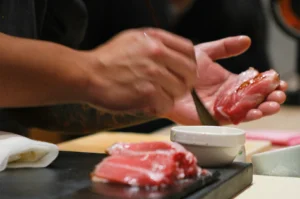
I take a seat where I can watch the chef work. He has been at this grill, I’m told, for more than thirty years. It shows in the way he doesn’t rush. He turns each skewer by feel, not by clock, reading the char the way you’d read a familiar face.
The foie gras arrives first. Crisp on the outside where the charcoal has done its work, then giving way to something soft and molten underneath — a single bite that seems to hold two textures at once. Then the sweet potato, its edges caught with smoke, the inside creamy and quietly sweet.
It reminds me of the best food in Japan — simple ingredients, treated with such care that time itself becomes part of the flavour.
Sumiyaki is a patient craft. The charcoal isn’t there for spectacle. It’s there to coax flavour out slowly, to let the heat settle into each piece rather than sear it into submission.
That patience is the whole point, and it’s becoming rare.
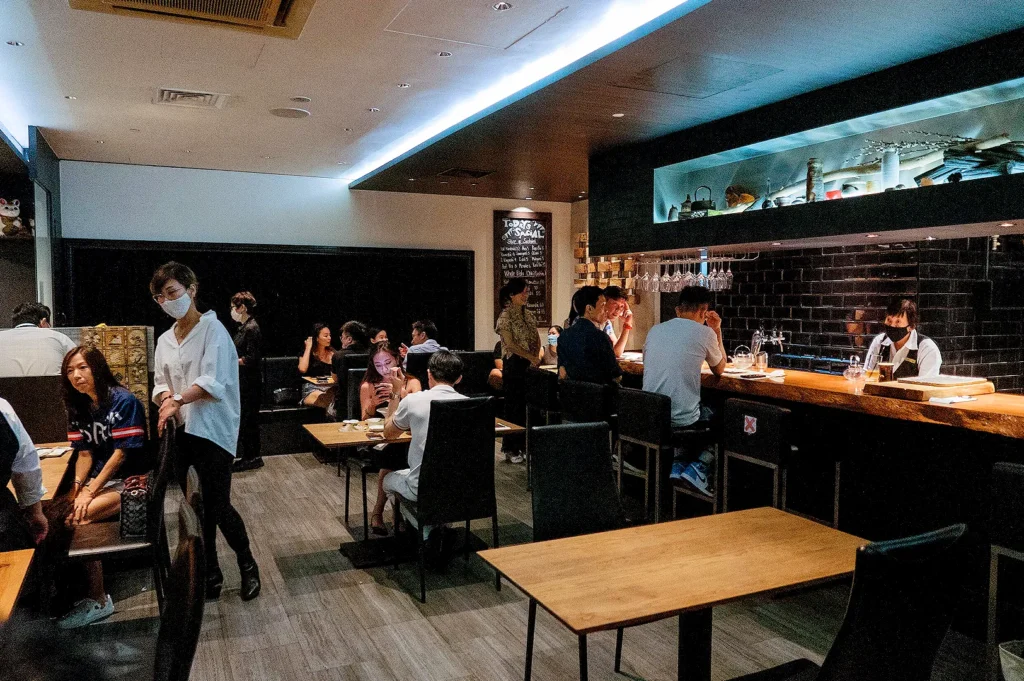
Around me, the room is a mix I don’t often see. Japanese expats loosening their ties after work, speaking low over shochu. Locals who found this place years ago and never left. The tables are small, the air is thick, the chairs a little worn. Nobody minds. There’s a kind of honesty to a room that doesn’t pretend — no soft lighting, no curated playlist, just the sound of the grill and the smell of it in your clothes long after you’ve gone.
It sits three floors above a street that has spent years polishing itself. Orchard Road, just minutes away, keeps reinventing what dining should look like — brighter, cleaner, faster. And here is Kazu, doing the opposite. Refusing to change what already works.
That’s the tension I keep turning over. We’ve grown used to convenience dressed up as care. Menus optimised, spaces designed to move you through. But a chef standing over the same charcoal for three decades isn’t convenient. It’s the slow accumulation of small decisions, made by hand, thousands of times over. You can taste that somewhere beneath the smoke — not perfection, but attention.
What feels worth recognising here isn’t novelty. It’s continuity. A grill that has outlasted trends. A room that never tried to be anything other than what it is. In a city that rewards the new, there’s something steadying about a place content to simply keep doing the thing it does well.
I finish the last skewer. The counter has emptied a little; the chef wipes the grill and starts again for the next order, the same motion I watched an hour ago.
I carry the smell of charcoal home with me. It fades by morning. The memory of that quiet, unhurried craft does not.

Between Aesthetic and Appetite: The Modern Food Blogger’s Dilemma
Eda Wong | April 15, 2026
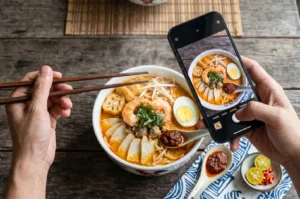
In our first, would probably say, emotional editorial, I would like to open with how there is a particular kind of silence that happens before a dish is eaten now. Not the quiet of anticipation, but the pause of positioning, a hand hovering just above the plate, adjusting the angle of a bowl so the…
-
Chasing Flavor: How Fook Kin Taught Us to Cook Asian Cuisine Recipes the Right Way
Eat Drink Asia Team | April 14, 2026
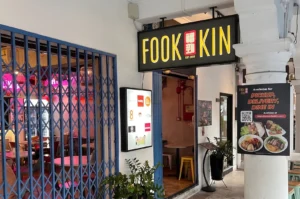
For years, we told ourselves that truly great Asian cooking was a mystical art form, a craft reserved for seasoned hawker uncles or Michelin-starred chefs with decades of experience. Our own attempts at home often felt like pale imitations, lacking that deep, smoky flavour or that perfect textural contrast we craved. Then, we had dinner…
-
Connecting Generations: How Asiatic Food Builds Family Bonds Across Time
Dio Asahi | April 11, 2026
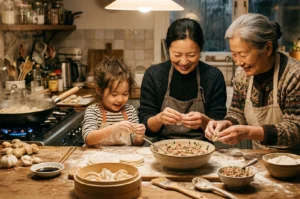
Whenever I smell toasted sesame oil hitting a hot wok, I am instantly transported back to a tiny, bustling kitchen from my childhood. The air would be thick with the aroma of ginger, garlic, and slow-simmering soy sauce. Before a single word was spoken, the meal was already telling a story. For many of us,…
-
A Comprehensive Resource for Oriental Foods Recipes for the Modern Home Cook
Eda Wong | April 10, 2026
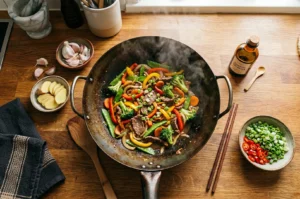
For years, I thought cooking Asian food at home required something mystical. My stir-fries were soggy, lacking that smoky breath of the wok. My fried rice was inconsistent, sometimes clumpy, other times dry. My sauces tasted flat, missing the balance of savory, sweet, and tangy flavors I craved. I assumed restaurants had secrets I’d never…
-
Pour Decisions: The Best Bars in Singapore for Craft Beers and More
Dio Asahi | April 9, 2026
Walking through the humid streets of Singapore at dusk, you can feel the city transforming. The tropical heat fades into neon lights, and the clinking of glasses begins to echo from narrow shophouses and towering skyscrapers. Singapore boasts a dynamic bar scene that rivals any global metropolis. From opulent destinations like to the laid back charm,…
-
The 8 Best Chinese Restaurants in Singapore: From Dim Sum to Peking Duck
Dio Asahi | April 7, 2026
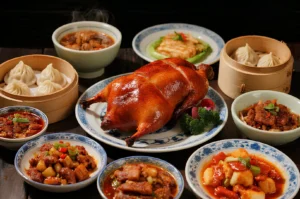
Singapore’s best chinese restaurants in singapore function less like isolated dining rooms and more like a networked system of technique. Across these chinese restaurants, you see branches of chinese cuisine expressed through roast mastery, controlled fermentation, seafood purity, and banquet choreography. This is not simply a guide to chinese food. It’s a mapped culinary journey…
-
The Neighbourhood Restaurant Test: How to Spot Truly Authentic Cuisine Restaurants in Your Area
Eda Wong | March 31, 2026
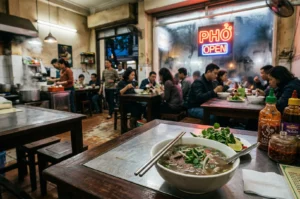
A friend texted me last week: “I’m outside this new Vietnamese place. How do I know if it’s legit before I waste my money?” It’s a question I get often. We’ve all been there, drawn in by a cool sign, only to get a plate of sad, sweet, tourist-grade pad thai that tastes like ketchup….
-
Cuisine in the World Meets Singapore: Inside Nakhon Kitchen’s Cross-Cultural Magic
Dio Asahi | March 26, 2026
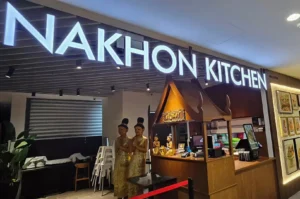
There’s a rite of passage for any food lover living in the East of Singapore, and it involves a queue. Specifically, the perpetually long, snaking queue outside Nakhon Kitchen in Bedok. I’d heard the legends for years: authentic Thai food, rock-bottom prices, and a wait time that tests your commitment. So, on a Tuesday evening…
-
The Spice Route Secrets: A Deep Dive into Malay Ethnic Food
Eda Wong | March 24, 2026
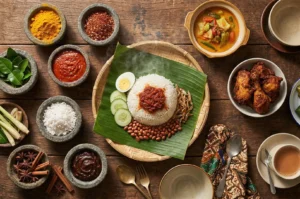
My first time ordering Nasi Padang in Geylang Serai was overwhelming, I randomly picked dishes and was shocked by a $20 bill due to premium beef rendang and squid. That taught me to always ask seafood prices and that Malay food is a complex, modular cuisine. Malay food is everywhere in Singapore, in hawker centres,…
-
The Shokunin Spirit: How Japan’s Craftsman Philosophy Lives Inside Singapore’s Most Disciplined Omakase Counter
Dio Asahi | March 21, 2026
The fire is not roaring; it is breathing. In a small, darkened workshop in Sakai, a swordsmith watches the colour of the steel with eyes that have tracked the same transformation for forty years. He does not look at a clock. He listens to the hum of the charcoal. He waits for the metal to…