By Dio Asahi for Eat Drink Asia.
It’s mid-morning, and the cook doesn’t look up.
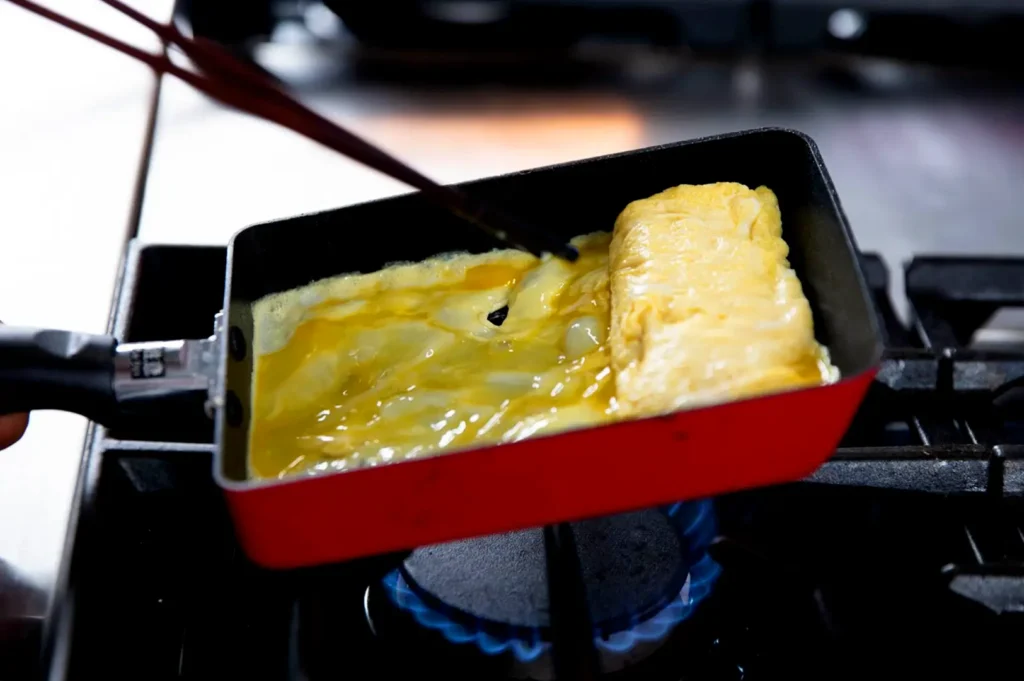
He stands over a rectangular pan, copper worn to a dull gold at the edges, and pours a thin skin of beaten egg across its surface. It hisses. Steam rises, warm and faintly sweet, and he tilts the pan just so, letting the egg find the corners. Before it fully sets, he folds. A chopstick lifts one edge, rolls it toward him in a single unhurried motion, then nudges the small log back to the far side. He pours again. Another layer. Another fold. The counter behind him is quiet. Somewhere, a knife works against a board.
This is tamagoyaki (tah-mah-go-YAH-ki), and up close, it’s less a dish than a slow accumulation.
Plainly, it’s rolled egg. But that description sells it short. Beaten egg, loosened with dashi, touched with sugar and sometimes a little soy, cooked not all at once but in layers — thin sheet upon thin sheet, each one folded into the last until a striped block builds up in the pan. The rectangular shape isn’t decoration. It’s what lets the roll keep its clean, right-angled form, layer stacking on layer until the cook can slice it into neat, banded pieces. Cut it open and you’ll see the rings, like the growth lines of something that took its time. The texture is soft, almost custard-like at the centre, holding just enough shape to lift with chopsticks.
To place tamagoyaki within the wider habits, ingredients, and rhythms of Japanese cuisine, see food in Japan.
There’s a patience in it I find hard to look away from.
The whole thing is built on timing you can’t rush. Too hot, and the egg browns and tears. Too cool, and the layers won’t set to fold. The cook reads the heat with his hands and eyes, not a timer — pour, wait, fold, pour, the rhythm so worn-in it looks like nothing. At a market counter, that economy of movement is its own kind of conversation. He doesn’t explain. You don’t ask. The pan does the talking, and you wait for it the way everyone before you waited. Tamagoyaki lives in bento boxes across the country, tucked beside rice and pickles, a small square of sweetness in a lunch packed by someone who cared. Watching it made is watching that care take shape in real time.
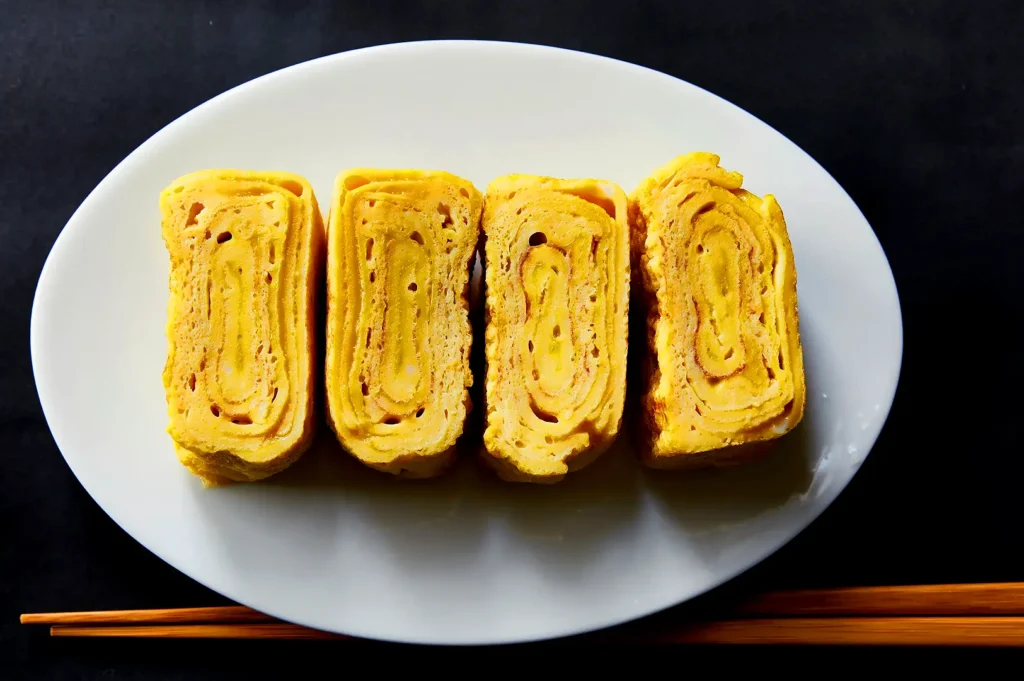
You can buy it already made, of course. Cut, sealed, stacked in every convenience store cold case, perfectly fine and perfectly forgettable. That’s the tension I keep turning over. The finished block looks nearly identical either way — neat, golden, photogenic. But the counter version carries something the packaged one can’t: the minutes it took, the folds you saw, the small heat still holding in it when it reaches you. The eye can’t tell them apart. The mouth, somehow, still can.
I took the last piece from the end of the roll, the one with the roughest edge.
It was warm, barely sweet, soft in a way that asked nothing of me. The cook had already started the next pan. And I understood, chewing, that I’d been given the plain end of something patient — and that plainness was the whole point.

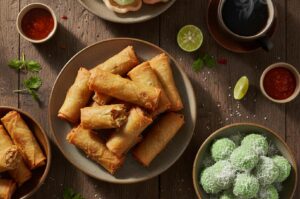
Crunch, Sweet, and Heat: The Irresistible Textures of Southeast Asian Snacks
Dio Asahi | February 17, 2026
In the humid, sticky heat of Southeast Asia, where your shirt clings to your back and the air is thick with the sharp scent of oxidising oil, there’s a particular clink that always gets me. It’s the sound of a metal spatula striking a wok, a rhythmic percussion that’s as familiar to me now as…
-
The Living Pantry: How Geography and Trade Shaped the Food in the Southeast Region
Eat Drink Asia Team | February 14, 2026
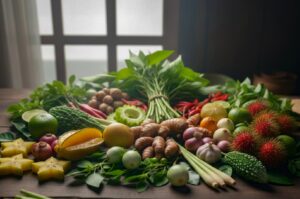
To understand the plate is to understand the map. If you were to trace the spice routes of the 15th century or follow the monsoon winds that carried merchant ships across the Indian Ocean, you would find yourself at the epicenter of the world’s most vibrant pantry. The food in the Southeast region of Asia…
-
A Symphony of Senses: Why Southeast Asian Food is the World’s Greatest Culinary Journey
Dio Asahi | February 12, 2026
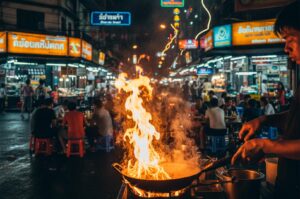
If you were to stand at a busy intersection in Bangkok, Ho Chi Minh City, or Jakarta and close your eyes, your nose would tell you a story before your eyes ever could. There is a specific, intoxicating perfume that defines Southeast Asian food: the sharp tang of lime juice hitting a hot wok, the…
-
The Alchemy of the Wok: The Story of Singapore-Style Bee Hoon
Eda Wong | February 10, 2026
Across the humid evening air of Singapore, a rhythmic clatter echoes from hawker stalls to high-rise kitchens—the sound of a metal spatula against a seasoned wok. Within that intense heat, rice vermicelli noodles undergoes a profound transformation, absorbing the golden hues of curry powder, the savory depths of soy sauce, and the smoky “breath” of…
-
The Sizzle of the Wok: An Exploration of Fried Bee Hoon Across Southeast Asia
Eat Drink Asia Team | February 7, 2026
Across Southeast Asia, from bustling hawker centers to family kitchens, the sizzle of rice vermicelli noodles hitting a hot wok is a universal comfort. Few dishes capture the spirit of Asian noodle culture as well as fried bee hoon. This stir fry, made with thin rice noodles, delivers a tasty meal any time of the…
-
The Silk of the East: A Deep Dive into Bee Hoon and the Art of Rice Vermicelli
Eda Wong | February 5, 2026
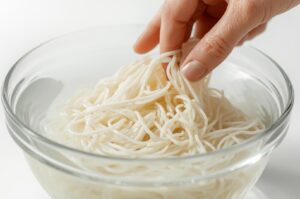
Across the bustling kitchens of Southeast Asia, one humble ingredient has woven itself into the fabric of countless beloved dishes. Bee hoon, the delicate rice vermicelli that transforms from brittle strands into silky noodles, represents centuries of culinary tradition and innovation. Whether you’ve savored Singapore noodles in a hawker center or encountered fried bee hoon…
-
The Eternal Hearth: A Journey Through the Soul of Indian Foods Vegetarian Traditions
Dio Asahi | February 3, 2026
In the vibrant tapestry of global gastronomy, few cultures have elevated the plant-based plate to an art form quite like India. While much of the world has recently turned toward meat alternatives for health or environmental reasons, Indian cuisine has been centered on the vegetable for millennia. This isn’t merely a dietary choice; it is…
-
The Essence of Jeju Citron Tea: A Distinctive Profile of Yuja Tea in Korea
Dio Asahi | January 31, 2026
Imagine sitting in a quiet, sun-drenched teahouse overlooking the dramatic volcanic coastline of Jeju Island. The steam rising from your cup carries an aroma that is at once familiar and yet entirely new—a version of Korean citron tea, or yuja cha, that tastes of sea salt, volcanic soil, and generations of island tradition. As you…
-
Korean Citron Tea: Health Benefits and Wellness Secrets
Eat Drink Asia Team | January 29, 2026
As the seasons change and a chill enters the air, many of us seek out comforting rituals to support our well-being. Imagine wrapping your hands around a steaming cup of Korean citron tea—also known as yuja-cha—its bright, citrus aroma soothing and revitalizing with every sip. More than just a winter treat, Korean citron tea is…
-
When the Izakaya Becomes the Plan: Izakaya Singapore Top Picks for After-Work Reset
Dio Asahi | January 28, 2026
January 28, 2026 | Dio Asahi Last updated: September 14, 2026 As you step behind the humble noren curtain, you’re greeted by glowing lanterns, sizzling charcoal-grilled skewers, and warm welcomes. This is izakaya, Japan’s casual pub, a vibrant part of Singapore’s dining scene. More than just yakitori and sake, izakayas offer a lively setting for social…