By Dio Asahi for Eat Drink Asia.
It’s mid-morning, and the cook doesn’t look up.
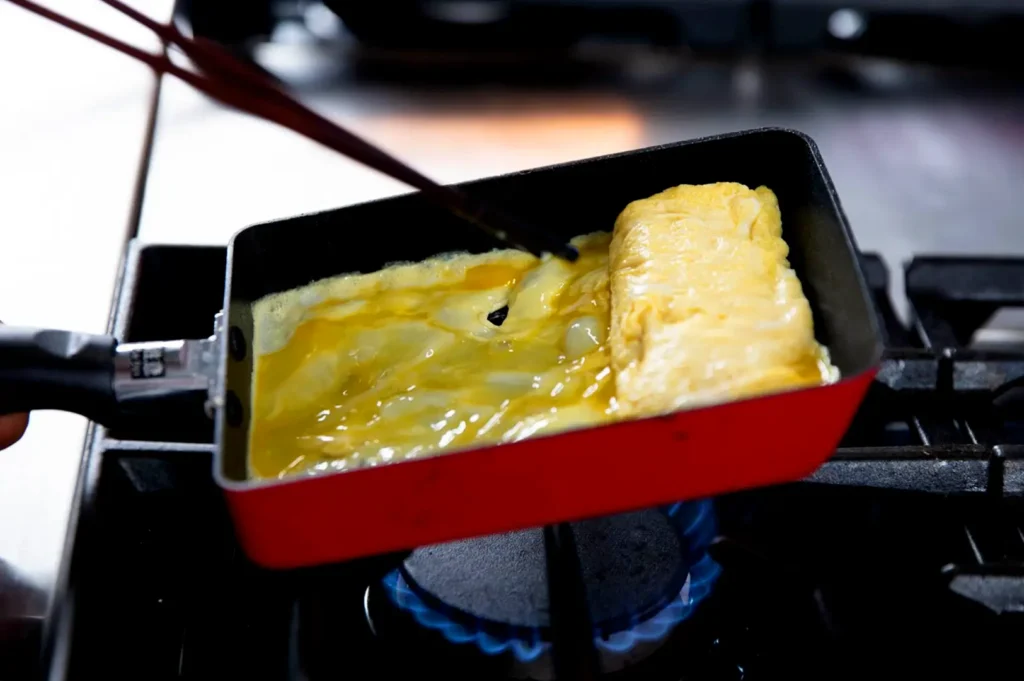
He stands over a rectangular pan, copper worn to a dull gold at the edges, and pours a thin skin of beaten egg across its surface. It hisses. Steam rises, warm and faintly sweet, and he tilts the pan just so, letting the egg find the corners. Before it fully sets, he folds. A chopstick lifts one edge, rolls it toward him in a single unhurried motion, then nudges the small log back to the far side. He pours again. Another layer. Another fold. The counter behind him is quiet. Somewhere, a knife works against a board.
This is tamagoyaki (tah-mah-go-YAH-ki), and up close, it’s less a dish than a slow accumulation.
Plainly, it’s rolled egg. But that description sells it short. Beaten egg, loosened with dashi, touched with sugar and sometimes a little soy, cooked not all at once but in layers — thin sheet upon thin sheet, each one folded into the last until a striped block builds up in the pan. The rectangular shape isn’t decoration. It’s what lets the roll keep its clean, right-angled form, layer stacking on layer until the cook can slice it into neat, banded pieces. Cut it open and you’ll see the rings, like the growth lines of something that took its time. The texture is soft, almost custard-like at the centre, holding just enough shape to lift with chopsticks.
To place tamagoyaki within the wider habits, ingredients, and rhythms of Japanese cuisine, see food in Japan.
There’s a patience in it I find hard to look away from.
The whole thing is built on timing you can’t rush. Too hot, and the egg browns and tears. Too cool, and the layers won’t set to fold. The cook reads the heat with his hands and eyes, not a timer — pour, wait, fold, pour, the rhythm so worn-in it looks like nothing. At a market counter, that economy of movement is its own kind of conversation. He doesn’t explain. You don’t ask. The pan does the talking, and you wait for it the way everyone before you waited. Tamagoyaki lives in bento boxes across the country, tucked beside rice and pickles, a small square of sweetness in a lunch packed by someone who cared. Watching it made is watching that care take shape in real time.
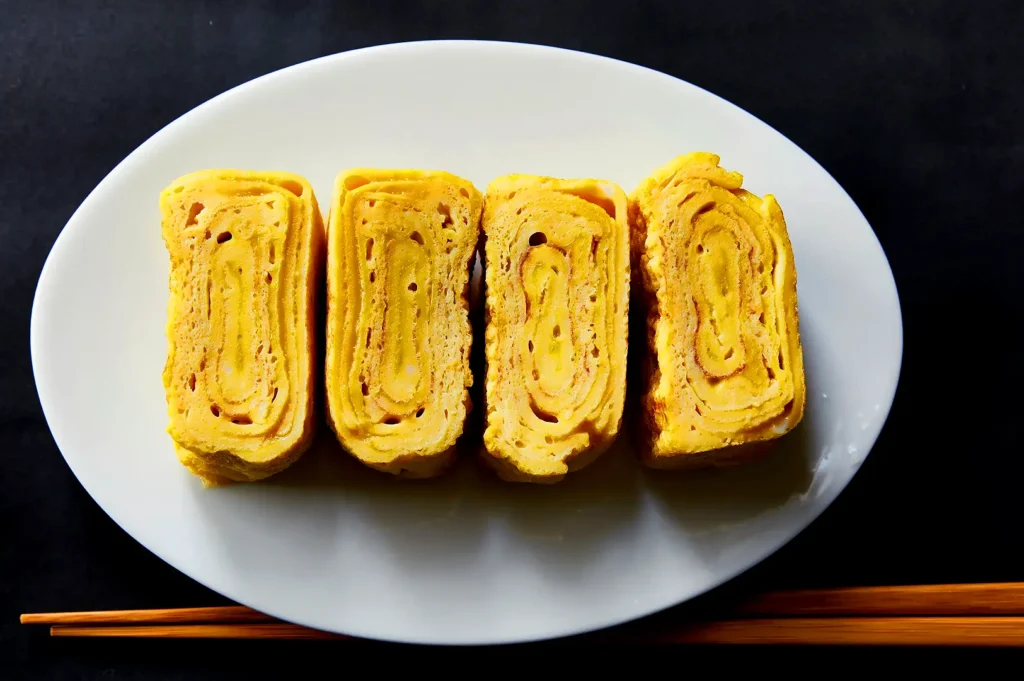
You can buy it already made, of course. Cut, sealed, stacked in every convenience store cold case, perfectly fine and perfectly forgettable. That’s the tension I keep turning over. The finished block looks nearly identical either way — neat, golden, photogenic. But the counter version carries something the packaged one can’t: the minutes it took, the folds you saw, the small heat still holding in it when it reaches you. The eye can’t tell them apart. The mouth, somehow, still can.
I took the last piece from the end of the roll, the one with the roughest edge.
It was warm, barely sweet, soft in a way that asked nothing of me. The cook had already started the next pan. And I understood, chewing, that I’d been given the plain end of something patient — and that plainness was the whole point.

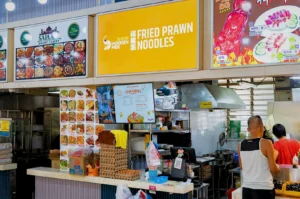
Shiok Hokkien Mee and the Pleasure of a Plate That Clings: Tiong Bahru Hokkien Mee at Midday
Eat Drink Asia Team | June 25, 2026
I have always believed that the true test of a neighbourhood’s food scene happens right in the middle of the day. When the midday hunger hits, you don’t want a tasting menu; you want a fast, flavourful culinary journey that hits the spot. That is exactly what led me, representing the Eat Drink Asia team,…
-
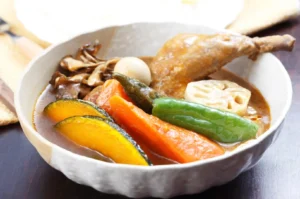
When Curry Learns to Breathe
Dio Asahi | June 24, 2026
The rain taps lightly against the glass of a quiet Japanese diner, turning the pavement outside a slick, silver grey. Inside, the bowl arrives with steam first, then colour: pumpkin orange, aubergine purple, and a dark curve of chicken set against a broth that looks too light to carry so much heat. The spoon touches…
-
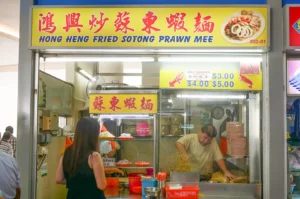
Hong Heng Fried Sotong Prawn Mee: Where Squid Turns Chewy, Broth Turns Glossy, and Time Turns Quiet
Eda Wong | June 23, 2026
There is something deeply comforting about a hawker centre right before the lunch rush hits. I visited Tiong Bahru Market on a Tuesday around 10:30 am, hoping to beat the infamous queue at Hong Heng Fried Sotong Prawn Mee. Even at that early hour, a line of six people had already formed, waiting quietly under…

Cuppage Plaza Food: Hidden Japanese Restaurants and Dining Gems Near Orchard
Dio Asahi | June 20, 2026
Orchard Road is a brilliant, trend-setting celebration of flavours, but its gleaming mega-malls can sometimes feel a bit predictable. If you are an urban food enthusiast seeking genuine culinary journeys rather than polished franchise menus, the true heart of the district lies slightly hidden. Cuppage Plaza is a fascinating, liminal space that operates almost like…
-
Makgeolli Bowls and the Soft Grain of Korean Rice Wine
Eda Wong | June 19, 2026
The monsoon rain drums a steady, heavy rhythm against the fogged windows of a narrow tavern in Jongno, muffling the chaotic pulse of the city outside. Inside, the air hangs warm, thick with the scent of toasted mung beans and a subtle, yeasty tang. A dented brass kettle tips forward, and a chalk-white, opaque liquid…
-
Kung Pao Chicken Sauce Is the Real Test: Why It Turns Glossy, Sharp, and Addictive
Eat Drink Asia Team | June 18, 2026
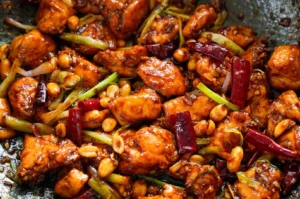
Kung pao chicken is often described by its main ingredients: diced chicken, dried chillies, peanuts, spring onions, and Sichuan peppercorns. But anyone who has cooked it at home knows the truth: the dish succeeds or fails because of the sauce. The sauce decides whether kung pao chicken tastes lively and balanced, or flat, sticky, and…
-
Jeju’s Seaweed Soup and the Memory of Birthday Tables
Dio Asahi | June 17, 2026
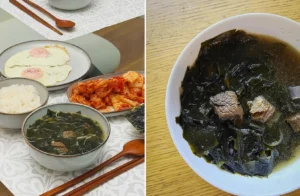
The sharp winter wind rattles the low stone walls of a Jeju Island kitchen, but inside, the air is thick with steam and the deeply marine scent of boiling kelp. An elderly woman stands by a bubbling steel pot, watching the dark green fronds swell and twist in the rolling water. She adds a splash…
-
Chicken Pao Recipe for People Who Respect Heat: Why Kung Pao Works Only When Timing Is Tight
Eda Wong | June 16, 2026
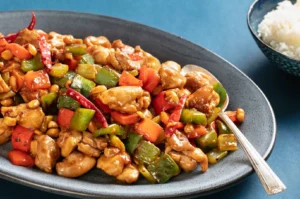
I remember my first attempt at cooking gong bao ji ding a few years ago. I wanted to recreate that authentic, trend-setting dish I had experienced at a traditional Sichuan restaurant, a meal that felt like a genuine celebration of flavours. I heated my wok until it was smoking, tossed in a handful of dried…
-
A Shu Yan Sichuan Cuisine Review Written in Pepper and Smoke: Chicken Pao That Wakes Up the Table
Dio Asahi | June 13, 2026
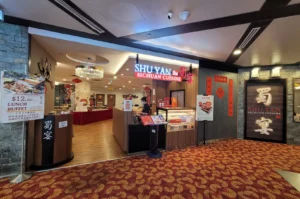
I used to think of authentic Sichuan food as a sheer test of endurance. For a long time, I assumed the goal was simply to survive the fiery onslaught of chillies rather than actually taste anything. But my recent culinary journey at Shu Yan Sichuan Cuisine completely rewired how I understand this region’s flavour map….
-
In Luang Prabang, Or Lam Carries the Taste of Sakhan
Eda Wong | June 12, 2026
The damp morning mist still clings to the teakwood houses of Luang Prabang as an elderly cook tends to a glowing charcoal brazier. Sparks jump lightly into the cool air, illuminating the blackened belly of an aluminium pot. Inside, a thick, dark liquid bubbles rhythmically, releasing an incredibly aromatic cloud of charred lemongrass, sweet Thai…