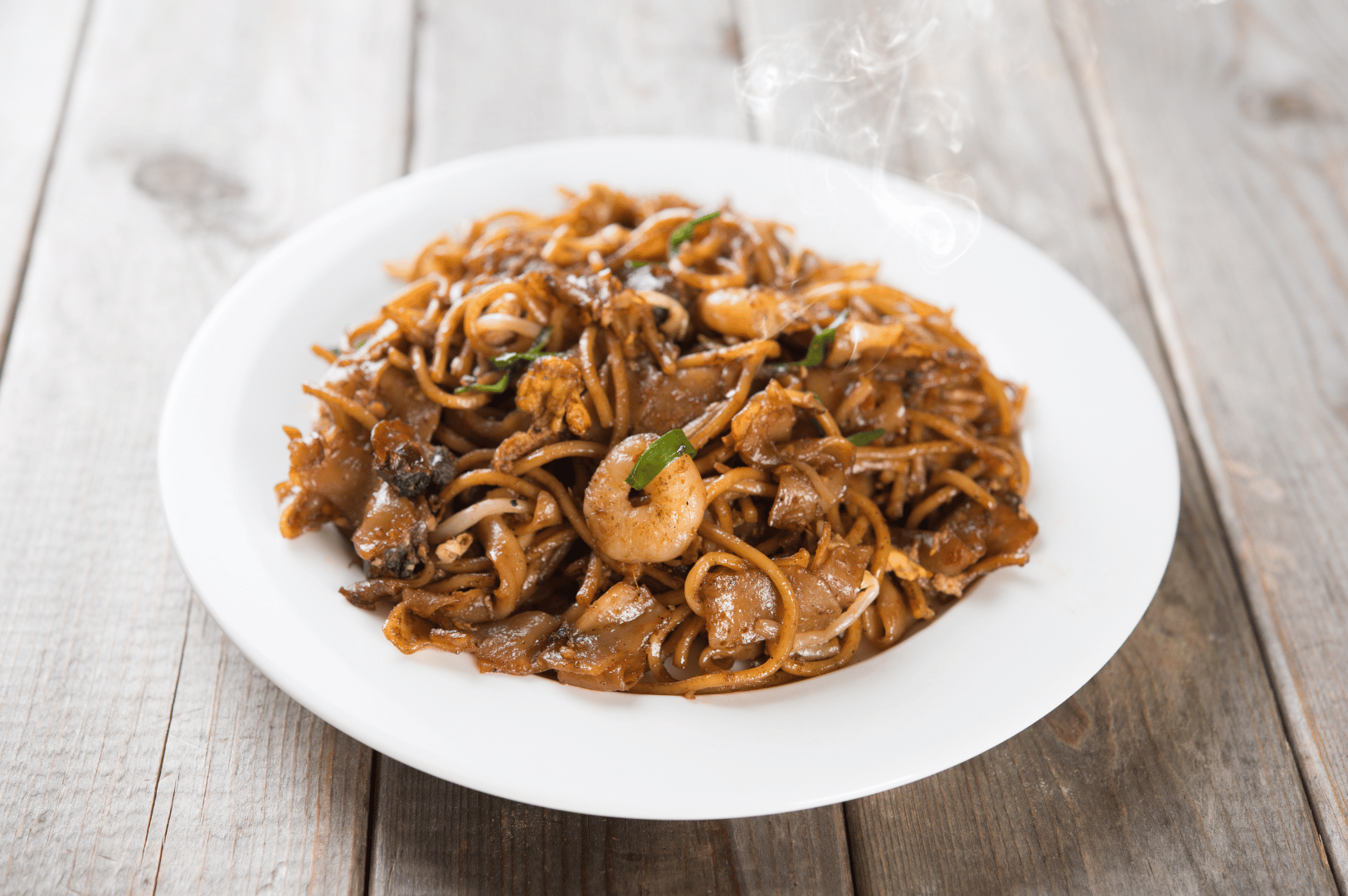
The air in Penang is thick with anticipation, carrying the sounds and smells of Malaysian street food being crafted with expert care. Your attention is captured by one of the many street vendors, a master standing before a seasoned wok glowing over an intense fire. The rhythmic clanging of metal on metal is the soundtrack to a mesmerising performance. A mixture of flat rice noodles, cooked shrimp, and bean sprouts is tossed into the air, briefly vanishing into a cloud of fragrant, smoky steam. This is the captivating theatre of the street stalls, and the star of this culinary show is Penang Char Kway Teow.
This isn't just a simple dish of noodles. It’s a plate loaded with history, an iconic dish that represents the soul of local food. Join us on this exploration as we uncover the secrets behind this famous stir fried meal and discover what makes the Penang version a global benchmark for flavour.
From Humble Meal to National Icon
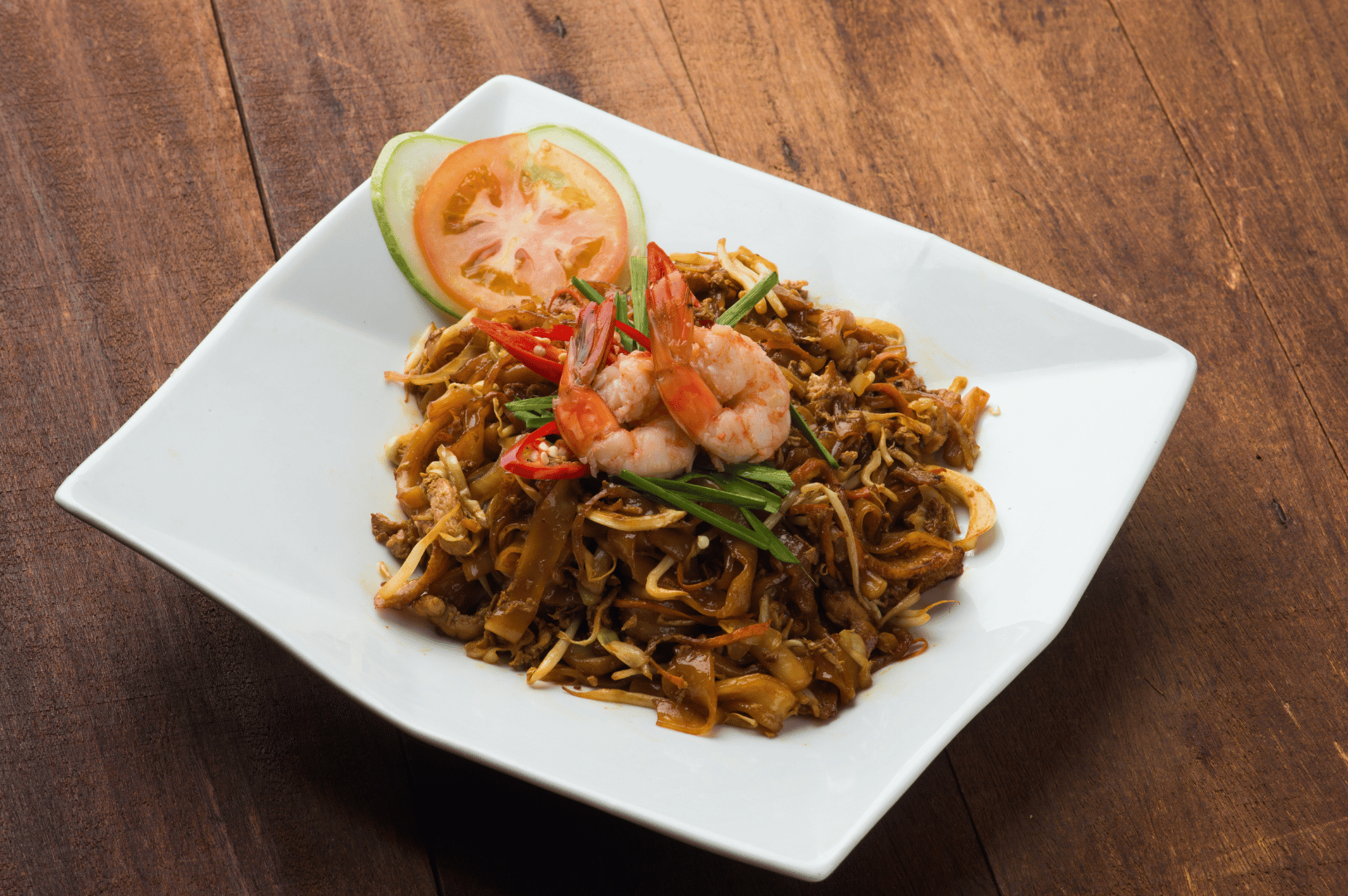
Char Kway Teow, which is literally translated from the Hokkien dialect as "stir-fried rice cake strips," began its life as a hearty, calorie-rich meal. Its roots lie with the Teochew immigrants who settled across Southeast Asia. Initially, it was the go-to food for labourers and fishermen who needed an affordable, filling, and energy-dense dish to get through a gruelling day's work. The high-fat content, traditionally from pork lard, provided essential energy, while the noodles and other simple additions offered substance.
Over many years, this humble dish transformed from a purely functional meal into a culinary masterpiece. It became a fixture in the lively ecosystem of Malaysian coffee shops and bustling food courts. Today, it stands as a proud symbol of Malaysia's multicultural food scene, cherished by locals and eagerly sought by travellers on a quest for authentic taste experiences. No culinary tour of Penang is complete without it.
The Anatomy of an Authentic Plate
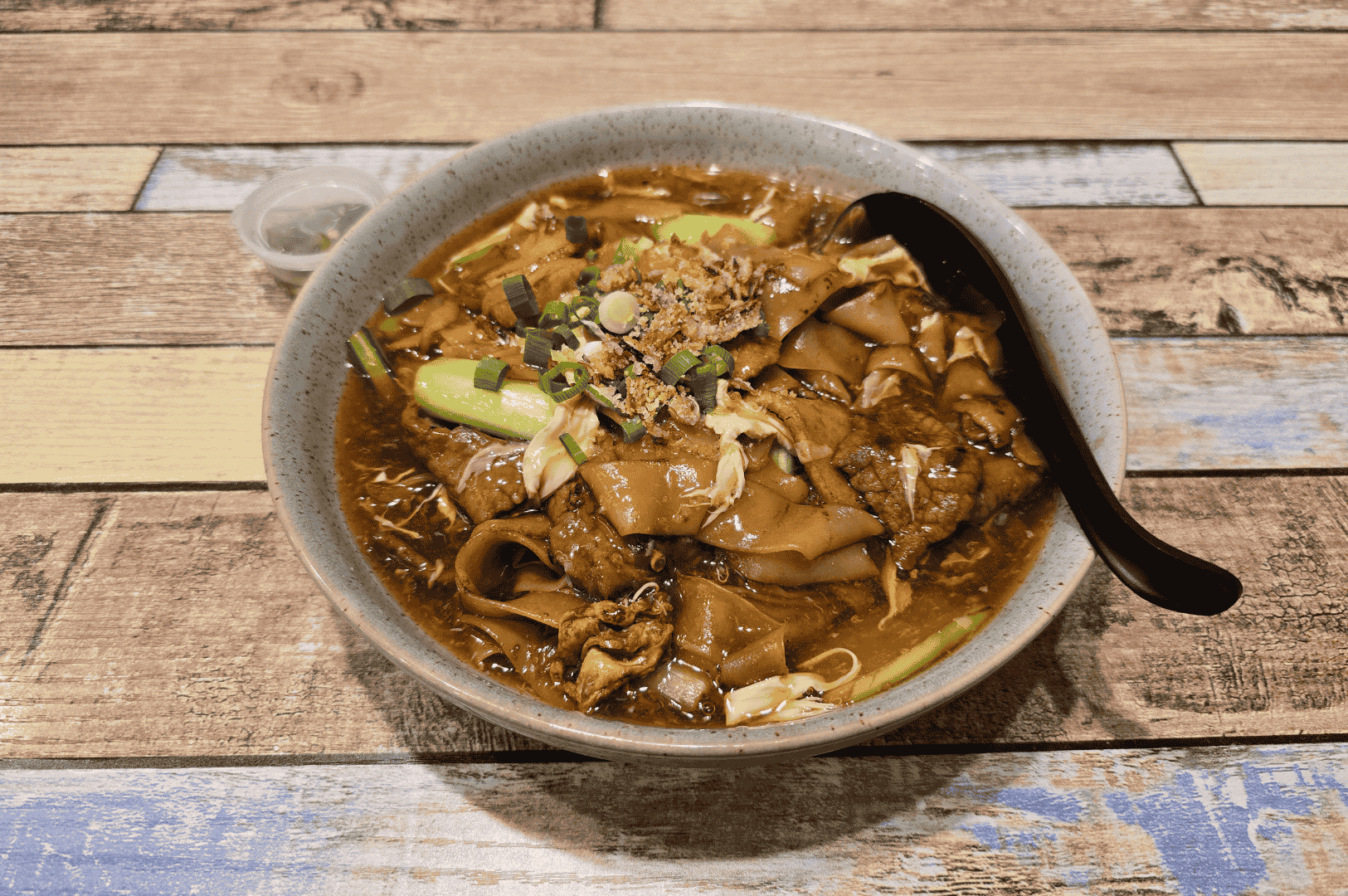
What elevates a basic stir fry to legendary status? The magic of a good Char Kway Teow is in the flawless harmony of its core components. Every single ingredient is selected for a specific texture and flavour, and the quality of each is essential for an authentic experience.
The Core Ingredients
- Rice Noodles: The heart of the dish is the kway teow, which are soft, slightly chewy flat rice noodles perfect for soaking up the savoury sauce. Sometimes, vendors use dried flat rice noodles which are prepared in boiling water before cooking. Often, these are mixed with a portion of yellow egg noodles to create a more complex texture.
- Shrimp: Fresh, juicy cooked shrimp are a cornerstone. They must be plump and sweet, adding a touch of seafood luxury. In Penang, the shrimp are often impressively large.
- Blood Cockles (See Hum): This is a defining, if sometimes polarising, ingredient. Lightly blanched, these small clams add a briny, metallic burst of flavour that many connoisseurs consider non-negotiable. You can, of course, request your plate without them.
- Chinese Sausage (Lap Cheong): These sweet, cured pork sausages are thinly sliced. As they cook, they release their fat and distinct sweetness into the dish, creating a beautiful balance with the savoury elements.
- Bean Sprouts (Taugeh): Added near the end of the cooking, they provide a vital element of freshness and a satisfying crunch that cuts through the richness of the meat and sauce.
- Chinese Chives (Ku Chai): Also known as garlic chives, these are chopped into sections and add a mild, onion-like freshness and a pop of vibrant green.
- Egg: Duck eggs are traditionally favoured in Penang for their richer yolk and creamier texture, which luxuriously coats the noodles. Chicken eggs are also commonly used.
- Pork Lard & Crispy Lardons: This is the secret weapon for many old-school vendors. Rendered pork fat is the traditional cooking oil, imparting an unparalleled flavour and aroma. The crispy fried cubes of lard are a decadent garnish.
- The Sauce: The exact recipe for the sauce is a closely guarded secret for many, but it's typically a sophisticated blend. It often includes dark soy sauce for colour and sweetness, light soy sauce for saltiness, and a chili sauce or chili paste like chili boh for a spicy kick. Some modern variations might even include a touch of oyster sauce for added umami.
The Soul of the Wok: Chasing "Wok Hei"
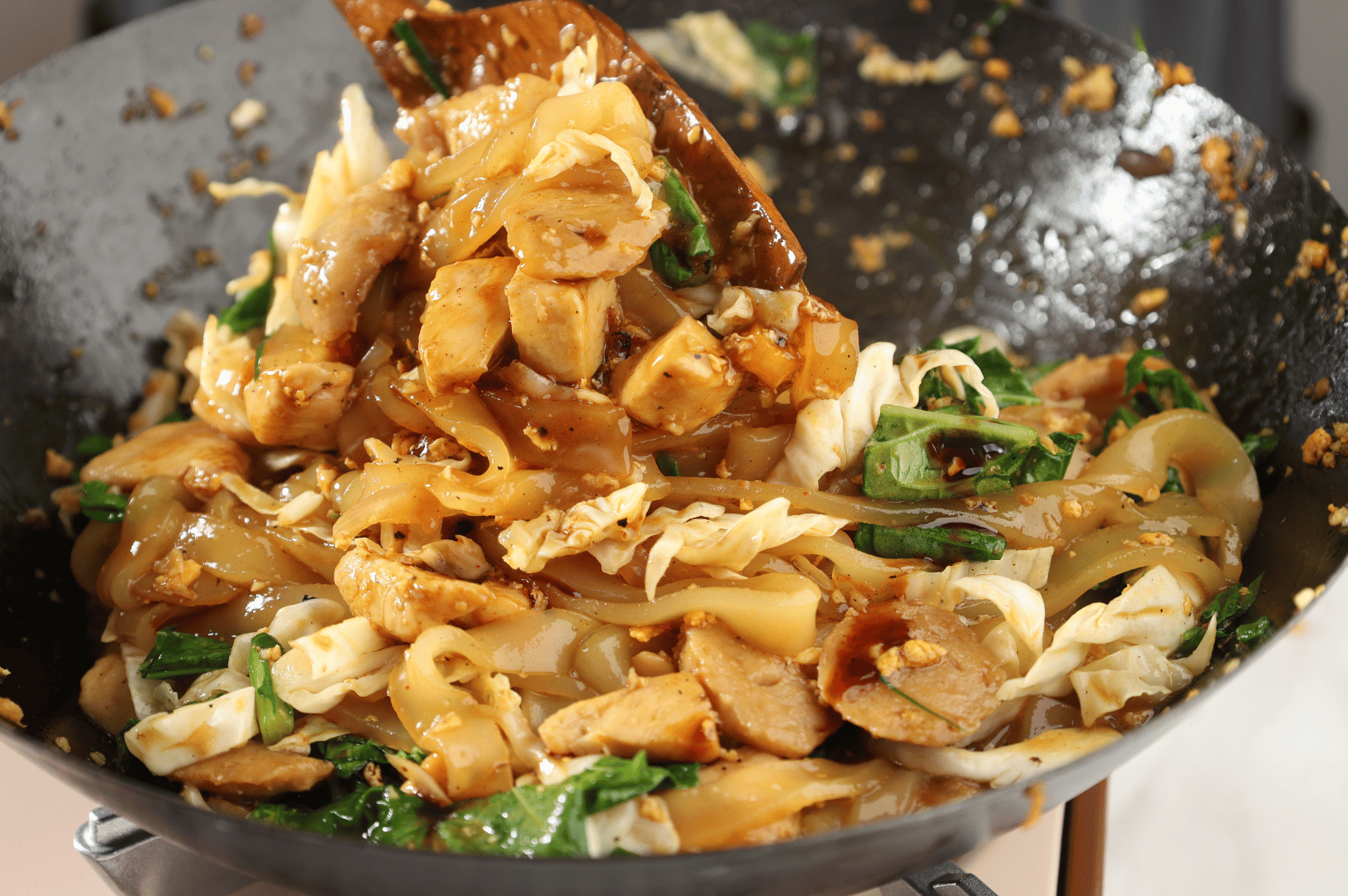
You could gather the world's finest ingredients, but without the right technique, you cannot create a genuine Char Kway Teow. The key to its signature smoky flavour is a concept known as wok hei.
Wok hei translates to "breath of the wok." It is that elusive, smoky, and slightly charred flavour that can only be achieved when cooking at an extremely high heat in a good wok. A well-seasoned wok is crucial. The intense heat, often from a roaring charcoal fire, causes the sauce to caramelise instantly upon hitting the hot metal. The food is tossed relentlessly, allowing it to connect with the searing surface without burning. This process imparts a distinct aroma that simply cannot be replicated on a standard kitchen stove. The noodles should be allowed to cook undisturbed for moments at a time to develop that char.
A master hawker orchestrates this with incredible speed. Garlic is flash-fried in cooking oil, followed by the noodles and Chinese sausage. The soy sauce blend is added, and the wok erupts in a cloud of aromatic steam. The shrimp, egg, and finally the bean sprouts and chives are tossed in, each at a precise moment to ensure it is perfectly cooked. The entire process takes just a few minutes, resulting in a dish that is smoky, savoury, sweet, and spicy all at once. The final plate is often served immediately, sometimes on a banana leaf for extra fragrance.
Penang Style vs. Other Variations
While you can find Char Kway teow across Malaysia and Singapore, the Penang version is widely seen as the gold standard. So, what sets it apart from the many variations?
- The Flavour Profile: Penang-style Char Kway Teow is predominantly savoury, with a pronounced seafood flavour, distinguishing it from sweeter, darker versions found elsewhere. It is a popular snack that balances its elements perfectly.
- The "Wetness": It tends to be slightly moister than other regional styles, with the sauce clinging to the noodles without making the dish soupy.
- Ingredient Focus: The use of large, fresh shrimp, blood cockles, and rich duck eggs are hallmarks of the Penang style. Other additions found in different regions, like fish cake, fish balls, or minced meat (like minced pork), are less common here. It is traditionally served without a side of cucumber slices.
- The Fire: Many legendary street stalls in Penang still insist on using charcoal fires, believing it is the only way to achieve true wok hei.
Where to Find Legendary Char Kway Teow
Your culinary journey in Penang should include a quest for the best plate. While "the best" is always a matter of personal taste, here are a few iconic street vendors that consistently deliver an unforgettable experience.
- Siam Road Char Koay Teow: Possibly the most famous of them all, this stall is known for its legendary queues. The elderly uncle helming the wok is a local celebrity, using a traditional charcoal fire to produce a plate that is intensely smoky and packed with juicy shrimp. The wait is long, but the reward is a truly authentic flavour.
- Ah Leng Char Koay Teow (Kafe Khoon Hiang): Ah Leng offers a "special" version that is a true indulgence, loaded with extra-large prawns or even mantis shrimp. It’s a pricier option, but the quality of the seafood is exceptional. It’s a firm favourite among those seeking a premium plate of this iconic dish.
- Lorong Selamat Char Koay Teow (Kafe Heng Huat): Known for its fiery "auntie" who wears goggles to protect her eyes from the oil, this stall serves a flavourful and slightly wetter version of the dish. The plates come piled with large chunks of fresh shrimp, making it a visually impressive meal.
- Tiger Char Koay Teow (Ping Hooi Coffee Shop): A classic spot for breakfast and lunch, this stall has been operating for decades. They use a gas-fired stove but still achieve a remarkable level of wok hei. Their version is consistently delicious and a great introduction for anyone new to the dish.
Beyond Char Kway Teow: A World of Malaysian Street Food
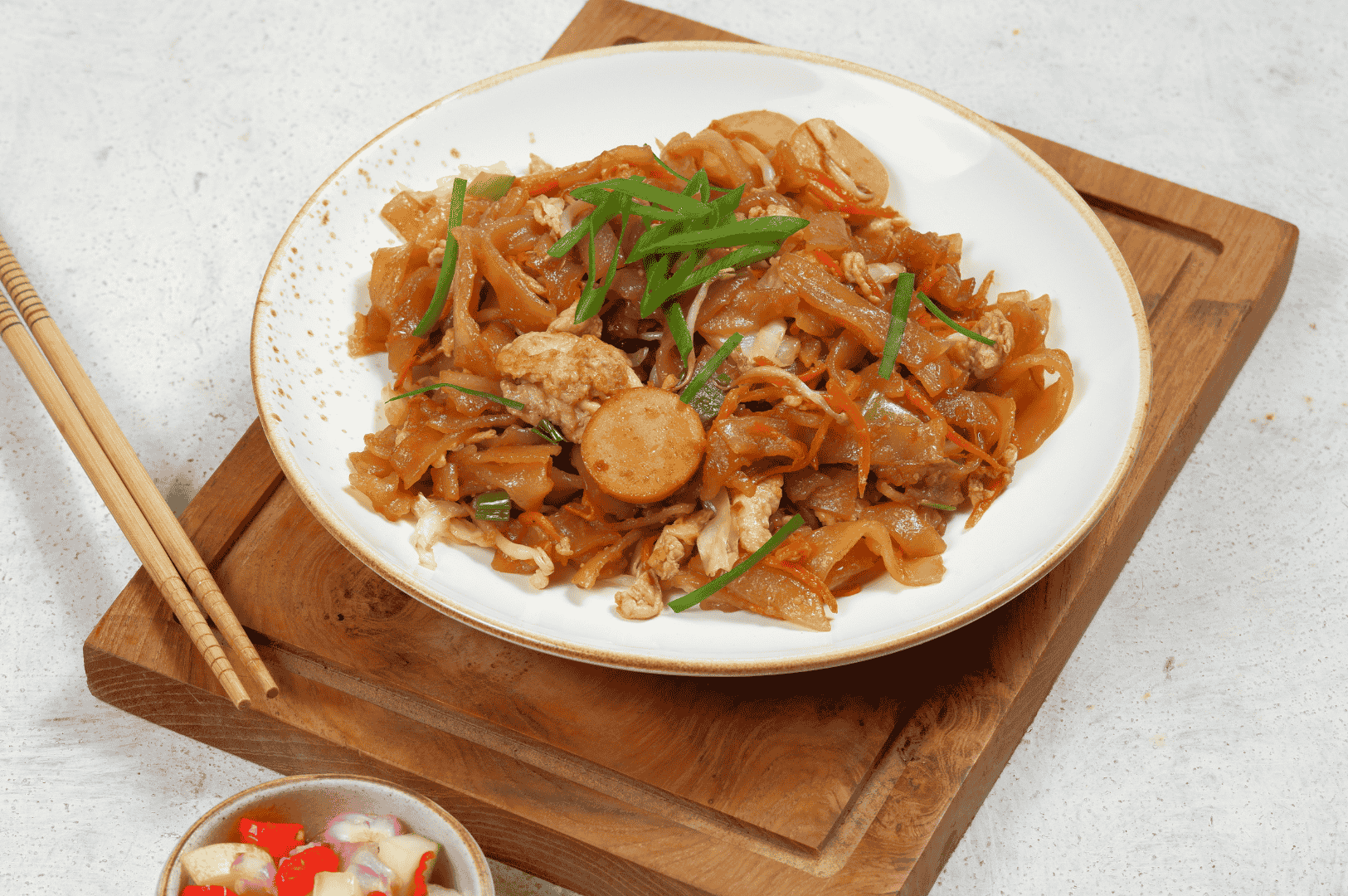
While Char Kway Teow might be king, Penang is a paradise of Malaysian street food. When you're not queuing for noodles, you can explore other local delights. Try Asam Laksa, a spicy and sour fish-based noodle soup with shredded mackerel, or Hokkien Mee, a rich prawn noodle soup. Don't miss out on Nasi Lemak, fragrant rice cooked in coconut milk and served with spicy sambal, or Roti Canai, a flaky flatbread perfect for dipping.
You can also find other noodle dishes like Mee Goreng (a different style of fried noodles) and delicacies from other cultures, such as Dim Sum in the morning or dishes from the stalls in Little India. For dessert, try shaved ice (ais kacang) topped with red beans, sweet corn, and green rice flour jelly, drizzled with palm sugar syrup and condensed milk.
An Essential Penang Experience
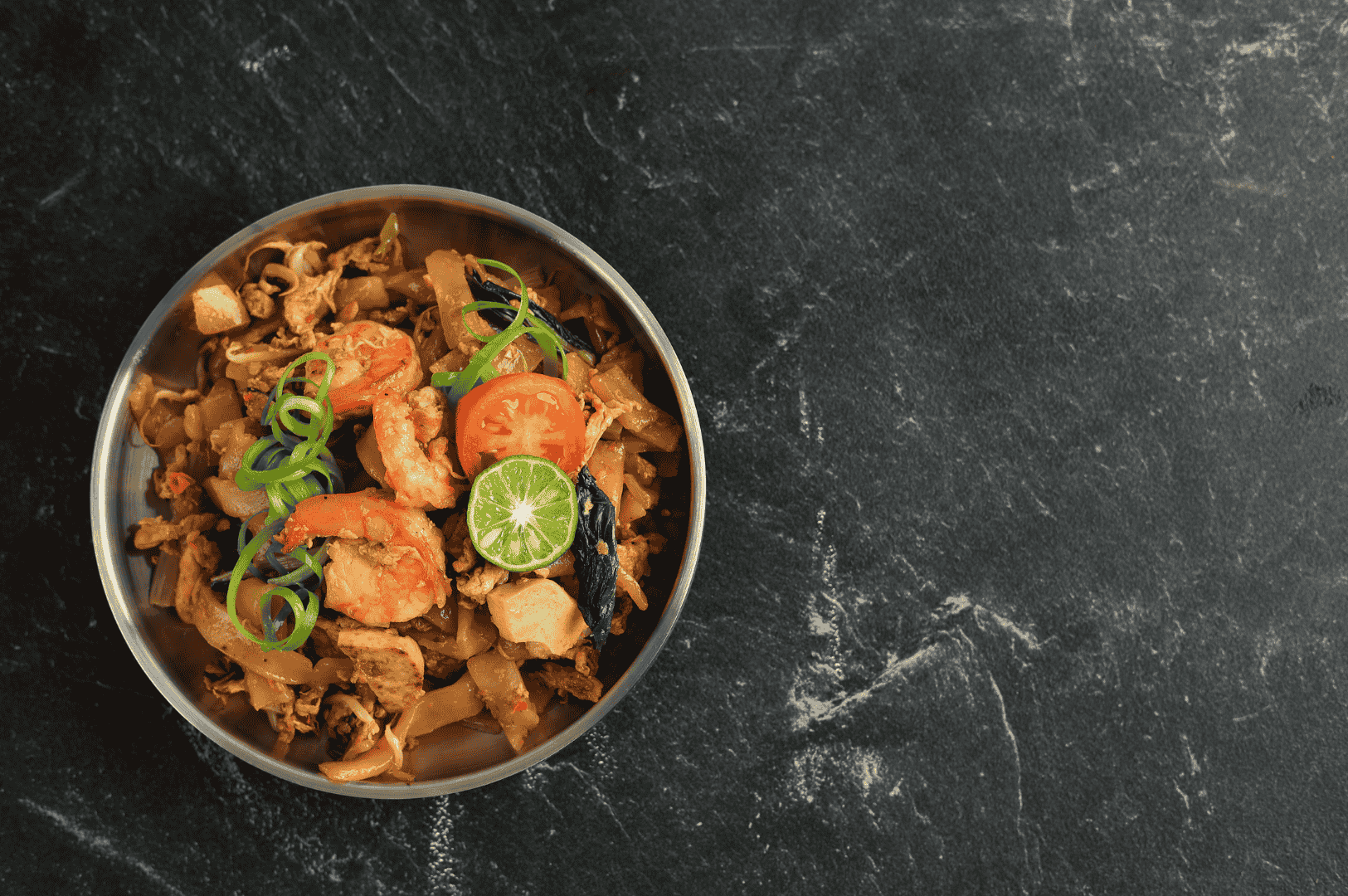
Char Kway Teow is more than just food; it's a celebration of flavours, a display of incredible skill, and a taste of Penang's soul. Watching the masters start cooking is a spectacle, and tasting the final product is a rite of passage for any visitor. The interplay of smoky noodles, sweet Chinese sausage, briny blood cockles, and fresh shrimp creates a complex symphony that lingers long after the final bite.
To visit Penang and not try a plate of authentic Char Kway Teow from a seasoned wok would be to miss out on one of Southeast Asia's greatest street food treasures. So, find a hawker stall, pull up a plastic stool, and prepare for a culinary journey you won't soon forget.
If you enjoy uncovering the traditions behind shared meals and ancient cooking methods, explore more about communal dining culture across Asia and the centuries-old dumpling techniques that continue to shape today’s kitchens.

Asian Food Comfort Trends: Why Broths and Bowls are Dominating Globally
Eda Wong | March 14, 2026
I still remember the first time I faced a “build-your-own” Mala Xiang Guo counter. I stood there, plastic tongs in hand, completely paralyzed by the mountain of choices. Lotus root? Kelp knots? three different types of tofu skin? My anxiety spiked. I panicked, grabbed way too much luncheon meat, and ended up with a $28…
-
The Fifth Element: A Masterclass on Umami in East Asian Cuisine
Dio Asahi | March 12, 2026
I’ll never forget the first time I made miso soup from scratch. Not the instant kind, but the “proper” way. I boiled water, dissolved miso paste, added tofu, and waited. It tasted flat, salty and cloudy but missing the deep, satisfying flavor I loved in Japanese restaurants. I thought maybe I needed better miso. Years…
-
Why My Quest Ended at Yummy Western (409 AMK)
Dio Asahi | March 10, 2026
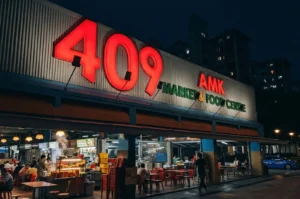
There’s a specific magic to a late-night supper hunt in Singapore. It’s the ritual of chasing a craving through the humidity to find that one stall that hits the spot. For me, that meant a pilgrimage to Ang Mo Kio Avenue 10. I arrived at 10 PM on a Friday, just as the ‘supper soul’…
-
A Taste of Time: My Dinner at Guan Hoe Soon
Eda Wong | March 7, 2026
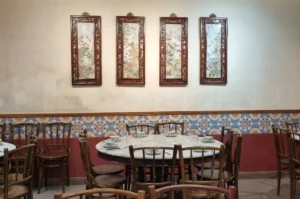
There’s something special about visiting a place that has seen decades of Singapore’s history unfold. Guan Hoe Soon, tucked away on Joo Chiat Road, holds the title of Singapore’s oldest Nyonya restaurant, and you can feel that heritage the moment you step inside. I’d heard about it for years, a place where recipes aren’t just…
-
The 5 Best Halal Restaurant in Singapore for Authentic Nasi Padang
Eda Wong | March 5, 2026
There are few meals as satisfying as Nasi Padang, a colourful feast where you choose from a variety of dishes to create your perfect plate. Over the years, I’ve explored Singapore’s Nasi Padang scene, especially in Kampong Glam, sampling everything from humble hawker stalls to renowned spots. This list highlights the five best halal Nasi…
-
The Global Soup Bowl: How Indonesian Soto Shapes the Future of Asiatic Food Traditions
Dio Asahi | March 3, 2026
I still remember my first “real” bowl of Indonesian soto. Sitting on a low plastic stool in a cramped warung, I ordered Soto Betawi, expecting it to be like the clear Soto Ayam from Singaporean weddings. I was wrong. The rich, milky broth was intense, creamy, and boldly spiced. That first spoonful rewired my idea…
-
Shun: Japan’s Seasonal Treasures – A Deep Dive Into the Ingredients Behind True Omakase
Eat Drink Asia Team | February 28, 2026
In the world of Asian food, few dining experiences capture the soul of traditional Japanese food culture like omakase. At a premier omakase restaurant, diners entrust their meal entirely to the chef, whose artistry is guided not just by mastery, but by shun—the appreciation of seasonal and fresh ingredients at the absolute peak of their…
-
My Trip to Bánh Mì Saigon and How It Compares to Best Food in Singapore
Eda Wong | February 26, 2026
Located in the bustling neighborhood of Ang Mo Kio, Bánh Mì Saigon offers a taste of Vietnam right here in Singapore. From traditional bánh mì sandwiches to hearty pho bowls and refreshing Vietnamese iced coffee, this restaurant has it all. I arrived at Bánh Mì Saigon on a busy Saturday evening and was immediately drawn…
-
Tea Room by Ki-setsu: A Curated Journey Through Chinese Tea in the Heart of Singapore
Dio Asahi | February 25, 2026
Most people arrive at Chinese tea the way they arrive at any beverage: thirsty, curious, maybe looking for something sweet or soothing. But traditional chinese tea isn’t built like a single drink. It’s a network: leaf origin, processing choices, vessel physics, water, pacing, and the quiet social technology of sitting down long enough for a…
-
Tandoori Chicken: The Signature Indian Chicken Dish
Eda Wong | February 24, 2026
Tandoori chicken stands tall among the best Indian chicken recipes. With its vibrant hue and smoky aroma, this iconic Indian chicken dish is celebrated in Indian restaurants worldwide. Emerging from Punjab, it pairs perfectly with fragrant basmati rice or fresh naan and is a favorite for anyone who loves bold flavors. The hallmark of tandoori…