Steam lifts from a bowl of clear pork broth, and a spoonful of chopped pickled greens slides in. The broth shifts at once, its richness suddenly cut by a sharp, clean sourness that sits high and bright on the tongue. The greens have softened in the heat but keep a faint, springy crunch. Someone leans over the pot, breathes in, and adds another small handful, tasting after each one. The smell is unmistakable: tangy, slightly funky, alive in a way fresh vegetables never are. It is a small adjustment, almost invisible, and it changes everything in the bowl.
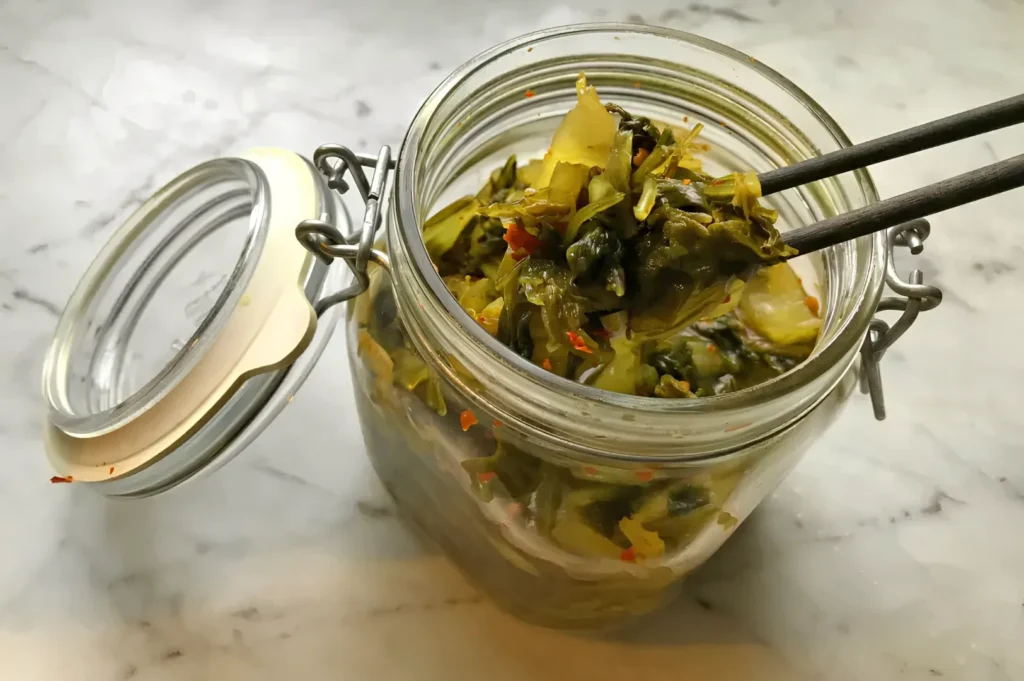
These are pickled mustard greens, known across regions as suancai (pronounced roughly swan-tsai), or as cải chua, or pak gard dong. The making is humble. Whole mustard greens are washed, salted, and pressed under a weight, then left to ferment in their own brine until the leaves turn translucent and deeply sour. Time does the work. A few days yields a gentle tang; longer brings a sharper, more pungent edge. Before they go into broth, the greens are usually rinsed and squeezed, a quiet act of calibration that decides how much sourness the cook wants. Too little rinsing and the soup turns aggressive; too much and the brightness disappears. In a clear broth, the greens do one thing perfectly: they lift fat, sharpen flavor, and keep the whole bowl from feeling heavy.
I learned this watching my grandmother tend her jar on the kitchen ledge, pressing the leaves down each evening with the flat of her hand. She never measured. She tasted the brine on a fingertip and knew. That jar was a household clock of sorts, a thing checked daily, replenished when it ran low, drawn from for noodle breakfasts and weekend soups. The greens were never the centerpiece. They were the note that made the rest make sense, the sour thread running through ordinary meals. It felt inseparable from an asian communal dining tradition—a shared table where one person’s careful jar quietly tuned everyone’s bowl. Whole families calibrated their cooking around one cook’s particular fermentation, a private standard passed hand to hand, rarely written down, often slightly different from the household next door.
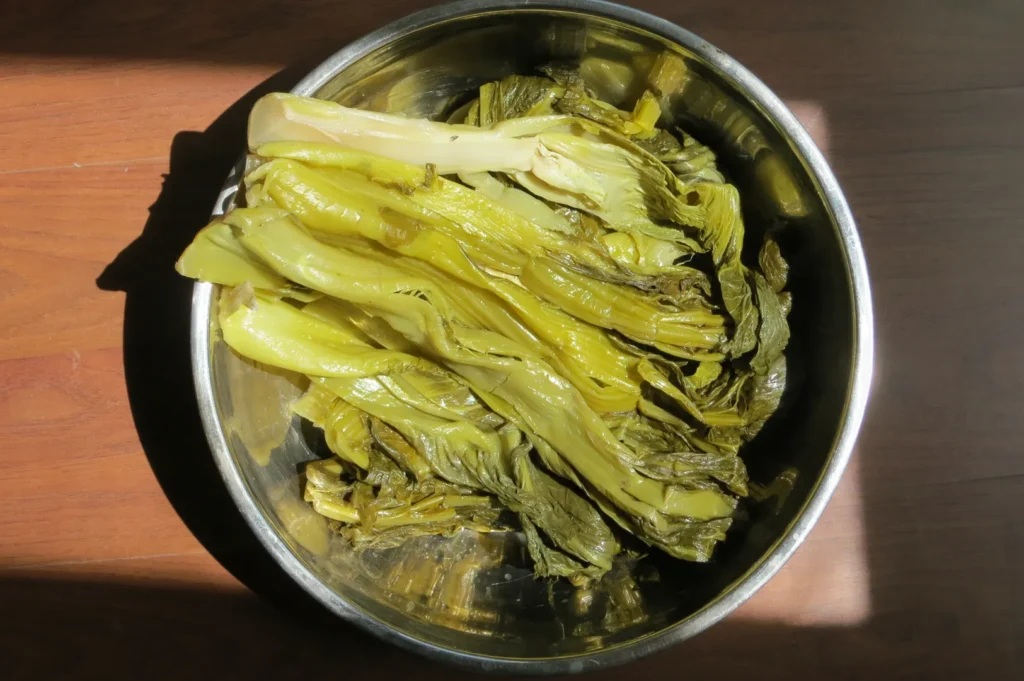
What stays with me now is how easily that calibration slips away. Factory-fermented greens fill the shelves, sealed in bright packets, consistent and convenient. They save the salting, the pressing, the daily tasting. But they arrive at a single fixed sourness, decided by a machine, not by a hand reading the brine. The skill of adjusting sour to suit a particular broth, a particular evening, a particular person’s tongue, fades when the jar disappears from the ledge. We gain ease. We lose the small, attentive judgment that made each bowl personal.
I think of that finger dipped in brine. It asked nothing of anyone, yet it carried a whole way of cooking—a quiet fluency in time and salt that a kitchen keeps alive only by tending it, day after day.

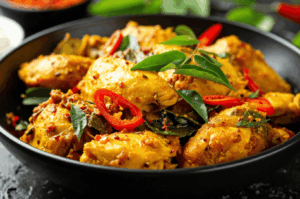
The Art of Slow-Cooked Curry Recipes: Time’s Magic in South Asian Cuisine
Eda Wong | November 13, 2025
Step into a South Asian kitchen, and the senses are instantly enveloped by the inviting aroma of food slowly simmering in a sturdy clay pot or heavy vessel. The allure is undeniable: in this space, slow-cooked curry recipes are a celebration of patient tradition, spices, and the richness of South Asian cuisine. Here, time and…
-
Bandung Drink Recipe: A Singaporean Rose Syrup Drink Tradition
Eat Drink Asia Team | November 11, 2025
Step into any night market or hawker centre in Singapore, and you’ll spot a vibrant, glowing glass filled with a cold, beautiful drink-Bandung. Known for its iconic blush-pink hue and refreshing taste, this rose syrup drink is an integral part of Singapore’s beverages scene and a cherished tradition in Southeast Asian gatherings. More than just…
-
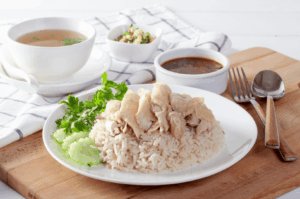
The Ultimate Hainanese Chicken Rice Recipe: A Deep Dive
Eda Wong | November 8, 2025
To wander through Singapore’s bustling hawker centres on a humid evening is to experience a symphony of sights, sounds, and smells. Among the many other dishes sizzling away, one plate stands out for its elegant simplicity: Hainanese Chicken Rice. It arrives without fanfare-gleaming slices of poached chicken over fragrant rice, flanked by a trio of…
-
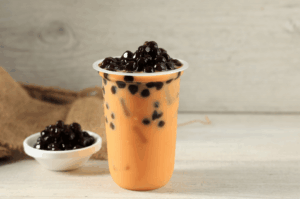
Bubble Tea Origins: How Taiwan Created a Global Beverage Phenomenon
Dio Asahi | November 6, 2025
From Taipei to New York, a single drink has captured the world’s taste buds: bubble tea. This beverage, known as pearl milk tea or boba tea, and also known as boba in many regions, is celebrated for its delightful combination of sweet, creamy tea and signature chewy tapioca pearls. What began as a novel creation…
-
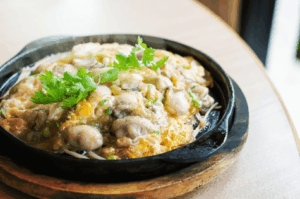
A Food Lover’s Guide to the Taiwanese Oyster Omelet
Eat Drink Asia Team | November 4, 2025
As twilight descends upon Taipei City, a vibrant energy pulses through its streets. This is the hour of the night markets, bustling hubs of community, commerce, and some of the world’s most incredible street food. Amidst the steam from soup dumplings and the sizzle of Taiwanese fried chicken, one iconic dish reigns supreme: the Taiwanese…
-
Jamu: Indonesian Herbal Medicine for Modern Well-Being
Dio Asahi | November 1, 2025
Across the Indonesian archipelago, a vibrant tradition of herbal healing has flourished for centuries. This is jamu, a cornerstone of Indonesian cultural heritage and a sophisticated system of traditional herbal medicine. Far more than just a refreshing drink, jamu represents a philosophy of balance, a deep connection to nature, and a form of indigenous medicine…
-
Padang Beef Rendang: The Complex Process Behind Indonesia’s Most Famous Dish
Eda Wong | October 30, 2025
This post may contain affiliate links. For full transparency, this article may contain affiliate links. To call Padang beef rendang simply a dish is to miss the soul of Indonesian cuisine. This legendary slow-cooked dry curry, a centerpiece of both festive tables and humble meals, has earned its fame as one of the world’s most…
-
Teh Tarik Malaysia: The Art and Science Behind Iconic Pulled Tea
Eat Drink Asia Team | October 28, 2025
In Malaysia, ordering a cup of teh tarik is about so much more than just enjoying a hot drink. Teh tarik, literally translated as “pulled tea,” is Malaysia’s national beverage, famous for its sweet, creamy taste, frothy top, and the spectacular pulling technique seen in bustling mamak stalls and coffee shops across the country. A…
-
The Legendary Penang Char Kway Teow: A Culinary Journey
Dio Asahi | October 25, 2025
The air in Penang is thick with anticipation, carrying the sounds and smells of Malaysian street food being crafted with expert care. Your attention is captured by one of the many street vendors, a master standing before a seasoned wok glowing over an intense fire. The rhythmic clanging of metal on metal is the soundtrack…
-
Traditional Korean Sikhye: Sweet Rice Punch Through the Seasons
Eda Wong | October 23, 2025
In the vibrant world of Korean food, beyond the fiery spice of gochujang and the savoury comfort of bulgogi, lies a gentler, more subtle delight. Meet traditional Korean sikhye (식혜), a beloved Korean sweet rice punch that holds a special place in the nation’s heart. With its cloudy, amber hue and delicate sweetness, this drink…