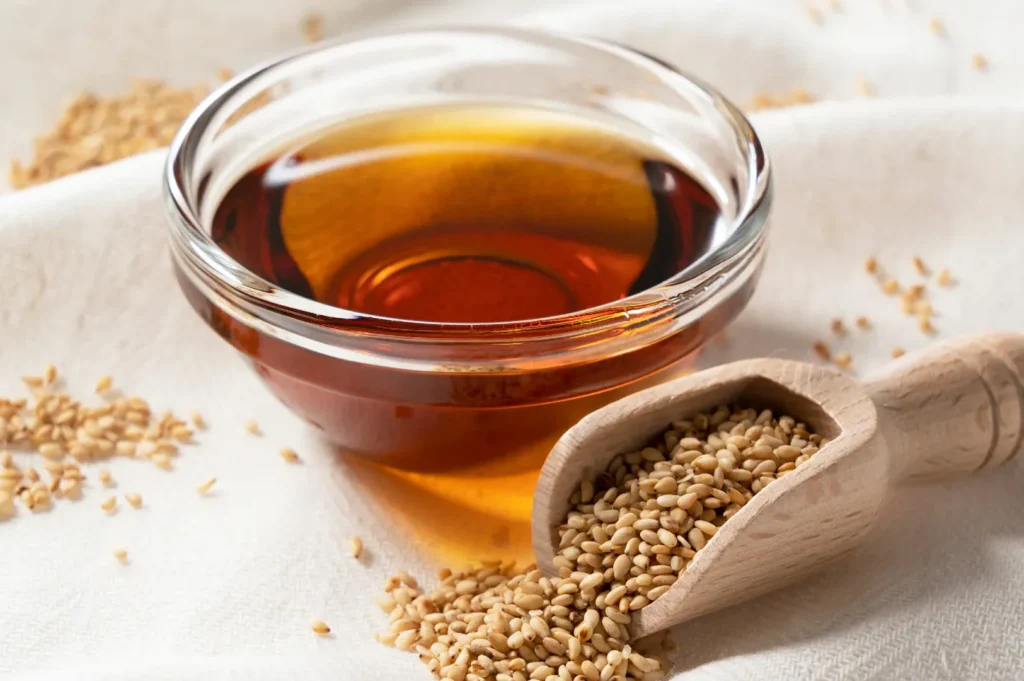
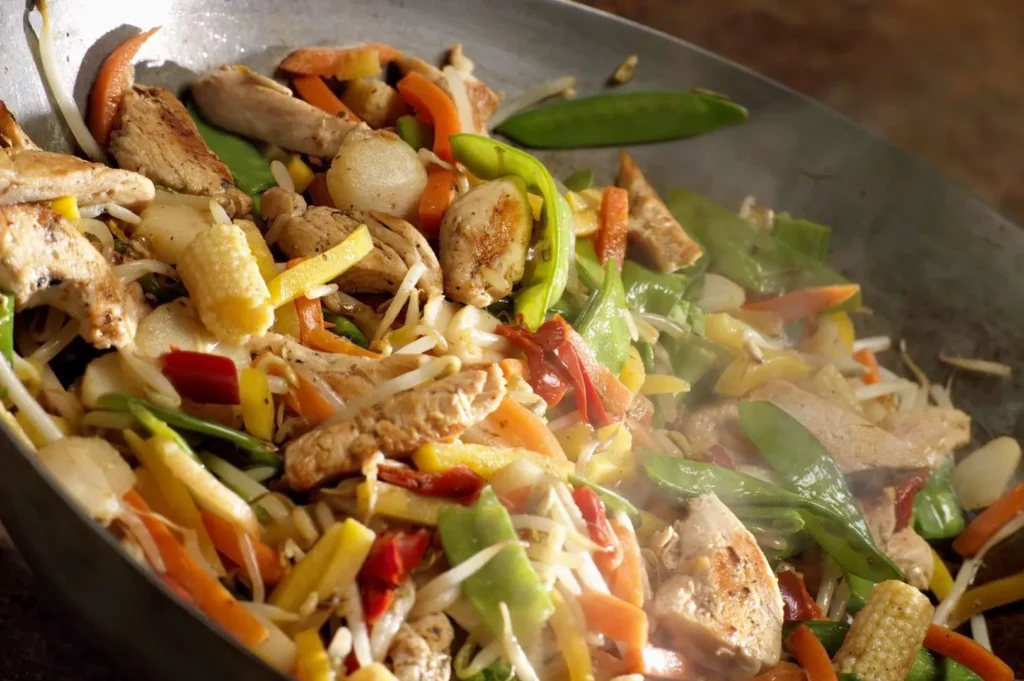
The wok is already off the heat. The greens sit glossy and dark, steam still curling off them. My mother lifts a small bottle, tilts it, and lets a thin line of sesame oil fall across the top. It hisses faintly against the warm leaves, and the smell rises all at once — toasted, nutty, almost smoky. She doesn’t stir much. Just a fold or two, enough to coat. The kitchen fills with it before the plate even reaches the table. That scent, more than anything, tells me dinner is ready.
What she’s doing is using sesame oil — 芝麻油, zhī ma yóu — as a finish, not a cooking fat. There’s an important difference. It’s the same kind of quiet, inherited precision you see in century-old dumpling techniques, timing and restraint that only shows itself at the end. Toasted sesame oil carries its flavour in volatile aromatics, the kind that burn off fast under high heat. Cook it in the wok from the start and you lose most of what makes it worth using.
Add it at the very end, off the flame, and it stays alive — fragrant, sharp, present. The skill here has nothing to do with how much you pour. A few drops, timed right, do more than a generous splash added too soon. It’s a technique built entirely around the moment, not the measure.
You see it everywhere once you start looking. The hawker who ladles soup, then circles a thread of sesame oil over the surface just before passing the bowl across. The home cook who keeps the bottle near the stove, not in the cupboard, because it’s the last thing reached for, not the first. In many kitchens, that final drizzle is how a dish announces itself as done. Not the plating. Not the garnish. The smell of sesame oil meeting heat — that’s the signal. It says the cooking is finished and the eating can begin. Nobody explains this. You simply learn it from the kitchens you grew up in.
What stays with me is how instinctive the good version is, and how easily it gets lost. A practised hand knows when to stop — a restraint that comes from years of watching a dish, not reading a recipe. But sesame oil is cheap and forgiving to misuse, so it’s easy to overdo, to drown a bowl until everything tastes the same, or to cook it in early out of habit and never notice the fragrance gone flat. What disappears isn’t flavour exactly. It’s the brightness. The lift. The reason the oil was reached for at all.
I think of that thin line falling across warm greens. It asks for almost nothing — a steady hand, a sense of timing, the patience to wait until the flame is off. A small thing, easy to rush past. But it’s there, in the last second of cooking, that a dish quietly becomes itself.

The Fifth Element: A Masterclass on Umami in East Asian Cuisine
Dio Asahi | March 12, 2026
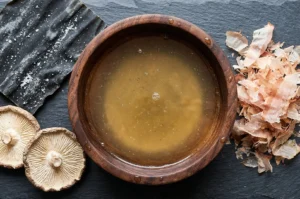
I’ll never forget the first time I made miso soup from scratch. Not the instant kind, but the “proper” way. I boiled water, dissolved miso paste, added tofu, and waited. It tasted flat, salty and cloudy but missing the deep, satisfying flavor I loved in Japanese restaurants. I thought maybe I needed better miso. Years…
-
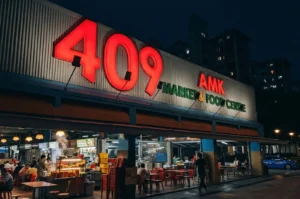
Why My Quest Ended at Yummy Western (409 AMK)
Dio Asahi | March 10, 2026
There’s a specific magic to a late-night supper hunt in Singapore. It’s the ritual of chasing a craving through the humidity to find that one stall that hits the spot. For me, that meant a pilgrimage to Ang Mo Kio Avenue 10. I arrived at 10 PM on a Friday, just as the ‘supper soul’…
-
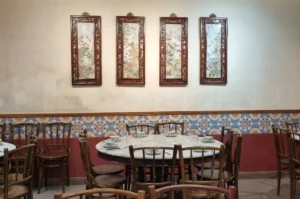
A Taste of Time: My Dinner at Guan Hoe Soon
Eda Wong | March 7, 2026
There’s something special about visiting a place that has seen decades of Singapore’s history unfold. Guan Hoe Soon, tucked away on Joo Chiat Road, holds the title of Singapore’s oldest Nyonya restaurant, and you can feel that heritage the moment you step inside. I’d heard about it for years, a place where recipes aren’t just…
-
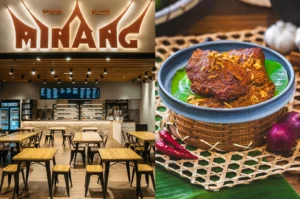
The 6 Best Halal Restaurant in Singapore for Authentic Nasi Padang
Eda Wong | March 5, 2026
There are few meals as satisfying as Nasi Padang, a colourful feast where you choose from a variety of dishes to create your perfect plate. Over the years, I’ve explored Singapore’s Nasi Padang scene, especially in Kampong Glam, sampling everything from humble hawker stalls to renowned spots. This list highlights the best halal Nasi Padang…
-
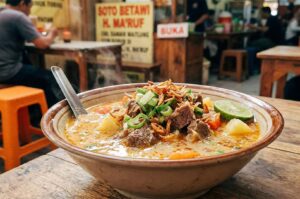
The Global Soup Bowl: How Indonesian Soto Shapes the Future of Asiatic Food Traditions
Dio Asahi | March 3, 2026
I still remember my first “real” bowl of Indonesian soto. Sitting on a low plastic stool in a cramped warung, I ordered Soto Betawi, expecting it to be like the clear Soto Ayam from Singaporean weddings. I was wrong. The rich, milky broth was intense, creamy, and boldly spiced. That first spoonful rewired my idea…
-
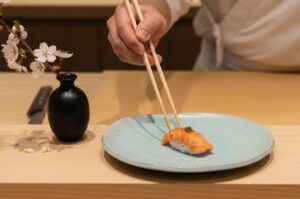
Shun: Japan’s Seasonal Treasures – A Deep Dive Into the Ingredients Behind True Omakase
Eat Drink Asia Team | February 28, 2026
In the world of Asian food, few dining experiences capture the soul of traditional Japanese food culture like omakase. At a premier omakase restaurant, diners entrust their meal entirely to the chef, whose artistry is guided not just by mastery, but by shun—the appreciation of seasonal and fresh ingredients at the absolute peak of their…

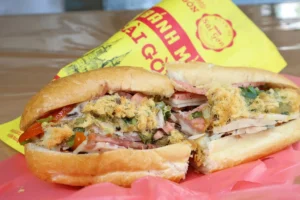
My Trip to Bánh Mì Saigon and How It Compares to Best Food in Singapore
Eda Wong | February 26, 2026
Located in the bustling neighborhood of Ang Mo Kio, Bánh Mì Saigon offers a taste of Vietnam right here in Singapore. From traditional bánh mì sandwiches to hearty pho bowls and refreshing Vietnamese iced coffee, this restaurant has it all. I arrived at Bánh Mì Saigon on a busy Saturday evening and was immediately drawn…
-
Tea Room by Ki-setsu: A Curated Journey Through Chinese Tea in the Heart of Singapore
Dio Asahi | February 25, 2026
Most people arrive at Chinese tea the way they arrive at any beverage: thirsty, curious, maybe looking for something sweet or soothing. But traditional chinese tea isn’t built like a single drink. It’s a network: leaf origin, processing choices, vessel physics, water, pacing, and the quiet social technology of sitting down long enough for a…
-
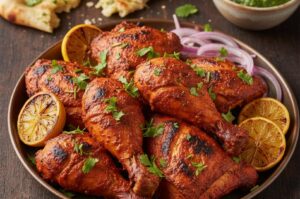
Tandoori Chicken: The Signature Indian Chicken Dish
Eda Wong | February 24, 2026
Tandoori chicken stands tall among the best Indian chicken recipes. With its vibrant hue and smoky aroma, this iconic Indian chicken dish is celebrated in Indian restaurants worldwide. Emerging from Punjab, it pairs perfectly with fragrant basmati rice or fresh naan and is a favorite for anyone who loves bold flavors. The hallmark of tandoori…
-
Chicken 65: A Fiery Indian Chicken Recipe You Must Try
Eat Drink Asia Team | February 21, 2026
We’ve spent months tracking the ‘shatter-rate’ of chicken across the South, and here’s the truth: most of what you find is a pale, food-colored imitation. The real Chicken 65 isn’t just spicy; it’s an atmospheric experience. It starts with the sharp, herbal snap of curry leaves hitting 180°C oil and ends with a deep, earthy…