The fire is not roaring; it is breathing. In a small, darkened workshop in Sakai, a swordsmith watches the colour of the steel with eyes that have tracked the same transformation for forty years. He does not look at a clock. He listens to the hum of the charcoal. He waits for the metal to reach a shade of red that exists only for a fleeting second—a colour that signals the precise moment when earth and fire are ready to yield to his hammer.
There is no audience here. There is no applause when the blade is quenched. There is only the artisan and the material, locked in a silent dialogue that will continue until his hands can no longer hold the tongs.
This is the essence of the shokunin (職人). To translate this word simply as “craftsman” is to strip it of its soul. In Japanese culture, a shokunin is not merely someone who makes things; they are someone who has surrendered their ego to the pursuit of mastery in a single, deepening discipline. It is a spiritual obligation to do one’s very best, not for profit or recognition, but for the sake of the craft itself.
The Weight of a Single Path
In a world obsessed with scaling, franchising, and “pivoting,” the shokunin philosophy stands as a quiet act of rebellion. It values depth over breadth. It chooses the infinite refinement of one thing over the mediocre production of many. It is the belief that if you polish a stone every day for fifty years, you will eventually see the universe reflected in it.
This worldview is often associated with the ancient arts—pottery, woodwork, sword making. Yet, in the heart of Singapore, amidst the neon glare and hurried ambition of Orchard Road, this ancient spirit has found a sanctuary. It lives inside a modest, eight-seat counter at Cuppage Plaza known as Sushi Masa by Ki-setsu.
Finding Stillness in the City of Speed
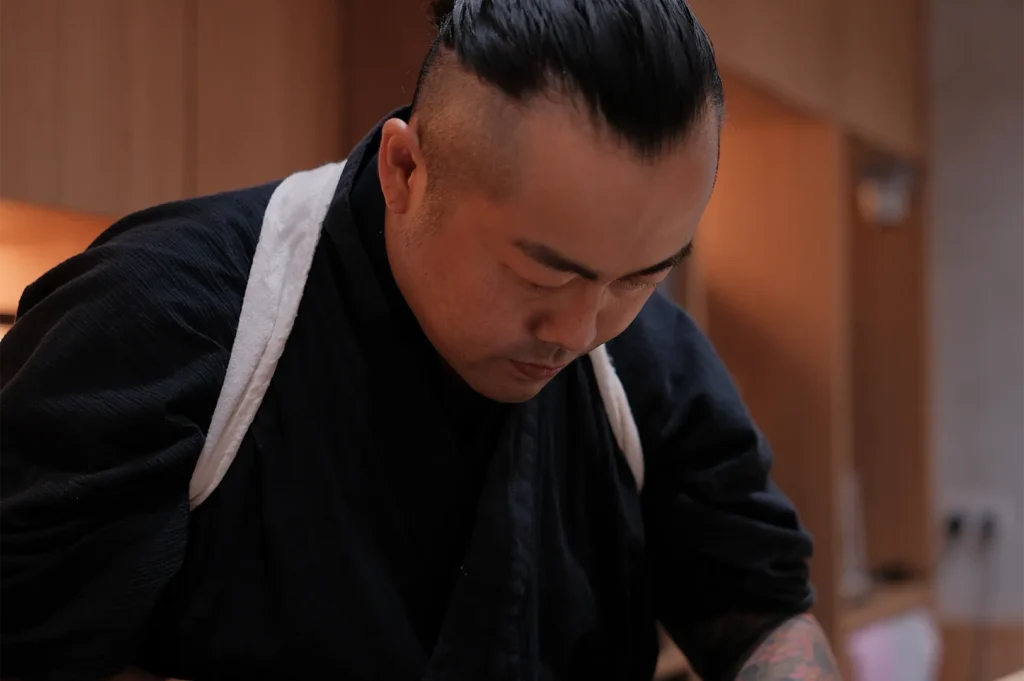
Cuppage Plaza is an anomaly in itself—a weathered, labyrinthine building that feels more like a portal to 1980s Tokyo than a mall in 2026 Singapore. It is here that Chef Masa from Sushi Masa by Ki-setsu has chosen to practise his craft. He is not a restaurateur in the modern sense; he is a custodian of the shokunin spirit.
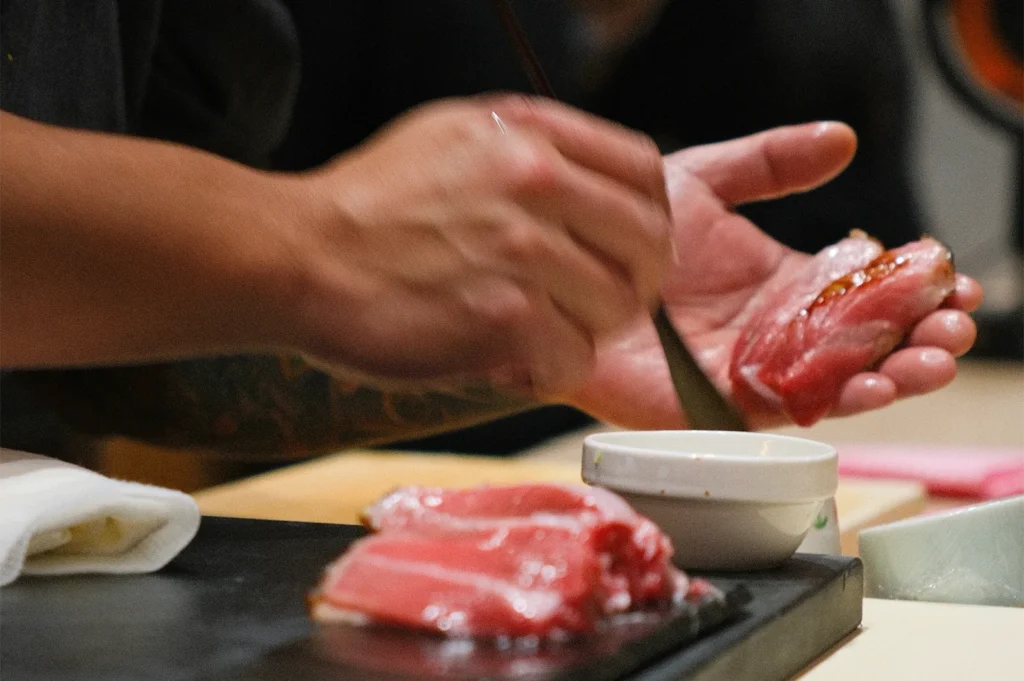
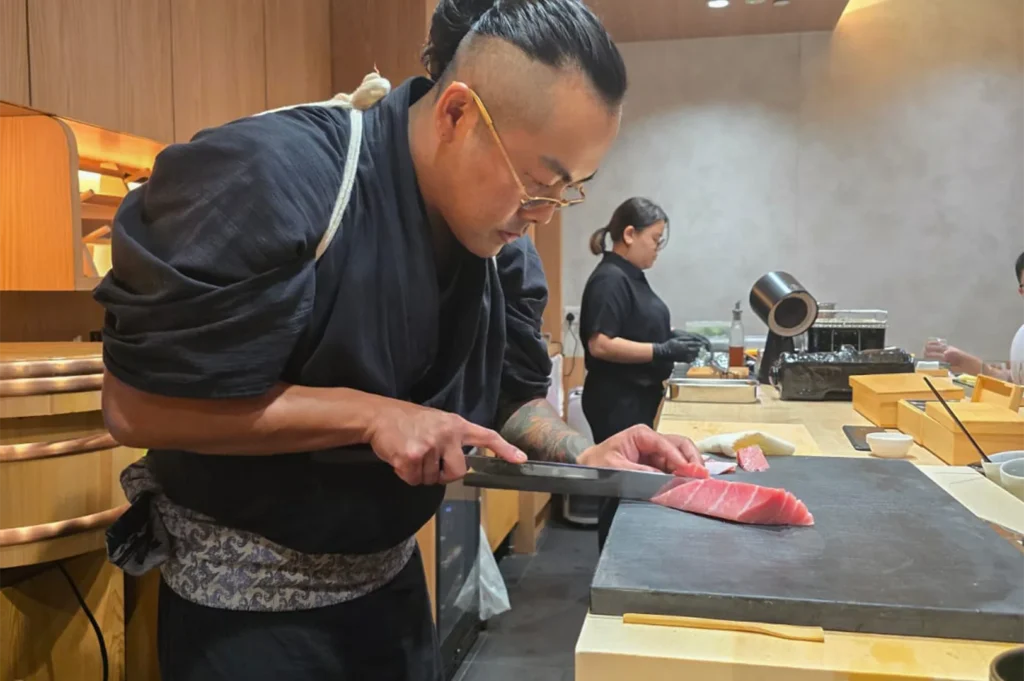
To dine here is not merely to eat; it is to witness a philosophy in motion. There are no sous chefs plating your nigiri. There is no expansion plan to open three more outlets by next year. There is only Chef Masa, standing behind the blonde wood counter, shaping rice and fish with the same meditative focus as the swordsmith in Sakai.
The Philosophy of the Solo Practitioner
Why does he refuse to delegate? In the shokunin tradition, the work cannot be separated from the worker. The warmth of the hands, the rhythm of the breathing, the precise pressure applied to the shari (sushi rice)—these are not technical steps; they are an extension of the chef’s own life force, or ki. To hand this over to another would be to dilute the spirit of the offering.
This refusal to scale is often baffling to the modern business mind. But for the shokunin, growth is measured vertically, not horizontally. The goal is not to serve more customers, but to serve the same number of customers better than yesterday. It is a relentless, internal competition where the only opponent is one’s previous self.
Ki-setsu: Listening to the Voice of Nature
The name of the counter, Ki-setsu, means “season.” But in the context of a Japanese omakase counter, seasonality is not just about using ingredients that are available; it is about submission to nature’s timeline.
A master carpenter does not force wood to bend against its grain. Similarly, a sushi shokunin does not force flavour. They wait. They wait for the specific week when the sanma (Pacific saury) is fattiest. They wait for the winter chill that sweetens the uni.
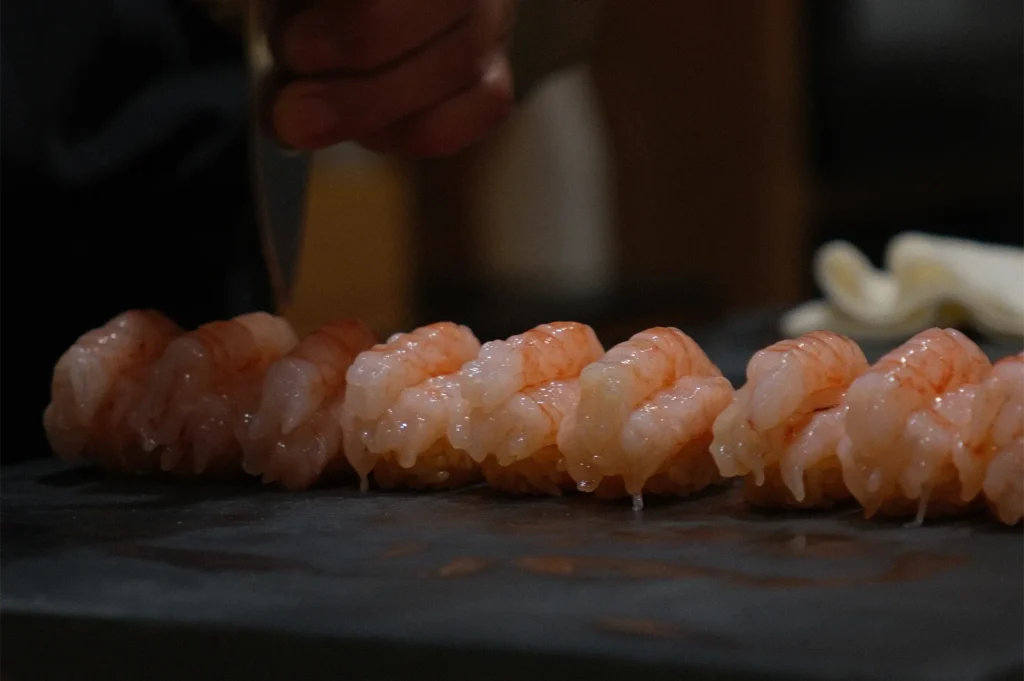
This deep respect for natural rhythms is a humble admission that the human hand can only enhance what nature has already perfected. Chef Masa’s role is not to invent, but to reveal. When he presents a piece of kawahagi topped with its own liver, he is not showing off his creativity; he is translating the ocean’s winter voice into a language your palate can understand.
Taste the absolute peak of food Japan imports, where Toyosu’s daily catch meets the surgical precision of an 8-seat counter.
The 72 Micro-Seasons of Japan
To understand the precision of this Japanese craftsman philosophy, one must look at the calendar. While the West observes four seasons, the traditional Japanese calendar recognises twenty-four major divisions (sekki), which are further split into seventy-two micro-seasons, or ko.
These micro-seasons last only about five days each. They have poetic names like “Earthworms Rise” (Mimizu izuru) or “First Peach Blossoms” (Momo hajimete saku). This hyper-specific awareness of time means that true omakase can never be industrialised. A factory cannot adjust its production line every five days. Only a human being, attuned to the subtle shifts in wind and temperature, can cook with this level of sensitivity.
At Sushi Masa by Ki-setsu, the menu is a mirror of these fleeting moments. What you eat today may not be there next week, not because it ran out, but because its moment has passed. The shokunin honours the ingredient by serving it only at its peak, and then letting it go.
Depth Over Abundance: A Different Kind of Care
In many Asian cultures, hospitality is defined by abundance. We show love through the overflowing banquet table, the extra scoop of rice, the constant refilling of tea. It is a beautiful, communal generosity.
The shokunin spirit offers a different, quieter form of care. It is the gift of subtraction.
At an intimate Singapore omakase counter like this, you are not given volume; you are given attention. Total, undivided, absolute attention. When the chef places a single piece of sushi in front of you, the entire world shrinks to that one bite. The temperature of the rice is matched to the temperature of your tongue. The size of the nigiri is adjusted based on how much you have already eaten.
It is a minimalist hospitality that asks the diner to slow down and meet the food halfway. It is an invitation to be present, to taste the nuance in the soy sauce, the texture of the seaweed, the labour of decades distilled into seconds.
The Quiet Anchor in a Fast World
Why does this matter to us in Singapore? We live in a city defined by speed, efficiency, and restless ambition. We are constantly looking for the next big thing, the newest opening, the faster route.
Places like Sushi Masa offer a necessary counterweight. They remind us that there is dignity in stillness. They teach us that true mastery takes time—a lifetime, in fact.
As you step out of Cuppage Plaza and back into the humid Singapore night, the noise of the city returns. But perhaps you carry a piece of that silence with you. You have tasted the shokunin spirit, and you understand that sometimes, the most profound way to move forward is to stand still, focus on one thing, and do it with all your heart.

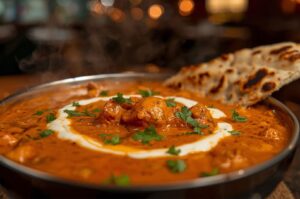
Tikka Masala: The Story Behind One of the Most Iconic Dishes in India’s Food Cuisine
Eat Drink Asia Team | December 23, 2025
Ask anyone to name a famous Indian dish, and chances are “Tikka Masala” will be one of the first things they say. This creamy, vibrant, and aromatic curry has become a global symbol for the food cuisine in India, celebrated from street food stalls in Delhi to upscale Indian restaurants around the world. Its rich…
-
Cuisines in India: A Journey Through the Diverse Regional Food Traditions of the Subcontinent
Dio Asahi | December 20, 2025
Indian cuisine is celebrated for its spectacular diversity, bursting with flavors, regional traditions, and culinary innovations. From the spice-laden gravies of Northern Indian cuisine and tandoor-fresh breads, to coconut-laced Southern Indian cuisine, fragrant rice dishes in the East, and the robust, spicy curries and street food of the West, the foods of India reflect not…
-
Green Tea with Milk: A Tale of Two Teas from Taiwan and Thailand
Eda Wong | December 18, 2025
The simple combination of green tea with milk has sparked a culinary phenomenon across Asia, creating a diverse family of beverages that are both comforting and refreshing. While many countries have embraced this pairing, two nations stand out for their iconic and wildly different interpretations: Taiwan and Thailand. Each has cultivated a unique culture around…
-
The Emerald Journey: Exploring Asia’s Green Milk Tea Culture
Eat Drink Asia Team | December 16, 2025
A vibrant, emerald-hued wave is sweeping across Asia, delighting taste buds and defining modern café culture. From street-side stalls in Bangkok to chic tea houses in Taipei, green milk tea—sometimes simply called green tea with milk—has blossomed from a simple concept into a beloved, refreshing drink with countless regional interpretations and profound cultural significance. Whether…
-
Thai Green Milk Tea: The Complete Guide to Thailand’s Refreshing Emerald Delight
Eda Wong | December 13, 2025
Picture a tall glass filled with crushed ice, its emerald-green contents swirled with ribbons of creamy white milk—this is thai green milk tea, one of Southeast Asia’s most visually striking and refreshing drinks. Known locally as cha khiao nom yen, this popular drink has captured hearts across Asia and beyond with its distinctive pale green…

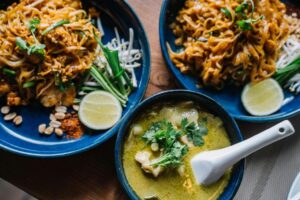
Best Thai Singapore: Discover the Art of Authentic Pad Thai
Dio Asahi | December 11, 2025
In Singapore, a city that celebrates a universe of flavors, the magnetic pull of Thai cuisine is undeniable. From bustling food courts to elegant dining rooms, the kingdom’s culinary ambassadors have firmly planted their flag. When considering the best Thai food, it’s impossible to overlook how integral Pad Thai is to the local Thai food…
-
Thai Cuisine in Singapore: Finding the Best Authentic Flavors
Eat Drink Asia Team | December 9, 2025
The unmistakable aroma of lemongrass, galangal, and fiery spices mingles with the bustling night air in Singapore, setting the stage for a dining experience that wakes the soul and tantalizes the senses. Thai cuisine in Singapore has become an essential part of the city’s culinary landscape, offering a complete blend of vibrant flavor, tangy notes,…
-
The Ultimate Guide to Thai Food: Flavors, Traditions, and Culinary Adventures
Dio Asahi | December 6, 2025
Thai cuisine is one of the world’s most beloved and complex culinary traditions, captivating food enthusiasts globally with its masterful balance of flavors and vibrant presentations. From bustling Bangkok street stalls to high-end international restaurants, Thai food has become a global phenomenon that evolves while maintaining its authentic roots. What sets Thai cuisine apart from…
-
How to Drink Sake: Your Guide to Enjoying Japanese Sake Wine
Eda Wong | December 5, 2025
As Japan’s national beverage, this traditional sake is present at celebrations, quiet dinners, and spiritual offerings, weaving itself into the very fabric of daily life and reflecting Japan’s deep-rooted cultural heritage. Yet, for many outside of Japan, it remains a delightful mystery. You might find yourself wondering, how do you drink sake properly to unlock…
-
The Quiet Pursuit of Perfection: Where to Find the Freshest Sashimi in Singapore
Eat Drink Asia Team | December 3, 2025
In Singapore, a city that moves at a dizzying pace, there is a quiet but growing reverence for pursuits that demand patience. Nowhere is this more apparent than in the city’s evolving appreciation for authentic Japanese cuisine. The once-niche world of omakase has entered the mainstream lexicon, and with it, a more discerning palate for…