The fire is not roaring; it is breathing. In a small, darkened workshop in Sakai, a swordsmith watches the colour of the steel with eyes that have tracked the same transformation for forty years. He does not look at a clock. He listens to the hum of the charcoal. He waits for the metal to reach a shade of red that exists only for a fleeting second—a colour that signals the precise moment when earth and fire are ready to yield to his hammer.
There is no audience here. There is no applause when the blade is quenched. There is only the artisan and the material, locked in a silent dialogue that will continue until his hands can no longer hold the tongs.
This is the essence of the shokunin (職人). To translate this word simply as “craftsman” is to strip it of its soul. In Japanese culture, a shokunin is not merely someone who makes things; they are someone who has surrendered their ego to the pursuit of mastery in a single, deepening discipline. It is a spiritual obligation to do one’s very best, not for profit or recognition, but for the sake of the craft itself.
The Weight of a Single Path
In a world obsessed with scaling, franchising, and “pivoting,” the shokunin philosophy stands as a quiet act of rebellion. It values depth over breadth. It chooses the infinite refinement of one thing over the mediocre production of many. It is the belief that if you polish a stone every day for fifty years, you will eventually see the universe reflected in it.
This worldview is often associated with the ancient arts—pottery, woodwork, sword making. Yet, in the heart of Singapore, amidst the neon glare and hurried ambition of Orchard Road, this ancient spirit has found a sanctuary. It lives inside a modest, eight-seat counter at Cuppage Plaza known as Sushi Masa by Ki-setsu.
Finding Stillness in the City of Speed
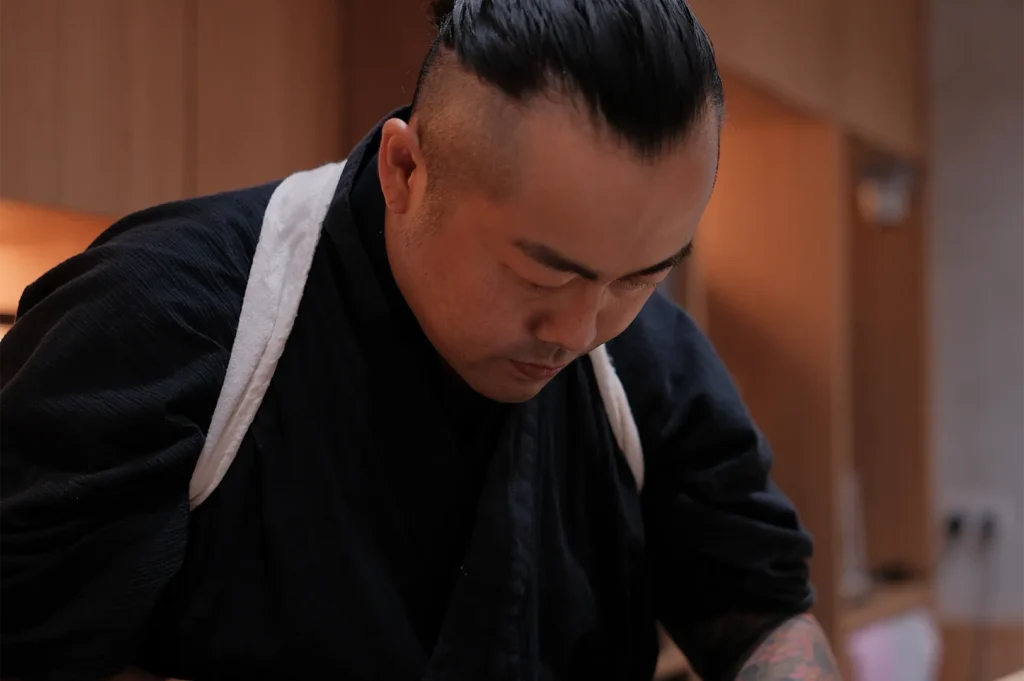
Cuppage Plaza is an anomaly in itself—a weathered, labyrinthine building that feels more like a portal to 1980s Tokyo than a mall in 2026 Singapore. It is here that Chef Masa from Sushi Masa by Ki-setsu has chosen to practise his craft. He is not a restaurateur in the modern sense; he is a custodian of the shokunin spirit.
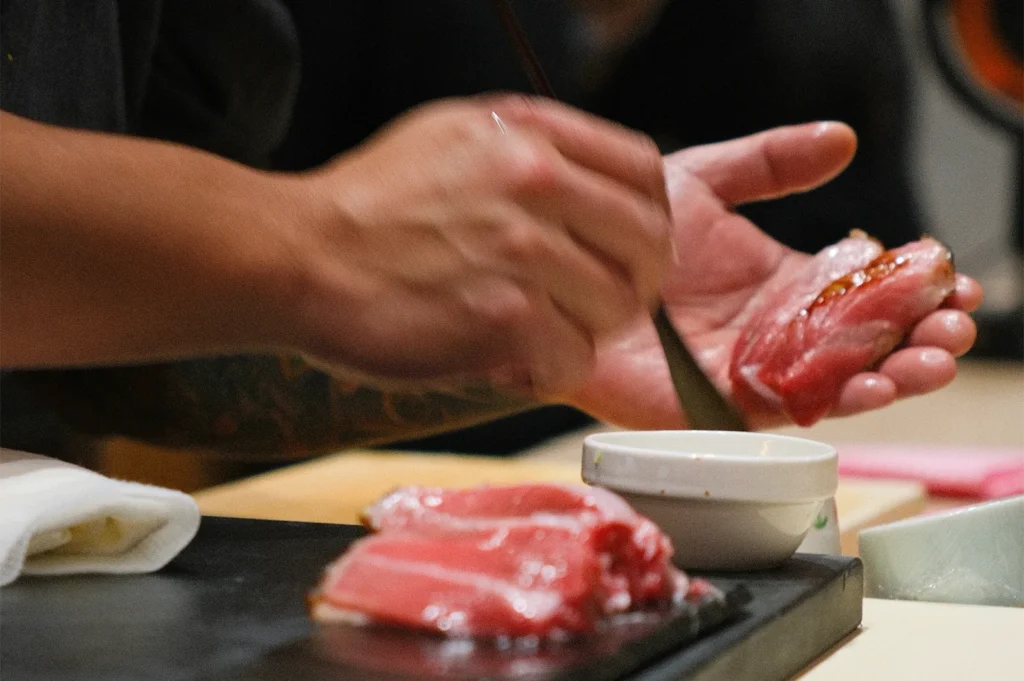
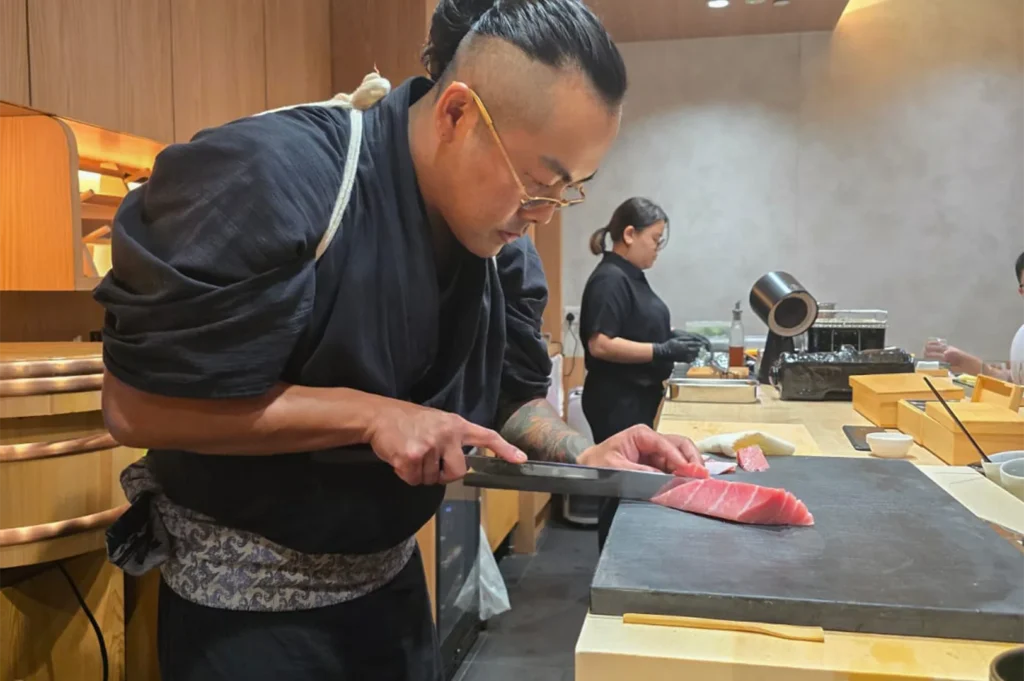
To dine here is not merely to eat; it is to witness a philosophy in motion. There are no sous chefs plating your nigiri. There is no expansion plan to open three more outlets by next year. There is only Chef Masa, standing behind the blonde wood counter, shaping rice and fish with the same meditative focus as the swordsmith in Sakai.
The Philosophy of the Solo Practitioner
Why does he refuse to delegate? In the shokunin tradition, the work cannot be separated from the worker. The warmth of the hands, the rhythm of the breathing, the precise pressure applied to the shari (sushi rice)—these are not technical steps; they are an extension of the chef’s own life force, or ki. To hand this over to another would be to dilute the spirit of the offering.
This refusal to scale is often baffling to the modern business mind. But for the shokunin, growth is measured vertically, not horizontally. The goal is not to serve more customers, but to serve the same number of customers better than yesterday. It is a relentless, internal competition where the only opponent is one’s previous self.
Ki-setsu: Listening to the Voice of Nature
The name of the counter, Ki-setsu, means “season.” But in the context of a Japanese omakase counter, seasonality is not just about using ingredients that are available; it is about submission to nature’s timeline.
A master carpenter does not force wood to bend against its grain. Similarly, a sushi shokunin does not force flavour. They wait. They wait for the specific week when the sanma (Pacific saury) is fattiest. They wait for the winter chill that sweetens the uni.
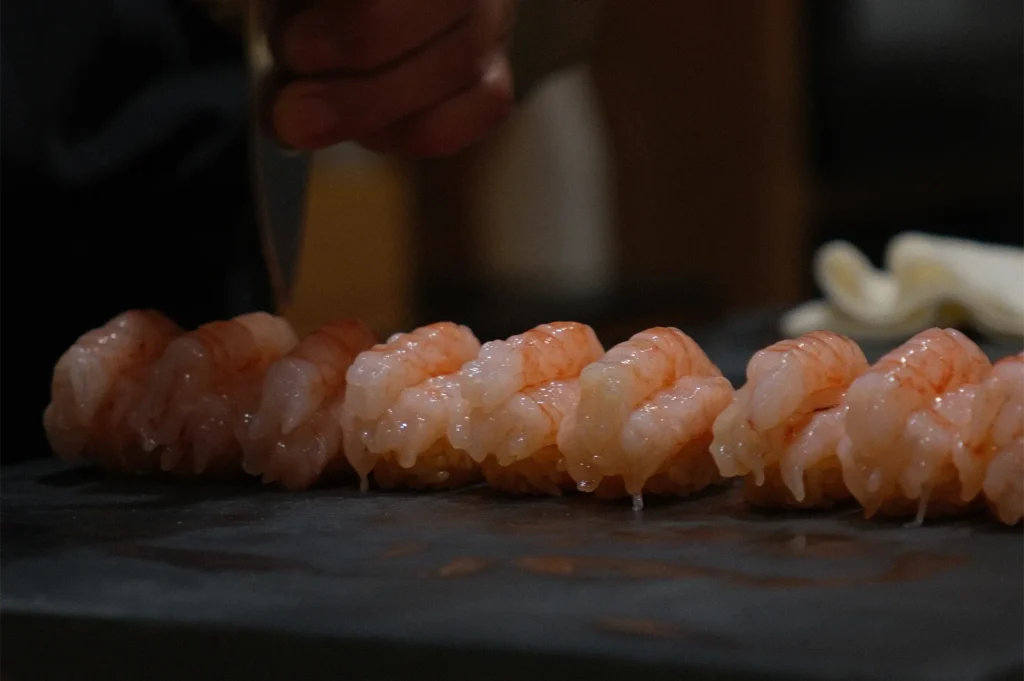
This deep respect for natural rhythms is a humble admission that the human hand can only enhance what nature has already perfected. Chef Masa’s role is not to invent, but to reveal. When he presents a piece of kawahagi topped with its own liver, he is not showing off his creativity; he is translating the ocean’s winter voice into a language your palate can understand.
Taste the absolute peak of food Japan imports, where Toyosu’s daily catch meets the surgical precision of an 8-seat counter.
The 72 Micro-Seasons of Japan
To understand the precision of this Japanese craftsman philosophy, one must look at the calendar. While the West observes four seasons, the traditional Japanese calendar recognises twenty-four major divisions (sekki), which are further split into seventy-two micro-seasons, or ko.
These micro-seasons last only about five days each. They have poetic names like “Earthworms Rise” (Mimizu izuru) or “First Peach Blossoms” (Momo hajimete saku). This hyper-specific awareness of time means that true omakase can never be industrialised. A factory cannot adjust its production line every five days. Only a human being, attuned to the subtle shifts in wind and temperature, can cook with this level of sensitivity.
At Sushi Masa by Ki-setsu, the menu is a mirror of these fleeting moments. What you eat today may not be there next week, not because it ran out, but because its moment has passed. The shokunin honours the ingredient by serving it only at its peak, and then letting it go.
Depth Over Abundance: A Different Kind of Care
In many Asian cultures, hospitality is defined by abundance. We show love through the overflowing banquet table, the extra scoop of rice, the constant refilling of tea. It is a beautiful, communal generosity.
The shokunin spirit offers a different, quieter form of care. It is the gift of subtraction.
At an intimate Singapore omakase counter like this, you are not given volume; you are given attention. Total, undivided, absolute attention. When the chef places a single piece of sushi in front of you, the entire world shrinks to that one bite. The temperature of the rice is matched to the temperature of your tongue. The size of the nigiri is adjusted based on how much you have already eaten.
It is a minimalist hospitality that asks the diner to slow down and meet the food halfway. It is an invitation to be present, to taste the nuance in the soy sauce, the texture of the seaweed, the labour of decades distilled into seconds.
The Quiet Anchor in a Fast World
Why does this matter to us in Singapore? We live in a city defined by speed, efficiency, and restless ambition. We are constantly looking for the next big thing, the newest opening, the faster route.
Places like Sushi Masa offer a necessary counterweight. They remind us that there is dignity in stillness. They teach us that true mastery takes time—a lifetime, in fact.
As you step out of Cuppage Plaza and back into the humid Singapore night, the noise of the city returns. But perhaps you carry a piece of that silence with you. You have tasted the shokunin spirit, and you understand that sometimes, the most profound way to move forward is to stand still, focus on one thing, and do it with all your heart.

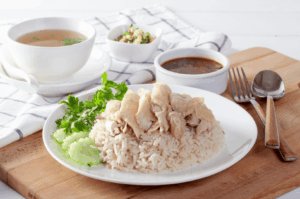
The Ultimate Hainanese Chicken Rice Recipe: A Deep Dive
Eda Wong | November 8, 2025
To wander through Singapore’s bustling hawker centres on a humid evening is to experience a symphony of sights, sounds, and smells. Among the many other dishes sizzling away, one plate stands out for its elegant simplicity: Hainanese Chicken Rice. It arrives without fanfare-gleaming slices of poached chicken over fragrant rice, flanked by a trio of…
-
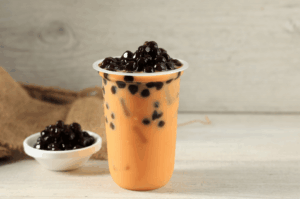
Bubble Tea Origins: How Taiwan Created a Global Beverage Phenomenon
Dio Asahi | November 6, 2025
From Taipei to New York, a single drink has captured the world’s taste buds: bubble tea. This beverage, known as pearl milk tea or boba tea, and also known as boba in many regions, is celebrated for its delightful combination of sweet, creamy tea and signature chewy tapioca pearls. What began as a novel creation…
-
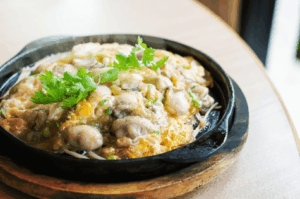
A Food Lover’s Guide to the Taiwanese Oyster Omelet
Eat Drink Asia Team | November 4, 2025
As twilight descends upon Taipei City, a vibrant energy pulses through its streets. This is the hour of the night markets, bustling hubs of community, commerce, and some of the world’s most incredible street food. Amidst the steam from soup dumplings and the sizzle of Taiwanese fried chicken, one iconic dish reigns supreme: the Taiwanese…
-
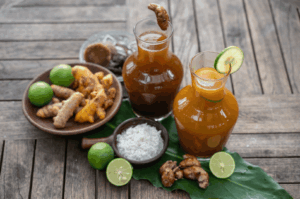
Jamu: Indonesian Herbal Medicine for Modern Well-Being
Dio Asahi | November 1, 2025
Across the Indonesian archipelago, a vibrant tradition of herbal healing has flourished for centuries. This is jamu, a cornerstone of Indonesian cultural heritage and a sophisticated system of traditional herbal medicine. Far more than just a refreshing drink, jamu represents a philosophy of balance, a deep connection to nature, and a form of indigenous medicine…
-
Padang Beef Rendang: The Complex Process Behind Indonesia’s Most Famous Dish
Eda Wong | October 30, 2025
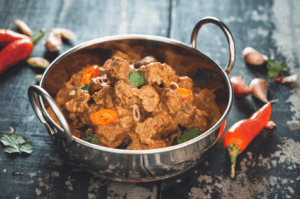
This post may contain affiliate links. For full transparency, this article may contain affiliate links. To call Padang beef rendang simply a dish is to miss the soul of Indonesian cuisine. This legendary slow-cooked dry curry, a centerpiece of both festive tables and humble meals, has earned its fame as one of the world’s most…
-
Teh Tarik Malaysia: The Art and Science Behind Iconic Pulled Tea
Eat Drink Asia Team | October 28, 2025
In Malaysia, ordering a cup of teh tarik is about so much more than just enjoying a hot drink. Teh tarik, literally translated as “pulled tea,” is Malaysia’s national beverage, famous for its sweet, creamy taste, frothy top, and the spectacular pulling technique seen in bustling mamak stalls and coffee shops across the country. A…
-
The Legendary Penang Char Kway Teow: A Culinary Journey
Dio Asahi | October 25, 2025
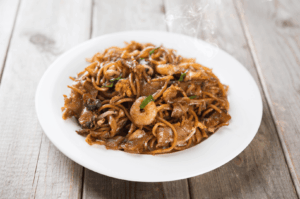
The air in Penang is thick with anticipation, carrying the sounds and smells of Malaysian street food being crafted with expert care. Your attention is captured by one of the many street vendors, a master standing before a seasoned wok glowing over an intense fire. The rhythmic clanging of metal on metal is the soundtrack…
-
Traditional Korean Sikhye: Sweet Rice Punch Through the Seasons
Eda Wong | October 23, 2025
In the vibrant world of Korean food, beyond the fiery spice of gochujang and the savoury comfort of bulgogi, lies a gentler, more subtle delight. Meet traditional Korean sikhye (식혜), a beloved Korean sweet rice punch that holds a special place in the nation’s heart. With its cloudy, amber hue and delicate sweetness, this drink…
-
Authentic Jeonju Bibimbap: Why Korea’s Culinary Capital Makes It Best
Eat Drink Asia Team | October 21, 2025
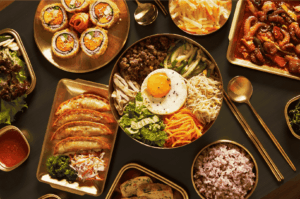
Picture this: A steaming Korean rice bowl is placed before you in Jeonju, South Korea. Vibrant arcs of seasoned bean sprouts, glossy strips of Korean beef, a golden runny yolk resting atop perfectly cooked mixed rice, and a dollop of rich red bibimbap sauce invite you to mix it all together. As you stir, the…
-
Communal Dining Traditions in Asia: Shared Meals, Lasting Bonds, and Cultural Heritage
Dio Asahi | October 18, 2025
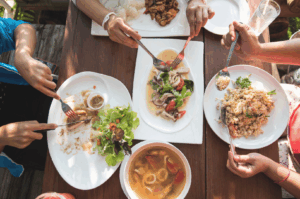
Imagine a dining table crowded with large platters of steaming food, the smell of spices in the air, small bowls arranged neatly around the shared table, and laughter echoing across the room. Across Asia, dining tables play a central role in communal dining traditions, serving as the focal point for etiquette, social interaction, and the…