By Dio Asahi for Eat Drink Asia.
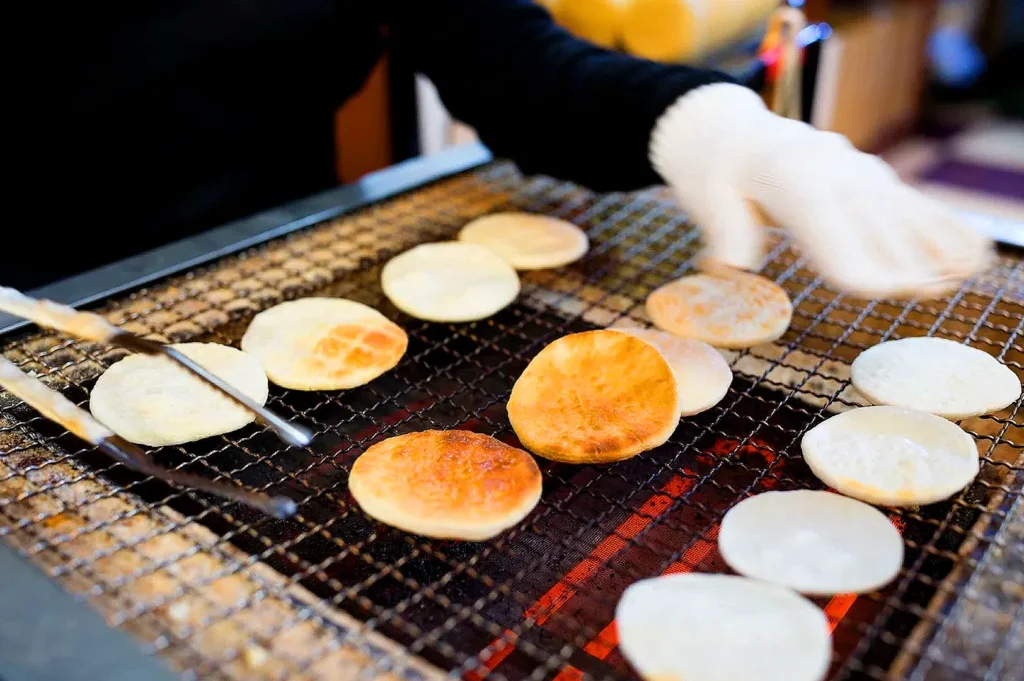
The old man works close to the coals, and the smell reaches me before I see what he’s doing. Soy meeting heat. That dark, caramel-edged smell that tightens something in your chest. His brush moves in short strokes across a rack of rice crackers, back and forth, patient. The coals tick. A cracker shifts on the grill with a small, dry sound. He doesn’t look up. In this narrow Kyoto shopfront, off the main street where the crowds thin out, there is only the fire, the brush, and the slow turn of each disc against the grate.
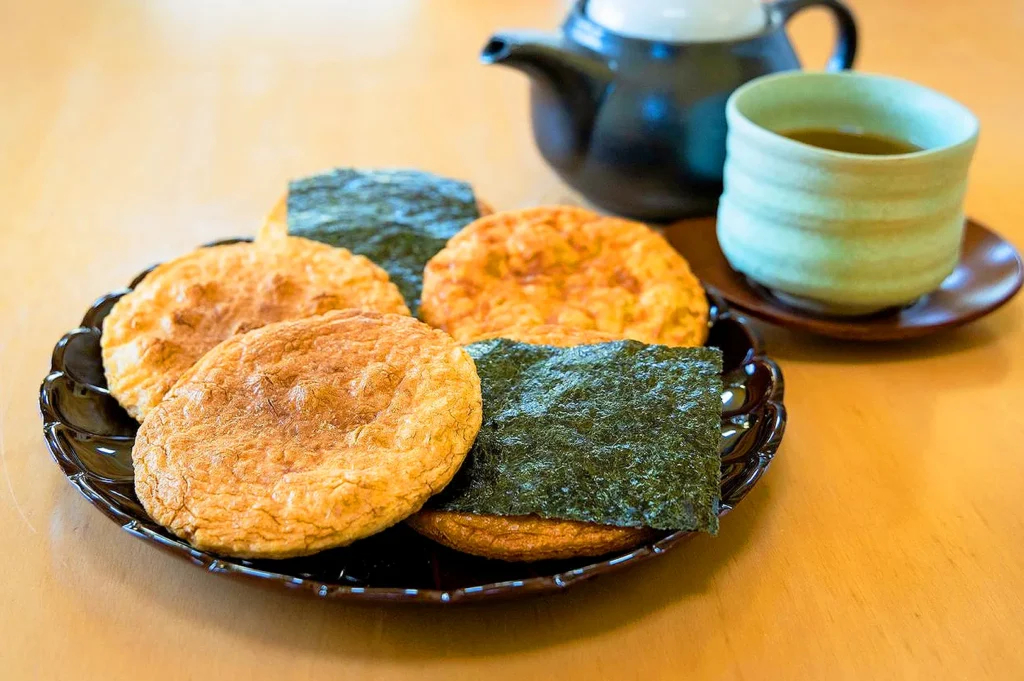
What he’s making is senbei — sen-bay — the soy-glazed rice cracker that most people now know only from plastic packets. The kind here begins with pressed rice, dried until it’s hard as a coin, then set over charcoal. As it heats, the cracker swells and blisters. That’s when the brush comes in. A soy-based glaze, wiped on in thin layers, not poured. Too much at once and it steams and turns bitter. Applied lightly, in the right window, the sugars in the soy catch the heat and set into a lacquered, savoury skin. He glazes, turns, glazes again. Each pass builds the colour. The timing is everything, and he keeps it in his hands, not on a clock.
These crackers used to sit in shallow tins on every counter — beside the register, near the tea, offered to a guest before anyone asked. Senbei was the snack you handed to a neighbour, wrapped for a visit, kept for the child who came home from school. Not special-occasion food. Just the food that was always there. In some homes the good ones, the hand-grilled ones, were saved for guests, a small courtesy that said you matter enough for the ones that took time. You can still find that gesture, if you know the quiet shops. Most of us reach for the packet now instead.
The Eat Drink Asia highlight is how ordinary this is, and how easily it slips away. A machine can press and season a thousand crackers before this man finishes a single rack. The packet version isn’t bad. It’s just even — the same colour, the same crunch, edge to edge. His are uneven. One a shade darker where the glaze pooled, another lighter, blistered differently. That unevenness is the tell. It means a hand was there, deciding, in the moment the soy met the fire.
I take one still warm. It cracks loud between my teeth, and the soy is deep, faintly smoky, almost bitter at the edge where the glaze caught hardest.
He nods, once. Goes back to the brush.

Pattaya Garden Restaurant and the Thai Meal That Knows How to Feed a Group
Eat Drink Asia Team | September 3, 2026
The rice came down first. A plain bowl, warm and steaming, set in the middle of the table before anything else. Then the green curry, in a bowl wide enough for four spoons to reach at once. And within a minute the table stopped being a set of individual meals and became one shared thing,…
-
At Keria Japanese Restaurant, the Meal Begins Before the First Bite
Dio Asahi | September 3, 2026
By Dio Asahi for Eat Drink Asia. The lift opens onto a corridor leading to the famed and hidden Cuppage Plaza food, and the building’s age shows in the flickering fluorescent light and the smell of old carpet. Then a sliding door pulls back, and Keria Japanese Restaurant asks you to slow down. Inside, it…
-
The Round Kaya Bun at Chin Mee Chin Confectionery, and the Mornings It Keeps
Eda Wong | September 2, 2026
By Eda Wong for Eat Drink Asia. It’s not quite eight, and the pastel-blue shophouse is already awake. Kopi cups clink against saucers. A ceiling fan turns slow overhead. Someone folds a newspaper at a marble-topped table, and the man behind the counter moves without hurry, sliding buns across in a rhythm he’s clearly done…
-
Nana Original Thai Food and the Thai Meal That Keeps Changing Its Accent
Eda Wong | September 1, 2026
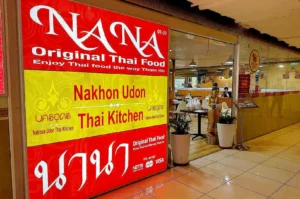
The tom yum arrived first, and the first spoonful hit sour and hot at once, lime and chilli chasing each other down the throat. This classic Thai dish features a spicy sauce and aromatic herbs that awaken the taste buds straight away, setting the stage with its bold flavors. Then the pineapple rice came, sweet…
-
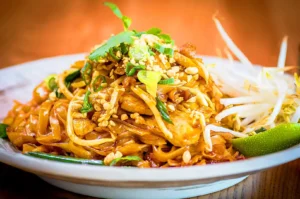
Pad Thai Recipe for People Who Know the Noodles Can’t Be an Afterthought
Dio Asahi | August 29, 2026
The first time I made Pad Thai, I ruined it before the wok was even hot. I’d left the noodles soaking while I answered a phone call. Ten minutes turned into forty. By the time I drained them, they were already soft, already surrendered. Everything I did in the pan after that was damage control….
-
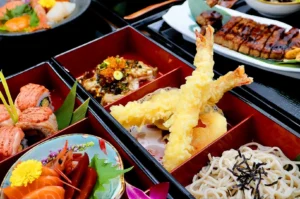
Best Japanese Restaurant Singapore: Places That Nail the “First Bite”
Eat Drink Asia Team | August 27, 2026
I built this list around a very specific feeling: that first bite where the room goes quiet for a second. I’ve tried enough Japanese restaurants in Singapore over the years to know that “best” does not always mean the most expensive, the rarest, or the hardest to book. Sometimes it is the warmth of the…
-
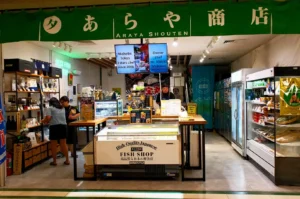
Not Just Seafood: How Araya Shouten Keeps Japanese Fishing Culture Alive in Singapore
Eat Drink Asia Team | August 26, 2026
Japanese cuisine has long been admired for its attention to seasonality, precision, and respect for ingredients. However, behind every piece of sashimi or carefully prepared seafood dish lies a story that begins far away from the dining table, often with fishermen, coastal communities, and generations of knowledge passed down through time. At Araya Shouten, seafood…
-
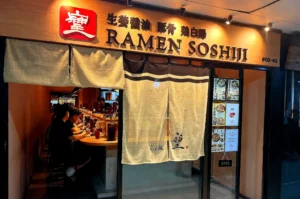
The Ginger Shoyu Ramen at Ramen Soshiji, Where Orchard Goes Quiet
Dio Asahi | August 26, 2026
By Dio Asahi for Eat Drink Asia. The lift opens on the third floor of Orchard Plaza, and for a second I don’t know which way to turn. The corridor is dim and still, the kind of quiet that feels almost accidental in this part of town. A few doors down, an unmarked entrance. Inside,…
-
Indo Rasa Singapore and the Nasi Goreng That Measures a Kitchen’s Confidence
Eat Drink Asia Team | August 25, 2026
There’s a dish I order when I want to know a kitchen quickly. Not the specialty. Not the thing the menu is proud of. I order the fried rice. Because nasi goreng has nowhere to hide. It’s rice, chilli, chicken, egg, a few crackers, some cucumber. Everyone thinks they can make it. Most people can….
-
Bebek Goreng Pak Ndut and the Fried Duck That Makes Nasi Goreng Feel Too Polite
Eda Wong | August 22, 2026
The duck arrived and made a sound before I’d even touched it. Not the plate, the skin. When my fork pressed against it, there was a small, dry crackle, the kind you feel in your fingers before you hear it. That’s when I understood I wasn’t eating a soft meal. This was something with edges….